
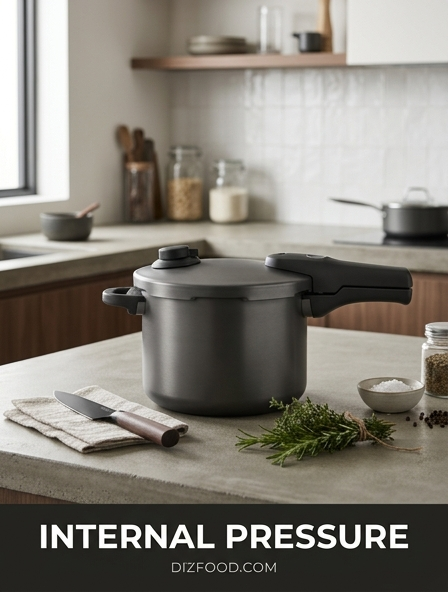
The Mechanics of Pressure and Heat Transfer
In a professional kitchen, the relationship between pressure and heat transfer is fundamental to high-speed cooking. When steam is confined within a sealed chamber, the internal pressure rises, which directly increases the boiling point of water. This allows the steam to reach temperatures well above 212°F (100°C), significantly increasing the kinetic energy of the water molecules. This energy is then transferred to the food surface with greater intensity than atmospheric steaming.
The efficiency of this transfer relies on several key factors that chefs must manage to ensure consistency across various ingredients:
- Vapor Density: Higher pressure increases the density of the steam, allowing more heat energy to occupy the same volume.
- Thermal Gradient: The larger temperature difference between the pressurized steam and the cold food accelerates heat flux.
- Surface Condensation: As steam hits the food, it reverts to liquid, releasing massive amounts of energy instantly.
- Molecular Agitation: Increased pressure forces moisture into the cellular structure of the food more rapidly.
Maximizing Thermal Efficiency in Commercial Steamers
Commercial steam cookers are engineered to minimize energy loss while maximizing the work performed by every BTU. Thermal efficiency is achieved through high-grade insulation and precision-engineered gaskets that prevent pressure leaks. In a high-volume environment, the ability of a steamer to maintain a constant internal pressure determines the throughput of the kitchen. If pressure fluctuates, cooking times become unpredictable, leading to inconsistent product quality.
| Efficiency Factor | Impact on Production | Technical Requirement |
|---|---|---|
| Pre-heat Speed | Reduces idle time between batches | High-output boiler elements |
| Pressure Recovery | Maintains temp after door opening | Rapid steam injection valves |
| Condensate Drainage | Prevents water-logging of food | Automatic pulse-purge drains |
By optimizing these mechanical aspects, kitchens can reduce their energy footprint while increasing the speed of service, ensuring that the internal pressure remains at the ideal set point for the duration of the cooking cycle.
Physics of Saturated Steam Under Pressure
Understanding the physics of saturated steam is essential for mastering pressure cooking. Saturated steam exists at a state where the liquid and vapor are in equilibrium at a specific pressure and temperature. Unlike "dry" steam, which can dehydrate food, saturated steam provides a moist environment that is incredibly efficient at conducting heat. When the internal pressure of a vessel is increased to 15 PSI, the temperature of the saturated steam rises to approximately 250°F (121°C).
The physical advantages of using saturated steam under pressure include:
- High Heat Capacity: Steam holds more energy than dry air at the same temperature.
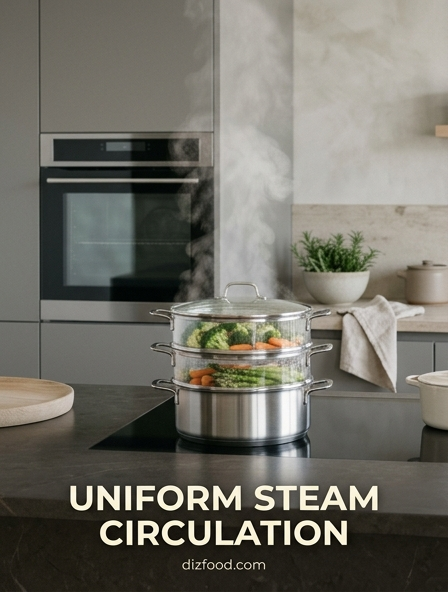
- Uniform Distribution: Gas expands to fill the chamber, ensuring every part of the food is exposed to the same thermal energy.
- No Hot Spots: Unlike convection ovens, pressure steamers eliminate localized burning or uneven cooking zones.
This phase-change physics allows for deep heat penetration, ensuring that the center of dense proteins or root vegetables reaches the target internal temperature without overcooking the exterior layers.
Accelerating Cooking Times with Internal Pressure
The primary draw of pressurized kitchen equipment is the dramatic reduction in cooking duration. By increasing the internal pressure, the "cooking force" is essentially multiplied. This is particularly effective for breaking down tough connective tissues in meats or softening the rigid cellulose in legumes and fibrous vegetables. In many cases, pressure steaming can reduce traditional cooking times by 50% to 70%, allowing for a more responsive "cook-to-order" workflow in busy establishments.
Standard cooking time reductions often include:
- Potatoes/Root Crops: Reduced from 30 minutes to approximately 8-10 minutes.
- Brown Rice/Grains: Reduced from 45 minutes to 15-18 minutes.
- Beef Brisket: Reduced from several hours to under 60 minutes.
- Dough Proofing: Accelerated through controlled humidity and low-pressure warmth.
This acceleration does not just save time; it preserves the structural integrity of the food by limiting the time it spends in a high-heat environment, preventing the "mushy" texture often associated with over-boiling or prolonged atmospheric steaming.
The Role of Latent Heat in Rapid Steaming
Latent heat is the "hidden" energy required to change water from a liquid to a gas without changing its temperature. In a pressure steamer, this latent heat is the secret weapon for rapid cooking. When steam molecules come into contact with the cooler surface of the food, they undergo a phase change back into liquid water. This process releases 540 calories of energy per gram of water-energy that is immediately absorbed by the food.
This massive energy release explains why steam is a far more effective medium for heat transfer than hot air or even boiling water. In a pressurized environment, the density of these steam molecules is higher, meaning more phase-change events occur per square inch of food surface area. This concentrated energy transfer allows the internal temperature of the food to climb rapidly, ensuring that the cooking process starts nearly instantaneously once the chamber is pressurized. For the chef, this means better control over the final texture and a significant reduction in the "lag time" associated with traditional roasting or poaching methods.
Optimizing Heat Penetration for Large Batches
One of the greatest challenges in high-volume catering is ensuring that a batch of 200 portions cooks as evenly as a batch of ten. Internal pressure is the solution to this scaling problem. In an atmospheric steamer, the "crowding effect" can lead to cold spots where steam cannot circulate. However, in a pressurized chamber, the gas is forced into every available gap, surrounding each piece of food with high-temperature vapor regardless of how tightly the pans are packed.
To optimize this penetration, kitchens should follow these spacing standards:
- Perforated Pans: Use perforated inserts to allow steam to move through the bottom of the food load.
- Shallow Loading: Spread items like broccoli or shrimp in thin layers to maximize surface area exposure.
- Staggered Shelving: Ensure there is at least an inch of clearance between the top of the food and the pan above it.
When these protocols are combined with high-pressure steam, the results are perfectly uniform, ensuring that the first portion served is identical to the last in terms of temperature, color, and doneness.
Pressure Steaming vs Atmospheric Methods
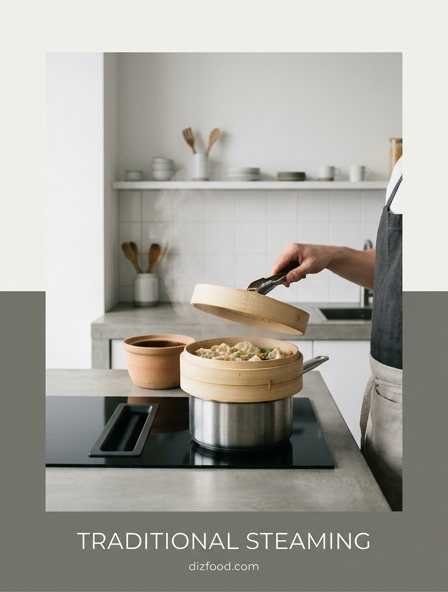
Choosing between pressure steaming and atmospheric (non-pressurized) steaming depends on the specific culinary goal. Atmospheric steamers are often preferred for delicate items like seafood or fine custards that might be damaged by the intensity of high-pressure environments. Conversely, pressure steamers are the workhorses for bulk production and dense ingredients. The difference lies in the vapor pressure and the resultant temperature ceiling of the cooking environment.
| Feature | Atmospheric Steaming | Pressure Steaming |
|---|---|---|
| Operating Temp | Fixed at 212°F (100°C) | Variable, up to 250°F (121°C) |
| Cooking Speed | Standard | Highly Accelerated |
| Texture Control | Gentle, for delicate proteins | Powerful, for fiber breakdown |
| Energy Use | Lower per hour, higher per lb | Higher per hour, lower per lb |
Understanding these distinctions allows a kitchen manager to deploy the right equipment for the right task, balancing speed with the necessary delicacy for high-end plating.
Preserving Nutrient Density through High Speed Transfer
Modern nutritional science highlights the benefits of pressure steaming as a superior method for vitamin retention. Because pressure cooking significantly reduces the time food is exposed to heat, it minimizes the thermal degradation of heat-sensitive vitamins like Vitamin C and various B vitamins. Furthermore, unlike boiling, where nutrients leach into the surrounding water, pressure steaming keeps the food out of the liquid, preserving the mineral content within the cellular walls.
Key nutritional advantages include:
- Reduced Oxidation: The pressurized environment displaces oxygen with steam, preventing the browning and nutrient loss associated with air exposure.
- Chlorophyll Retention: Rapid cooking locks in the bright green color of vegetables, indicating high phytonutrient levels.
- Flavor Concentration: Because less water is used, the natural sugars and salts in the food are not diluted, resulting in a more flavorful product without excessive seasoning.
This makes pressure equipment essential for hospitals, schools, and health-conscious restaurants where the nutrient profile of the meal is as important as the taste.
Engineering Steam for High Volume Kitchen Success
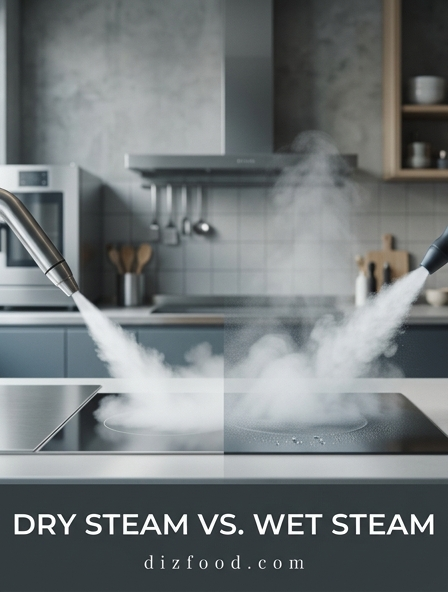
In a high-volume kitchen, the reliability of the steam delivery system is the backbone of the operation. Engineering a system that can handle the "slugs" of demand during peak hours requires a deep understanding of boiler capacity and steam quality. Dry steam is the goal; wet steam, which contains suspended water droplets, can lead to soggy food and slower heat transfer. A well-engineered pressure steamer uses separators to ensure that only pure vapor enters the cooking chamber.
Factors for high-volume engineering success:
- Boiler Descaling: Hard water can insulate heating elements, reducing the ability to maintain pressure.
- Steam Traps: Efficient removal of condensate ensures the chamber remains filled with active vapor.
- Venting Protocols: Rapid pressure release at the end of a cycle allows for immediate access without overcooking from residual heat.
By focusing on these engineering details, facilities can maintain a high "turn rate" on their equipment, moving hundreds of pounds of product through the kitchen with precision and safety.
Advanced Pressure Controls in Modern Steaming Technology
The latest generation of kitchen equipment features sophisticated digital controls that go far beyond simple "high" or "low" pressure settings. Modern PID (Proportional-Integral-Derivative) controllers monitor internal pressure and temperature in real-time, adjusting energy input to maintain a perfect curve. These systems can compensate for the drop in pressure that occurs when a cold tray of frozen vegetables is inserted, immediately ramping up the steam injection to recover the set point.
Advanced features include:
- Multi-Stage Programming: Start with high pressure for a rapid sear and finish with low pressure for gentle cooking.
- Automated Venting: Programmed release of pressure to prevent delicate skins on beans or potatoes from bursting.
- Integrated Meat Probes: Sensors that communicate with the pressure controller to shut off the steam exactly when the internal temp is reached.
These technological leaps have made pressure steaming safer and more accessible to less-experienced staff, ensuring that the complex physics of internal pressure are managed by the machine, leaving the chef to focus on flavor and presentation.

Comments