
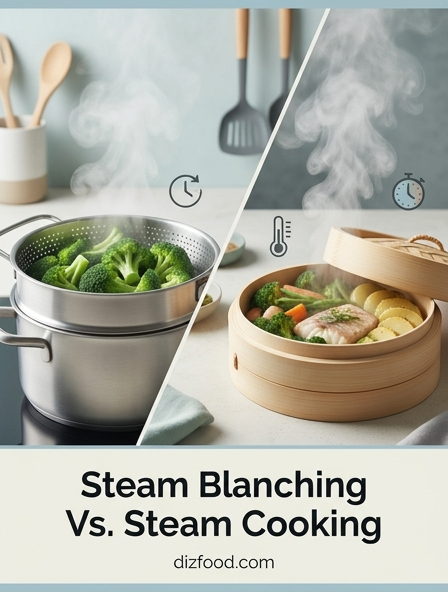
Choosing between steam blanching and steam cooking often depends on whether you're preparing a meal for tonight or preserving a harvest for the months ahead. Steam blanching is a high-speed precision technique designed to halt enzymatic activity, effectively "locking in" vibrant colors and crisp textures before freezing or dehydrating. In contrast, steam cooking is a gentler, more thorough process that uses moist heat to break down fibers until food reaches peak tenderness and digestibility. While both methods excel at retaining water-soluble vitamins better than boiling, understanding their timing and intent ensures you never end up with mushy meal-prepped greens or undercooked dinner sides.
| Feature | Steam Blanching | Steam Cooking |
|---|---|---|
| Primary Goal | Enzyme deactivation for preservation | Full tenderization for consumption |
| Typical Duration | 1-5 minutes (very brief) | 10-30+ minutes (until soft) |
| Core Benefit | Prevents color/flavor loss in freezer | Maximum nutrient & mineral retention |
| Internal Texture | Partially raw/crunchy center | Uniformly soft and fully cooked |
| Post-Process | Requires immediate "shocking" in ice water | Served immediately or seasoned |
| Best Used For | Long-term storage (freezing/drying) | Daily meal prep and healthy sides |
Steam Blanching vs Steam Cooking Key Differences
The primary distinction between steam blanching and steam cooking lies in the duration of heat exposure and the ultimate purpose of the process. Steam blanching is a preliminary thermal treatment where food is exposed to pressurized or atmospheric steam for a very short window, typically ranging from one to five minutes. This process is not intended to cook the food for immediate consumption but rather to prepare it for further processing, such as freezing, drying, or canning. By contrast, steam cooking is a complete culinary method designed to bring the food to a fully edible state, ensuring that the internal temperature reaches a point where fibers are softened and starches are gelatinized.
| Feature | Steam Blanching | Steam Cooking |
|---|---|---|
| Primary Goal | Enzyme inactivation and preservation | Palatability and texture softening |
| Typical Duration | 1 to 5 minutes | 10 to 30+ minutes |
| Internal State | Partial heat penetration; remains crisp | Fully cooked; tender throughout |
| Post-Process Action | Immediate cooling in ice water | Immediate serving or seasoning |
While both methods utilize the latent heat of water vapor, the intensity of the thermal impact differs significantly. Blanching acts as a "thermal shock" that cleanses the surface and halts biological degradation, whereas cooking utilizes prolonged heat to break down complex cellular structures, making nutrients more bioavailable and the food easier to chew and digest.
Understanding the Basics of Steam Blanching Techniques
Steam blanching is often preferred over water blanching because it minimizes the leaching of water-soluble vitamins and minerals. The technique involves suspending vegetables or fruits above boiling water, allowing the rising steam to envelop the items. This creates a high-temperature environment that quickly raises the surface temperature of the produce. Because steam carries more heat energy than boiling water per gram, it is an incredibly efficient medium for rapid thermal processing.
- Preparation: Vegetables should be cut into uniform pieces to ensure consistent heat penetration during the short window.
- Layering: Food should be spread in a single layer or a thin batch to allow the steam to circulate freely around every surface.
- Timing: The countdown begins the moment the lid is secured and steam begins to build, requiring precise monitoring to avoid over-processing.
- Shocking: Following the steam interval, the food must be plunged into an ice bath to stop the residual heat from continuing the cooking process.
This method is particularly effective for porous vegetables like broccoli and cauliflower, which can become waterlogged if submerged in boiling water. By using steam, the kitchen operator maintains the structural integrity of the cell walls while still achieving the necessary temperature to neutralize oxidative enzymes. It is a technical foundation for long-term food preservation that balances heat intensity with textural preservation.
How Steam Cooking Differs from Brief Blanching
Steam cooking is a comprehensive preparation method that focuses on transforming the raw state of food into a finished dish. Unlike the brief intervention of blanching, steam cooking requires the food to remain in the steamer until the heat has fully permeated to the center of the item. This transition involves the denaturation of proteins in meats or the total softening of cellulose and pectin in vegetables. The prolonged exposure to 212°F (100°C) steam ensures that the food is safe to eat and has the desired mouthfeel for a meal.
The difference is most apparent in the chemical changes occurring within the food. During brief blanching, only the outer layers reach high temperatures, leaving the core essentially raw. In steam cooking, the sustained heat allows for the breakdown of complex carbohydrates and the release of aromatic compounds that define the flavor profile of the dish. While blanching is a means to an end-usually preservation-steam cooking is the end itself. The lack of a "shocking" phase in ice water also distinguishes the two; cooked food is typically kept warm and served immediately to preserve its heat and moisture content.
Furthermore, steam cooking can accommodate a wider variety of foods, including grains, dumplings, and fish, which would not survive the blanch-and-shock cycle used for vegetables. It is a gentle yet thorough cooking medium that relies on moisture to prevent the food from drying out, which is a common risk in dry-heat methods like roasting or frying.
Nutritional Retention in Blanching vs Cooking
One of the most significant advantages of using steam in the kitchen is the superior retention of nutrients compared to boiling. However, the degree of retention varies between blanching and full cooking. Because blanching is a shorter process, it typically preserves a higher percentage of heat-sensitive vitamins, such as Vitamin C and B-complex vitamins. Since the food is not submerged, there is also less loss of minerals like potassium and magnesium into the cooking liquid.
- Antioxidant Stability: Brief steaming can actually increase the availability of certain antioxidants by breaking down plant cell walls without destroying the compounds themselves.
- Glucosinolates: In cruciferous vegetables, short steam blanching preserves the enzymes that convert these compounds into healthy isothiocyanates.
- Soluble Fiber: Long-term steam cooking can cause some degradation of soluble fibers, though far less than boiling.
- Phytochemicals: Vibrant pigments, which often correlate with nutrient density, are better preserved in the short-burst blanching method.
While full steam cooking does result in some nutrient loss due to the longer duration of heat exposure, it remains one of the healthiest cooking methods available. It avoids the addition of fats and prevents the massive nutrient leaching seen in boiling. When comparing the two, blanching is the winner for raw nutrient density, but cooking is necessary to make certain nutrients, like lycopene in tomatoes or beta-carotene in carrots, more accessible to the human digestive system.
The Role of Enzyme Inactivation in Blanching
The core scientific purpose of steam blanching is the inactivation of natural enzymes present in fresh produce. Even after harvest, vegetables remain biologically active. Enzymes such as catalase and peroxidase continue to function, leading to the loss of flavor, color, and nutritional value over time. If vegetables were frozen without blanching, these enzymes would continue to work-albeit slowly-even at sub-zero temperatures, resulting in a toughened texture and an "off" or hay-like flavor within a few months.
Steam blanching provides just enough heat to denature these protein-based catalysts. By raising the temperature of the vegetable tissue to approximately 180°F to 190°F, the enzyme structures unfold and lose their functional capability. This effectively "freezes" the biological state of the vegetable. Because steam is a more concentrated heat source than hot air, it achieves this inactivation much faster than a dry oven could, and with more precision than boiling water, which might overcook the exterior before the interior enzymes are neutralized.
In the context of the kitchen, this process is an insurance policy for the freezer. It ensures that when you thaw your green beans or peas six months later, they retain the bright green color and sweet flavor they had on the day they were processed. Without this critical step, the quality of preserved foods would degrade rapidly, making long-term storage impractical for high-quality culinary applications.
Achieving Perfect Texture with Steam Methods
Texture is the primary sensory metric used to determine whether a steaming process was successful. In steam blanching, the goal is "snap." The vegetable should be flexible but still offer a distinct resistance when bitten. This is achieved by timing the steam exposure to the second. For instance, thin asparagus may only need 90 seconds, while thick carrot slices might require three minutes. The subsequent ice bath is essential for texture because it locks in the crispness by immediately halting the softening of the cell walls.
- Assess the Density: Denser vegetables like squash require longer steam times than leafy greens like spinach.
- Uniformity: Ensure all pieces are the same size so they reach the desired texture simultaneously.
- Steam Flow: Do not overcrowd the steamer basket; restricted steam flow leads to uneven textures where some pieces are mushy and others are raw.
- Testing: Use the "fork-tender" rule for cooking, but the "vibrant-snap" rule for blanching.
In full steam cooking, the texture goal shifts toward tenderness. The heat must persist long enough to dissolve the "glue" (pectin) between cells, allowing them to slide against each other. This results in a soft, buttery mouthfeel. Mastering the transition between a blanched texture and a cooked texture allows a chef to prepare components for various stages of a meal, such as par-cooked vegetables that will be finished in a high-heat stir-fry to maintain their crunch.
When to Blanch and When to Cook
Deciding whether to blanch or fully cook depends entirely on the intended timeline for the food. Blanching is the correct choice when the food is a component of a larger, multi-step recipe or when it is destined for long-term storage. It is a preparation technique that provides a head start on the cooking process without committing to a final texture. Conversely, steam cooking is the final destination, used when the food is intended to be seasoned and eaten immediately as a side dish or main component.
- Blanching scenarios: Preparing crudités for a party platter, softening peel on tomatoes or peaches for easy removal, or prepping broccoli for a quick toss in a wok.
- Cooking scenarios: Preparing a delicate piece of fish, steaming a bowl of rice, or making a side of tender seasoned green beans for dinner.
- Freezer Prep: Always blanch; never freeze raw or fully cooked vegetables if you want the best quality upon thawing.
- Salads: Blanching is used for "composed" salads where a slight crunch is desired, but the raw "grassy" flavor needs to be removed.
Essentially, if you are planning to apply heat again later, blanching is the way to go. If this is the only time the food will touch a heat source before hitting the plate, full steam cooking is required. Understanding this distinction prevents the common kitchen error of "double cooking," which results in mushy, over-processed food that lacks structural integrity and aesthetic appeal.
Impact on Food Color and Aesthetic Appeal
Visual appeal is one of the most immediate benefits of steam-based methods. Steam blanching is famous for "setting" the color of green vegetables. The brief heat causes the microscopic air bubbles between the cells to expand and escape. These bubbles often cloud the visibility of the chlorophyll; once they are gone, the vibrant green color of the plant is revealed with stunning clarity. This "brightening" effect is a hallmark of professional food preparation and makes dishes look significantly more appetizing.
However, if steaming continues for too long (moving from blanching into full cooking), the color can begin to degrade. Chlorophyll is sensitive to prolonged heat and acidic environments. Over-steaming can cause the magnesium atom at the center of the chlorophyll molecule to be replaced by hydrogen, turning the bright green into a dull, unappealing olive drab. This is why timing is so critical in both methods. A perfectly cooked steamed vegetable should still look lively and colorful, even if it is soft to the touch.
For non-green vegetables, such as carrots or purple cauliflower, steam helps maintain the intensity of the carotenoids and anthocyanins. Because these pigments are not as easily leached into steam as they are into boiling water, the food retains its original hue much better. This makes steaming the superior choice for colorful vegetable medleys where maintaining the individual identity of each component's color is a priority for the presentation.
Preparing Vegetables for Freezing via Steam Blanching
Steam blanching is the gold standard for home and industrial freezing of vegetables. The process ensures that the produce remains high-quality for up to 12 months. When preparing vegetables for the freezer, the steam blanching method is slightly more forgiving than water blanching regarding nutrient loss, but it requires about 1.5 times the duration because steam is less dense than water. The goal is to reach a temperature that stops enzyme activity without making the vegetable soft.
- Wash and Sort: Remove dirt and separate the vegetables by size.
- Steam Interval: Place in the steamer basket over boiling water. For example, peas take about 2 minutes, while corn on the cob may take up to 5 minutes.
- The Ice Bath: Immediately transfer to a bowl of water that is 60°F (15°C) or lower. The rule of thumb is to cool the food for the same amount of time it was steamed.
- Dry Thoroughly: Remove excess moisture before bagging. Residual water creates ice crystals that cause freezer burn and ruin the texture.
Once dried, the vegetables should be packed into airtight containers or vacuum-sealed bags. By using steam blanching, you ensure that the enzymes responsible for browning and vitamin loss are neutralized. This preparation allows you to enjoy "fresh-tasting" produce in the middle of winter, with a texture and flavor profile that is nearly identical to the day it was picked, a feat that is impossible with raw freezing.
Essential Equipment for Steam Processing Methods
To successfully execute both steam blanching and steam cooking, specific kitchen tools are required to manage heat and moisture effectively. The core requirement is a vessel that can hold boiling water while keeping the food suspended above it. The efficiency of the equipment directly impacts the speed of heat transfer and the uniformity of the results. While many home cooks use basic setups, professional results often require more specialized gear.
- Steamer Basket: A collapsible metal or silicone insert that fits inside standard pots, allowing for versatility across different cookware sizes.
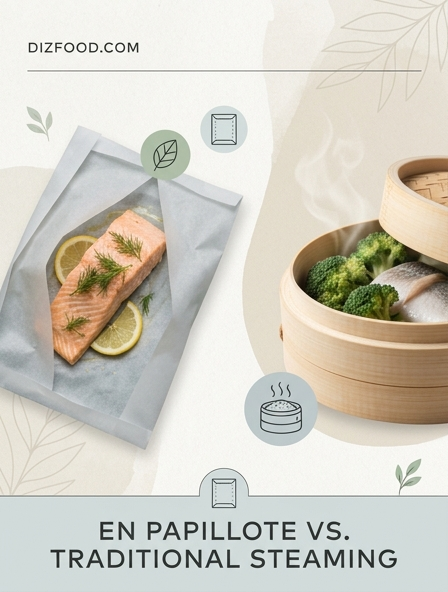
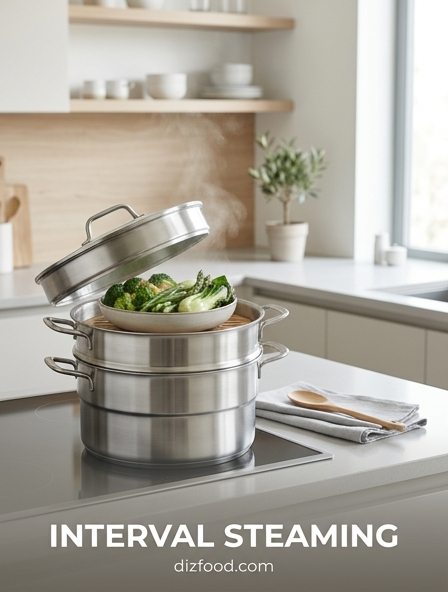
- Bamboo Steamer: Traditional for Asian cuisine, these stackable units allow for multiple layers of cooking and absorb excess moisture, preventing drips on the food.
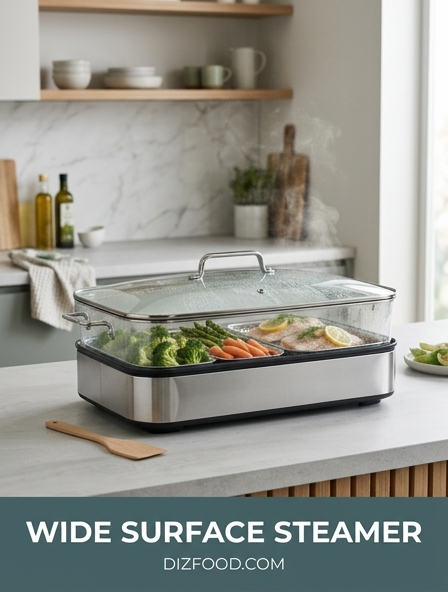
- Electric Food Steamer: A dedicated appliance with built-in timers and tiered compartments, ideal for large batches and precise temperature control.
- Pressure Cooker: Can be used for "pressure steaming," which significantly accelerates the process for dense root vegetables or grains.
- Ice Bath Reservoir: A large bowl or sink dedicated to the "shocking" phase of blanching, which is just as important as the heat source itself.
In addition to the primary steamer, a high-quality kitchen timer is indispensable. Since the window between perfectly blanched and overcooked is often less than sixty seconds, precision is paramount. For those doing high-volume preservation, a steam juice extractor or a large-capacity stovetop steamer can streamline the workflow, ensuring that batches move quickly from the heat to the ice bath without losing the critical timing necessary for enzyme inactivation.

Comments