
Maintaining the fresh taste and vibrant color of harvested produce starts with mastering the science of enzymatic control. While natural enzymes are essential for ripening, they quickly lead to spoilage, nutrient degradation, and unappealing textures once a plant is picked. By utilizing precision thermal techniques, you can effectively deactivate these biological catalysts, locking in peak quality and extending shelf life. This strategic application of heat ensures that vegetables retain their structural integrity and flavor profile without the need for chemical preservatives. To achieve superior results, it is essential to understand the distinct impact of heat transfer methods, particularly when evaluating the differences between Steam Blanching Vs. Steam Cooking.

Understanding Enzymatic Decay in Fresh Produce
Fresh vegetables and fruits are biological entities that remain metabolically active even after harvest. This activity is primarily driven by endogenous enzymes, which are specialized proteins that catalyze biochemical reactions. While these enzymes are essential for the growth and ripening of the plant, they become agents of deterioration once the produce is picked and stored. The most notorious culprits in the kitchen are polyphenol oxidase, which causes browning, and lipoxygenase, which leads to the development of off-flavors and the breakdown of essential fatty acids.
If left unchecked, enzymatic activity results in the gradual degradation of sensory qualities and nutritional value. This process manifests as textural softening due to the breakdown of pectin by pectic enzymes, and the loss of vibrant colors as chlorophyll is metabolized. Understanding this process is the first step in mastering preservation techniques. By intervening at the molecular level, cooks can halt these natural degradative pathways, ensuring that produce maintains its peak quality for extended periods, whether for immediate consumption or long-term freezer storage.
Thermal Denaturation Through Precision Steaming
The primary objective of steaming in the context of enzyme management is thermal denaturation. This is a physical process where the application of heat energy disrupts the hydrogen bonds and hydrophobic interactions that maintain an enzyme's specific three-dimensional shape. Because an enzyme's functionality is entirely dependent on its unique structure-specifically its active site-altering this shape effectively "turns off" the biological catalyst. Precision steaming provides a consistent medium for this heat transfer without the physical agitation associated with boiling.
When plant tissues are exposed to saturated steam, the temperature rapidly rises to a point where proteins begin to unfold. This transition is critical because under-heating can actually accelerate enzymatic reactions by increasing kinetic energy without reaching the threshold for denaturation. Conversely, over-heating leads to unwanted chemical changes and structural collapse. Achieving the "sweet spot" ensures that the enzymes are rendered permanently inactive, thereby locking in the current state of the produce and preventing the onset of rot or discoloration during subsequent storage phases.
Comparing Steam Blanching to Traditional Methods
While water blanching involves submerging produce in boiling water, steam blanching utilizes vapor to achieve enzymatic inactivation. This distinction is significant for both the texture and nutritional profile of the food. Steam is generally considered a more gentle medium, as it minimizes the mechanical damage to delicate leaves and florets. Furthermore, steam blanching significantly reduces the leaching of water-soluble components into the cooking medium, a common drawback of immersion methods.
- Nutrient Retention: Steam preserves a higher percentage of Vitamin C and B-complex vitamins compared to boiling.
- Flavor Concentration: Less dilution of natural sugars and salts occurs in a steam environment.
- Water Usage: Steam blanching requires significantly less water, making it a more efficient process in professional kitchens.
- Solute Loss: Minimized contact with liquid water prevents the loss of minerals and pigments.
By opting for steam over boiling water, the integrity of the produce is better maintained. The lack of turbulent water prevents the bruising of fragile vegetables like broccoli rabe or spinach, ensuring a superior aesthetic presentation on the plate.
The Critical Role of Temperature Control
Temperature control is the most vital variable in managing enzymatic activity within the kitchen. Most enzymes that contribute to spoilage are highly active at room temperature but begin to lose their structural integrity as temperatures surpass 60°C (140°F). To ensure complete inactivation, the internal temperature of the produce must reach a threshold-typically between 70°C and 100°C-depending on the specific vegetable and its density. Using a thermometer to monitor the steam environment ensures that the heat is sufficient to penetrate to the core of the food.
The following table illustrates the general temperature requirements for common enzymatic concerns:
| Enzyme Type | Primary Effect | Inactivation Threshold |
|---|---|---|
| Polyphenol Oxidase | Browning/Discoloration | 70°C - 90°C |
| Peroxidase | Off-flavors/Toughness | 75°C - 95°C |
| Lipoxygenase | Rancid aromas | 80°C - 100°C |
Failure to reach these temperatures results in residual activity, which can lead to a "hay-like" flavor in frozen vegetables over time.
Preserving Cellular Integrity with Controlled Vapor
The structural strength of vegetables is derived from turgor pressure and the rigidity of cell walls composed of cellulose, hemicellulose, and pectin. When high-heat steam is applied, it must be done with precision to avoid the complete hydrolysis of these structural polysaccharides. Controlled vapor allows for the inactivation of enzymes like pectin methylesterase, which otherwise contributes to the softening of the vegetable tissue during storage. By precisely timing the steam exposure, a cook can achieve "enzyme kill" while the cell walls remain largely intact.
This balance is what separates a professionally blanched vegetable from one that is merely overcooked. The steam interacts with the surface and migrates inward, providing a rapid thermal shock. This shock stabilizes the pectins within the middle lamella, the "glue" that holds cells together. Consequently, the vegetable retains its "snap" or "crunch" even after being reheated for service. Maintaining this cellular integrity is not only a matter of texture but also affects how the vegetable holds sauces and seasonings, as a compromised cell structure will weep moisture and dilute the final dish.
Optimal Steaming Durations for Enzyme Deactivation
The duration of steam exposure is as critical as the temperature. Because steam transfers heat efficiently, the times are generally shorter than one might expect. Thick or dense vegetables require longer exposure to ensure the heat reaches the geometric center, whereas leafy greens require mere seconds. If the duration is too short, the enzymes in the center remain active; if too long, the produce becomes mushy and loses its vibrant color due to the degradation of chlorophyll into pheophytin.
- Leafy Greens (Spinach, Kale): 1 to 1.5 minutes.
- Small Florets (Broccoli, Cauliflower): 3 to 4 minutes.
- Stalks and Root Segments (Carrots, Asparagus): 4 to 5 minutes.
- Dense Tubers (Potatoes, Parsnips): 5 to 8 minutes, depending on size.
Consistency in size is key to ensuring even deactivation. When preparing vegetables for steaming, uniform cutting ensures that every piece undergoes the same degree of molecular stabilization. This prevents a mixture of over-processed and under-processed pieces, which would compromise the shelf life and quality of the entire batch.
Retaining Micronutrients via Precision Heat Application
One of the most compelling arguments for using steam to manage enzymes is the preservation of micronutrients. Many vitamins, particularly Vitamin C, folate, and certain antioxidants, are highly sensitive to both heat and water. While some heat is necessary to deactivate destructive enzymes, prolonged exposure or submersion in water causes these nutrients to degrade or wash away. Precision steaming minimizes this loss by using a gaseous medium that carries heat without the solvent properties of liquid water.
Research indicates that steam-processed vegetables can retain up to 90% of their antioxidant capacity, whereas boiling can reduce it by half. By quickly reaching the enzyme-deactivation temperature and then immediately cooling the produce, the window of nutrient degradation is kept to a minimum. This makes steaming the ideal choice for health-conscious cooking. Furthermore, the retention of natural pigments like carotenoids and anthocyanins-which often double as phytonutrients-ensures that the food remains visually appealing and nutritionally dense, providing the maximum biological benefit to the consumer.
Flash Steaming Techniques for Domestic Preservation
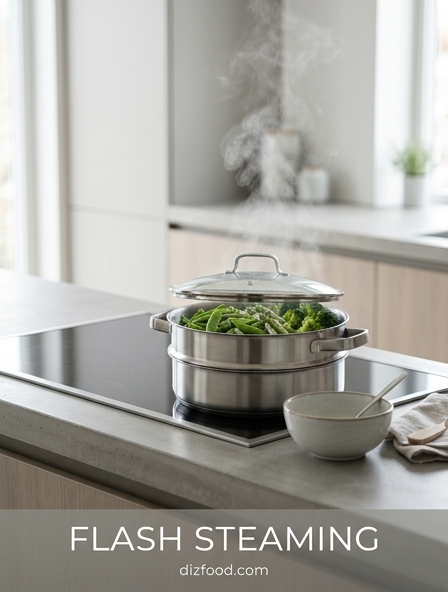
Flash steaming is a high-intensity technique adapted for domestic kitchens to quickly stabilize produce. This method involves using a small amount of water in a tightly sealed vessel to create a pressurized steam environment. The goal is to reach the thermal denaturation point as quickly as possible. For the home cook, this is the most effective way to prepare seasonal harvests for the freezer. Unlike traditional slow cooking, flash steaming "shocks" the enzymes into inactivity before they can respond to the heat by accelerating decay.
To execute this effectively at home, one should follow a standardized protocol:
- Bring a small volume of water to a rolling boil before adding the steamer basket.
- Arrange vegetables in a single, even layer to ensure uniform steam circulation.
- Cover with a heavy, tight-fitting lid to prevent steam loss and maintain pressure.
- Use a timer to prevent even thirty seconds of over-processing.
This domestic application of molecular kitchen science allows home cooks to achieve professional-grade results, ensuring that the flavor and texture of summer produce are preserved through the winter months.
Stopping the Clock with Rapid Post-Steam Cooling
The process of managing enzymatic activity does not end when the steam is turned off. Residual heat continues to cook the produce and can lead to further structural breakdown. To "stop the clock," it is essential to utilize an ice bath-a process often referred to as shocking or refreshing. By dropping the temperature of the produce to near freezing immediately after steaming, the cook ensures that the thermal denaturation is locked in without allowing the heat to damage the plant's remaining sensory qualities.
The cooling time should generally match the steaming time. For instance, if carrots were steamed for four minutes, they should submerged in ice water for at least four minutes. This rapid transition achieves thermal equilibrium and prevents the "carry-over" cooking that turns vibrant green vegetables into a dull olive-brown. Once cooled, the produce must be thoroughly drained. Excess moisture on the surface can lead to ice crystal formation during freezing, which causes physical damage to the cell walls and results in a "leathery" texture upon thawing and final preparation.
Enhanced Flavor Stability Through Molecular Inactivation
The ultimate goal of controlling enzymatic activity in the kitchen is the preservation of flavor. Enzymes like lipoxygenase and lipase act on the lipid components of plant cells, breaking them down into aldehydes and ketones that possess unpleasant, soapy, or metallic tastes. By using steam to inactivate these molecules, the natural, sweet, and earthy flavors of the vegetables are protected. This is especially important for produce that will be stored, as even slow enzymatic activity at sub-zero temperatures can eventually ruin the flavor profile of a frozen batch.
Furthermore, the inactivation of peroxidase-one of the most heat-stable enzymes-serves as a benchmark for flavor stability. If peroxidase is deactivated, it is highly likely that all other flavor-degrading enzymes have also been neutralized. This molecular intervention ensures that when the food is eventually served, it tastes as though it were just harvested. The result is a superior culinary product that retains the volatile aromatic compounds responsible for the "fresh" smell and taste of high-quality produce, providing a consistent and enjoyable dining experience.



Comments