
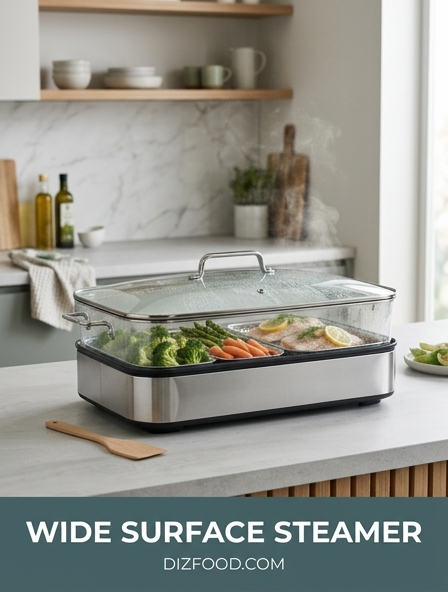
Maximizing Cooking Surface for Even Heat
A wide surface steamer is engineered to distribute thermal energy across a broader plane, ensuring that every square inch of the cooking platform receives a consistent amount of heat. Unlike narrow, deep pots where the steam becomes concentrated and overly pressurized at the center, a wide vessel allows the water vapor to rise in a more uniform column. This prevents the common issue of hot spots, where items in the middle overcook while those at the edges remain underdone. By spreading the ingredients out, you facilitate a more direct path for the steam to interact with the food surface.
- Enhanced thermal stability across the entire diameter.
- Reduction in temperature fluctuations during the boiling process.
- Improved energy efficiency by utilizing a larger burner surface.
- Elimination of cold pockets within the steaming chamber.
The increased surface area also means the water reservoir underneath is wider, allowing for a more vigorous and steady generation of steam. This creates a stable micro-environment where the ambient temperature remains constant, which is critical for sensitive proteins and vegetables that require precise timing and heat application to retain their structural integrity and flavor profiles.
Preventing Overcrowding and Sticking Dumplings
When steaming delicate items like dumplings, baozi, or dim sum, the primary challenge is the expansion of dough. In a cramped environment, these items tend to swell and fuse together, leading to torn wrappers and lost fillings when they are separated. A wide surface steamer provides the essential "breathing room" required for each individual piece. By maintaining a clear perimeter of at least half an inch around every dumpling, you ensure that the steam can circulate fully around the dough, setting the starch quickly and preventing a tacky, sticky exterior.
Furthermore, the horizontal layout allows for better placement of parchment liners or cabbage leaves, which act as non-stick barriers. In a smaller steamer, these liners often bunch up, creating folds where moisture collects and causes the bottom of the dough to become soggy. In a wide-format steamer, the liners lay flat, ensuring that the base of each dumpling is cooked by dry-hot steam rather than sitting in a pool of condensed water. This spatial freedom is the difference between a professional presentation and a clumped, unappealing mass of dough.
Accommodating Large Whole Fish and Long Greens
Traditional round steamers often force chefs to cut ingredients into smaller pieces, which can compromise the visual appeal and moisture retention of the dish. A wide surface steamer, particularly those with an oval or rectangular geometry, is specifically designed to handle long ingredients like a whole red snapper or bundles of Chinese broccoli. Cooking a fish whole is often preferred in many cuisines to keep the flesh succulent and the presentation impressive. A wide steamer allows the fish to lie flat, ensuring the head and tail cook at the same rate as the thicker midsection.
- Accommodates fish up to 16 inches without trimming.
- Allows for long-stemmed vegetables to remain intact.
- Facilitates the use of larger, decorative serving platters directly inside.
- Supports horizontal steaming of corn on the cob or asparagus spears.
By keeping ingredients whole, you minimize the surface area exposed to oxygen during prep, which helps in retaining natural juices. The wide surface also makes it easier to tuck aromatics like ginger, scallions, and herbs around the ingredient, allowing their oils to infuse into the steam and penetrate the food more effectively.
Optimizing Steam Flow Across Wide Tiers
The physics of steam movement changes significantly when the diameter of the steamer is increased. In a wide-tier system, the goal is to prevent the "chimney effect" where steam rushes through the center and bypasses the perimeter. High-quality wide steamers often feature perforated bases with specific hole patterns that guide the vapor toward the edges. This ensures that the pressure remains balanced throughout the chamber. When steam flows evenly, it prevents the condensation from dripping excessively on the food, as the vapor moves more freely toward the lid's drainage points.
| Feature | Benefit |
|---|---|
| Perforation Density | Ensures edge-to-edge steam saturation. |
| Tier Height | Optimizes vapor pressure for faster cooking. |
| Lid Curvature | Directs condensation away from the center of the food. |
Optimizing this flow is crucial for multi-layered steaming. In wide configurations, the steam has more room to dissipate heat naturally as it rises, which can actually be gentler on delicate items placed on upper tiers. This balance of volume and flow rate creates a more forgiving cooking environment compared to narrow, high-pressure setups.
Reducing Prep Time with Single Layer Capacity
Efficiency in the kitchen is often a matter of capacity. A wide surface steamer allows for a "one-and-done" approach to batch cooking. Instead of steaming three separate rounds of buns or vegetables, a wide steamer can often accommodate the entire batch in a single layer. This drastically reduces the total time spent at the stove, as you eliminate the cumulative time required to bring the water back to a boil between batches. It also ensures that all guests are served at the same time with food at the same peak temperature.
Beyond the actual cooking time, prep becomes more streamlined. You can arrange the entire meal on a single large tray and slide it into the wide chamber. This reduces the labor involved in managing multiple tiers or rotating baskets to ensure evenness. For busy home cooks or those entertaining guests, the ability to process a high volume of food simultaneously without sacrificing quality is a significant advantage. The single-layer approach also simplifies the monitoring process, as you can check the progress of the entire batch with a single lift of the lid, maintaining more heat within the system.
Maintaining Texture in Delicate Dough Wrappers
The texture of a steamed wrapper-whether it is made from wheat, rice flour, or starch-is highly dependent on the moisture-to-heat ratio. Wide surface steamers excel at maintaining this balance by preventing moisture buildup. In a narrow steamer, the proximity of the walls to the food often leads to "rain" within the chamber, where steam hits the lid and drips directly onto the delicate dough, making it mushy or waterlogged. The increased surface area of a wide lid allows for a more gradual slope, encouraging condensation to run down the sides of the vessel rather than falling on the food.
- Prevents "soggy bottoms" in yeast-leavened buns.
- Protects the translucent skin of har gow from tearing.
- Ensures a consistent "snap" in rice noodle rolls.
- Reduces the risk of dough blistering from localized steam jets.
This environment is particularly beneficial for gluten-free wrappers, which are notoriously fragile. By providing a stable, dry-steam environment, the wide surface allows the starches to gelatinize perfectly without being diluted by excess water, resulting in a professional, silky texture that holds its shape from the steamer to the plate.
Why Horizontal Space Beats Vertical Stacking
While vertical stacking is often marketed as a space-saver, it introduces several variables that can complicate the cooking process. In a vertical stack, the bottom tier is always subjected to higher temperatures and more moisture than the top tier. Furthermore, juices from the top tier can drip down onto the bottom tier, potentially mingling flavors in undesirable ways. Horizontal space eliminates these issues by keeping all ingredients on a single plane, exposed to the same atmospheric conditions simultaneously.
| Factor | Horizontal Steaming | Vertical Stacking |
|---|---|---|
| Heat Uniformity | Excellent | Variable by Tier |
| Flavor Integrity | No Cross-Contamination | Drip-down Risks |
| Monitoring | Easy Access | Must Unstack Tiers |
By prioritizing horizontal width over vertical height, you gain better control over the culinary outcome. It is much easier to remove a single piece of salmon that is cooking faster than others when you have wide access, rather than having to dismantle a hot, steaming tower to reach the bottom layer. This accessibility is a major ergonomic benefit for the cook.
Consistency in Large Batch Steam Cooking
Consistency is the hallmark of professional cooking, and it becomes increasingly difficult to maintain as the volume of food increases. A wide surface steamer provides a predictable environment for large batches. Because the steam is distributed over a wider area, the drop in temperature that occurs when cold food is introduced is more easily recovered by the large reservoir of boiling water below. This rapid recovery time is essential for "flash steaming" vegetables, where a few seconds can be the difference between vibrant green and muddy brown.
When cooking for a family or a dinner party, the uniformity provided by a wide steamer ensures that every guest receives a dish of identical quality. There are no "middle pieces" that are overcooked or "edge pieces" that are cold. This reliability allows the cook to follow recipes more strictly, as the timing becomes standardized across the entire batch. Whether you are steaming twenty tamales or a dozen custard cups, the wide surface area ensures that the heat transfer is simultaneous and identical for every unit, leading to flawless results every time.
Easier Handling for Oversized Ingredients
Managing hot food inside a steaming chamber requires precision and the right tools. A wide surface steamer offers the necessary clearance to use spatulas, tongs, or plate lifters without hitting the sides of the pot or burning your knuckles. When dealing with oversized ingredients like a whole cauliflower or a large plate of stuffed shellfish, the extra "elbow room" provided by a wide diameter is invaluable. You can easily get a grip on the edges of a plate or slide a turner under a delicate piece of fish without breaking it.
- Wider clearance for heat-resistant gloves.
- Easier insertion and removal of standard-sized dinner plates.
- Ample room for decorative garnishing before the lid is closed.
- Reduced risk of steam burns due to improved maneuverability.
This ease of handling also translates to better food safety. Being able to safely and quickly remove items once they reach the target internal temperature prevents the carry-over cooking that often happens when you struggle to extract food from a cramped container. The wide layout effectively turns the steamer into a more accessible extension of your countertop.
Achieving Restaurant Quality Results at Home
Many iconic restaurant dishes rely on the specific thermodynamics of large-scale commercial steamers. Bringing a wide surface steamer into a home kitchen is one of the most effective ways to replicate those results. The primary secret to restaurant-quality steamed fish or dim sum is the volume of steam and the space in which it operates. By avoiding the crowding and uneven heating of smaller consumer-grade steamers, you can achieve that elusive silky texture and vibrant presentation that defines high-end cuisine.
Moreover, the wide surface allows for more adventurous cooking. You can experiment with "tray-style" steaming, where different components of a meal-such as rice, proteins, and greens-are cooked simultaneously on the same level but kept separate by the ample space. This method allows the flavors to subtly harmonize through the steam without becoming a stew. Investing in a wide-format steamer moves the home cook away from the limitations of "boiling in a basket" and toward the professional technique of vapor-based precision cooking, elevating the humble steamer to a versatile tool for gourmet preparation.

Comments