
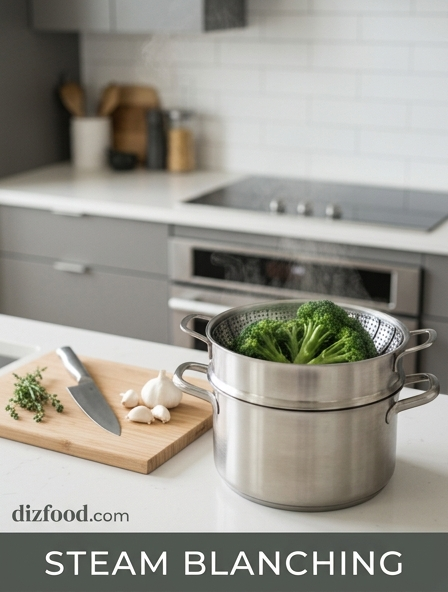
Understanding Steam Blanching Basics
Steam blanching is a foundational culinary technique used primarily to prepare vegetables for long-term preservation. Unlike traditional boiling, this method utilizes the intense heat of water vapor to deactivate the enzymes responsible for spoilage, off-flavors, and textural decay. By suspending food above boiling water rather than submerging it, the cook ensures that the produce is heated thoroughly without the aggressive agitation of a rolling boil. This process is highly efficient, as steam carries significant thermal energy that penetrates the cellular structure of the food rapidly.
The primary goal of steam blanching is to stop biological activity while the vegetable is still at its peak freshness. It serves as a bridge between the raw state and various storage methods such as freezing, drying, or canning. Because steam is hotter than liquid water at standard pressure, the timing must be precise to avoid transitioning from blanching to full cooking. Mastery of this basic concept allows home cooks and professional chefs alike to maintain the integrity of their ingredients for months, ensuring that the final thawed product retains the essence of its harvest state.
Benefits of Color Retention
One of the most immediate and visually striking advantages of steam blanching is its ability to lock in the natural, vibrant hues of fresh produce. Chlorophyll, the pigment that gives green vegetables their characteristic color, is highly sensitive to prolonged heat and chemical changes. Steam blanching provides a quick burst of heat that "sets" the color by removing air bubbles trapped between plant cells. This atmospheric displacement makes the vegetables appear more saturated and bright, a quality that remains stable even after the items are frozen and eventually reheated for service.
In addition to green pigments, steam blanching is effective for preserving the carotenoids and anthocyanins found in carrots, peppers, and purple cabbage. Because the vegetables do not sit in a large volume of water, the water-soluble pigments are less likely to bleed out, which often happens during immersion blanching. This aesthetic preservation is not merely for visual appeal; it serves as a culinary indicator of a successful blanch. A vibrant color usually signifies that the internal enzymes have been neutralized without destroying the physical structure of the vegetable, resulting in a superior presentation on the plate.
Essential Steaming Equipment Needed
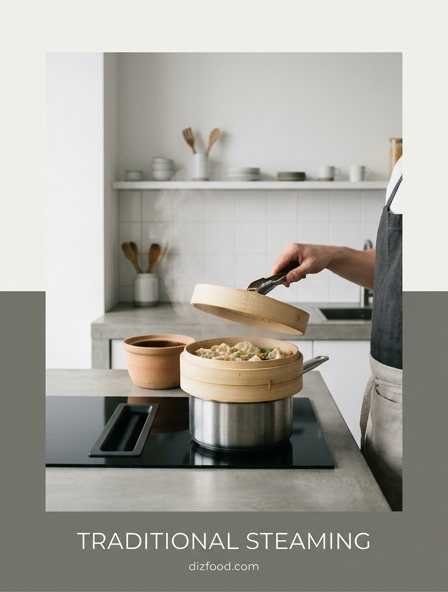
To perform a successful steam blanch, a specific set of tools is required to manage the balance of heat and moisture. While specialized industrial equipment exists, the home kitchen can achieve professional results with a few high-quality basics. The most critical component is a heavy-bottomed pot equipped with a tight-fitting lid to ensure the steam remains trapped and pressurized around the food. Inside this pot, a steamer basket or perforated metal insert is used to keep the vegetables elevated above the water line, preventing leaching and overcooking.
| Equipment Item | Primary Function |
|---|---|
| Steamer Basket | Suspends food above the boiling water reservoir. |
| Digital Timer | Tracks exact intervals to prevent over-processing. |
| Tight-Fitting Lid | Maintains high vapor temperature and pressure. |
| Kitchen Tongs | Safely transfers hot produce to the cooling station. |
Beyond the primary cooking vessel, a large basin for the ice bath and a reliable digital timer are indispensable. Because steam blanching happens so quickly, even a thirty-second deviation can lead to a loss of quality. Having all equipment prepared and within reach is essential for a seamless transition between the heat and the cooling phase.
Best Vegetables for Steaming
While many vegetables can be blanched, certain varieties are particularly well-suited to the steam method due to their density and structural composition. Fibrous vegetables that might become waterlogged or mushy in a pot of boiling water often thrive when exposed to vapor. Brassicas, such as broccoli florets, cauliflower, and Brussels sprouts, are ideal candidates. Their complex surfaces contain many small crevices that can trap water if submerged, but steam penetrates these areas cleanly, ensuring even enzymatic deactivation without a soggy finish.
Root vegetables and dense stalks also respond well to this technique. Sliced carrots, parsnips, and asparagus spears maintain their "snap" better under steam than when boiled. Leafy greens like kale and collard greens can be steam blanched, though they require a very brief exposure time. Conversely, very soft or extremely high-moisture vegetables like zucchini or cucumbers are rarely blanched using steam, as the heat can break down their delicate cell walls too quickly. Selecting the right vegetable ensures that the preservation process enhances, rather than detracts from, the final culinary application.
Preparation and Cutting Techniques
The success of the steam blanching process is largely determined before the heat is ever applied. Preparation begins with thorough cleaning to remove any residual soil, pesticides, or debris. Once cleaned, the most critical step is ensuring that the vegetables are cut into uniform sizes. If the pieces vary significantly in thickness or length, they will blanch at different rates, leading to a mixture of overcooked and under-processed food. Uniformity allows the steam to circulate evenly and ensures that every piece reaches the required internal temperature at the same time.
- Uniform Cubing: Best for root vegetables like carrots and turnips.
- Floret Separation: Cutting broccoli and cauliflower into similar bite-sized pieces.
- Julienne Slicing: Increasing surface area for faster steam penetration.
- Leaf Stripping: Removing tough central ribs from greens for even heat access.
- Surface Drying: Removing excess rinse water to prevent steaming delays.
Additionally, maximizing the surface area of the cut produce allows the steam to act more quickly, which is essential for preserving the crisp texture. For items like green beans, trimming the ends while keeping the pods whole is standard practice. Regardless of the vegetable, the preparation phase sets the stage for a consistent and high-quality result.
Ideal Timing for Crispness
Timing is the most sensitive variable in the steam blanching equation. Because steam is a more concentrated form of heat than boiling water, the duration required to halt enzyme action is typically fifty percent longer than traditional immersion times to account for the indirect heat transfer. However, this remains a very narrow window. For most vegetables, the ideal duration falls between two and five minutes. For instance, tender greens may only need ninety seconds, while dense cauliflower florets might require a full four minutes to reach the necessary core temperature.
The goal is to achieve a "crisp-tender" state-a textural middle ground where the vegetable is no longer raw but still retains its structural snap. If the timing is too short, the enzymes will remain active, causing the food to toughen and lose flavor during storage. If the timing is too long, the vegetable becomes fully cooked and will eventually turn mushy when thawed. Keeping a precise log or chart based on the specific vegetable and its thickness is highly recommended. Always start the timer the moment the lid is secured and the steam begins to build, ensuring a consistent application of heat for every batch.
The Critical Ice Bath Step
Once the steaming interval is complete, the cooking process must be halted immediately to prevent carryover heat from ruining the texture. This is achieved through "shocking," a process where the hot vegetables are plunged into a basin of ice water. Without this step, the internal temperature of the produce will continue to rise, resulting in an overcooked and limp product that will not survive the freezing process well. The ice bath should be prepared before the steaming begins, using a ratio of at least one pound of ice per pound of vegetables to ensure the water temperature stays near freezing.
- Prepare a large bowl with half ice and half cold water.
- Remove vegetables from the steamer immediately when the timer sounds.
- Submerge the produce fully in the ice water.
- Chill for a duration equal to the steaming time.
- Agitate the water gently to ensure even cooling.
A common rule of thumb is to cool the vegetables for the same amount of time they were steamed. For example, three minutes of steam requires three minutes of chilling. Once the vegetables are completely cold to the touch, they should be removed and drained thoroughly to prepare for the final storage phase.
Preserving Vital Nutrients Naturally
Steam blanching is widely considered the superior method for nutrient preservation in the kitchen. Many essential vitamins, particularly Vitamin C and the B-vitamin complex, are water-soluble, meaning they leach out of vegetables and into the cooking water during boiling. By using steam, the contact between the produce and the liquid is minimized, effectively locking these nutrients inside the plant's cell walls. Studies have shown that steaming can preserve up to fifteen percent more antioxidants and phytochemicals compared to immersion methods, making it a favorite for health-conscious individuals.
Beyond vitamins, the natural minerals and salts that contribute to the flavor profile of the vegetable are also better maintained. This means that steam-blanched vegetables often require less seasoning when they are eventually served, as their natural essence remains intact. By avoiding the dilution that occurs in a large pot of boiling water, you are ensuring that the food you preserve is as nutritionally dense as possible. This preservation of biological value is one of the primary reasons steam blanching is the standard recommendation for home preservationists looking to maintain a high-quality, healthy food supply throughout the year.
Avoiding Common Blanching Mistakes
Even with the right equipment, several common errors can compromise the quality of steam-blanched vegetables. One of the most frequent mistakes is overcrowding the steamer basket. When vegetables are layered too deeply, the steam cannot circulate freely, leading to uneven results where the bottom layer is overcooked and the top remains essentially raw. To avoid this, blanch in small batches that allow the vapor to reach every surface area simultaneously. Another error is failing to maintain a vigorous boil in the reservoir; if the water is only simmering, the steam will not be hot enough to deactivate the enzymes efficiently.
Other pitfalls include:
- Inaccurate Timing: Starting the timer before the steam has fully built up.
- Inadequate Cooling: Using a small water bowl that warms up too quickly.
- Poor Drainage: Leaving excess water on the vegetables before freezing.
- Neglecting Dryness: Failing to pat vegetables dry after the ice bath.
Storing and Freezing Methods
The final stage of the steam blanching process is preparing the cooled vegetables for long-term storage. Moisture is the primary enemy of frozen food; if the produce is packed while wet, large ice crystals will form, puncturing cell walls and resulting in a mushy texture upon thawing. Therefore, it is vital to dry the vegetables thoroughly using clean kitchen towels or a salad spinner after they emerge from the ice bath. For the best quality, utilize the "tray-freeze" method by spreading the dried vegetables in a single layer on a baking sheet and freezing them for two hours before bagging.
Once the individual pieces are frozen solid, transfer them to heavy-duty freezer bags or vacuum-sealed containers. Removing as much air as possible is essential to prevent freezer burn and oxidation. Always label each package with the specific vegetable and the date of processing. Most steam-blanched vegetables will maintain their peak flavor and nutritional profile for eight to twelve months when stored at zero degrees Fahrenheit or lower. This methodical approach to storage ensures that the effort put into the blanching process results in a convenient, high-quality ingredient ready for any future meal.

Comments