
Are you tired of soggy greens or unevenly cooked florets? Choosing between a flexible silicone steamer and a classic stainless steel basket can completely transform your daily meal prep. While traditional metal steamers are celebrated for their rapid heat conductivity and high-temperature durability, modern food-grade silicone inserts offer a non-stick, collapsible alternative that is perfect for small kitchens and microwave use. Whether you prioritize the heavy-duty longevity of steel or the scratch-resistant, dishwasher-safe convenience of silicone, understanding how these materials distribute heat is the secret to achieving that vibrant, nutrient-rich crunch in your favorite vegetables.
| Feature | Stainless Steel Steamer | Food-Grade Silicone Steamer |
|---|---|---|
| Heat Transfer | Rapid conduction; ideal for high-heat stovetop boiling. | Insulating properties; provides gentle, even steam. |
| Durability | High; rust-resistant but can warp over decades. | Flexible; won't dent or rust, but prone to staining. |
| Storage | Rigid or "petal" fold; requires dedicated cabinet space. | Collapsible/flexible; fits into shallow drawers easily. |
| Versatility | Stovetop only; can scratch non-stick pans. | Stovetop, microwave, and pressure cooker safe. |
| Maintenance | Dishwasher safe; may require scrubbing for minerals. | Naturally non-stick; food particles slide off easily. |
| Temp Range | Up to 500°F+; handles direct flame contact well. | Typically rated up to 450°F; avoid direct flame. |
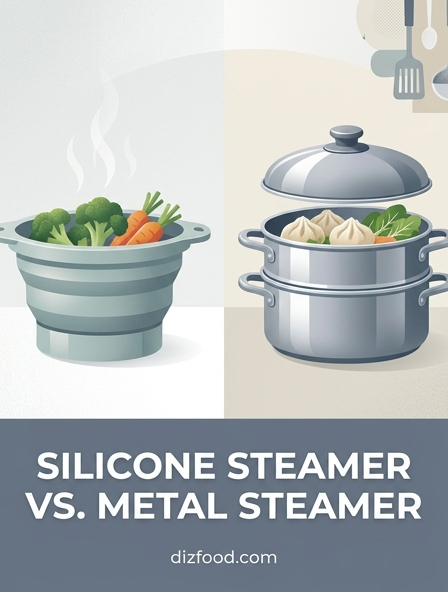
Silicone Steamer vs Metal Steamer Comparison Guide
The choice between a silicone steamer and a metal steamer often depends on your specific cooking habits, the appliances you own, and your storage limitations. Silicone steamers are a relatively modern addition to the culinary world, praised for their flexibility, non-stick properties, and lightweight design. They are frequently used by those who prioritize convenience and microwave compatibility. Because silicone is a flexible polymer, these steamers can often be squished into tight spaces or collapsed entirely, making them a favorite for apartment dwellers or those with crowded kitchen cabinets.
In contrast, metal steamers-typically made from stainless steel-represent the traditional standard in professional and home kitchens alike. They are known for their extreme durability and exceptional heat conductivity. Metal steamers come in various forms, including the classic folding "petal" inserts and heavy-duty tiered pots. While they lack the flexibility of silicone, they offer a level of stability and longevity that many home cooks find essential for long-term use. Understanding the primary differences involves looking at how each material interacts with heat, moisture, and the food itself.
- Silicone: Flexible, microwave-safe, and generally non-stick.
- Metal: Rigid, stovetop-optimized, and virtually indestructible under normal conditions.
- Hybrid Options: Some modern designs combine both materials to capture the benefits of each.
Ultimately, neither tool is objectively "better" in every scenario. The metal steamer excels in high-heat stovetop environments, whereas the silicone steamer offers unmatched versatility for quick microwave meals and easy storage. This guide will explore the nuances of both to help you decide which material aligns with your cooking style.
Durability and Heat Resistance Differences
When evaluating durability, metal steamers are the clear frontrunners. High-quality stainless steel is resistant to warping, melting, and cracking. A metal steamer can easily last several decades, even with daily use on high-heat stovetops. It can withstand the intense heat of a gas flame or an induction burner without any risk of structural failure. However, metal is prone to scratching if cleaned with abrasive steel wool, and cheaper versions may eventually see some rust at the joints or hinges if not dried properly after use.
Silicone steamers are surprisingly durable but have a different set of vulnerabilities. High-grade food silicone is usually rated for temperatures up to 450°F (232°C). While this is more than sufficient for steaming water (which boils at 212°F), it means silicone cannot be used for searing or placed near an open flame where temperatures can spike. The primary weakness of silicone is its susceptibility to sharp objects; a slip of a knife or a sharp fork can easily puncture or tear the material. Over many years, silicone may also lose some of its elasticity or become slightly tacky if exposed to certain oils repeatedly.
| Feature | Metal Steamer | Silicone Steamer |
|---|---|---|
| Heat Limit | Extremely High (800°F+) | Moderate (Up to 450°F) |
| Impact Resistance | May dent if dropped | Bounces, will not dent |
| Longevity | 20+ years | 5 to 10 years |
| Sharp Object Risk | Low (scratches) | High (tears/punctures) |
In terms of physical resilience, metal handles the rigors of a busy kitchen better, while silicone offers a "shatterproof" benefit that metal lacks, as it won't dent or deform if it falls from a high shelf onto a hard floor.
Material Safety Food Grade Silicone vs Stainless Steel
Safety is a primary concern for many when choosing kitchenware that will be exposed to high heat. Stainless steel is widely regarded as one of the safest materials for cooking. It is non-reactive, meaning it will not leach chemicals into your food or alter the flavor of acidic ingredients. For steaming, "18/10" or "304" grade stainless steel is the industry standard, providing excellent corrosion resistance. Because it is a solid metal, there are no coatings to peel off, and no synthetic chemicals like PFOA or BPA are involved in its construction.
Food-grade silicone has also been deemed safe by regulatory bodies like the FDA and LFGB. It is a BPA-free, non-toxic polymer primarily derived from silica (sand). Unlike some plastics, high-quality silicone does not outgas or leach chemicals at steaming temperatures. However, consumers must be cautious of "filler" materials in low-quality silicone products. You can often test for fillers by twisting the silicone; if white streaks appear, it likely contains plastic fillers that may not be as heat-stable or safe as pure silicone. Pure silicone remains a solid color throughout when stretched or twisted.
One minor safety advantage for silicone is its low thermal conductivity compared to metal. While the steam itself is always dangerous, the handles of a silicone steamer are less likely to cause an immediate, severe burn if touched momentarily, as the material does not transfer heat as aggressively as steel. Nevertheless, both materials are considered highly safe for food preparation, provided you purchase from reputable manufacturers that adhere to food-safety standards.
Efficiency and Heat Conductivity in Cooking
Heat conductivity plays a significant role in how quickly your food cooks. Metal is an excellent conductor of heat. When placed over boiling water, a stainless steel steamer basket heats up almost instantly. This contributes to a very consistent internal environment where the metal itself helps radiate heat toward the food. Because the metal is thin and conductive, it doesn't "steal" much energy from the steam, allowing for very rapid cooking times for delicate vegetables like asparagus or seafood like shrimp.
Silicone, on the other hand, is an insulator. It takes longer to reach the ambient temperature of the steam and does not conduct heat to the food through contact as effectively as metal does. In some cases, this can result in slightly longer cooking times-perhaps just a minute or two-compared to a metal insert. However, this insulating property can be an advantage when it comes to heat retention. Once removed from the heat source, a silicone steamer will keep the food warm for a slightly longer period than a thin metal basket, which loses its heat to the surrounding air almost immediately.
- Metal Efficiency: Fast heat-up, shorter cooking cycles, ideal for crisp vegetables.
- Silicone Efficiency: Slower heat-up, better warmth retention, excellent for microwave use.
- Steam Flow: Metal steamers often have more precise, smaller perforations, while silicone designs may have larger, fewer holes, affecting steam distribution.
For those who value speed and "snap" in their steamed vegetables, metal is usually the preferred choice. For those who use a microwave to steam, silicone is the only viable option, as metal cannot be used in a microwave environment due to the risk of arcing and fire.
Ease of Cleaning and Maintenance Tips
Maintenance is where silicone often wins the favor of busy home cooks. Most silicone steamers are naturally non-stick, meaning that even if a piece of broccoli florets or a bit of fish skin gets stuck, it usually slides off with minimal effort. Silicone is also completely dishwasher safe and does not suffer from the water spotting or mineral buildup often seen on metal. Because it is flexible, you can turn it inside out to reach every crevice and corner, ensuring a thorough clean.
Metal steamers, particularly the folding petal variety, can be a nightmare to clean by hand. The numerous small hinges and overlapping plates provide countless hiding spots for food particles and bacteria. While they are technically dishwasher safe, the harsh detergents can sometimes dull the finish of the stainless steel over time. Furthermore, if you live in an area with hard water, metal steamers will quickly develop white calcium deposits that require vinegar soaks to remove. To keep your steamers in top shape, follow these maintenance steps:
- For Metal: Dry immediately after washing to prevent water spots and potential corrosion in the hinges.
- For Silicone: Avoid using abrasive sponges which can create microscopic scratches where odors can trap.
- For Odors: If silicone retains a food smell, bake it in an oven at 350°F for 20 minutes to "off-gas" the trapped scents.
- For Mineral Buildup: Soak metal inserts in a mixture of water and lemon juice to restore the shine.
If you loathe scrubbing small crevices, the molded, one-piece design of most silicone steamers will be a significant upgrade over the complex mechanical design of traditional metal folding baskets.
Storage and Space Saving Kitchen Benefits
Kitchen storage is often at a premium, and this is where the design of the steamer makes the most impact. Traditional metal steamers come in two main types: the folding basket and the tiered pot. The folding basket is relatively compact, but its rigid legs and central post mean it cannot be flattened entirely. The tiered metal pots are even more cumbersome, requiring as much shelf space as a large stockpot. For those with large kitchens and plenty of cabinetry, this is rarely an issue, but for others, it can be a dealbreaker.
Silicone steamers are the champions of space-saving design. Many models are specifically engineered to be collapsible, folding down to a thickness of less than an inch. This allows them to be tucked into a narrow drawer or stacked under other pans without taking up significant vertical space. Even non-collapsible silicone steamers are flexible enough to be squeezed into irregular gaps. Furthermore, because silicone is soft, you don't have to worry about it scratching your expensive non-stick pans if you store it inside another pot.
Another factor to consider is weight. Metal steamers, especially high-walled stainless steel versions, are significantly heavier than their silicone counterparts. This makes silicone much easier to retrieve from high shelves. If your goal is a minimalist kitchen or if you frequently cook in an RV or while camping, the lightweight and squishable nature of silicone provides a clear advantage over the heavy, rigid form of metal cookware.
Impact on Food Flavor and Nutrient Retention
The primary reason for steaming is to preserve the nutrients and natural flavors of food. Both silicone and metal are excellent in this regard, as steaming prevents water-soluble vitamins (like Vitamin C and B vitamins) from leaching out into boiling water. Since neither material requires the use of oil, both are equally effective for low-fat, healthy cooking. However, there are subtle differences in flavor perception that some sensitive palates might notice.
Stainless steel is completely inert and does not absorb flavors or odors. You can steam pungent garlic and ginger one day and delicate pears the next without any flavor carryover. This makes metal the preferred choice for those who cook a wide variety of aromatic foods. Silicone is generally non-porous, but it has a known tendency to absorb fats and oils from food over time. If not cleaned thoroughly with a high-quality degreasing soap, these oils can become rancid and impart a "soapy" or "plastic" taste to future meals.
- Metal: Zero flavor transfer; preserves the "cleanest" taste of the ingredients.
- Silicone: Potential for odor absorption if oils are allowed to sit on the surface.
- Nutrients: Both methods are superior to boiling or frying for vitamin retention.
To ensure the best flavor in silicone, it is recommended to use a dedicated steamer for savory items and perhaps a separate one for neutral or sweet items if you are particularly sensitive to flavor nuances. With metal, a single steamer can handle all types of food without any risk of cross-contamination of tastes.
Versatility for Microwave and Stovetop Use
Versatility is the category where these two materials diverge the most. Metal steamers are strictly limited to stovetop use or use within electric multi-cookers like the Instant Pot. You cannot put a metal steamer in the microwave. This limitation makes metal less ideal for "quick-fix" meals or office environments where a microwave is the only available heat source. However, on the stovetop, metal is the king. It can handle the high-pressure environment of a pressure cooker and the intense steam of a rapidly boiling pot without any risk of losing its shape or stability.
Silicone steamers are far more versatile across different appliances. They are perfectly safe for the microwave, allowing you to steam a side of vegetables in three minutes with just a tablespoon of water. Most silicone steamers are also stovetop safe, meaning you can place them inside a pot of boiling water just like a metal insert. Some are even oven-safe, allowing them to be used for "en papillote" style cooking where the food is encased and baked.
| Appliance | Metal Steamer | Silicone Steamer |
|---|---|---|
| Stovetop Pot | Yes (Optimal) | Yes |
| Microwave | No (Dangerous) | Yes (Optimal) |
| Oven | Yes | Yes (Up to 450°F) |
| Pressure Cooker | Yes | Yes |
If you want one tool that can do everything-from a quick microwave lunch to a traditional stovetop dinner-silicone is the more adaptable material. If you never use a microwave for cooking, the specialized stovetop performance of metal is likely more attractive.
Long Term Value and Environmental Impact
When looking at the long-term value, you have to weigh the initial cost against the lifespan of the product. Metal steamers, particularly basic folding inserts, are very affordable and can last a lifetime. This makes them an incredibly sustainable choice because they rarely need to be replaced. From an environmental perspective, stainless steel is also highly recyclable. If a metal steamer eventually reaches the end of its life, it can be melted down and repurposed into new steel products with relative ease.
Silicone steamers are also reasonably priced, but they are generally considered to have a shorter lifespan than steel. While they won't break if dropped, the potential for tearing or the gradual accumulation of stubborn odors means many people replace them every 5 to 10 years. Environmentally, silicone is a bit more complicated. While it is more eco-friendly than single-use plastics or cheap plastic steamers, it is not as easily recycled as metal. Only specialized facilities can process silicone, so most worn-out silicone steamers end up in landfills, where they are stable and won't leach toxins, but they won't biodegrade either.
In short, if your goal is "buy it once for life," metal is the winner for long-term value and environmental sustainability. If your priority is avoiding plastic and having a durable, reusable alternative that is safer than petroleum-based polymers, silicone is still a very responsible choice compared to the many plastic steaming baskets sold on the market today.
Final Verdict Choosing the Right Steamer for You
Deciding between a silicone and metal steamer comes down to your kitchen lifestyle and your priorities. Both materials are excellent for preparing healthy, nutrient-rich meals, but they serve different user profiles. If you are someone who values speed, modern convenience, and has limited storage space, the silicone steamer is likely your best match. Its ability to transition from the microwave to the stovetop, coupled with its collapsible design and easy-to-clean surface, makes it the ultimate tool for the modern, fast-paced cook.
On the other hand, if you are a traditionalist who values heirloom-quality kitchenware and maximum heat efficiency, the metal steamer is the way to go. Its superior heat conductivity ensures your vegetables are perfectly cooked every time, and its indestructible nature means you will never have to buy another steamer again. Metal is also the better choice for those who are sensitive to flavors and want to ensure their steamer never retains any lingering odors from previous meals.
- Choose Silicone if: You use a microwave often, have small drawers, or want a dishwasher-friendly, non-stick experience.
- Choose Metal if: You only cook on the stovetop, want a tool that lasts 30 years, and prefer the fastest possible heat-up times.
Regardless of which you choose, incorporating more steamed foods into your diet is a fantastic step for your health. Whether it's a flexible green silicone basket or a shining stainless steel insert, both will help you unlock the natural flavors of your favorite ingredients while keeping their vital nutrients intact.

Comments