
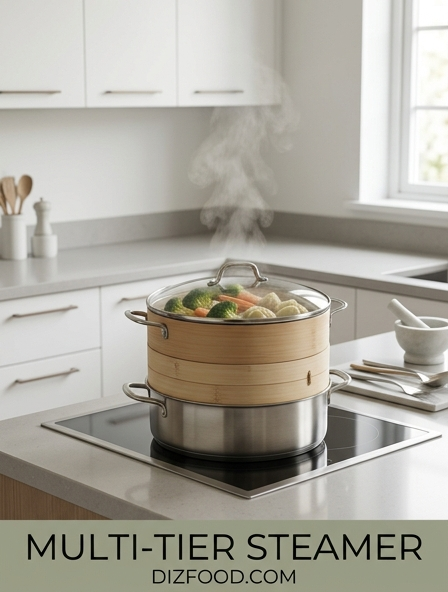
When it comes to mastering the art of steaming, nothing beats the rugged reliability of a classic stainless steel steamer. Engineered specifically for high-heat durability, this kitchen essential stands up to intense boiling temperatures without warping, melting, or leaching unwanted chemicals into your meals. Its heavy-duty construction ensures superior heat distribution and a lifetime of service, making it the ultimate choice for home cooks who prioritize both performance and food safety. Whether you are prepping crisp vegetables or delicate seafood, the polished, rust-resistant nature of metal provides unmatched longevity in the kitchen. To determine which material truly fits your lifestyle, explore our detailed breakdown of a silicone steamer vs. metal steamer.
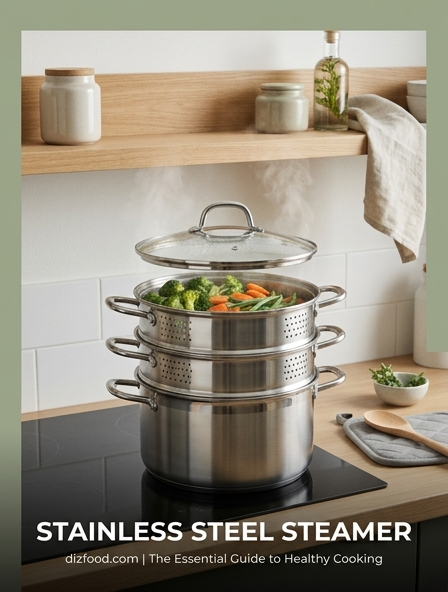
Superior High-Heat Resistance of Stainless Steel
Stainless steel is renowned in the culinary world for its exceptional ability to withstand extreme temperatures without compromising its physical state. In the context of a steamer, this high-heat resistance ensures that the vessel can endure the intense thermal energy required to generate consistent vapor. Unlike other materials that may soften or lose their shape when exposed to direct flames or high-induction settings, stainless steel maintains its rigidity. This characteristic is primarily due to the specific alloy composition, often featuring a blend of iron, chromium, and nickel, which raises the melting point significantly beyond typical home cooking ranges.
- Maintains structural stability at temperatures exceeding 400 degrees Celsius.
- Resists surface scorching even when used over high-output gas burners.
- Ensures even heat distribution across the base of the steamer pot.
- Prevents the release of volatile organic compounds during intense heating cycles.
This thermal resilience makes stainless steel the preferred choice for techniques that require rapid boiling and sustained steaming. It allows the cook to transition from a quick sear to a gentle steam without switching vessels, providing a versatile platform that handles the stress of temperature fluctuations with ease and professional-grade reliability.
Preventing Material Warping Under Extreme Temperatures
One of the primary engineering challenges in kitchenware design is preventing the base and walls of a steamer from warping. Warping occurs when uneven thermal expansion causes the metal to buckle, leading to an unstable cooking surface and poor lid sealing. High-quality stainless steel steamers utilize heavy-gauge construction and multi-ply bases to mitigate this risk. By bonding layers of different metals, such as an aluminum core between steel sheets, manufacturers ensure that heat moves quickly and evenly, preventing the hot spots that trigger deformation.
- Thick encapsulated bases provide a thermal buffer against direct heat sources.
- Reinforced rims prevent the circular shape from becoming elliptical over time.
- Impact-bonded technology secures the layers to prevent air pockets and delamination.
- High-tensile strength allows the metal to expand and contract uniformly.
When a steamer remains perfectly flat, it ensures maximum contact with the heating element, whether it be induction, electric, or gas. This precision fit also ensures that the steam baskets stack securely, preventing steam leakage and maintaining the pressurized environment necessary for efficient cooking. This structural integrity is a hallmark of premium stainless steel engineering.
Comparing Stainless Steel vs Bamboo Steamer Durability
While bamboo steamers offer a traditional aesthetic and slight moisture absorption, they lack the long-term durability and heat resilience of stainless steel. Bamboo is an organic material susceptible to scorching, splintering, and mold if not dried perfectly. In contrast, stainless steel is non-porous and impervious to the biological degradation that affects wood. The following table highlights the key differences in durability and maintenance between these two popular steaming materials.
| Feature | Stainless Steel Steamer | Bamboo Steamer |
|---|---|---|
| Lifespan | Decades with proper care | 1 to 3 years depending on use |
| Heat Limit | Extremely high; induction safe | Low; prone to charring |
| Sanitation | Dishwasher safe; non-porous | Hand wash only; porous |
| Storage | Resistant to humidity | Prone to mold in damp areas |
The choice between these materials often boils down to a preference for tradition versus performance. Stainless steel provides a modern solution that withstands the rigors of a busy kitchen, offering a level of hygiene and structural permanence that bamboo simply cannot match over years of heavy use.
The Non-Reactive Nature of Heated Steel Surfaces
Cooking at high temperatures can often cause chemical reactions between the food and the cookware surface. Stainless steel is prized for being a non-reactive metal, meaning it does not leach metallic flavors or harmful chemicals into the food, even when exposed to acidic ingredients or intense steam. This is particularly important when steaming delicate proteins or vegetables, where the purity of flavor is paramount. The passive chromium oxide layer on the surface of the steel acts as a shield, preventing the underlying iron from interacting with the environment.
- Preserves the natural color and vitamins of steamed vegetables.
- Prevents the "metallic tang" associated with low-quality aluminum or carbon steel.
- Safe for steaming with vinegar-based marinades or citrus infusions.
- Ensures that the aroma of the food remains untainted by the vessel.
This neutrality makes stainless steel the safest and most reliable medium for health-conscious cooks. Whether you are preparing a simple fish fillet or a complex dim sum spread, the non-reactive nature of the steel ensures that the final result tastes exactly as intended, without any unwanted chemical interference from the heat source.
Engineering for Professional Grade Thermal Stability
Professional kitchens demand equipment that can run for eighteen hours a day without failure. Engineering for thermal stability in stainless steel steamers involves optimizing the thickness of the metal and the precision of the joints. Professional-grade steamers often feature riveted handles and laser-welded seams that can withstand the constant expansion and contraction of the metal. This thermal stability ensures that the steamer does not rattle or lose its seal during prolonged periods of high-heat operation.
- Precision-engineered lids create a heavy seal to trap high-pressure steam.
- Optimized perforation patterns in the baskets ensure even vapor flow.
- Advanced alloy grades like 304 or 316 provide superior thermal endurance.
- Aerodynamic shapes minimize heat loss from the sides of the vessel.
By focusing on these engineering details, manufacturers create tools that provide consistent results every time. Thermal stability isn't just about surviving the heat; it's about maintaining a steady, predictable environment where the temperature remains constant from the bottom basket to the top. This reliability is why stainless steel remains the industry standard for commercial steaming applications across the globe.
Corrosion Resistance in Constant Steam Environments
Steaming creates an incredibly harsh environment for metal, characterized by constant moisture, high heat, and oxygen exposure. This combination is a catalyst for rust and corrosion in inferior materials. Stainless steel overcomes this through its high chromium content, which forms an invisible, self-healing protective layer. Even if the surface is scratched, the chromium reacts with oxygen to reform the barrier, ensuring the steamer remains rust-free throughout its life. This is vital for maintaining food safety and the aesthetic appeal of the kitchenware.
- Resists pitting corrosion from salt often added to the steaming water.
- Prevents rust spots from forming in the hard-to-reach crevices of the basket.
- Eliminates the need for seasoning or protective oil coatings.
- Withstands the harsh chemicals found in many modern dishwashing detergents.
In a constant steam environment, the ability to resist oxidation is the difference between a tool that lasts a lifetime and one that ends up in a landfill. Stainless steel's innate resistance to the elements makes it the most hygienic and durable choice for any water-based cooking method, providing peace of mind for the home chef.
Optimal Heat Retention for Consistent Cooking Results
Heat retention is the ability of a material to hold onto thermal energy and release it steadily. While stainless steel is not the fastest conductor of heat, its mass allows it to act as a thermal reservoir once it reaches the desired temperature. In a steamer, this means that even if the heat source fluctuates or the lid is briefly lifted, the residual heat within the metal helps maintain the steam production. This leads to more consistent cooking times and prevents the "temperature dips" that can result in soggy or unevenly cooked food.
- Keeps water boiling steadily with less energy input once heated.
- Reduces the recovery time after adding cold food to the steaming tiers.
- Maintains food warmth for longer periods after the heat is turned off.
- Provides a stable microclimate inside the steamer for delicate doughs.
This efficiency is beneficial for both the quality of the food and the utility bills of the household. By retaining heat effectively, stainless steel steamers allow for a more controlled and forgiving cooking process, ensuring that every dumpling or vegetable garnish is steamed to perfection with minimal effort and maximum consistency.
Structural Integrity During Prolonged High-Heat Steaming
Prolonged steaming sessions, such as those required for certain stews, puddings, or large batches of tamales, put significant mechanical stress on cookware. The structural integrity of stainless steel is superior because it does not become brittle or soft under extended thermal exposure. The crystalline structure of the steel remains tight, ensuring that the handles remain securely attached and the base stays flat even after hours of use. This makes it the ideal material for slow-steaming techniques that require a steady vapor for several hours.
- Sturdy handle attachments prevent accidents when lifting heavy, hot pots.
- Uniform wall thickness prevents localized thinning or hot-spot failures.
- The high density of the metal provides a stable center of gravity on the stove.
- Resists the "pinging" sounds associated with lower-quality metals expanding.
When choosing a steamer for long-duration tasks, the physical strength of the material is a safety concern as much as a performance one. Stainless steel provides the confidence that the vessel will perform just as well in the fourth hour of steaming as it did in the first minute, maintaining its form and function under pressure.
Safe High-Temperature Cooking Without Chemical Leaching
Health and safety are paramount when selecting kitchenware, especially for high-temperature applications. Many non-stick coatings and plastics can release harmful substances like PFOA, PTFE, or BPA when they reach high temperatures. Stainless steel is a solid, elemental material that does not require these synthetic coatings. It offers a naturally slick surface when polished, and because it is an alloy of stable metals, it does not off-gas or leach chemicals into the steam. This makes it the gold standard for preparing baby food and health-focused meals.
- 100% free from hormone-disrupting chemicals found in many plastics.
- No risk of coating flakes peeling off and entering the food supply.
- Inert surface does not trap bacteria or food particles from previous meals.
- Safe for use at temperatures that would melt or degrade silicone components.
By opting for stainless steel, you eliminate the guesswork associated with "heat-safe" plastics. The simplicity of the material is its greatest asset, providing a clean, pure, and safe environment for steaming everything from simple grains to complex seafood dishes without any chemical concerns.
Long-Term Investment in Durable Kitchen Metalware
Purchasing a high-quality stainless steel steamer should be viewed as a long-term investment rather than a recurring expense. While the initial cost may be higher than aluminum or bamboo alternatives, the lifecycle cost is significantly lower. A well-maintained stainless steel steamer can easily last for thirty years or more, often being passed down through generations. This longevity is bolstered by the fact that the material is 100% recyclable, making it an environmentally conscious choice for the modern kitchen.
| Investment Factor | Impact of Stainless Steel |
|---|---|
| Replacement Frequency | Virtually zero; lasts a lifetime |
| Maintenance Cost | Low; standard cleaning only |
| Resale/Heirloom Value | High; maintains appearance and function |
| Environmental Impact | Sustainable; fully recyclable metal |
The durability of stainless steel means less waste in landfills and fewer resources spent on manufacturing replacements. For the serious cook, the reliability, safety, and performance of a stainless steel steamer provide a value proposition that far outweighs the entry price, cementing its place as a foundational tool in any high-performance kitchen.

Comments