
Choosing between a traditional clay steamer and its modern ceramic counterpart is a journey into the heart of culinary texture. Traditional unglazed clay is beloved for its natural porosity, which allows the vessel to "breathe" by absorbing excess moisture and preventing soggy results-the secret behind perfectly fluffy buns and grains. On the other hand, modern ceramic steamers utilize high-fired, vitrified materials that offer incredible thermal shock resistance and a non-reactive surface, making them a durable, low-maintenance alternative for the contemporary kitchen. While clay provides an unmatched, earthy micro-environment for delicate steam circulation, modern ceramics win on versatility and heat consistency, ensuring you achieve a professional-grade steam texture with far less effort.
| Feature | Traditional Clay Steamer | Modern Ceramic Steamer |
|---|---|---|
| Material Base | Porous, unglazed earthenware. | Vitrified, high-fired stoneware. |
| Moisture Control | Absorbs excess steam; prevents dripping. | Lower absorption; relies on lid design. |
| Thermal Shock | Low (Prone to cracking with temp shifts). | High (Safe from fridge to stovetop). |
| Maintenance | Seasoning needed; hand-wash only. | Non-porous; dishwasher safe. |
| Heat Retention | Slow, steady release (high inertia). | Rapid heating; uniform distribution. |
| Best For | Authentic dim sum and artisanal grains. | Versatile everyday cooking and stews. |
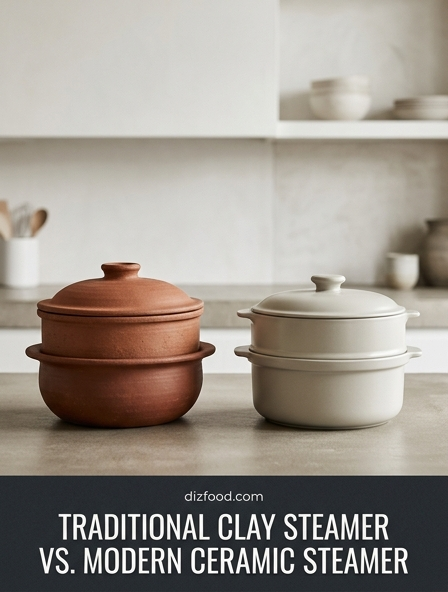
Heritage Origins of Traditional Clay Steamers
The legacy of traditional clay steamers is deeply rooted in ancient culinary practices, particularly within the diverse regions of East and Southeast Asia. For millennia, artisans have utilized local earth to craft vessels that harmonize with the element of fire. One of the most iconic examples is the Yunnan Zisha or "purple sand" steamer from China, celebrated for its unique mineral composition and historical significance. These vessels were not merely tools but cultural artifacts, often passed down through generations. The design typically features a central chimney or a perforated base, allowing steam to circulate evenly while the clay itself regulates temperature fluctuations.
In many indigenous cultures, the transition from open-fire cooking to enclosed steaming marked a significant evolution in nutrition and flavor preservation. Traditional clay steamers reflect a philosophy of patience; they are designed for slow, rhythmic cooking that respects the integrity of the ingredients. The craftsmanship involved in hand-throwing these pots ensures that no two pieces are identical, with each steamer bearing the marks of its regional origin and the specific type of clay harvested from local riverbeds or hillsides. This heritage continues to influence modern kitchen aesthetics, as the rustic appeal and historical weight of clay provide a tangible connection to the ancestral methods of food preparation that prioritize communal sharing and holistic wellness.
Material Composition of Modern Ceramic Steamers
Modern ceramic steamers represent a technological evolution of the traditional clay pot, engineered to meet the demands of contemporary high-performance kitchens. Unlike raw clay, which is often porous and minimally processed, modern ceramics are composed of a refined blend of clay, minerals, and specialized additives such as spodumene. This particular mineral is integrated to significantly enhance thermal shock resistance, allowing the vessel to withstand rapid temperature changes without fracturing. The manufacturing process involves high-fire kilning, often exceeding temperatures of 2,000 degrees Fahrenheit, which results in a much denser and more vitrified structure than traditional earthenware.
The surfaces of these steamers are frequently finished with advanced glazes that are non-reactive and glass-like in consistency. These glazes serve several purposes:
- Liquid Resistance: They prevent the absorption of fats, acids, and water, ensuring the vessel remains hygienic.
- Aesthetic Variety: Modern firing techniques allow for a spectrum of colors and finishes, from matte minimalism to high-gloss vibrant hues.
- Structural Integrity: The vitrification process fuses the materials into a singular, rock-hard body that is less prone to the flaking often associated with lower-fired traditional clay.
This sophisticated material composition bridges the gap between the ancient art of pottery and the precision of modern industrial design, offering a product that feels organic yet performs with the reliability of modern metal cookware.
Heat Retention and Thermal Efficiency Comparison
The performance of a steamer is largely defined by its ability to manage and distribute heat. While both clay and ceramic are superior to metal in terms of heat retention, they interact with thermal energy in distinct ways. Traditional clay is a slow conductor; it takes longer to reach the desired temperature but possesses an extraordinary ability to radiate "far-infrared" heat. This type of heat penetrates food deeply and evenly, ensuring that the interior of a protein or vegetable is cooked at the same rate as the exterior. Modern ceramics, while also retaining heat well, are often engineered for faster thermal transfer to accommodate the pace of modern lifestyles.
| Feature | Traditional Clay | Modern Ceramic |
|---|---|---|
| Heating Speed | Slow and gradual | Moderate to fast |
| Heat Distribution | Highly even, infrared focus | Even, convection-assisted |
| Cool-down Rate | Very slow (keeps food warm) | Slow to moderate |
| Thermal Shock Resistance | Low (requires gradual heating) | High (engineered for stability) |
Because traditional clay is more porous, it also manages moisture differently during the heating process. The clay absorbs a small amount of water which, when heated, turns into steam within the walls of the pot itself. This creates a humid cooking environment that is difficult to replicate with the more sealed, non-porous surfaces of modern glazed ceramics, which rely more on the external water source to generate steam volume.
Flavor Enhancement and Porosity in Clay Cooking
One of the most debated aspects of kitchenware is the "breathability" of the material. Traditional unglazed or partially glazed clay steamers are prized for their porosity. This physical characteristic allows a microscopic exchange of air and moisture, which many chefs believe imparts a "wok hei" or "breath of the pot" to the food. Over time, a well-used clay steamer develops a seasoned patina. Much like a cast-iron skillet, the pores of the clay absorb the essences of the spices and broths used within it, subtly enhancing the flavor profile of future dishes. This is particularly noticeable in delicate fish or vegetable preparations where the earthy mineral notes of the clay can provide a background complexity.
Modern ceramic steamers, by contrast, are typically non-porous due to their high-gloss glazes. This makes them "flavor neutral." While they do not contribute any earthy notes to the dish, they also do not retain odors from previous meals. For a cook who prepares a pungent curry one day and a delicate vanilla custard the next, the modern ceramic steamer is often the more practical choice. However, for the purist seeking the specific "umami" associated with clay-pot cooking, the interaction between the food and the raw earth remains an irreplaceable component of the culinary experience. The clay's ability to alkaline the water used for steaming also contributes to a smoother, sweeter taste in the finished product.
Durability and Crack Resistance of Ceramic Surfaces
Durability is perhaps the most significant divergence point between these two categories. Traditional clay is notoriously delicate. It is susceptible to "thermal shock," which occurs when a cold pot is placed on a high flame or a hot pot is rinsed with cold water. These rapid temperature shifts cause the clay to expand or contract unevenly, leading to hair-line fractures or total structural failure. Consequently, traditional clay users must follow strict protocols, such as "seasoning" the pot with rice water to fill pores and always increasing heat gradually. Even with perfect care, traditional clay is viewed as a semi-consumable item that will eventually wear out over years of heavy use.
Modern ceramic steamers are engineered to solve these vulnerabilities. By utilizing high-tech mineral blends like cordierite or spodumene, manufacturers create vessels that can move directly from a refrigerator to a preheated oven or stovetop. The glaze on modern ceramics also provides a level of scratch resistance that unglazed clay cannot match. While a ceramic pot can still break if dropped onto a hard floor, it is much more resilient against the daily rigors of a busy kitchen, including metal utensil use and aggressive scrubbing. This makes ceramic the preferred choice for those who value longevity and "worry-free" cooking over the specialized care required by heritage earthenware.
Cleaning and Maintenance for Long Term Use
The maintenance rituals for traditional clay and modern ceramic could not be more different. Caring for a traditional clay steamer is an exercise in mindfulness. Because the material is porous, it should never be cleaned with synthetic detergents or soaps, as the clay will absorb the chemicals and release them into the next meal. Instead, it must be cleaned with hot water and perhaps a stiff brush or a paste made of baking soda. After washing, it must be dried completely in a well-ventilated area to prevent mold from growing within the pores. These requirements make it a labor-intensive choice for the modern household.
Modern ceramic steamers offer a much simpler maintenance profile. Because of their non-porous, vitrified surfaces, they are generally compatible with standard dish soaps and, in many cases, are even dishwasher safe. To maintain a modern ceramic steamer for the long term, consider the following steps:
- Avoid Abrasives: Use soft sponges to preserve the luster of the glaze.
- Soaking: If food is burnt onto the surface, a simple soak in warm soapy water usually suffices.
- Storage: While more durable, they should still be stored with a felt protector or paper towel between stacked pieces to avoid rim chipping.
The ease of cleaning modern ceramic is a major selling point for those who cook daily, whereas the maintenance of clay is often seen as a labor of love for the dedicated hobbyist.
Health Safety and Non Toxic Cooking Benefits
In an era of increasing awareness regarding "forever chemicals" and heavy metal leaching, both clay and ceramic are often viewed as safer alternatives to non-stick pans. Traditional clay, when sourced from reputable artisans, is one of the most inert cooking surfaces available. It is free from PFOA, PFAS, and synthetic coatings. Because it is a natural material, it does not off-gas toxic fumes even if overheated. However, buyers must be cautious with cheap, unregulated clay imports, as some traditional glazes used in the past contained lead or cadmium to achieve specific colors.
Modern ceramic steamers are subject to rigorous safety standards and are generally marketed as being "lead-free" and "cadmium-free." The high-firing process ensures that the minerals are locked into a stable matrix that will not leach into food, even when exposed to acidic ingredients like tomatoes or citrus. Furthermore, the absence of plastic components or chemical non-stick layers means that these steamers provide a "clean" cooking environment. Both options offer the health benefit of steaming itself-a process that preserves water-soluble vitamins (like Vitamin C and B-complex) and minerals that are often lost during boiling. By choosing either clay or ceramic, the cook ensures that the vessel contributes to the nutritional density of the meal rather than detracting from its purity through chemical contamination.
Modern Kitchen Compatibility and Induction Use
One of the primary hurdles for traditional clay steamers is their lack of compatibility with modern stove technologies. Traditional clay is strictly intended for gas flames, charcoal, or specialized electric coils. Because clay is non-magnetic and a poor conductor of electricity, it cannot be used on induction cooktops, which rely on electromagnetic fields to heat the cookware. For many urban dwellers with induction-only kitchens, this makes traditional clay a decorative item rather than a functional tool unless they utilize a separate induction interface disk-which often compromises heating efficiency.
Modern ceramic steamers have begun to address this limitation. While standard ceramic is also non-magnetic, many manufacturers now offer "induction-ready" ceramic lines. These vessels feature a spray-coated or bonded metallic plate at the base, allowing them to trigger the induction sensor. Additionally, modern ceramics are often designed with flat, precision-ground bases to ensure maximum contact with smooth-top electric glass stoves. Traditional clay pots often have rounded or slightly uneven bottoms, which can lead to inefficient heating or even scratching on glass surfaces. If your kitchen features a modern glass or induction cooktop, a specially engineered modern ceramic steamer is almost always the more functional and safer choice to ensure even cooking and prevent appliance damage.
Eco Friendly Sourcing and Sustainable Manufacturing
Sustainability in kitchenware involves looking at the entire lifecycle of a product, from the extraction of raw materials to its eventual disposal. Traditional clay steamers are champions of the circular economy. They are made from abundant, natural earth and, should they break, they are fully biodegradable. In many cultures, broken clay pots are crushed and tilled back into the soil or used as drainage in garden pots. The carbon footprint of a small-scale, locally produced clay pot is relatively low, although the traditional wood-fired kilns do release localized emissions.
Modern ceramic manufacturing is more energy-intensive due to the extremely high temperatures required for vitrification and the global shipping of specialized minerals like spodumene. However, modern factories often utilize natural gas kilns and heat-recovery systems to improve efficiency. The sustainability argument for modern ceramic lies in its longevity; because it is less likely to crack than traditional clay, a single ceramic steamer might replace three or four clay ones over a lifetime, reducing the total volume of manufacturing and waste. When evaluating eco-friendliness, consumers should consider:
- Sourcing: Is the clay harvested responsibly without destroying local ecosystems?
- Manufacturing: Does the factory utilize renewable energy or waste-water recycling?
- Longevity: Will this product last for decades, or will it need to be replaced in a year?
Ultimately, both materials are far more sustainable than disposable or short-lived plastic and thin-gauge metal alternatives.
Choosing the Best Steamer for Your Culinary Style
The decision between a traditional clay steamer and a modern ceramic version ultimately depends on your culinary priorities and your kitchen environment. If you view cooking as a slow, meditative process and you are dedicated to the nuances of flavor development, the traditional clay steamer is an unrivaled choice. It requires a "getting to know you" phase, where you learn its heat-up patterns and care for it like a living object. The reward is a unique taste profile and a beautiful, rustic aesthetic that serves as a centerpiece for the dining table.
Conversely, if you lead a busy lifestyle and need a versatile, durable, and easy-to-clean vessel, the modern ceramic steamer is the superior option. It offers the health benefits of ceramic cooking without the fragility of ancient earthenware. It is the better choice for those who want a "set it and forget it" experience and for those who use induction or glass-top stoves. For the adventurous home cook, perhaps the best solution is to own both: a modern ceramic steamer for quick weekday fish and vegetables, and a traditional clay steamer for slow-cooked weekend feasts where the heritage of the vessel becomes part of the storytelling of the meal. Regardless of your choice, moving away from metal and plastic toward earth-based steaming is a significant step toward a more flavorful and health-conscious kitchen.

Comments