
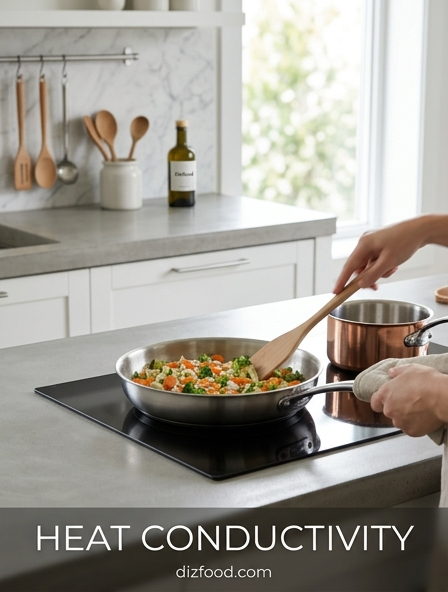
Understanding Thermal Conductivity in Steam Cooking
Thermal conductivity is a fundamental physical property that dictates how efficiently heat energy moves through a medium. In the specific context of steam cooking, this process is driven by the movement of water vapor molecules carrying latent heat. When water transitions from a liquid to a gas, it absorbs a significant amount of energy, which is then released upon contact with the cooler surface of the food. This phase change provides a highly efficient mechanism for heat transfer compared to dry air convection.
The rate of heat transfer is governed by the temperature gradient between the steam and the culinary ingredients. Because steam maintains a constant temperature of 100°C at standard atmospheric pressure, it provides a stable environment for thermal diffusion. The following factors influence this exchange:
- Molecular velocity of the vapor phase.
- Condensation rates on the food surface.
- The thermal resistance of the boundary layer.
Effective steaming relies on the rapid conduction of this released latent heat from the surface into the core of the food. Unlike roasting, where radiation plays a major role, steaming is almost entirely a game of conduction and convection, making the thermal properties of the surrounding atmosphere critical to the final result.
Material Selection and Heat Transfer Rates
The choice of cookware material serves as the primary gateway for heat entering the cooking system. Different materials possess varying coefficients of thermal conductivity, measured in Watts per meter-Kelvin (W/m·K). In a kitchen environment, selecting a material with high conductivity ensures that the heat from the burner is distributed evenly across the vessel's base, preventing localized hot spots that can scorch delicate sauces or unevenly steam vegetables.
| Material | Conductivity (W/m·K) | Thermal Response |
|---|---|---|
| Copper | 385-401 | Near-instantaneous |
| Aluminum | 205-235 | Very Rapid |
| Cast Iron | 50-80 | Slow but steady |
| Stainless Steel | 14-16 | Poor (requires core) |
While copper and aluminum are superior conductors, they are often clad with stainless steel to prevent chemical reactivity with acidic foods. This layering technique utilizes the high conductivity of the inner core to facilitate rapid heat transfer while maintaining a durable, non-reactive exterior. Understanding these values allows chefs to predict how quickly a vessel will reach equilibrium with its heat source.
Bamboo Versus Stainless Steel Thermal Dynamics
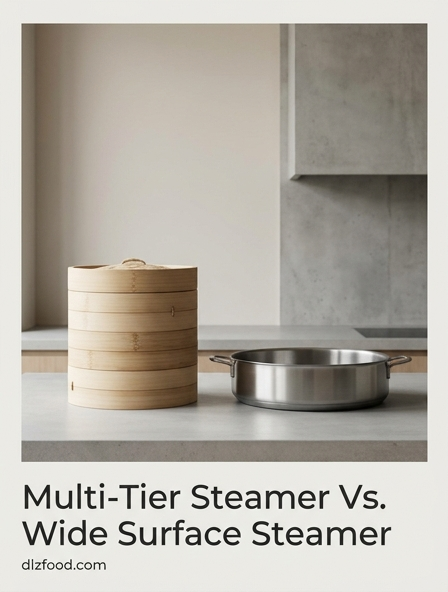
The thermal behavior of bamboo steamers differs fundamentally from that of stainless steel counterparts. Bamboo is a natural insulator with low thermal conductivity. This property allows the material to absorb excess moisture from the steam, preventing condensation from dripping back onto the food. Because bamboo does not conduct heat rapidly to the exterior, the internal environment remains humid and stable, though it takes longer to reach peak temperature compared to metal vessels.
Conversely, stainless steel is a much more efficient conductor of heat. When used in a steamer, the metal walls quickly reach the temperature of the internal vapor. This rapid conduction can lead to heavy condensation on the lid, as the cooler exterior air temperature causes the metal to pull heat away from the internal steam. To manage these dynamics, one must consider:
- The insulating properties of the vessel walls.
- The rate of heat loss to the surrounding kitchen environment.
- The management of "rain" caused by surface condensation.
Ultimately, bamboo favors a dry-steam environment through absorption, while stainless steel facilitates a high-energy, high-moisture environment through rapid thermal cycling.
The Role of Steam Saturation in Heat Exchange
Steam saturation refers to the density of water vapor molecules within a given volume of air. In heat conductivity, the presence of "saturated steam"-vapor that is at its boiling point and in equilibrium with liquid water-is essential for maximum energy transfer. When steam is saturated, it carries the maximum possible latent heat. If the steam becomes "superheated" or mixed with too much air, its ability to conduct heat to the food surface decreases because air acts as an insulator.
Effective heat exchange occurs when the steam displaces all oxygen within the cooking vessel. Oxygen has a much lower thermal conductivity than water vapor; therefore, a pocket of trapped air can create a cold zone, leading to uneven cooking. This is why properly sealed lids are vital in kitchen applications. By maintaining high vapor saturation, the chef ensures that every square millimeter of the food's surface is bombarded with high-energy molecules, facilitating a rapid and uniform rise in internal temperature through the process of conductive penetration.
How Vessel Wall Thickness Affects Cooking Speed
The thickness of a cooking vessel, often referred to as its gauge, significantly impacts its thermal mass and heat retention capabilities. In the context of heat conductivity, a thicker wall acts as a thermal reservoir. While it may take longer to preheat, it provides a much more stable heat flow, resisting fluctuations when cold food is introduced to the system. This is particularly important for techniques requiring precise temperature control, such as simmering or poaching.
A thin-walled vessel, such as a carbon steel wok, has low thermal mass. This allows for rapid changes in temperature, which is ideal for stir-frying but less effective for maintaining a steady steam environment. When the walls are thin, heat is conducted through the material and lost to the air almost as quickly as it is supplied by the flame. For steaming, a medium-to-heavy gauge vessel is often preferred because it minimizes the "recovery time" after the lid is opened. The thicker the material, the more energy it stores, ensuring that the conductive path from the heat source to the water remains uninterrupted and consistent throughout the cooking cycle.
Thermal Resistance of Dense Versus Porous Foods
Heat conductivity within the food itself is a major variable in cooking times. Dense foods, such as root vegetables or solid proteins, have high molecular density and fewer air pockets, which generally allows for more direct conduction. However, because they have more mass per unit of volume, they require more total energy to increase their temperature. Porous foods, such as bread or leafy greens, contain air or water-filled cavities that significantly alter their thermal resistance.
Air is a poor conductor of heat, meaning that highly porous foods can actually act as insulators, slowing the movement of heat toward the center. However, if those pores are filled with water or steam, the conductivity increases dramatically. Consider these factors:
- Fiber density: Higher fiber can impede rapid heat flow.
- Water content: High moisture improves internal conductivity.
- Structural gaps: Air pockets increase thermal resistance.
When steaming, the external heat must overcome the internal resistance of the food. A dense potato conducts heat differently than a porous piece of broccoli, requiring the chef to adjust surface area exposure to ensure the thermal gradient reaches the core at the desired rate.
Impact of Surface Area on Heat Distribution
The relationship between surface area and volume is a primary determinant of heat conductivity in the kitchen. Heat can only enter food through its exterior surface; therefore, increasing the surface area relative to the total volume accelerates the rate at which the core temperature rises. This is the scientific principle behind dicing vegetables or scoring the skin of a fish. By creating more "entry points" for thermal energy, the conductive path to the center is shortened.
In a steaming environment, how food is arranged on the rack is just as important as how it is cut. If ingredients are crowded or overlapping, the effective surface area is reduced, and the steam cannot circulate to conduct heat evenly. This creates a reliance on food-to-food conduction, which is much slower and less efficient than steam-to-food conduction. Utilizing a single layer of ingredients ensures that each piece is exposed to the maximum amount of vapor, allowing the thermal energy to penetrate the structure uniformly. Proper spacing effectively lowers the total thermal resistance of the batch, leading to faster and more consistent results.
Maintaining Consistent Temperature for Texture Quality
Consistency in heat conductivity is the key to achieving professional-grade textures. Whether it is the snap of a green bean or the silkiness of a custard, the rate at which heat is conducted determines the chemical reactions within the food. For example, proteins begin to denature at specific temperatures; if heat is conducted too rapidly, the outer layers may over-coagulate and become tough before the center is cooked. Conversely, if conductivity is too low, the food may lose its structural integrity before reaching the target temperature.
To maintain this balance, the kitchen environment must control the heat flux. Using heavy-bottomed pans or double boilers helps modulate the conductivity, ensuring that the energy transfer is indirect and steady. This "thermal buffering" prevents the temperature spikes that lead to syneresis in eggs or the breakdown of cell walls in delicate fruits. By understanding the conductivity of the medium-be it water, oil, or steam-a cook can manipulate the timing of heat delivery to ensure that the texture remains uniform throughout the entire cross-section of the dish.
Heat Diffusion and Moisture Retention Balance
Cooking is essentially a process of heat diffusion coupled with moisture management. As heat is conducted into the food, it causes the internal moisture to move. If the external heat is too intense and the conductivity of the cooking vessel is too high, the surface of the food may dehydrate before the interior is heated. This is particularly relevant in dry-heat methods like roasting. However, in steaming, the high humidity environment provides a "vapor seal" that slows down the evaporation of internal juices.
The balance is maintained by the interplay between thermal conductivity and the evaporation rate. Water is an excellent conductor of heat, so keeping food moist actually helps the heat move faster through the tissue. If the surface dries out, a layer of dehydrated cells forms, which has lower conductivity and acts as an insulating barrier. By using steam, the chef ensures that the surface remains saturated, keeping the "thermal bridge" active. This allows for rapid heat diffusion into the core while simultaneously preventing the loss of the essential fluids that contribute to the flavor and succulent mouthfeel of the finished product.
Optimizing Energy Efficiency Through Material Conductivity
Energy efficiency in the kitchen is directly linked to how well a system manages heat conductivity and minimizes waste. Every joule of energy that escapes the vessel into the surrounding air is a loss of efficiency. High-conductivity materials like copper and aluminum are efficient because they transfer energy from the flame to the food with minimal resistance. However, without proper insulation, these materials can also lose heat just as quickly. The most energy-efficient setups often combine a high-conductivity base with low-conductivity, insulating lids or walls.
To optimize energy usage, consider the following strategies:
- Use lids with tight seals to prevent latent heat escape.
- Match the burner size to the vessel diameter to maximize conductive contact.
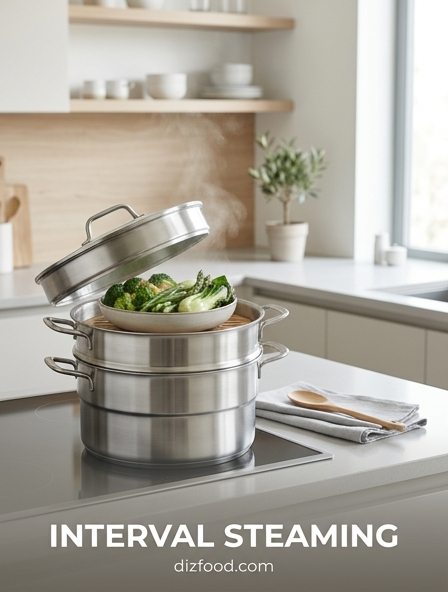
- Select multi-tiered steamers to utilize the same steam source for multiple layers.
By understanding the thermal dynamics of the kitchen, one can reduce the fuel required to reach cooking temperatures. Efficient conduction means less time on the stove, which not only saves energy but also prevents the kitchen from overheating, creating a more controlled and sustainable cooking environment.

Comments