
When it comes to locking in the essential vitamins and minerals in your vegetables, the choice between microwave steaming and conventional stovetop methods often boils down to a balance of speed and precision. While traditional steaming is celebrated for its gentle, even heat, microwave steaming is frequently the unsung hero of nutrient retention because it utilizes significantly shorter cooking cycles and minimal water. Since heat-sensitive nutrients like Vitamin C and folate degrade the longer they are exposed to high temperatures, the rapid efficiency of a microwave can actually leave your greens more nutrient-dense than a longer stay over a boiling pot. Understanding how these two methods handle heat distribution and moisture will help you decide whether you need the culinary control of the stovetop or the lightning-fast, vitamin-preserving power of the microwave.
| Feature | Microwave Steaming | Conventional Steaming |
|---|---|---|
| Cooking Speed | Ultra-fast (2-5 mins); no preheating required. | Slower (10-15 mins); requires water to boil first. |
| Nutrient Retention | Highest; minimal heat exposure preserves Vitamin C. | High; however, longer steam times can degrade folate. |
| Water Usage | Minimal (1-2 tbsp); reduces leaching of minerals. | Moderate (1-2 inches); steam cycle is longer. |
| Texture Control | Prone to "hot spots" or accidental overcooking. | Superior; easy to monitor for perfect "crisp-tender." |
| Energy Efficiency | High; targets food directly via electromagnetic waves. | Lower; wastes energy heating the vessel and air. |
| Best For | Quick weeknight meals and frozen vegetables. | Large batches, delicate seafood, and leafy greens. |
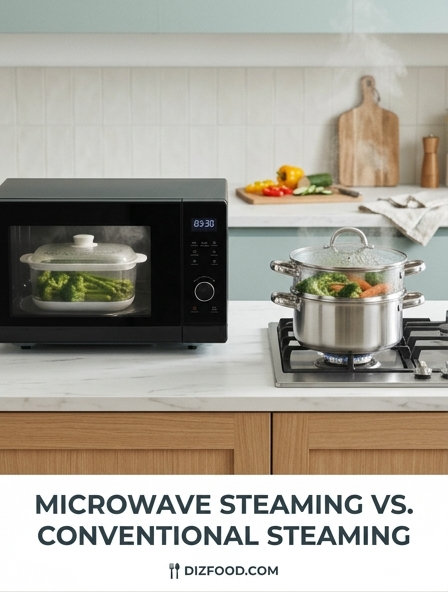
Microwave Steaming vs Conventional Steaming Overview
Steaming is widely regarded as one of the healthiest cooking methods available in the modern kitchen, primarily because it avoids the use of fats and oils while preserving the structural integrity of the food. Within this category, two primary techniques dominate: microwave steaming and conventional stovetop steaming. While both methods utilize the power of water vapor to cook ingredients, the physics behind them differ significantly. Conventional steaming relies on an external heat source, such as a gas or electric burner, to boil water. The resulting steam rises and surrounds the food, transferring heat from the outside in through convection and conduction. This is a time-honored tradition that often involves tiered baskets or specialized inserts.
In contrast, microwave steaming utilizes electromagnetic waves to excite water molecules directly inside the food and within a small added reservoir of water. This process generates heat rapidly and internally, which then turns the surrounding moisture into steam. Because the microwave reaches cooking temperatures almost instantaneously, it significantly reduces the overall time the food spends exposed to heat. However, some culinary purists argue that the intensity of microwave radiation can lead to uneven cooking if the food is not arranged correctly. Understanding the fundamental differences between these two methods allows home cooks to choose the right approach based on their specific needs for speed, flavor, and texture. Both methods have their place in a functional kitchen, offering distinct advantages depending on whether one is preparing a quick side dish or a large, multi-course meal.
Nutrient Retention in Microwave vs Traditional Steaming
One of the most persistent debates in kitchen science involves which steaming method best preserves essential vitamins and minerals. Vegetables are rich in water-soluble nutrients, such as Vitamin C and the B-vitamin complex, which are particularly sensitive to heat and water immersion. In traditional stovetop steaming, the food is suspended above boiling water, preventing the leaching of nutrients that occurs during boiling. However, because conventional steaming usually takes longer to reach the desired tenderness, the prolonged exposure to heat can cause some thermal degradation of sensitive antioxidants and phytochemicals.
Recent nutritional studies have suggested that microwave steaming may actually be superior for nutrient retention in many instances. The primary reason is the speed of the cooking process; by drastically shortening the time the vegetables are exposed to heat, the microwave minimizes the breakdown of temperature-sensitive compounds. Furthermore, microwave steaming requires very little added water-often just a tablespoon or two-which further reduces the risk of nutrient leaching. To maximize health benefits, many experts recommend using a tightly sealed, microwave-safe container to trap the steam effectively. Despite the historical myths suggesting that microwaves "kill" the goodness in food, the reality is that the shorter cooking duration and minimal water usage often result in a higher concentration of vitamins compared to the longer, slower process of stovetop steaming.
- Vitamin C retention is typically higher in microwave-steamed broccoli and spinach.
- Glucosinolates in cruciferous vegetables are better preserved with shorter microwave intervals.
- Folate levels remain more stable when food is not subjected to long periods of steam saturation.
Speed and Efficiency Comparison for Modern Steaming
In the fast-paced environment of a contemporary household, the speed of preparation is often the deciding factor in choosing a cooking method. Microwave steaming is the undisputed champion of efficiency. A standard serving of fresh vegetables, such as sliced carrots or green beans, can often be steamed to perfection in three to five minutes. This includes the time it takes for the microwave to begin generating steam, which happens almost immediately upon activation. There is no need to wait for a large pot of water to reach a rolling boil, a process that can take up to ten minutes on a standard electric stove before the cooking even begins.
Conventional steaming, while slower, offers a different type of efficiency when it comes to volume. If a cook is preparing food for a large family gathering, a multi-tiered bamboo or stainless steel steamer can process a vast quantity of food simultaneously using a single burner. While the "start-to-finish" time is longer for a single serving, the capacity of stovetop methods often outweighs the microwave for bulk prep. However, for the individual or small family, the microwave eliminates the "dead time" of preheating. This makes it an ideal tool for healthy weekday lunches or quick additions to dinner. When factoring in the total energy and time spent standing over a stove, the microwave remains the most streamlined option for those seeking a rapid transition from raw ingredients to a finished plate.
Impact of Steaming Methods on Food Texture
Texture is perhaps the most subjective aspect of the steaming debate, as it directly influences the "mouthfeel" of the final dish. Conventional steaming is often praised for producing a more consistent and delicate texture. Because the steam surrounds the food gently and at a constant temperature of 212°F (100°C), it is difficult to "shock" the food. This results in vegetables that are tender but retain a pleasant snap, and proteins like fish that remain moist and flake easily. The high humidity of a stovetop steamer ensures that the surface of the food does not dry out, which is a common risk with other high-heat methods.
Microwave steaming, if not managed carefully, can sometimes lead to localized overcooking or "toughness." Because microwaves work by vibrating water molecules, areas with higher water content may cook faster than others, leading to hot spots. If the container is not properly sealed, the moisture can escape, leaving the vegetables shriveled or rubbery rather than plump and crisp. However, when using a dedicated microwave steamer with a vented lid, the results can be remarkably similar to stovetop versions. The key difference lies in the margin for error; a few extra seconds in the microwave can drastically change the texture of a delicate asparagus spear, whereas the stovetop method is generally more forgiving. For those who prioritize a precise, uniform texture across a large batch of food, the traditional steamer remains the superior culinary tool.
Equipment Needed for Microwave and Stovetop Steaming
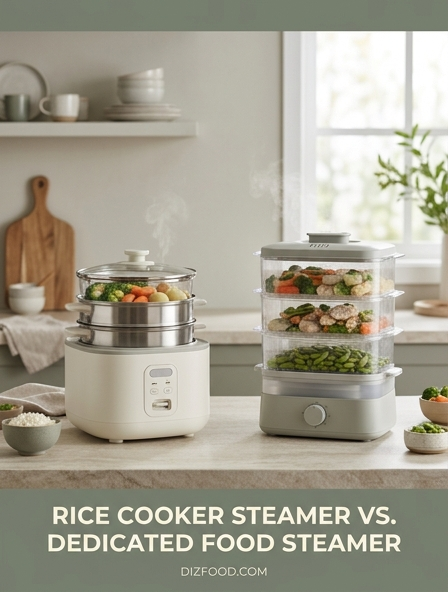
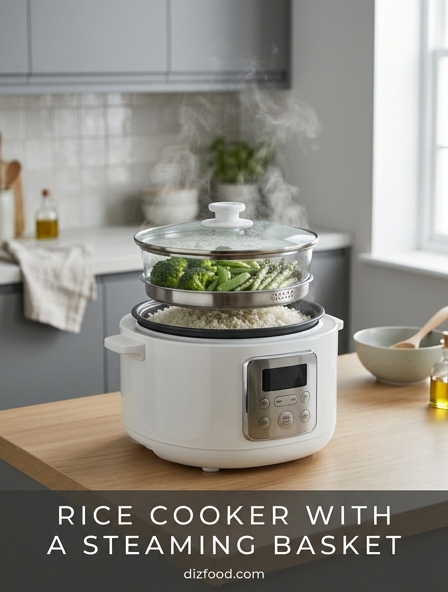
The equipment required for these two methods varies in both complexity and material. Conventional steaming is highly versatile, allowing for a range of specialized tools. The most common setup is a metal fold-out steamer basket that fits into various pot sizes. For those who cook Asian cuisine frequently, stacked bamboo steamers are preferred as they absorb excess moisture and prevent condensation from dripping back onto the food. There are also dedicated electric steamers that feature multiple transparent tiers and built-in timers, though these take up significant counter space.
Microwave steaming requires a much smaller footprint. At its simplest, one only needs a microwave-safe glass or ceramic bowl and a covering, such as a plate or BPA-free plastic wrap. However, for better results, many manufacturers offer specialized microwave steaming containers made from silicone or high-heat resistant plastics. These containers often include a small tray to keep the food elevated above the water and a lid with a pressure-release valve. Unlike stovetop equipment, these items are usually lightweight and easy to store in cramped cabinets. When selecting equipment, it is vital to ensure all microwave components are labeled as food-safe and heat-resistant to avoid chemical leaching or melting during the intense energy bursts of the microwave cycle.
| Equipment Type | Conventional Steaming | Microwave Steaming |
|---|---|---|
| Primary Vessel | Stainless steel or copper pot | Glass or silicone bowl |
| Insert | Metal basket or bamboo tiers | Plastic perforated tray |
| Lid | Heavy, tight-fitting lid | Vented microwave-safe cover |
| Heat Source | Stovetop burner | Internal magnetron |
Energy Usage of Microwave vs Conventional Steamers
From an environmental and cost-saving perspective, energy efficiency is an important consideration. The microwave is inherently more efficient for small to medium tasks. This is because it converts electricity into microwave energy that targets the food directly. Very little energy is wasted heating the surrounding air or the appliance itself. Furthermore, because the cooking time is so short, the total kilowatt-hours used are minimal. In a side-by-side comparison for steaming a single bowl of vegetables, the microwave uses roughly 70% to 80% less energy than a traditional stovetop burner, which must heat a heavy pot, a significant volume of water, and the air in the kitchen.
Conventional steaming is less efficient because of the energy required to bring water to a boil and maintain that boil throughout the cooking process. Much of the heat generated by a gas flame or an electric coil escapes into the room rather than entering the pot. However, the efficiency gap closes when cooking very large quantities. If you are steaming three pounds of potatoes, the microwave may require multiple cycles or a very long run time, which can tax the magnetron and lead to uneven results. In such cases, the "set it and forget it" nature of a large stovetop pot may be more practical, even if it uses more raw energy. For the vast majority of daily side dishes, however, the microwave is the greener choice, contributing to lower utility bills and a cooler kitchen environment during the summer months.
Best Vegetables for Microwave and Stovetop Steaming
Not all vegetables react the same way to different steaming methods. Some thrive under the intense, quick heat of the microwave, while others require the gentle, saturating moisture of the stovetop. Leafy greens like spinach, bok choy, and kale are excellent candidates for the microwave. Their high water content allows them to wilt and cook in under two minutes, preserving their vibrant green color and delicate flavor. Similarly, frozen vegetables are often optimized for microwave steaming, as the ice crystals on their surface provide the necessary moisture for the process without the need for additional water.
On the other hand, dense or fibrous vegetables often yield better results on the stovetop. Broccoli and cauliflower, for instance, have complex shapes that can lead to uneven "woody" spots in the microwave if not rotated. Stovetop steaming allows the heat to penetrate the thick stems at the same rate as the tender florets. Root vegetables like carrots, beets, and small potatoes also benefit from the stovetop, as the longer cooking time allows their natural sugars to develop more fully, resulting in a sweeter taste. Artichokes are another prime example; they require a significant amount of time and a large volume of steam to soften their tough leaves, making the microwave an impractical choice for this specific vegetable. Understanding these nuances helps in planning a meal where each component is cooked to its ideal peak.
- Best for Microwave: Spinach, peas, corn on the cob, zucchini, and frozen mixed vegetables.
- Best for Stovetop: Broccoli florets, whole artichokes, thick asparagus, and sliced root vegetables.
- Versatile: Green beans and bell peppers perform well in both, depending on the desired crunch level.
Safety and Radiation Myths in Microwave Steaming
Despite being a household staple for decades, the microwave is still surrounded by various safety myths, particularly concerning radiation and its effect on food. It is important to clarify that microwaves use non-ionizing electromagnetic radiation, which is similar to the waves used for radio and television signals. This type of energy is not strong enough to alter the atomic structure of food or make it "radioactive." When you steam vegetables in the microwave, the waves simply cause water molecules to vibrate, creating friction-based heat. Once the microwave is turned off, no "radiation" remains in the food or the appliance.
The real safety concerns regarding microwave steaming are related to heat and materials. Steam burns are a significant risk; because microwave containers are often tightly sealed to build pressure, opening them can release a concentrated burst of hot vapor. Always use oven mitts and peel back lids away from the face. Additionally, the choice of container is paramount. Using non-microwave-safe plastics can lead to "leaching," where chemicals like bisphenol A (BPA) or phthalates migrate from the plastic into the food. Conventional steaming also carries safety risks, primarily related to the open flame of a gas stove or the potential for a pot to boil dry, which can damage cookware and create a fire hazard. By following standard safety protocols-using glass or certified silicone in the microwave and monitoring water levels on the stove-both methods are perfectly safe for daily use.
Ease of Cleanup Between Steaming Techniques
For many home cooks, the decision of how to cook is heavily influenced by the work required after the meal is finished. Microwave steaming is generally praised for its minimal cleanup requirements. Often, the same dish used for steaming can be used for serving and even storing leftovers. Because the process involves very little water and no oils, a simple rinse or a quick cycle in the dishwasher is usually sufficient. There are no heavy pots to scrub, and no stovetop splatters to wipe down. Silicone microwave steamers are particularly convenient, as they are non-stick and highly flexible, making them easy to fit into a crowded dishwasher.
Conventional steaming involves more components and, consequently, more cleaning. A typical setup includes a pot, a steamer basket or insert, and a lid. If using a bamboo steamer, cleanup requires more care, as these cannot be soaked in water or placed in a dishwasher; they must be rinsed and air-dried thoroughly to prevent mold growth. Furthermore, if the water used for steaming was hard, a mineral crust can form at the bottom of the pot, requiring occasional descaling with vinegar. While these tasks are not overly burdensome, they do add several minutes to the kitchen routine. For those who prioritize a "one-pot" or "no-pot" lifestyle, the microwave is the clear winner, allowing for a healthy meal with almost zero secondary labor.
Choosing the Right Steaming Method for Your Kitchen
In conclusion, choosing between microwave and conventional steaming depends on your priorities for the specific meal at hand. If you are in a rush, cooking for one, or focused on maximum nutrient retention for delicate greens, the microwave is an invaluable tool. Its speed, energy efficiency, and ease of cleanup make it the perfect companion for a modern, busy lifestyle. By investing in high-quality, BPA-free steaming containers, you can achieve results that are nearly indistinguishable from traditional methods while saving a significant amount of time and energy.
However, for the culinary enthusiast or the host of a large dinner party, the stovetop steamer remains an essential piece of kitchen equipment. It offers superior control over texture, the ability to cook large volumes at once, and a traditional charm that the microwave cannot replicate. Stovetop steaming is also the better choice for dense, fibrous vegetables that require a long, steady soak in hot vapor to reach the perfect consistency. Ultimately, the best-equipped kitchens are those that utilize both methods. By matching the vegetable type and the available time to the appropriate steaming technique, you can ensure that your meals are consistently healthy, flavorful, and perfectly prepared. Both methods represent the best of kitchen science, turning simple water into a powerful medium for creating nutritious and delicious food.

Comments