
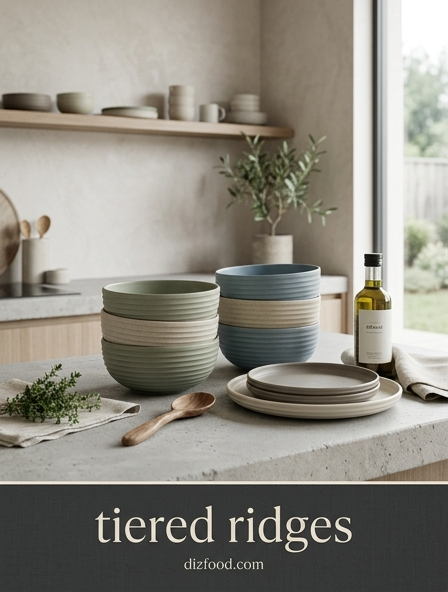
The Mechanics of Tiered Ridge Design
The core functionality of tiered ridge design in kitchenware lies in its geometric precision. These ridges are engineered as a series of concentric steps that descend toward the center of the lid. Each tier acts as a distinct seating platform designed to intercept the rim of a pot or pan. By utilizing a stepped architecture rather than a flat surface, the lid can accommodate various diameters without requiring a custom fit for every individual piece of cookware. This structural approach ensures that the weight of the lid is distributed evenly across the contact point, providing a stable foundation that prevents the lid from shifting during the boiling process.
- Graduated diameters for incremental sizing.
- Reinforced structural integrity through vertical walls.
- Enhanced surface area for improved thermal distribution.
- Gravity-assisted centering for various vessel widths.
Furthermore, these ridges serve a secondary mechanical purpose by acting as a baffle system. As steam rises, it encounters the vertical sections of the tiers, which helps to direct condensation back into the vessel. This mechanical redirection is essential for maintaining the moisture balance of the food being prepared, ensuring that the tiered design is as much about performance as it is about universal compatibility.
Achieving a Perfect Seal Across Sizes
Achieving an airtight or high-moisture seal is often difficult with standard lids, but tiered ridges solve this by creating multiple potential contact zones. When a tiered lid is placed on a pot, the specific ridge that matches the pot's diameter creates a physical barrier. The precision of the "step" ensures that there are no significant gaps through which steam can escape. This is particularly effective when the ridges are finished with a silicone coating, which compresses slightly under the lid's weight to fill microscopic imperfections in the cookware's rim.
| Ridge Tier | Standard Diameter | Seal Type |
|---|---|---|
| Inner Tier | 16cm - 18cm | Compression Seal |
| Middle Tier | 20cm - 24cm | Gravity Seal |
| Outer Tier | 26cm - 30cm | Baffle Seal |
The effectiveness of this seal across various sizes is quantified by the lid's ability to maintain internal pressure. By providing a dedicated groove for each size range, the design mimics the performance of a dedicated lid. This versatility eliminates the "rattle" often associated with oversized flat lids, as the stepped nature of the ridges locks the lid into a centered position, maximizing the efficiency of the thermal seal.
Maximizing Steam Retention with Graduated Steps
Steam retention is a critical factor in both steaming and braising. Graduated steps within a lid's design do more than just provide a fit; they manage the internal micro-climate of the pot. As water vapor rises, it hits the underside of the lid. In a tiered design, the steps create a "staircase" effect for the rising steam, slowing its velocity before it reaches the outer edges. This allows for a more controlled environment where heat is recycled effectively.
- Steam rises and hits the central dome or flat section.
- Vapor travels outward and is intercepted by the first vertical ridge.
- Condensation forms on the cool underside of the tiers.
- Water droplets follow the ridge contours back into the center of the pot.
This process ensures that the nutrients and flavors remain trapped within the cooking vessel. Without these graduated steps, steam would move horizontally toward the rim and escape through the smallest gap. The tiered ridges act as a series of locks, ensuring that even if one tier allows a small amount of vapor to pass, the subsequent higher tier provides an additional layer of containment. This maximizes energy efficiency by reducing the heat required to maintain a steady temperature.
Space Saving Benefits of Universal Steamer Lids
The primary logistical advantage of tiered ridge design is the radical reduction of kitchen clutter. Traditional cookware sets require a dedicated lid for every pot, which quickly consumes valuable cabinet space and leads to disorganized drawers. A single universal lid with tiered ridges can replace three or four standard lids, streamlining the storage process significantly. This minimalist approach is ideal for smaller kitchens or for cooks who prefer an uncluttered workspace. Because the ridges allow one lid to sit securely on a wide range of vessel sizes, the need for a complex lid-organizer rack is eliminated.
Moreover, the vertical profile of tiered lids is often designed to be relatively slim despite their broad diameter. This allows them to be stacked together more tightly than domed lids. In a professional environment, where speed and efficiency are paramount, having one lid that fits almost every pan on the stove saves time that would otherwise be spent searching for the correct size. The transition from a 2-quart saucepan to a 10-inch skillet becomes seamless when the same lid can be used for both. This adaptability represents a fundamental shift in kitchen organization, prioritizing multi-functional utility over individual specialized components.
Engineering Stability for Various Pot Diameters
Stability is a common concern with universal kitchen tools, but tiered ridges provide an engineered solution to the "slipping lid" problem. Each ridge serves as a mechanical stop; once a pot rim is nested within a tier, the lid cannot move laterally. This is vital for safety, as a shifting lid can release a sudden burst of hot steam or even fall off the pot entirely. The engineering behind these ridges accounts for the center of gravity of the lid, ensuring it remains balanced even when resting on its smallest innermost tier.
- Lateral movement prevention via recessed grooves.
- Self-centering geometry for immediate placement.
- Counter-balanced weight distribution across the rim.
- High-friction ridge surfaces to prevent sliding on stainless steel.
This stability is further enhanced by the thickness of the material used in the tiered sections. By adding mass to the rim area where the ridges are located, manufacturers increase the downward force applied to the pot's edge. This weight, combined with the interlocking nature of the ridges and the rim, creates a secure fit that resists being dislodged by the internal pressure of boiling water. The result is a lid that feels solid and dependable, regardless of whether it is being used on a small milk pan or a large sauté pan.
Why Concentric Ridges Prevent Steam Leakage
Concentric ridges function as a labyrinth seal, a classic engineering concept used to prevent fluid leakage. In the context of a kitchen lid, these ridges create a difficult path for steam to navigate. For steam to escape, it must move vertically over a ridge, travel horizontally across a step, and repeat this process for every tier of the design. This "tortuous path" significantly reduces the pressure and speed of escaping vapor, effectively keeping the majority of the moisture inside the pot where it belongs.
The circular nature of these ridges also ensures that the seal is uniform around the entire circumference of the pot. On a flat lid, any slight warping of the metal or an uneven stove surface can create a gap. However, because tiered ridges nestle inside the pot's rim, they utilize the interior edge of the vessel to reinforce the seal. The concentric design also allows for thermal expansion; as the lid heats up, the ridges expand uniformly, maintaining the integrity of the seal throughout the cooking process. This prevents the common issue of "steam jets" that can burn a cook's hand when reaching for a handle, as the leakage is either eliminated or diffused evenly.
Durability of Multi Fit Silicone and Metal Rims
The materials used in tiered ridge lids are selected for their ability to withstand repeated thermal cycling and physical wear. Most high-quality universal lids utilize a combination of tempered glass and either stainless steel or food-grade silicone for the tiered sections. Stainless steel ridges offer extreme durability and are resistant to scratching or denting, while silicone ridges provide a superior airtight seal and are quieter when being placed on metal pots. Both materials are chosen for their non-reactive properties, ensuring they do not affect the flavor of the food.
| Material | Heat Resistance | Flexibility | Longevity |
|---|---|---|---|
| Silicone | Up to 450°F | High (Creates better seal) | Moderate |
| Stainless Steel | Up to 600°F+ | None (Rigid fit) | Very High |
| Tempered Glass | High | None | High (Fragile to drops) |
The bond between the central glass or metal disc and the tiered rim is a critical point of engineering. Manufacturers often use high-pressure molding to ensure that the silicone is fused to the core, preventing the ridges from detaching over time. This robust construction ensures that the lid can handle the rigors of a dishwasher and the high heat of a stove without losing its shape or the precision of its tiers.
Streamlining Your Cookware Collection Efficiently
Efficient kitchen management involves selecting tools that offer maximum versatility with a minimum footprint. Transitioning to tiered-ridge lids is a strategic move for any home chef looking to streamline their collection. By identifying the most common pot sizes in your kitchen, you can replace a mismatched assortment of metal and glass lids with one or two high-quality universal options. This process not only saves space but also reduces the cognitive load of searching for the "right" lid during high-pressure cooking moments.
- Audit your current cookware to determine the diameter ranges you use most.
- Discard or donate redundant lids that only fit a single specific pot.
- Invest in a tiered lid that covers the 8-inch to 12-inch range.
- Organize the new lids in an easy-access vertical slot.
Streamlining also extends to cleaning and maintenance. Washing one universal lid is significantly more efficient than managing three different lids after a large meal. Furthermore, because these lids are designed for multi-fit use, they often feature universal handles and steam vents that are easier to clean than the complex hardware found on older, specialized lids. This efficiency converts the kitchen from a place of clutter into a streamlined environment where the focus remains on the culinary process rather than equipment management.
The Physics of Nested Lid Security
The security of a tiered lid is governed by the principles of friction and gravitational force. When a lid is placed on a pot, gravity pulls it downward, forcing the selected ridge to make contact with the pot's rim. The "nested" nature of this fit means that the lid is partially inside the pot and partially resting on top of it. This dual-action fit increases the friction between the two surfaces. If the lid is bumped, the vertical wall of the next tier acts as a physical stop against the pot rim, preventing the lid from sliding off.
Physics also plays a role in how the lid handles internal pressure. In a standard flat lid, internal steam pressure pushes directly upward, often causing the lid to "dance" or clatter. In a tiered design, the weight is concentrated at the contact points of the ridges. The stepped geometry helps to distribute the upward force of the steam more broadly across the underside of the lid. This distribution of force, combined with the weight of the reinforced tiered rim, keeps the lid seated firmly even when the contents are at a rolling boil. The result is a quieter, safer, and more predictable cooking experience where the lid stays put regardless of the turbulence inside the vessel.
Enhancing Cooking Precision with One Size Design
Precision in cooking often depends on the ability to maintain consistent temperatures and moisture levels. A tiered ridge lid enhances this precision by providing a reliable environment across all your cookware. When a chef knows exactly how a lid performs-how much steam it vents and how well it retains heat-they can apply that knowledge to any pot in their kitchen. This consistency removes a variable from the cooking process, allowing for more predictable results whether you are simmering a delicate sauce or steaming vegetables.
- Consistent evaporation rates across different vessels.
- Uniform heat retention for precise simmering.
- Improved visibility through tempered glass centers.
- Standardized venting via integrated steam ports.
The "one size" design philosophy also means that the lid is likely to be used more frequently, leading to a better understanding of its thermal properties. Instead of juggling different lids with varying vent sizes and thicknesses, the cook masters the use of a single tool. This familiarity leads to better timing and improved texture in the final dish. The ridges ensure that the seal is always the same, providing a standardized "lid-on" environment that is the hallmark of professional-grade precision in a home kitchen setting.

Comments