
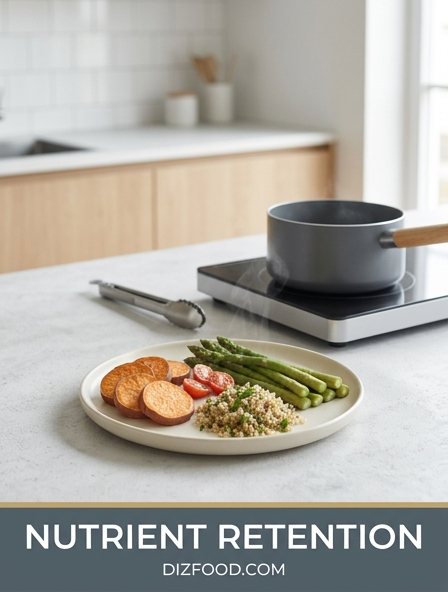
Minimizing Thermal Exposure Duration
The relationship between time and temperature is the primary determinant of nutritional degradation in the kitchen. Most vitamins, particularly Vitamin C and the B-complex group, are highly sensitive to prolonged heat. When vegetables are cooked for extended periods, the chemical bonds holding these micronutrients together begin to break down, resulting in a significantly lower nutritional yield. To counter this, techniques such as high-heat stir-frying or pressure cooking are preferred. These methods utilize intense heat for a minimal duration, ensuring the core of the food reaches the necessary temperature for safety and palatability without exhausting the nutrient profile.
Shortening the time food spends in the "danger zone" of thermal degradation preserves the bioactive compounds. For example, a quick sauté of spinach retains significantly more folate than a long boil. The goal is to achieve a balance where the food is structurally softened enough for digestion while the thermal window remains narrow. By monitoring the internal temperature and removing items from the heat source as soon as they reach the desired texture, cooks can effectively halt the depletion of essential vitamins that occur during overexposure.
Preventing Water Soluble Vitamin Leaching
Leaching occurs when water-soluble vitamins, such as Vitamin C and all B-vitamins, migrate from the plant tissue into the surrounding cooking liquid. This is most prevalent during traditional boiling, where the large volume of water acts as a solvent. To prevent this loss, it is essential to minimize the surface area exposed to water and limit the volume of the liquid used during the cooking process. If boiling is necessary, reusing the nutrient-rich water for soups or sauces ensures the lost vitamins are ultimately consumed rather than discarded.
- Keep vegetables in larger pieces to reduce the surface area-to-volume ratio.
- Use a lid to trap steam, allowing for faster cooking with less water.
- Opt for dry-heat methods like roasting or air-frying when moisture retention is not the primary goal.
- Avoid soaking cut vegetables in water for extended periods before cooking.
By understanding the polar nature of these vitamins, a chef can manipulate cooking environments to keep nutrients locked within the cellular matrix. Utilizing the smallest amount of liquid possible ensures that the osmotic pressure does not force the micronutrients out of the food and into the sink.
Preserving Heat Sensitive Phytonutrients
Phytonutrients, including glucosinolates in cruciferous vegetables and various polyphenols, are the defense mechanisms of plants that provide significant health benefits to humans. However, many of these compounds are extremely sensitive to high temperatures. Glucosinolates, for instance, require the enzyme myrosinase to convert into beneficial isothiocyanates. Excessive heat can denature this enzyme before the conversion takes place. To preserve these delicate compounds, gentle heating or raw preparation is often recommended for specific vegetable families.
Preservation strategies often involve "priming" the vegetables. Cutting or crushing garlic and cruciferous vegetables and letting them sit for ten minutes before cooking allows for enzymatic reactions to stabilize the phytonutrients, making them more resistant to heat. This "chop and wait" method ensures that even if some thermal damage occurs, the most potent compounds have already been synthesized and are ready for absorption. Understanding the specific thermal thresholds of these plant chemicals allows for a more scientific approach to meal preparation that prioritizes long-term health over mere flavor extraction.
Rapid Enzyme Deactivation Processes
Once a vegetable is harvested, its internal enzymes remain active, gradually breaking down nutrients and altering texture and flavor. In the kitchen, rapid enzyme deactivation is typically achieved through blanching-a process of briefly immersing food in boiling water followed by an immediate ice bath. This thermal shock halts the enzymatic activity of peroxidases and lipoxygenases, which are responsible for the degradation of flavor and color during storage. This process is particularly vital for vegetables intended for the freezer, as it locks in the vitamin content at its peak.
- Submerge the vegetable in boiling water for 1 to 3 minutes depending on density.
- Immediately transfer the item to a bowl of ice water to stop the cooking process.
- Drain thoroughly to prevent moisture-induced spoilage or freezer burn.
Without rapid deactivation, enzymes continue to work even at low temperatures, leading to a loss of Vitamin C and the development of off-flavors. Blanching acts as a "pause button" for the nutritional profile, ensuring that the biochemical state of the produce is preserved until the final cooking stage or consumption occurs.
Maintaining Cellular Structural Integrity
The structural integrity of a plant's cell walls, composed primarily of cellulose and pectin, dictates the retention of its internal juices and nutrients. When these walls are ruptured through overcooking or aggressive mechanical processing, the internal nutrients are easily lost. Maintaining a "tender-crisp" texture is a visual and tactile indicator that the cellular matrix remains largely intact. Techniques that use high heat for a short duration help to soften the pectin without completely collapsing the cell wall structure.
Acidic ingredients, such as lemon juice or vinegar, can be added to the cooking process to help firm up the pectin, thereby maintaining the structure of the vegetable. Conversely, alkaline environments, such as those created by adding baking soda, accelerate the breakdown of cell walls, leading to mushy textures and rapid nutrient loss. By controlling the pH and the duration of heat, the cook can ensure that the food retains its structural "crunch," which serves as a protective barrier for the vitamins and minerals housed within the plant's vacuoles.
Steam Efficiency Versus Traditional Boiling
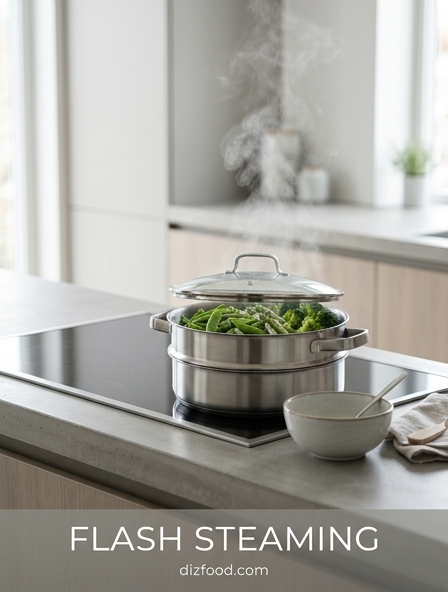
Steaming is widely regarded as one of the most efficient methods for nutrient retention because it avoids direct contact between the food and the cooking liquid. Unlike boiling, which facilitates the leaching of water-soluble minerals and vitamins, steaming uses the convection of water vapor to transfer heat. This allows the food to reach the necessary internal temperature while the nutrients remain trapped within the vegetable's physical structure. The lack of turbulent water also prevents the mechanical breakdown of delicate produce.
| Nutrient Type | Boiling Retention | Steaming Retention |
|---|---|---|
| Vitamin C | Low (40-60%) | High (80-90%) |
| Folate | Medium | High |
| Glucosinolates | Very Low | High |
| Potassium | Moderate Loss | Minimal Loss |
Because steam transfers heat more efficiently than air but less aggressively than boiling water, it provides a middle ground that optimizes both speed and safety. This method is particularly effective for broccoli, spinach, and other leafy greens where the preservation of chlorophyll and Vitamin C is a priority for the health-conscious cook.
Reducing Oxidative Damage in Vegetables
Oxidation is a chemical reaction that occurs when the internal tissues of vegetables are exposed to oxygen, often triggered by cutting, peeling, or bruising. This process leads to the degradation of antioxidants and the browning of the produce. In the kitchen, reducing the time between preparation and consumption is the most effective way to combat oxidative damage. When oxygen interacts with enzymes like polyphenol oxidase, it not only changes the color but also consumes the very antioxidants that make the food healthy.
- Use sharp knives to minimize cellular crushing and bruising.
- Apply an acidulant, such as lime juice, to cut surfaces to lower the pH and inhibit enzymatic browning.
- Store pre-cut vegetables in airtight containers or under water if they are to be used within a short timeframe.
- Blanch vegetables briefly to destroy the oxidative enzymes before long-term storage.
By managing the surface area exposure and using chemical inhibitors like citric acid, you can preserve the "reducing power" of the vegetables. This ensures that the antioxidants remain available for the human body to use against free radicals rather than being spent during the food preparation process.
Thermal Transfer Speed and Bioavailability
While heat can destroy some nutrients, it is also essential for increasing the bioavailability of others. Bioavailability refers to the proportion of a nutrient that is absorbed and utilized by the body. For certain compounds, such as beta-carotene in carrots or lycopene in tomatoes, the heat helps to break down thick plant cell walls and dissociate the nutrients from their protein complexes. This makes it easier for the digestive system to access and absorb these fat-soluble antioxidants.
The speed of thermal transfer is critical; a rapid increase in temperature can unlock these nutrients without giving them enough time to undergo thermal degradation. Combining these foods with a small amount of healthy fat during the cooking process further enhances absorption. For example, cooking tomatoes in olive oil increases the bioavailability of lycopene significantly compared to eating raw tomatoes. The objective is to apply enough thermal energy to liberate the nutrients while avoiding the excessive duration that would lead to the destruction of more sensitive vitamins like Vitamin C.
Color Retention as Nutritional Indicators
In the culinary world, color is often synonymous with nutritional density. Bright greens, deep purples, and vibrant oranges indicate the presence of chlorophyll, anthocyanins, and carotenoids. These pigments are not only visually appealing but serve as markers for the chemical stability of the food. When a green vegetable turns a dull olive brown, it is a sign that the magnesium atom in the center of the chlorophyll molecule has been replaced by hydrogen, signaling overexposure to heat or acid and a corresponding loss of nutrients.
- Vibrant Green: High chlorophyll and Vitamin C retention.
- Bright Orange/Red: Stable carotenoids and lycopene levels.
- Deep Purple: Preservation of water-soluble anthocyanins.
- Dull/Brown: Indicates significant oxidative or thermal damage.
Monitoring color changes during the cooking process provides a real-time feedback loop for the cook. By pulling vegetables off the heat while their colors are still "electric," one ensures the maximum retention of phytonutrients. This visual cue is the most practical way to gauge when the balance between palatability and nutritional integrity has been reached.
Optimizing Kitchen Workflows for Health
Efficiency in the kitchen is not just about speed; it is about the strategic sequencing of tasks to preserve food quality. A "nutrient-first" workflow prioritizes the handling of the most sensitive ingredients last. By preparing stable items like grains or proteins first, and leaving the cutting and cooking of delicate vegetables for the final minutes, one minimizes the window for oxidation and leaching. This organizational approach ensures that the path from the cutting board to the plate is as direct as possible.
Standardizing a "mise en place" that accounts for nutritional stability involves grouping ingredients by their thermal sensitivity. For instance, adding hardy aromatics at the start of a sauté while reserving leafy greens for the final thirty seconds of residual heat. This tiered cooking approach maximizes flavor development in the base components while protecting the fragile micronutrients in the vegetables. Ultimately, a well-optimized workflow reduces the total time food spends in a degraded state, ensuring that the final meal is as nutritionally potent as the raw ingredients from which it was crafted.

Comments