
Choosing between a universal steamer lid and an integrated one often comes down to balancing kitchen efficiency with precision performance. While integrated lids are custom-engineered to provide a seamless, airtight seal for a specific pot, the universal steamer lid is a master of adaptability, featuring tiered ridges designed to fit multiple cookware diameters ranging from small saucepans to large stockpots. If you are a minimalist looking to reduce clutter, a universal option transforms your existing collection into a high-capacity steaming station without the need for extra bulky inserts. However, for those who prioritize maximum heat retention and a matching aesthetic, integrated systems offer a specialized fit that ensures consistent steam pressure every time you cook. Determining which offers the most versatility depends on whether you value the "one-size-fits-all" convenience or the dedicated reliability of a tailored cooking set.
| Feature | Universal Steamer Lid | Integrated Steamer Lid |
|---|---|---|
| Compatibility | Multi-fit (tiered for 8", 10", 12" pots) | Single-size (custom to specific pot) |
| Steam Retention | Moderate; potential for minor gaps | Superior; airtight vacuum seal |
| Storage Impact | Space-saving; replaces multiple lids | High footprint; requires dedicated pot |
| Material Build | Heavy-duty Stainless Steel or Silicone | Tempered Glass or Polished Steel |
| Versatility Score | High; adaptable to any brand/size | Low; limited to matching cookware |
| Best For | Small kitchens & minimalist cooks | Gourmet chefs & matching set owners |
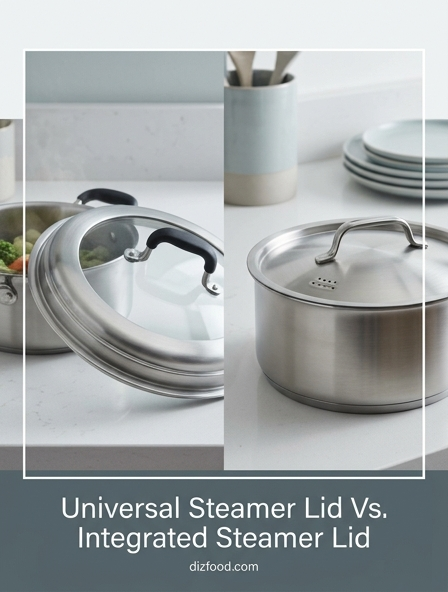
Defining Universal vs Integrated Steamer Lid Technology
In the realm of modern kitchenware, steamer lids serve as the critical barrier that regulates internal pressure and moisture levels. Universal steamer lid technology is characterized by a "stepped" or tiered rim design, typically crafted from tempered glass and rimmed with high-heat silicone. This specialized architecture allows a single lid to rest securely on multiple pot diameters, such as 10-inch, 11-inch, and 12-inch vessels. The primary engineering goal is adaptability, ensuring that regardless of the brand or thickness of the cookware, the lid creates a functional seal to trap steam effectively.
Conversely, integrated steamer lid technology refers to lids specifically engineered for a dedicated cookware set. These components are precision-manufactured to match the exact radius and lip profile of a specific pot or steaming basket. Unlike their universal counterparts, integrated lids often utilize a "plug-and-play" fitment where the lid edge nests perfectly inside or over the rim of the pot with zero tolerance for lateral movement. The fundamental differences between these two technologies can be summarized by the following attributes:
- Rim Configuration: Universal lids use graduated concentric circles; integrated lids use a single-radius lip.
- Material Composition: Universal lids frequently combine glass with flexible silicone; integrated lids are often monochromatic stainless steel or cast iron.
- Ventilation Logic: Integrated lids usually feature a calibrated steam vent hole; universal lids may rely on the fit of the silicone rim to manage excess pressure.
Maximizing Kitchen Space with Multi Sized Steaming Lids
Efficient space management is a cornerstone of a functional kitchen, particularly in urban environments where cabinet real estate is at a premium. The universal steamer lid is a direct response to the "clutter crisis" caused by mismatched cookware. By consolidating the functionality of three or four different lids into a single unit, home cooks can drastically reduce the volume of items stored in drawers. The tiered design allows it to stack flat, eliminating the awkward "dome" stacking issues often associated with traditional lid collections.
The impact on kitchen organization is measurable. When transitioning to a multi-sized lid system, the "lid-to-pot" ratio shifts from 1:1 to 1:3 or even 1:4. This reduction in physical items simplifies the workflow during meal preparation. To better understand how these lids optimize space, consider the following organizational benefits:
- Vertical Stacking: Eliminates the need for specialized lid organizers or racks, as one lid covers the majority of wide-mouth pans.
- Weight Reduction: Replacing several heavy stainless steel lids with one glass and silicone hybrid reduces the load on pull-out pantry shelves.
- Accessibility: Reduces the time spent searching for a specific matching lid, as the universal option is designed to be the "default" choice for various tasks.
While integrated lids provide a sleek look when displayed as a set, they require individual storage spots, which can lead to a disorganized kitchen environment over time if the original packaging or dedicated racks are not used.
The Precision Fit of Integrated Steamer Lid Designs
The primary advantage of an integrated steamer lid is its precision fit. When a lid is designed for a specific pot, the tolerances are measured in fractions of a millimeter. This exactness ensures that the lid does not rattle or shift during a vigorous boil, providing a stable environment for delicate steaming tasks. In professional culinary settings, this precision is often preferred because it allows for repeatable results; the chef knows exactly how much steam will be retained and how much will escape through the built-in vent.
This tight seal creates what is known as a "water seal" effect in some high-end stainless steel sets. As steam condenses between the lid and the pot rim, it forms a thin film of water that locks the lid in place, effectively creating a low-pressure environment that speeds up the cooking process without the need for heavy locking mechanisms. The design features of these precision lids include:
- Recessed Lips: These prevent condensation from dripping down the exterior of the pot, keeping the stovetop cleaner.
- Weighted Lids: Integrated metal lids are often heavy enough to counteract internal steam pressure, preventing "lid dancing."
- Consistent Thermal Expansion: Because the lid and pot are made of the same material grade, they expand and contract at the same rate, maintaining a perfect seal at any temperature.
Material Matters Silicone Universal Lids vs Metal Integrated Sets
The material composition of a steamer lid dictates its durability, heat retention, and visibility. Universal lids almost exclusively utilize a combination of tempered glass and food-grade silicone. This choice is functional; the silicone provides the necessary friction and flexibility to grip various pot rims, while the glass allows the cook to monitor progress without lifting the lid. Integrated lids, however, are usually made from the same material as the pot-typically 18/10 stainless steel or aluminum-offering a more uniform aesthetic and higher heat tolerance.
The following table compares the physical properties of these two common material configurations:
| Feature | Silicone/Glass (Universal) | Stainless Steel (Integrated) |
|---|---|---|
| Heat Resistance | Up to 450°F (approx.) | Up to 600°F+ (Oven safe) |
| Visibility | High (Transparent window) | None (Opaque) |
| Weight | Moderate | Heavy / Durable |
| Impact Resistance | Moderate (Glass can break) | High (Dent resistant) |
| Seal Type | Flexible/Gripping | Rigid/Precision Metal-to-Metal |
While silicone is excellent for creating a seal on uneven surfaces, it can absorb odors over time if not cleaned properly. Metal lids are non-porous and will never retain the scent of previous meals, making them superior for long-term culinary purity.
Steam Retention Efficiency and Cooking Performance Comparison
Cooking efficiency in steaming is measured by how well the vessel maintains a constant temperature and humidity level. Integrated steamer lids generally offer superior steam retention because the metal-on-metal contact is designed to minimize gaps. This leads to a faster build-up of steam and a more intense cooking environment, which is ideal for dense vegetables like carrots or potatoes. Because there is no "stepped" gap, there is less opportunity for heat to escape through the sides.
Universal lids, while effective, can sometimes suffer from minor steam leakage at the points where the tiered silicone transitions from one size to another. However, for most home cooking applications, this difference is negligible. Performance can be categorized by the following factors:
- Pressurization: Integrated lids allow for a slight internal pressure buildup, which can reduce cooking time by 10-15%.
- Condensation Management: Universal glass lids allow you to see when a boil has been achieved, preventing boil-overs.
- Moisture Recovery: The domed shape of many integrated lids encourages condensation to roll back into the center of the food, whereas flatter universal lids may drop moisture along the perimeter.
Versatility Benefits of a One Size Fits All Steamer Cover
The most compelling argument for the universal steamer cover is its sheer versatility. In a kitchen where a cook might use a cast iron skillet for searing and then want to steam finish a piece of fish, a universal lid is the only tool that fits the job. It bridges the gap between different types of cookware that were never intended to be used with lids. This "one-size-fits-all" approach is particularly beneficial for those who own an eclectic mix of vintage copper, modern non-stick, and stainless steel pans.
Beyond simply fitting different sizes, the versatility extends to the types of cooking methods it supports. Because of the silicone rim, these lids can be used as:
- Splatter Guards: The weight and seal prevent oil from escaping during shallow frying.
- Microwave Covers: Many silicone-rimmed lids are safe for use in large microwave ovens to prevent food splashes.
- Temporary Food Storage: They can be placed over a mixing bowl in the refrigerator to keep contents fresh.
This multi-functional nature makes the universal lid a favorite for minimalist cooks, campers, or students who may only own one or two pots but require the functionality of a full set.
Cleaning and Maintenance for Different Steamer Lid Types
Maintenance requirements vary significantly between universal and integrated designs. Integrated lids, particularly those made of solid stainless steel, are nearly indestructible and can be tossed into the dishwasher without concern. Their simple, single-rim design means there are no hidden crevices where food particles or grease can accumulate. This makes them the more hygienic choice for high-volume cooking where quick turnover is necessary.
Universal lids require a bit more attention due to their multi-material construction. The transition points between the glass center and the silicone rim, as well as the "steps" in the rim itself, can collect residues. Proper cleaning involves:
- Rim Inspection: Periodically checking the grooves of the silicone for trapped moisture or debris.
- Gasket Care: Avoiding abrasive scrubbers on the silicone to prevent micro-tears that could compromise the seal.
- Hand Washing Recommended: While many are labeled dishwasher safe, the high heat and harsh detergents can eventually degrade the bond between the glass and silicone.
Furthermore, if a universal lid uses a screw-on knob, it is important to occasionally tighten it, as the expansion and contraction of different materials can cause the handle to loosen over time.
Economic Value of Buying Individual vs Integrated Steamer Parts
From a financial perspective, the choice between universal and integrated lids often comes down to the "cost per use" and replacement logistics. Buying a high-quality universal lid is an upfront investment that negates the need to buy specialized lids for every future pan purchase. For many, this represents a significant saving, especially when compared to the cost of purchasing a replacement lid from a premium cookware brand, which can sometimes cost as much as a new pan.
The economic landscape can be compared as follows:
| Economic Factor | Universal Lid Purchase | Integrated Lid Purchase |
|---|---|---|
| Initial Cost | Low to Moderate ($15-$30) | High (Usually bundled in $100+ sets) |
| Replacement Ease | Easy (Available at most retailers) | Difficult (Brand specific) |
| Long-term Value | High (Works with future pots) | Moderate (Tied to specific pot life) |
| Resale Value | Low | High (As part of a complete set) |
For someone building a kitchen from scratch, an integrated set offers better value as a package. However, for a cook looking to upgrade or replace a single broken lid, the universal option is almost always the more economically sound decision.
Impact on Cooking Time and Energy Consumption
Energy efficiency in the kitchen is often overlooked, but the lid plays a vital role in reducing the carbon footprint of a meal. A lid that fits poorly allows steam-and therefore heat-to escape, forcing the stovetop to work harder to maintain a boil. Integrated lids are generally more energy-efficient because their precision fit creates a more hermetic environment. This allows the cook to turn the heat down to a lower setting once the initial steam is generated, as the lid retains the thermal energy more effectively.
Universal lids are also efficient, but their performance can vary depending on how well the "step" matches the pot. To maximize energy savings with a universal lid, users should:
- Match the Step: Ensure the pot rim sits squarely in one of the silicone grooves rather than resting on a transition point.
- Reduce "Peeking": Use the transparency of the glass to check food, avoiding the massive heat loss that occurs when a lid is lifted.
- Residual Heat: Both types allow for "off-heat" steaming, where the stove is turned off 2-3 minutes early, and the trapped steam finishes the cooking.
Over a year of daily cooking, the time saved by a well-fitting lid can add up to several hours, while the energy savings contribute to lower utility bills.
Final Verdict Selecting the Right Steamer Lid for Your Home
The decision between a universal steamer lid and an integrated one depends on your cooking style, kitchen space, and existing cookware collection. Neither is objectively "better," but each serves a distinct demographic. If you value a streamlined, professional-looking kitchen and prefer to buy high-quality matching sets, the integrated lid is the superior choice. It offers the best performance, easiest maintenance, and a level of precision that serious culinary tasks demand.
On the other hand, the universal lid is the ultimate tool for the practical, space-conscious, or budget-oriented cook. It solves the problem of "lid chaos" and provides a functional solution for a wide range of vessels. To make your final choice, consider these three questions:
- Do I have a "junk drawer" full of lids? If yes, a universal lid will provide immediate relief and organization.
- Do I cook delicate dishes that require perfect moisture control? If yes, the precision of an integrated lid is worth the extra storage space.
- Am I working with a mismatched set of pans? If yes, a universal lid is the most logical and cost-effective acquisition.
Ultimately, many modern kitchens find room for both: a high-quality integrated set for daily staples and one universal lid to handle the odd-sized pans and overflow cooking tasks.

Comments