
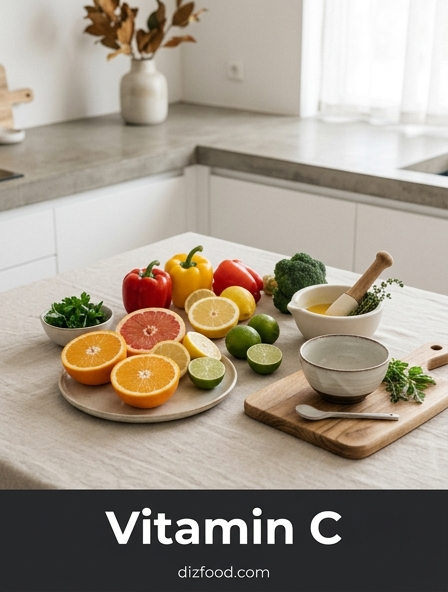
Understanding Vitamin C Heat Sensitivity
Vitamin C, or ascorbic acid, is one of the most fragile micronutrients found in the modern kitchen. Unlike fat-soluble vitamins, which can withstand significant culinary processing, Vitamin C is highly susceptible to thermal degradation. This sensitivity stems from its chemical structure, which easily breaks down when exposed to high temperatures and oxygen. When heat is applied to vegetables, the cellular structures begin to rupture, exposing the internal ascorbic acid to oxidative enzymes and external heat sources.
The rate of degradation is directly proportional to the intensity and duration of the heat applied. In a standard kitchen environment, boiling or prolonged roasting can lead to a significant loss of this essential antioxidant. Scientists have observed that the molecular bonds within ascorbic acid are easily disrupted, leading to the formation of dehydroascorbic acid, which eventually degrades into inactive compounds. Understanding this vulnerability is the first step toward optimizing cooking techniques that prioritize nutritional density alongside flavor and texture. By managing the thermal environment, home cooks can effectively bridge the gap between palatability and health.
Microwave Steaming vs Traditional Boiling
When comparing microwave steaming to traditional boiling, the impact on Vitamin C retention is stark. Traditional boiling involves immersing food in a large volume of water, which acts as a solvent, drawing out water-soluble vitamins through a process known as leaching. In contrast, microwave steaming uses electromagnetic waves to excite water molecules within the food itself, generating heat internally and rapidly. This fundamental difference in energy transfer plays a critical role in preserving the chemical integrity of the produce.
| Feature | Traditional Boiling | Microwave Steaming |
|---|---|---|
| Water Volume | High (Full Immersion) | Minimal (Few Tablespoons) |
| Cooking Speed | Slow (Waiting for Boil) | Rapid (Immediate) |
| Vitamin Retention | Low (40-60% Loss) | High (10-20% Loss) |
Because the microwave method significantly reduces the time food spends at high temperatures and eliminates the large water bath, the Vitamin C remains trapped within the cellular matrix rather than being discarded with the cooking water.
How Rapid Heating Saves Nutrients
Rapid heating is a cornerstone of nutrient preservation in the kitchen. The primary enemy of Vitamin C, besides heat itself, is an enzyme called ascorbate oxidase. This enzyme naturally exists in plants and begins to break down Vitamin C as soon as the plant tissue is cut or heated gently. Slow heating methods, such as simmering or low-temperature roasting, allow these enzymes to remain active for a longer period, resulting in greater nutrient depletion before the enzyme eventually denatures.
By using a microwave or a high-pressure steamer, the internal temperature of the vegetable rises almost instantly. This quick transition past the enzyme's "active" temperature range effectively neutralizes it before it can catalyze the destruction of the ascorbic acid. Furthermore, shortening the total time the food spends in a heated state limits the kinetic energy available for chemical oxidation. The goal is to reach the desired tenderness as fast as possible, ensuring that the molecular stability of the antioxidants is maintained. Speed is not just a convenience; it is a biological necessity for nutrient-rich meals.
The Role of Minimal Water Usage
The amount of water used during cooking is arguably the most influential factor in the loss of Vitamin C. Since Vitamin C is highly water-soluble, it naturally migrates from areas of high concentration (inside the vegetable) to areas of low concentration (the cooking water) via osmosis and diffusion. This leaching effect is exacerbated when food is submerged for extended periods. In the context of a microwave, only a minimal amount of added water is required to create a steam-rich environment, which drastically reduces the surface area contact with liquid water.
- Reduces the gradient that pulls vitamins out of plant cells.
- Prevents the "washout" effect seen in heavy boiling.
- Allows the steam to cook the food via latent heat without immersion.
- Ensures that the few nutrients that do escape remain in the minimal liquid, which can sometimes be consumed.
By keeping the water volume low, you create a closed-loop system where the moisture acts as a conductor rather than a solvent. This ensures that the water-soluble antioxidants remain concentrated within the fiber of the food.
Optimal Timing for Nutrient Retention
Timing is a precision tool in the quest to save Vitamin C. Every additional minute of heat exposure correlates to a measurable decline in antioxidant levels. For most green vegetables, such as broccoli, spinach, or peppers, the window for optimal nutrient retention is incredibly narrow. The objective is to achieve a state often described as "tender-crisp," where the cellulose has softened enough for digestion but the cellular walls remain largely intact. Overcooking leads to a mushy texture, which is a physical indicator that the cellular integrity has failed, and most of the Vitamin C has likely degraded or leached out.
To master timing, one should always err on the side of undercooking, as residual heat will continue to process the food for a minute after it is removed from the microwave or steamer. Utilizing a kitchen timer and performing frequent checks can prevent the common mistake of over-processing. By strictly controlling the duration of the thermal cycle, you minimize the cumulative heat load on the sensitive ascorbic acid molecules, ensuring that the final dish is as nutritious as it is vibrant in color.
Impact of Short Cook Cycles
The microwave is uniquely suited for short cook cycles because of how it interacts with matter. Unlike a conventional oven, which must heat the air and then the surface of the food through conduction, the microwave penetrates the food directly. This allows for cook cycles that are often measured in seconds or very short minutes. These brief intervals are insufficient for the deep thermal degradation that occurs during long braising or roasting. Short cycles ensure that the core of the vegetable reaches the safe temperature without the exterior becoming over-processed.
Furthermore, short cycles prevent the "soaking" phase that many vegetables undergo in traditional methods. When a cook cycle is truncated, the thermal energy is focused on altering the texture rather than fueling long-term chemical reactions. Scientific studies have consistently shown that short-duration microwave cooking preserves a significantly higher percentage of Vitamin C compared to any method lasting longer than ten minutes. This efficiency makes the microwave an essential tool for those who prioritize a diet rich in active, heat-sensitive antioxidants and phytonutrients.
Preserving Water Soluble Antioxidants
Vitamin C is the most famous water-soluble antioxidant, but it is not the only one. B-vitamins and various polyphenols also share this solubility trait. When we optimize our kitchen practices for Vitamin C, we are effectively protecting a whole suite of nutrients. The preservation of these elements depends on maintaining the boundary between the food's internal moisture and the external environment. If a cooking method involves high heat and high water volume, these antioxidants are essentially "rinsed" out of the food before it even reaches the plate.
To keep these antioxidants intact, it is helpful to follow these guidelines:
- Keep vegetables in large pieces to reduce the surface area available for leaching.
- Use a lid to trap steam, which speeds up cooking and keeps the food moist without submersion.
- Avoid adding baking soda to cooking water, as its alkalinity rapidly destroys Vitamin C.
- Cool cooked vegetables quickly if they are not being eaten immediately to stop further heat degradation.
Maintaining these water-soluble compounds ensures that the food provides maximum biological value, supporting immune function and cellular repair.
Science of Steam and Ascorbic Acid
Steam is an incredibly efficient medium for energy transfer. It carries latent heat, which is released upon contact with the cooler surface of the food. This allows for rapid cooking at a consistent temperature of 100°C (212°F). In terms of ascorbic acid, steam is preferable to liquid water because it does not act as a solvent. The gas molecules surround the food, providing the energy needed to soften the fiber without the aggressive leaching action of a liquid bath. This creates a protective "vapor barrier" that keeps the nutrients locked inside the vegetable's structure.
Because steam is so effective at transferring heat, it reduces the "ramp-up" time required for the food to reach its target temperature. For Vitamin C, this means less time spent in the danger zone where enzymatic and oxidative degradation are most active. Scientific analysis reveals that steamed vegetables retain nearly all their original Vitamin C, whereas boiled counterparts often lose more than half. The gaseous state of water is, therefore, the primary ally in a health-conscious kitchen, offering a balance between efficient cooking and chemical preservation.
Reducing Heat Exposure in the Kitchen
Minimizing heat exposure requires a strategic approach to food preparation. It starts with how food is cut and ends with how it is served. Smaller pieces cook faster, which can be beneficial for reducing total heat time, but they also offer more surface area for leaching. The balance is found in uniform cutting, which ensures that all pieces finish cooking at the same time, preventing some pieces from becoming overcooked while waiting for larger ones to finish. Additionally, pre-heating the steamer or using a microwave can shave precious minutes off the total thermal exposure.
Another technique is the use of "carry-over cooking." By removing food from the heat source just before it is fully done, you utilize the internal heat to finish the process. This prevents the outer layers from being subjected to excessive external heat. Whenever possible, choose cooking methods that utilize high intensity for short periods rather than low intensity for long periods. This fundamental shift in kitchen philosophy can result in a dramatic increase in the daily intake of Vitamin C, simply by altering the duration and method of heat application.
Best Practices for Quick Steaming
To maximize the Vitamin C content in your meals, adopting a standardized steaming routine is highly effective. The following best practices are designed to ensure that the food remains nutrient-dense while achieving the perfect culinary texture. By focusing on speed, minimal water, and containment, you create the ideal environment for heat-sensitive ascorbic acid.
- Use a microwave-safe glass container with a tight-fitting lid to create a pressurized steam environment.
- Add no more than one to two tablespoons of water for most vegetables.
- Arrange the thickest parts of the vegetables toward the outside of the dish for even microwave penetration.
- Set the timer for the minimum recommended time, checking for doneness with a fork.
- Serve immediately to avoid the continued degradation of nutrients that occurs during prolonged warming.
By following these steps, the kitchen becomes a place of nutritional preservation. Quick steaming is not just about saving time; it is a scientifically sound method for ensuring that the vital antioxidants in your produce survive the journey from the cutting board to your body.

Comments