
Navigating the modern culinary landscape often feels like a choice between high-tech efficiency and old-world quality. While smart fridge grocery lists leverage AI-driven sensors and automated restocking to ensure you never run out of staples, farmers market excursions offer a tactile, sensory-rich experience that prioritizes peak-season ripeness and local biodiversity. This comparison dives into the core of kitchen management, weighing the data-driven precision of an automated smart home against the nutrient-dense, soil-to-table integrity of local harvests. Whether you value the time-saving convenience of a digital inventory or the unmatched flavor profile of a hand-picked heirloom tomato, understanding how these two sourcing methods impact your kitchen's quality is essential for the discerning home chef.
| Feature | Smart Fridge Grocery Lists | Farmers Market Excursions |
|---|---|---|
| Freshness & Nutrients | Standard retail shelf-life; variable harvest dates. | Peak ripeness; often harvested within 24-48 hours. |
| Sourcing Transparency | Industrial supply chains; limited origin data. | Direct-from-grower; 100% traceable origins. |
| Convenience Factor | Automated; 24/7 restocking via integrated apps. | Time-intensive; restricted to weekly/seasonal windows. |
| Waste Management | AI sensors reduce spoilage via expiration alerts. | Reduced packaging; encourages "ugly" produce use. |
| Price Dynamics | Consistent retail pricing; easier bulk discounts. | Seasonal premiums; high value for specialty items. |
| Environmental Impact | Higher "food miles" and plastic packaging. | Low carbon footprint; supports local biodiversity. |
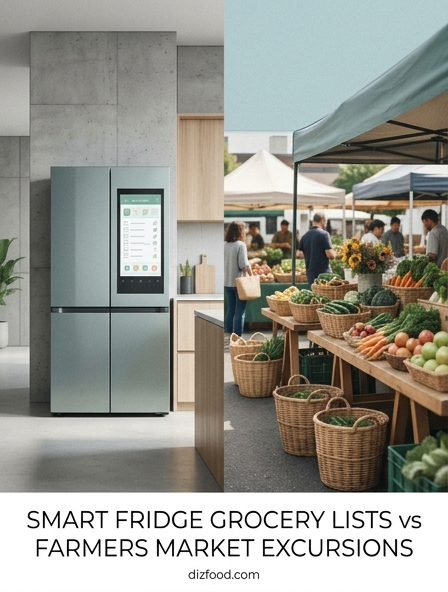
Automated Inventory Control vs Seasonal Market Discovery
The modern kitchen is increasingly defined by the tension between clinical precision and the unpredictable rhythms of nature. Automated inventory control, powered by smart refrigerators equipped with internal cameras and weight sensors, offers a level of domestic management previously reserved for industrial warehouses. These devices track the exact quantity of milk, the expiration date of yogurt, and the depletion of eggs, generating digital lists that ensure the household never runs dry of staples. This system prioritizes the elimination of the "out of stock" crisis, providing a seamless flow of necessities that requires minimal cognitive load from the homeowner.
In contrast, seasonal market discovery operates on the principle of serendipity and the biological clock of the land. When a shopper steps into a farmers market, they relinquish the rigid checklist in favor of what the earth has provided that specific week. While a smart fridge might signal that you are out of generic peppers, the market offers a sudden, fleeting abundance of shishito peppers or heirloom varieties that aren't programmed into a standard database. This experience forces a shift from replenishment to exploration. The following table highlights the core differences in these approaches:
| Feature | Smart Inventory | Market Discovery |
|---|---|---|
| Primary Driver | Data and Depletion | Seasonality and Sight |
| Product Range | Standardized Staples | Variable Heritage Crops |
| User Input | Passive Monitoring | Active Selection |
Digital Efficiency Meets Traditional Local Sourcing
The integration of digital efficiency into the kitchen has revolutionized how we perceive time. For the busy professional, the ability to swipe a screen on a refrigerator door to order a week's worth of groceries is a triumph of logistics. This efficiency is built on the backbone of global supply chains and hyper-optimized delivery routes. It treats food as a commodity-units of fuel to be delivered with the lowest possible friction. However, this speed often comes at the cost of the narrative behind the food, as the digital interface strips away the origin story of the produce in favor of a clean, standardized thumbnail image.
Traditional local sourcing via farmers markets reintroduces the narrative element into the kitchen. Here, the "efficiency" is not measured in minutes saved, but in the density of flavor and the transparency of the supply chain. Buying a head of lettuce from the person who planted the seed provides a level of traceability that no blockchain-verified smart app can currently replicate with the same emotional resonance. To balance these two worlds, many households are adopting a tiered shopping strategy:
- Digital Tier: Subscription-based replenishment for non-perishables and household cleaning supplies.
- Traditional Tier: Weekly excursions for proteins, dairy, and seasonal produce to ensure peak freshness.
- Hybrid Tier: Using smart apps to locate local vendors or pre-order "farm boxes" for quick pickup.
Ultimately, the goal is to use digital tools to clear the mundane tasks, leaving more time for the intentional act of sourcing high-quality, local ingredients that define the character of a home-cooked meal.
Smart Fridge Data Versus Farmers Market Sensory Experience
The smart fridge interacts with the world through binary code and optical recognition. It views a tomato as a red sphere of a certain weight with a projected shelf life based on average degradation rates. For the user, this provides a dashboard of data that can be accessed remotely from a smartphone, allowing for informed decisions while standing in the supermarket aisle. It is a relationship built on "knowing"-knowing what is inside, knowing when it expires, and knowing what it cost. This data-driven approach is invaluable for reducing the mental labor of household management.
However, data cannot replicate the sensory experience of a farmers market, which is a vital component of culinary inspiration. A digital list cannot convey the aroma of sun-warmed basil, the heavy weight of a juice-filled peach, or the snap of a truly fresh green bean. These sensory cues are the primary drivers of quality control in traditional shopping. In the market, the shopper uses their nose, hands, and eyes to judge ripeness and vitality, often changing their entire menu based on a single taste of a seasonal plum. While the smart fridge ensures you have "food," the sensory engagement of the market ensures you have "ingredients" at their absolute peak. This tactile connection to food fosters a deeper appreciation for the cooking process, transforming a chore into a restorative ritual that begins long before the stove is even lit.
Optimizing Grocery Budgets with Tech and Local Vendors
Financial management in the kitchen has become a high-tech endeavor. Smart fridge interfaces often integrate with supermarket loyalty programs and price-tracking algorithms. They can suggest recipes based on what is on sale or alert the user when a frequently purchased item hits its lowest price point. By analyzing consumption patterns, these devices help families avoid over-purchasing and capitalize on the economies of scale offered by big-box retailers. This is the height of precision budgeting, where every penny is tracked and every purchase is justified by a digital record.
Conversely, the farmers market offers a different kind of economic optimization. While prices can sometimes be higher for boutique items, the "market-goer" finds value through different channels. Negotiating for bulk buys at the end of the day, purchasing "seconds" (cosmetically imperfect but delicious produce), and buying in peak season when supply is high and prices drop are all strategies for the savvy local shopper. The value here is also found in the longevity of the product; market produce often lasts twice as long as its supermarket counterparts because it hasn't spent days in a shipping container. Consider these budget-saving steps for a hybrid approach:
- Use smart fridge alerts to identify when bulk staples are needed.
- Check local market apps for "crop gluts" that signal low prices on seasonal produce.
- Compare the price-per-ounce of digital delivery against the superior shelf-life value of farm-fresh goods.
- Allocate "fun money" for unique market finds that replace expensive restaurant meals.
Reducing Food Waste Through AI and Fresh Produce
Food waste is one of the most significant challenges in the modern household, and technology provides a robust defense against it. AI-driven kitchen systems monitor the "health" of the fridge's contents, sending push notifications to the user's phone when a bag of spinach is three days away from wilting. Some advanced systems even suggest recipes that utilize those specific aging ingredients, effectively "thinking" for the consumer to ensure that nothing is discarded. This proactive management turns the refrigerator from a passive cold box into an active participant in sustainability.
On the other hand, the farmers market approach reduces waste through the inherent quality and freshness of the goods. When produce is harvested the morning of the market, its cellular structure is intact, and its nutrient density is at its peak. This naturally extends the window of usability compared to produce that has traveled thousands of miles. Furthermore, market shopping encourages a "zero-waste" mindset through the absence of plastic packaging. Shoppers bring their own bags and crates, and many vendors take back egg cartons and berry baskets for reuse. By combining AI monitoring with the high-quality, unpackaged goods from a local vendor, a kitchen can achieve a near-circular economy, where technology tracks consumption and the supply chain minimizes the initial environmental footprint of the food itself.
Modern Kitchen Automation vs Authentic Slow Food Culture
Modern kitchen automation is designed for the "Fast Life." It caters to a world where time is the scarcest resource, offering voice-activated grocery lists, automated coffee brewing, and refrigerators that can order your favorite takeout when the inventory is empty. This is the pinnacle of convenience, allowing individuals to outsource the logistics of eating to a network of smart devices. It is an impressive feat of engineering that acknowledges the pressures of contemporary existence, but it can also lead to a sense of detachment from the very act of nourishment.
Slow Food culture, which finds its heart in the bustling aisles of a farmers market, stands as a deliberate counter-movement. It emphasizes the importance of knowing where food comes from, how it was grown, and the time required to prepare it properly. In this philosophy, the kitchen is not a factory for calorie production but a sanctuary for craft and connection. Choosing to visit a market rather than clicking a button is an act of resistance against the homogenization of flavor. It encourages the cook to slow down, to talk to the cheesemaker, and to spend an afternoon processing a crate of tomatoes for sauce. This authentic connection transforms the kitchen from a high-tech laboratory into a cultural hub, where the tools are secondary to the quality of the ingredients and the intention of the maker.
Precision Meal Planning Against Spontaneous Market Finds
Precision meal planning is the hallmark of the data-integrated kitchen. With a smart fridge, a user can select a Mediterranean diet plan for the week, and the device will automatically cross-reference the required ingredients against current inventory, generating a perfect shopping list. This eliminates the "what's for dinner" anxiety and ensures that every calorie and nutrient is accounted for. It is an ideal system for athletes, those with strict dietary requirements, or families with highly structured schedules. The predictability of this method allows for a very high level of organizational efficiency.
However, rigid planning leaves little room for the spontaneous inspiration found at a market. A shopper might arrive with a plan for broccoli but find that the first chanterelle mushrooms of the season have just appeared. The ability to pivot-to abandon the list in favor of a superior, unexpected ingredient-is where culinary creativity flourishes. Spontaneity leads to the discovery of new flavors and techniques that a pre-programmed algorithm might never suggest. To balance these two, many cooks use a flexible framework:
| Meal Component | Planned (Tech-Driven) | Spontaneous (Market-Driven) |
|---|---|---|
| Proteins | Pre-ordered staples (Chicken, Tofu) | Catch of the day or local butcher special |
| Vegetables | Frozen basics for emergencies | Whatever is at peak ripeness today |
| Grains/Starches | Stored inventory (Rice, Pasta) | Freshly baked artisan bread |
Sustainable Shopping Tech vs Eco Friendly Local Goods
Sustainability in the kitchen is often viewed through two different lenses: the macro-efficiency of technology and the micro-impact of local sourcing. Sustainable shopping tech focuses on optimizing the "last mile" of delivery. By consolidating orders and using AI to plot the most fuel-efficient routes, large-scale distributors can actually lower the per-item carbon footprint compared to hundreds of individual cars driving to different stores. Furthermore, smart fridges help reduce energy consumption by monitoring door-open times and optimizing cooling cycles based on the thermal mass inside.
The eco-friendly nature of local goods, however, addresses the problem at the source. Farmers markets drastically reduce "food miles," the distance food travels from field to plate. This not only saves fuel but also reduces the need for the chemical preservatives and sophisticated packaging required for long-distance transport. Market goods are often grown using regenerative or organic practices that prioritize soil health and biodiversity. When a consumer uses a smart fridge to manage these local goods, they are combining the best of both worlds: using technology to ensure that the low-impact, high-quality food they've purchased is consumed before it spoils, thereby honoring the resources that went into its production.
Comparing Smart Device Convenience with Community Connection
The convenience of a smart device is solitary and silent. It allows for the management of a household in the quiet gaps of a busy day-on the bus, between meetings, or late at night. There is an undeniable power in this autonomy; it gives the individual total control over their domestic environment without the need for social negotiation. For many, this efficiency is the only way to maintain a healthy diet in a demanding world. The interface is predictable, the transaction is instant, and the delivery is anonymous.
The farmers market, conversely, is a social ecosystem. It is one of the few remaining "third places" where people from different walks of life gather. The connection here is human: the nod to the regular vendor, the exchange of recipes with a fellow shopper, and the ambient noise of a community in motion. This connection provides a sense of belonging that a smart screen cannot offer. It turns the act of buying food into a civic engagement. Studies have shown that these social interactions, however brief, contribute significantly to mental well-being and community resilience. While the smart fridge provides the convenience of time saved, the market provides the richness of time well spent, reinforcing the idea that the kitchen is connected to a wider world of people, not just a network of servers.
The Future of Grocery Shopping Tech and Tradition Combined
The future of the kitchen does not require a choice between a silicon-chip refrigerator and a wicker market basket; instead, it points toward a sophisticated synthesis of both. We are moving toward a "Phygital" grocery experience, where the physical reality of fresh food is enhanced by digital intelligence. Imagine a smart fridge that doesn't just track milk, but also syncs with the local farmers market schedule to tell you exactly which of your favorite vendors are appearing this Saturday and what they are likely to have based on local weather patterns. This integration allows technology to serve as a bridge to tradition rather than a replacement for it.
In this burgeoning landscape, the consumer becomes a curator of their own food supply. They use data to eliminate the mundane and human intuition to embrace the exceptional. The steps toward this future involve a more conscious use of our tools:
- Utilizing AI to manage pantry inventory and reduce "panic buying" of staples.
- Supporting local digital platforms that allow farmers to list their daily harvests for pre-order.
- Adopting smart kitchen appliances that can be programmed to handle the specific requirements of heritage ingredients.
- Maintaining the habit of the weekly market visit as a primary source of inspiration and community health.
By blending the cold efficiency of the smart fridge with the warm, vibrant reality of the farmers market, we can create a kitchen culture that is both sustainable and deeply satisfying.




Comments