
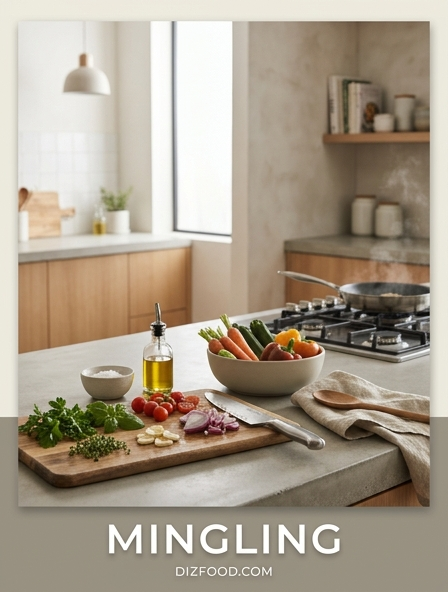
The Kitchen as a Social Catalyst
The contemporary kitchen has transcended its traditional role as a mere site for food preparation, evolving into the primary engine of household social life. It acts as a neutral ground where hierarchies dissolve, allowing residents and guests to interact in a relaxed, sensory-rich environment. The presence of heat, enticing aromas, and the rhythmic sounds of cooking create an inviting atmosphere that naturally draws people toward the center of the home. This transformation reflects a shift in architectural philosophy, where open-plan layouts prioritize visibility and accessibility over utility alone.
When the kitchen serves as a catalyst, it fosters a unique type of intimacy that is difficult to replicate in formal dining or living rooms. The shared experience of being near the "hearth" encourages vulnerability and open communication. To maximize this social potential, modern designs often incorporate specific zones that facilitate proximity without crowding:
- Extended breakfast bars that invite guests to linger while the host prepares meals.
- Dedicated beverage stations that allow for self-service and casual movement.
- Strategic lighting that shifts the mood from functional task-oriented brightness to warm, communal glows.
- Integrated seating that keeps observers at eye level with the cook.
Anatomy of the Modern Espresso Bar
An espresso bar within the kitchen is more than a luxury appliance; it is a curated station designed for precision and performance. The anatomy of this space requires a balance between technical requirements and aesthetic integration. A well-designed espresso hub considers the workflow of the barista, ensuring that water sources, grinders, and disposal units are positioned within a tight ergonomic radius. This setup allows for a seamless transition between the technical act of brewing and the social act of hosting.
| Component | Function | Social Benefit |
|---|---|---|
| Prosumer Machine | Thermal stability and pressure | Creates a focal point for performance |
| Burr Grinder | Particle size consistency | Aromatic engagement for guests |
| Knock Box | Efficient puck disposal | Maintains cleanliness during high traffic |
| Steam Wand | Texturing milk for latte art | Visual appeal and personalized service |
Integrating these elements into a kitchen requires dedicated counter depth and accessible electrical outlets. By treating the espresso bar as an architectural feature, homeowners create a designated "third space" that bridges the gap between professional cafe culture and the comfort of domestic life.
Fluidity in Spontaneous Social Spaces
Fluidity in kitchen design refers to the ease with which occupants can move and interact without physical or visual barriers. Spontaneous social spaces rely on this lack of friction to thrive; when a kitchen feels restrictive, movement becomes a chore rather than a natural extension of conversation. A fluid layout anticipates the "dance" of multiple people navigating the space, ensuring that paths between the refrigerator, the island, and the espresso bar remain unobstructed.
To achieve a sense of fluidity that supports spontaneous mingling, designers often follow these principles:
- Widening thoroughfares to at least 48 inches to allow two people to pass comfortably.
- Eliminating dead-end corners that can trap guests and stifle movement.
- Implementing "perch" points where people can lean or sit briefly without committing to a full meal.
- Aligning sightlines so that those in the kitchen can maintain eye contact with those in adjacent living areas.
By prioritizing these elements, the kitchen becomes a resilient environment that adapts to the ebb and flow of guests. Whether it is a quick morning coffee or a late-night gathering, the space remains breathable and conducive to organic human connection.
Design Elements of Interactive Kitchens
Interactive kitchens are characterized by their ability to involve everyone in the room, making the process of consumption a shared activity. The design must accommodate the "active bystander"-someone who is not cooking but wants to participate in the energy of the kitchen. This is often achieved through the use of multi-functional islands and varied counter heights. These elements break down the barrier between the "work zone" and the "social zone," inviting participation through proximity.
Key design elements that enhance interactivity include:
- Dual-tier islands that provide a workspace on one side and a raised social ledge on the other.
- Open shelving that makes it easy for guests to find glasses or napkins without asking the host.
- Integrated wine coolers or beverage drawers located at the perimeter of the kitchen to prevent crowding.
- Tactile materials like natural stone or reclaimed wood that invite guests to touch and engage with the environment.
Ultimately, the goal of an interactive design is to empower guests to feel at home. When the layout is intuitive and the tools are accessible, the kitchen functions as a stage where the host and the guest co-create the social experience.
The Ritual of Coffee and Connection
The act of preparing coffee is a time-honored ritual that serves as a bridge for social bonding. Unlike the quick press of a button on a standard brewer, the manual process of crafting an espresso-grinding, tamping, and steaming-introduces a deliberate pace to the morning or afternoon. This slowed tempo provides a natural window for conversation, allowing individuals to connect over the shared sensory experience. The ritual acts as a communal heartbeat, where the machine's hiss and the grinder's hum provide a familiar acoustic backdrop for daily updates and deep discussions.
In many homes, the coffee station becomes a destination. It is the first stop for visitors and the primary gathering point for family members before they disperse for the day. This ritualistic quality transforms coffee from a simple stimulant into a medium for hospitality. By dedicating space to this practice, the kitchen reinforces the value of "slow living." It encourages residents to pause, observe the craft, and engage with one another in a way that modern, high-speed lifestyles often overlook. The connection formed over a cup of coffee is rooted in the shared presence and the mutual appreciation of a carefully crafted beverage.
Urban Espresso Culture in Home Design
Urban espresso culture, characterized by industrial aesthetics and high-efficiency workflows, has profoundly influenced modern residential kitchen design. Homeowners are increasingly looking to replicate the "café vibe"-a blend of sophisticated machinery, tactile surfaces, and a buzzy, communal atmosphere. This trend emphasizes the use of raw materials like matte black steel, exposed brick, and polished concrete to create a space that feels both professional and inviting. The integration of these elements turns the kitchen into a stylish sanctuary that reflects the pulse of the city.
| Design Feature | Urban Café Inspiration | Home Application |
|---|---|---|
| Materiality | Industrial finishes and stainless steel | Backsplashes and metal accents |
| Lighting | Pendant lamps and neon signs | Task lighting over the brew station |
| Organization | Vertical storage and visible tools | Pegboards for portafilters and cups |
| Ambiance | Curated playlists and acoustic warmth | Integrated smart speakers |
This design movement is not just about looks; it is about adopting the mindset of a community hub. By incorporating urban espresso elements, the home kitchen becomes a place where the barrier between the private sphere and the vibrant public life of a coffee shop is beautifully blurred.
Navigating Informal Social Dynamics
The kitchen is the quintessential environment for informal social dynamics, where interactions are fluid and lack the rigidity of a seated dinner party. In this space, people naturally gravitate toward "zones of comfort," such as leaning against a counter or perching on a high stool. These postures signal a level of relaxation that encourages more honest and spontaneous dialogue. The absence of a formal table allows for a rotating cast of participants, as people can move in and out of conversations without disrupting the flow of the gathering.
To successfully navigate these dynamics, the kitchen layout should support varying levels of engagement:
- The "Inner Circle" near the prep area for close friends and family who want to help.
- The "Outer Perimeter" for those who prefer to observe while enjoying a drink.
- The "Transition Zone" near the entrance where people can hover before committing to the space.
- The "Refreshment Station" which acts as a secondary magnet to distribute the crowd.
Understanding these subconscious movement patterns allows for a design that prevents bottlenecks and ensures that every guest feels comfortable, regardless of their level of social energy. The kitchen thus becomes a self-regulating social ecosystem.
Espresso Bars as Micro Community Hubs
Within the larger context of the home, a dedicated espresso bar acts as a micro community hub. It is a specialized destination that pulls people away from their screens and into a shared physical space. In multi-generational households or shared living arrangements, the espresso bar serves as the "water cooler" of the home-a place for brief, meaningful check-ins throughout the day. It provides a focal point that is less formal than a dining table but more intentional than a random countertop, creating a specific identity for that corner of the kitchen.
Attributes that define these micro hubs include:
- Personalized mug collections that reflect the identities of the residents.
- A "menu" of available beans or roasts, sparking conversation about tastes and origins.
- The display of accessories like scales, timers, and specialized glassware.
- Proximity to seating that encourages a "stay a while" mentality.
By fostering these small-scale interactions, the espresso bar strengthens the social fabric of the household. It turns a routine caffeine fix into an opportunity for connection, ensuring that even in a busy home, there is always a dedicated space for communal engagement and shared appreciation of craft.
The Psychology of Stand-Up Socializing
Standing while socializing in the kitchen creates a psychological state of "active readiness" that differs significantly from seated interactions. When people stand, they are more likely to use expressive gestures, change positions frequently, and engage with multiple people simultaneously. This posture reduces the perceived length of time, making interactions feel brisk and energetic rather than heavy or stagnant. The kitchen island or bar height counter is the perfect height for this type of engagement, providing a place to rest a drink while maintaining an upright, engaged stance.
This psychological phenomenon explains why the kitchen often becomes more crowded than the living room during parties. Standing fosters a sense of equality; everyone is at the same eye level, which removes the subtle power dynamics often found in seated arrangements where one person might be at the head of a table. Furthermore, the ability to walk away easily-to grab a snack or check a pot-lowers the social "cost" of starting a conversation. This low-pressure environment is ideal for breaking the ice among new acquaintances and maintaining the high energy of a lively social gathering.
Evolving Kitchens into Social Experience Zones
The future of kitchen design lies in the creation of comprehensive social experience zones. These are spaces where the boundaries between cooking, dining, and entertaining are completely erased in favor of a holistic "living" environment. As technology advances, we see the integration of hidden appliances and smart surfaces that transform from workstations into sleek social furniture at the touch of a button. The goal is to create a versatile stage that can adapt to different social scripts throughout the day, from a productive morning coffee station to a sophisticated evening cocktail lounge.
Key trends in this evolution include:
- Invisible induction cooktops that allow the entire island to be used for serving.
- Acoustic treatments that dampen the noise of appliances to prioritize clear conversation.
- Zoned temperature control for wine and specialty coffee beans.
- Biophilic design elements like indoor herb gardens that provide a visual and aromatic connection to nature.
By focusing on the experience rather than just the utility, the kitchen becomes a resilient social asset. It is no longer just a room where food is made; it is a meticulously designed theater for human connection, where every element is calibrated to enhance the joy of being together.


Comments