
Deciding between a Mocktail Mixing Station and a Juice Bar Hangout can completely redefine the atmosphere of your next gathering. If you're aiming for a sophisticated, evening-ready vibe, a mocktail station encourages interactive "dry" mixology where guests can experiment with artisanal shrubs, complex syrups, and elegant garnishes. Conversely, a juice bar hangout offers a high-energy, wellness-focused experience that is perfect for daytime events, prioritizing the vibrant, revitalizing flavors of fresh-pressed produce and effortless refreshment. Whether you want to foster a creative DIY lounge feel or a fast-paced, health-conscious social hub, understanding the logistical differences in prep, equipment, and guest engagement will help you choose the ultimate alcohol-free setup for your home entertaining needs.
| Feature | Mocktail Mixing Station | Juice Bar Hangout |
|---|---|---|
| Primary Vibe | Sophisticated, creative, & craft-focused | High-energy, wellness, & refreshing |
| Essential Gear | Shakers, jiggers, strainers, & glassware | High-speed/cold-press juicers & carafes |
| Core Ingredients | Non-alcoholic spirits, bitters, & herbs | Bulk seasonal fruits, roots, & leafy greens |
| Guest Interaction | High (DIY building and garnishing) | Low (Mostly pour-and-go convenience) |
| Prep Style | Labor-intensive (syrups & infusions) | Volume-heavy (washing & peeling produce) |
| Best Occasion | Evening soirées & dinner parties | Brunches, pool parties, & fitness meets |
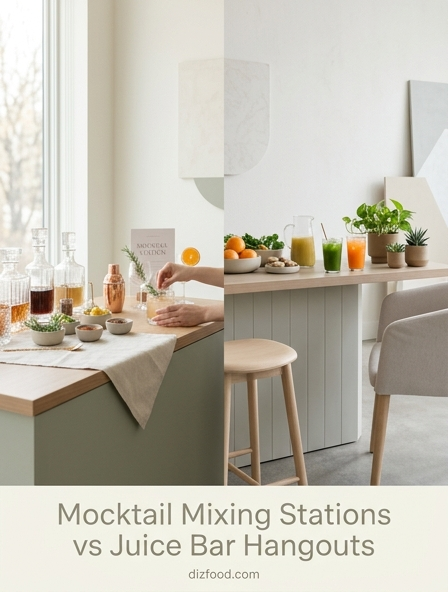
Mocktail Stations vs Juice Bars: Choosing Your Event Vibe
Selecting the right beverage concept for a kitchen-centric gathering requires a deep understanding of the intended atmosphere. Mocktail mixing stations and juice bar hangouts offer two distinct psychological experiences for guests. A mocktail station typically leans toward the sophisticated and celebratory, mimicking the ritual of traditional cocktail hour without the inclusion of alcohol. It transforms the kitchen island into a high-end apothecary where presentation, glassware, and complex flavor layering take center stage. This setup is ideal for evening events or formal celebrations where the goal is to provide a sense of "adult" indulgence and refined social interaction.
In contrast, a juice bar hangout evokes feelings of vitality, freshness, and morning-to-midday energy. These setups are often more laid-back, focusing on the vibrant colors of raw produce and the immediate gratification of a nutrient-dense beverage. While a mocktail station might use velvet textures and dim lighting, a juice bar thrives in bright, airy environments with plenty of natural light. When deciding between the two, consider the following factors:
- The time of day: Mornings favor juice bars, while evenings lean toward mocktails.
- The energy level: High-energy social mixing vs. restorative wellness breaks.
- The guest demographic: Health-conscious fitness enthusiasts vs. culinary-focused foodies.
- The visual aesthetic: Minimalist clean lines for juice vs. ornate barware for mocktails.
Ultimately, the "vibe" is determined by whether you want your guests to feel energized and cleansed or pampered and sophisticated. Both concepts effectively replace the standard soda or wine offerings, but they do so by tapping into very different lifestyle aspirations.
The Rise of Interactive Mocktail Mixing Stations
The culinary world has seen a dramatic shift toward interactive kitchen experiences, with mocktail mixing stations leading the charge. No longer relegated to simple "Shirley Temples," modern non-alcoholic stations empower guests to become their own mixologists. This DIY approach turns beverage preparation into a shared activity, breaking the ice and encouraging guests to experiment with botanical extracts, house-made shrubs, and zero-proof spirits. The kitchen island serves as the perfect stage for this performance, allowing for a layout that separates ingredients into logical, easy-to-navigate zones.
- The Base Zone: Featuring dealcoholized spirits, sparkling waters, and artisanal tonics.
- The Flavor Profile Zone: Offering complex syrups like elderflower, hibiscus, or smoked peppercorn.
- The Textural Zone: Providing fresh herbs, dehydrated citrus wheels, and edible flowers for garnish.
- The Tool Station: Equipped with shakers, stirrers, and measuring jiggers for a professional feel.
This interactivity is particularly popular among younger generations who prioritize experience over passive consumption. By providing a curated selection of high-quality ingredients, the host allows guests to tailor their drinks to specific palates-whether they prefer something dry and bitter or bright and fruity. The tactile nature of muddling mint or shaking a tin filled with ice adds a sensory layer to the evening that a pre-poured drink cannot match. It fosters a sense of accomplishment and creative expression, turning the act of drinking into a conversation starter.
Why Juice Bar Hangouts Remain a Wellness Staple
Juice bar hangouts have transcended their origins as post-gym pitstops to become permanent fixtures in the modern social kitchen. The enduring popularity of these setups stems from a collective shift toward functional nutrition and the desire for "clean" socialization. A juice bar serves as a communal hub where the focus is on the raw power of ingredients-kale, ginger, turmeric, and cold-pressed apples. The kitchen becomes a laboratory of health, where the sound of the juicer signifies a commitment to self-care rather than late-night revelry.
- Instant Nutrient Absorption: Fresh juices provide a rapid infusion of vitamins and minerals.
- Customizable Functionality: Guests can choose "shots" of wheatgrass or ginger based on their current needs.
- Visual Appeal: The rainbow of glass pitchers filled with greens, oranges, and deep purples creates a stunning focal point.
- Inclusive Nature: Juice bars are naturally gluten-free, vegan, and free from the stigmas often associated with drinking cultures.
The "hangout" aspect is crucial here; unlike a quick-service commercial juice bar, a kitchen-based setup allows for slow sipping and meaningful conversation. It encourages a lifestyle where "grabbing a drink" doesn't have to mean compromising one's health goals. For many, the juice bar represents a sanctuary of clarity and physical well-being, making it a staple for brunch parties, baby showers, and weekend morning gatherings where the goal is to leave feeling better than when you arrived.
Comparing Custom Craft Mocktails and Fresh Pressed Juices
While both beverages are non-alcoholic, the culinary philosophy behind craft mocktails and fresh juices is fundamentally different. Mocktails are an exercise in chemistry and balance, often utilizing fermentation, maceration, and carbonation to mimic the "bite" and mouthfeel of alcohol. They are designed to be sipped slowly, evolving as the ice melts. Fresh juices, on the other hand, are celebrations of raw, unadulterated produce. The goal is to preserve the integrity of the fruit or vegetable, focusing on sweetness, acidity, and earthiness in their most natural forms.
| Feature | Craft Mocktails | Fresh Pressed Juices |
|---|---|---|
| Primary Flavor Base | Botanicals and Bitters | Raw Fruits and Vegetables |
| Complexity | High (layered flavors) | Moderate (single or dual notes) |
| Sugar Source | Syrups or Nectars | Natural Fructose |
| Typical Glassware | Coupe, Nick & Nora, Highball | Tumbler, Mason Jar, Juice Glass |
| Preparation Style | Shaken, Stirred, or Built | Extracted via Juicer/Press |
Choosing between the two often comes down to the desired "weight" of the drink. A craft mocktail is often lighter on the palate but heavier on complex aromatics, while a juice can be quite filling due to its density. Mocktails often require more shelf-stable pantry items like specialty tonics, whereas juice bars require a significant amount of fresh, perishable inventory that must be processed immediately to prevent oxidation.
Social Dynamics of DIY Stations vs Relaxed Juice Lounges
The physical setup of a beverage station dictates the social flow of the room. A DIY mocktail station is inherently high-energy and "busy." It creates a focal point in the kitchen where people gather, compare recipes, and assist one another with tools. This setup is perfect for breaking up cliques, as guests must physically move to the station to "work" on their beverage. The social dynamic is one of collaboration and shared discovery, making it excellent for groups where not everyone knows each other well. It provides a shared task that eases social anxiety.
Conversely, a relaxed juice lounge emphasizes comfort and stillness. Typically, the juices are either pre-pressed and kept in carafes or made by a designated "juice-tender" to minimize noise and mess. This allows guests to remain seated in cozy kitchen nooks or around a large table, focusing entirely on the conversation at hand. The juice bar becomes a background element that supports a calm atmosphere. The social dynamic here is more intimate and focused, favoring deep catch-ups and slow-paced mornings. While the mocktail station is about the "act" of making, the juice lounge is about the "state" of being. Understanding these dynamics helps a host control the tempo of the event, ensuring that the environment matches the social goals of the gathering.
Flavor Profiles: Botanical Spirits vs Tropical Fruit Blends
The palate of a mocktail enthusiast is often quite different from that of a juice lover. Mocktails frequently leverage "botanical spirits"-non-alcoholic distillates made from juniper, coriander, oak, and various roots. These ingredients provide a savory, bitter, or spicy profile that satisfies the craving for a complex, adult beverage. These drinks often lean into "sophisticated" flavors:
- Smoky: Lapsang souchong tea or liquid smoke.
- Bitter: Gentian root or cinchona bark.
- Spicy: Ginger beer, chili tinctures, or black pepper.
- Herbaceous: Rosemary, thyme, and sage infusions.
Best Occasions for Mocktail Bars and Juice Stations
Context is everything when deciding which beverage station to implement in a home kitchen. The occasion usually dictates the most appropriate choice based on tradition and the physiological needs of the guests. Certain events naturally pair with the ritualistic nature of mocktails, while others benefit from the restorative properties of fresh juice. Matching the station to the event ensures maximum guest satisfaction and a cohesive theme.
- New Year's Eve or Cocktail Parties: Mocktail stations are the clear winner, providing a festive atmosphere that feels celebratory and inclusive for non-drinkers.
- Post-Yoga Brunches or Wellness Retreats: Juice bars are essential here to replenish electrolytes and maintain a health-focused mindset.
- Wedding Showers and Garden Parties: A hybrid approach works well, but a mocktail station with floral garnishes adds a touch of elegance.
- Corporate Strategy Sessions: Juice bars are preferred to keep minds sharp and energy levels stable without the "sugar crash" associated with some mocktails.
- Holiday Dinners: Complex mocktails that pair well with heavy foods-using bitters and acids-are the superior choice.
By analyzing the goal of the event-whether it is to celebrate, to heal, to brainstorm, or to relax-the host can select the refreshment style that best supports that objective. A juice bar at a late-night dance party might feel out of place, just as a complex, bitter mocktail might feel jarring at a 9:00 AM breakfast gathering.
Health Benefits and Nutritional Value Comparison
From a nutritional standpoint, juice bars and mocktail stations offer very different profiles. Juice bars are essentially "liquid food." They are packed with vitamins, minerals, and phytonutrients that are easily absorbed by the body. However, because the fiber is removed during juicing, the sugar content (even if natural) can cause a rapid spike in blood glucose levels. Mocktails, depending on their construction, can range from very low-calorie "tonics" to sugar-heavy concoctions if they rely too much on commercial syrups and sodas.
| Metric | Green Juice Bar | Artisanal Mocktail Bar |
|---|---|---|
| Vitamin Density | Very High (A, C, K) | Low (unless using fresh citrus) |
| Caloric Range | 100-200 per 8oz | 40-150 per 5oz |
| Glycemic Index | Moderate to High | Variable (Low with sugar-free modifiers) |
| Functional Additives | Spirulina, Ginger, Turmeric | Adaptogens, Ashwagandha, CBD |
For those watching their sugar intake, a mocktail made with club soda, fresh lime, and a splash of botanical distillate is often the "healthier" choice in terms of caloric load. However, for those looking for a "nutritional boost," the juice bar is unbeatable. Modern mocktails are increasingly incorporating "functional" ingredients like adaptogens or nootropics, which aim to provide a relaxed or focused mental state, blurring the lines between a social drink and a wellness supplement.
Equipment and Setup Needs for Both Refreshment Styles
The logistical requirements for these two setups can vary significantly in terms of kitchen real estate and cleanup. A juice bar requires heavy machinery. Whether using a centrifugal juicer or a masticating cold-press, these machines are loud and take up considerable counter space. Furthermore, the cleanup involves disassembling multiple parts and managing a large amount of wet pulp. You also need ample refrigeration for the bulk produce-carrots, apples, and leafy greens take up significant room before they are processed.
In contrast, a mocktail station is "dryer" and more compact. The primary equipment includes:
- High-quality bar tools: Shakers, Hawthorne strainers, and bar spoons.
- Glassware variety: Different drinks require different vessels to enhance the aroma.
- Ice management: Large clear cubes, crushed ice, or spheres are essential for mocktails.
- Garnish containers: Small bowls for herbs, spices, and fruit peels.
The Future of Alcohol-Free Socializing Trends
The landscape of kitchen socializing is moving toward a "hybridization" of these two concepts. As the "sober-curious" movement continues to grow, people are demanding more than just a substitute for alcohol; they want beverages that offer flavor, function, and flair. We are seeing the rise of "functional mocktails," which combine the culinary complexity of a craft drink with the nutritional benefits of a fresh juice. Imagine a drink that uses a base of cold-pressed pomegranate juice but is shaken with zero-proof gin, topped with a rosemary-infused foam, and spiked with magnesium for relaxation.
Sustainability is also becoming a major factor in these kitchen setups. Future juice bars will likely focus on "zero-waste" juicing, where the leftover pulp is used to create crackers or fruit leathers served alongside the drinks. Mocktail stations are increasingly moving away from plastic straws and imported garnishes, favoring local, seasonal herbs grown in kitchen window gardens. Technology will also play a role, with smart appliances that can perfectly carbonate a drink or extract juice while preserving 100% of the enzymes. Whether it is a dedicated "wellness nook" or an "apothecary island," the kitchen of the future is being designed with these alcohol-free social hubs as a primary consideration, proving that the most interesting drinks in the room no longer require a proof count.

Comments