
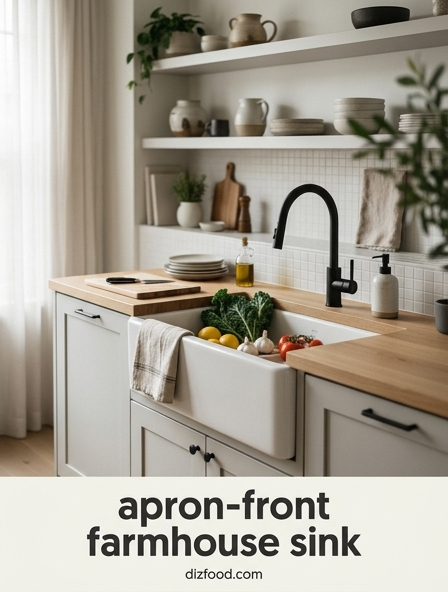
Ergonomic Benefits of Apron Front Sinks
The primary ergonomic advantage of an apron-front farmhouse sink lies in its unique architectural integration with the cabinetry. Unlike traditional drop-in or undermount sinks, which require a few inches of countertop space between the user and the basin, the apron-front design removes this barrier entirely. This design allows the user to stand directly against the sink's edge, eliminating the need to lean forward over a strip of granite or laminate. By bringing the workspace closer to the body, these sinks promote a more natural upright position, which is essential for long periods of kitchen labor.
Furthermore, the forward-facing orientation reduces the "reach distance" required to access the faucet and the bottom of the basin. This seemingly minor adjustment significantly decreases the cumulative stress placed on the upper body throughout the day. Whether you are washing delicate glassware or scrubbing heavy cast iron, the physical proximity provided by an apron-front sink transforms the kitchen into a more user-centric environment. This shift toward human-centered design is why many professionals recommend these units for high-use residential kitchens.
Maximizing Depth for Large Cookware
One of the most functional aspects of a farmhouse sink is its exceptional depth and volume. Typical kitchen sinks often struggle to accommodate modern professional-grade cookware, but the deep-set basin of an apron-front model is specifically designed for high-capacity tasks. This depth ensures that even the largest items remain submerged during soaking, preventing water from splashing onto the surrounding floor or cabinetry. This is particularly beneficial for home cooks who frequently use oversized tools that do not fit in standard divided basins.
- Large stockpots and canning jars
- Full-sized commercial baking sheets
- Deep roasting pans and Dutch ovens
- Woks and oversized mixing bowls
- Grilling grates and oven racks
Beyond simple capacity, the single-basin design common in farmhouse sinks offers an uninterrupted workspace. Without a center divider, users have the freedom to maneuver long-handled pans and wide platters with ease. This maximizes the utility of the sink, turning it into a versatile station capable of handling intense meal preparation and cleanup without the frustration of cramped quarters.
Reducing Back Strain During Cleanup
Traditional kitchen sinks often force the user into a slight, repetitive forward lean. Over time, this posture leads to lower back fatigue and muscle strain, as the spine is held in a compromised position to reach the water stream. The apron-front farmhouse sink addresses this issue by eliminating the "countertop bridge." By allowing the user to maintain a neutral pelvic alignment and a vertical spine, the sink minimizes the torque placed on the lumbar region. This makes the chore of dishwashing significantly more comfortable for individuals of all heights.
The height of the sink installation also plays a role in this benefit. Because the apron sits lower than a standard countertop edge, the transition between the basin and the user's torso is seamless. This creates a more intuitive workspace where the arms can move freely without the shoulders being hunched upward. For those who spend significant time in the kitchen, the long-term health benefits of reduced back strain cannot be overstated, making the farmhouse sink a strategic choice for aging-in-place renovations and ergonomic kitchen upgrades.
Farmhouse Sinks as a Social Hub
In the modern open-concept home, the kitchen has transitioned from a utility room to a social center. The apron-front sink serves as a visual anchor and a natural gathering point within this space. Because of its distinctive exposed front, it often becomes a piece of "functional furniture" that defines the kitchen's aesthetic. Whether crafted from classic white fireclay, rustic hammered copper, or sleek stainless steel, the sink creates a focal point that draws guests into the workspace, making the act of food preparation a shared experience.
This social aspect is enhanced by the sink's substantial size, which allows it to serve multiple roles during a gathering. It is not uncommon to see a farmhouse sink used as a massive ice bucket for chilling wine and beverages during a party, or as a prep station where multiple people can contribute to a meal. Its presence encourages interaction, as the person working at the sink is no longer tucked away but is instead positioned at a command center that faces the heart of the home, fostering conversation and community.
Optimizing Workflow for Guest Entertaining
Entertaining guests requires a kitchen that can handle high volumes of waste and prep work simultaneously. The expansive basin of an apron-front sink is ideal for maintaining a clean environment while hosting. Its depth allows the host to discreetly tuck away dirty hors d'oeuvre plates and used glassware, keeping the countertops clear and the kitchen looking tidy even before the final cleanup begins. This "soak and hide" capability is a secret weapon for hosts who prefer to focus on their guests rather than immediate dishwashing.
- Clear dirty dishes from the dining area quickly into the deep basin.
- Use the large surface area for rapid produce rinsing and prep.
- Transition the sink into a cooling station for bottled drinks.
- Utilize the open space for managing large serving platters post-meal.
By streamlining the workflow, the farmhouse sink reduces the chaos typically associated with large dinner parties. It provides a centralized zone where all cleanup activities are contained, ensuring that the kitchen remains a welcoming environment for guests rather than a cluttered obstacle course of used cookware and utensils.
Proximity and Reach for Better Posture
The distance between a user and the faucet may seem negligible, but over thousands of repetitions, a shorter reach significantly improves joint health. In a standard undermount setup, the user must reach over a portion of the countertop and then down into the basin. The apron-front sink removes the horizontal distance, allowing the user to reach straight down. This table compares the physical impact of these different configurations on the user's daily experience.
| Feature | Standard Undermount | Apron-Front Sink |
|---|---|---|
| Distance to Basin | 3-4 inches of counter | 0 inches (Flush) |
| Torso Alignment | Slight forward lean | Fully upright |
| Shoulder Strain | Moderate reach | Minimal reach |
| Splash Risk | High on countertop | Contained in apron |
By improving proximity, the farmhouse sink reduces the extension of the arms, which in turn lowers the tension in the neck and shoulders. This alignment is particularly helpful for shorter individuals or children who may otherwise struggle to reach the water stream effectively. It creates a more inclusive and accessible kitchen environment for everyone.
Handling Heavy Pots with Ease
Lifting a heavy, water-filled stockpot or a seasoned cast iron skillet into a sink can be a physically taxing maneuver. In a traditional sink, you must lift the item over the countertop edge and then lower it carefully to avoid damage. The apron-front sink simplifies this process. Because the front of the sink is the front of the workstation, there is no high "wall" of cabinetry and countertop to clear. The user can effectively slide or pivot heavy items into the basin with much less vertical lifting required.
This increased leverage is a major safety benefit. It reduces the likelihood of dropping heavy cookware, which can lead to injury or damage to the sink itself. For those with limited grip strength or wrist issues, the ability to maneuver heavy items close to the body is a significant upgrade. The sturdy construction of these sinks, particularly those made of fireclay or thick-gauge stainless steel, provides a stable foundation that can support the weight of industrial-sized kitchen tools without vibration or instability, ensuring a safer and more efficient cleaning process.
Functional Design for Shared Kitchens
In households where multiple people cook or clean at the same time, the width of the farmhouse sink becomes a vital asset. Standard sinks can feel crowded when two people attempt to use the faucet or rinse vegetables simultaneously. However, most apron-front models are designed with generous widths, often ranging from 30 to 36 inches or more. This wide-open format allows for "side-by-side" utility, where one person can be rinsing produce on one side while another washes a glass on the other.
This shared functionality is further enhanced when paired with a high-arc professional faucet or a dual-faucet setup. The sink becomes a multi-user workstation that prevents bottlenecks during busy morning routines or holiday meal preparations. Because there is no divider, the space remains flexible; it can be one massive basin for a single large task or two distinct zones for collaborative work. This adaptability makes the farmhouse sink the ideal choice for large families or homes where the kitchen is a communal laboratory for culinary experimentation.
Durability for High Traffic Social Spaces
A kitchen sink in a busy home must withstand constant impact, temperature fluctuations, and abrasive cleaning agents. Apron-front sinks are typically manufactured from high-durability materials designed for longevity. Fireclay, for instance, is fired at extremely high temperatures to create a non-porous, scratch-resistant surface that stands up to heavy daily use. Similarly, stainless steel versions offer modern resilience against dents and stains. These materials are chosen because the "apron" is exposed to the room and must maintain its aesthetic integrity despite physical contact from belts, buttons, and pans.
- Resistant to thermal shock from boiling water.
- Non-porous surfaces prevent bacteria and mold growth.
- Thick walls provide superior sound dampening.
- Acid and alkali resistance protects against food stains.
Investing in a high-quality farmhouse sink means choosing a fixture that will look as good in ten years as it does on the day of installation. Its ability to withstand the "high traffic" of a social kitchen-where it may be bumped by heavy pots or leaned on by guests-makes it a practical choice for those who want both beauty and brawn in their kitchen hardware.
Enhancing Utility in Modern Farmhouse Styles
While the farmhouse sink has historic roots, its modern evolution has seen the integration of high-tech workstation features. Many contemporary apron-front sinks are designed with integrated ledges that support a variety of custom accessories. This turns the sink from a simple basin into a multifunctional prep center. By utilizing the vertical space of the sink, you can perform tasks like chopping, straining, and drying directly over the water source, keeping the rest of your kitchen counters clean and dry.
Common accessories that enhance this utility include:
- Integrated cutting boards that slide across the basin.
- Custom-fit colanders for hands-free rinsing.
- Roll-up drying racks that save counter space.
- Bottom grids to protect the finish and facilitate drainage.






Comments