
Are you a fan of "less is more," or do you believe your dining table should be a canvas for creative explosion? Choosing between the serene functionality of Minimalist Scandi Dining and the vibrant, layered storytelling of Maximalist Tablescape Design isn't just about plates-it's about how you host and the energy you bring to your home. While Scandinavian design leans into "hygge" with neutral palettes and organic textures to create a calm, intentional atmosphere, maximalism invites you to break every rule with bold patterns, clashing colors, and curated abundance. Whether you crave the quiet sophistication of a single ceramic vase or the theatrical flair of vintage glassware and overflowing florals, understanding these two polarizing aesthetics will help you curate a dining experience that perfectly reflects your unique entertaining philosophy.
| Feature | Minimalist Scandi | Maximalist Tablescape |
|---|---|---|
| Design Philosophy | Functionalism, "Lagom" (just enough). | "More is more," curated chaos, storytelling. |
| Color Palette | Monochromatic, earth tones, cool grays. | High-contrast, jewel tones, clashing prints. |
| Materiality | Light wood, linen, matte ceramics. | Velvet, brass, crystal, patterned porcelain. |
| Table Layers | Bare table or single runner; 2-3 layers. | Chargers, multiple plates, tiered linens; 5+ layers. |
| Centerpiece Style | Single branch or dried floral in a stone vase. | Overflowing florals, fruit bowls, tapered candles. |
| Visual Impact | Open space, breathable, calming. | Sensory richness, busy, conversational. |
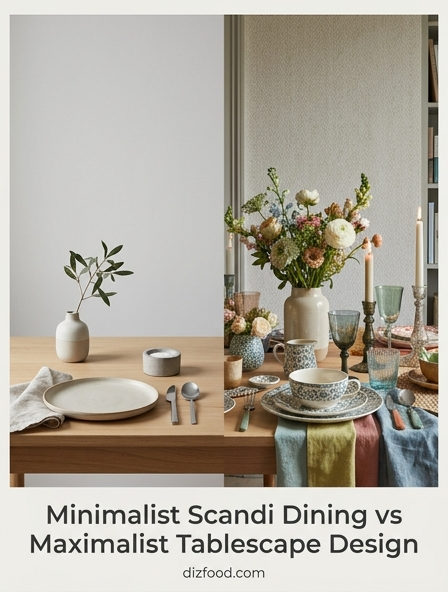
Scandi Minimalism vs Maximalist Design Overview
The culinary heart of the home often serves as the primary stage for a stylistic tug-of-war between two polarizing aesthetics: Scandinavian minimalism and maximalist tablescape design. These philosophies represent fundamentally different approaches to how we interact with our dining spaces. Scandinavian minimalism, rooted in the mid-century modern movements of Nordic countries, prioritizes "less is more," emphasizing clarity, light, and the removal of unnecessary clutter. It is a design language that seeks to reduce the dining experience to its most meaningful components, fostering a sense of calm and intentionality during meals.
In stark contrast, maximalist tablescape design celebrates the "more is more" ethos. It treats the dining table as a canvas for exuberant self-expression, where history, color, and texture collide in a deliberate display of abundance. While minimalism asks us what we can live without, maximalism asks us how much joy we can pack into a single setting. This overview explores the intersection of these two worlds, examining how the quiet restraint of the North compares to the boisterous, eclectic luxury of high-decor dining. Whether one prefers the monastic serenity of a bare oak table or the theatrical flair of a multi-layered banquet, understanding these styles allows for a more conscious curation of the kitchen environment.
The Philosophy of Scandinavian Dining Simplicity
At the core of Scandinavian dining is the concept of "lagom"-the Swedish word meaning "just the right amount." This philosophy dictates that every item on the table should serve a purpose, whether functional or emotional, without overwhelming the senses. The goal is to create a democratic and inviting space where the focus remains on the food and the company rather than the grandeur of the decor. This simplicity is not about lack; rather, it is about the careful selection of high-quality essentials that stand the test of time.
- Hygge Integration: Creating a cozy atmosphere through soft lighting and warmth rather than excessive ornamentation.
- Intentionality: Every plate, glass, and carafe is chosen for its ergonomic form and aesthetic longevity.
- Clutter Reduction: Eliminating visual noise to promote a mindful eating experience and easy conversation.
- Democratic Design: Utilizing accessible, well-made pieces that bridge the gap between high art and everyday utility.
By stripping away the superfluous, Scandi dining creates a vacuum that is filled by the sensory details of the meal itself. The steam rising from a bowl, the sound of a pouring drink, and the natural grain of the tabletop become the primary decorations. This philosophical approach encourages a slower pace of life, aligning the kitchen's aesthetic with a broader commitment to mental well-being and environmental consciousness.
Embracing Boldness in Maximalist Tablescapes
Maximalism in the dining room is an unapologetic rejection of the sterile and the sparse. It is a design movement that embraces the theatrical, drawing inspiration from historical eras such as the Baroque, Victorian, and Regency periods, while infusing them with modern irony and personal flair. A maximalist tablescape is never "finished" in the traditional sense; it is a living collection of stories told through objects. It invites guests to explore the table with their eyes, discovering hidden details in patterned linens, vintage glassware, and towering centerpieces.
The boldness of this style lies in its ability to harmonize seemingly clashing elements. In a maximalist kitchen, a contemporary neon-colored vase might sit comfortably next to a set of inherited porcelain plates, tied together by a shared sense of confidence. This approach transforms a routine dinner into an event, elevating the act of dining to a form of performance art. The psychological impact is one of stimulation and energy, making it an ideal choice for those who view their home as a gallery of their life's travels, collections, and eccentricities. It is about the courage to be "too much" and finding beauty in the resulting visual symphony.
Neutral Palettes vs Vibrant Color Schemes
The use of color serves as the most immediate differentiator between these two styles. Scandinavian design typically leans on a foundation of "non-colors"-whites, creams, grays, and muted earth tones-to maximize natural light and create a sense of airy openness. Maximalism, however, views the color wheel as a playground, often utilizing saturated jewel tones, neon accents, and high-contrast combinations to dictate the mood of the room.
| Feature | Scandi Minimalism | Maximalist Design |
|---|---|---|
| Primary Base | White, Eggshell, Light Grey | Emerald, Navy, Deep Ochre |
| Accent Approach | Monochromatic or Soft Pastels | Contrasting Primaries and Metallics |
| Mood Goal | Serenity and Airiness | Drama and Vitality |
| Light Interaction | Reflective and Soft | Absorptive and Moody |
While the Scandi palette seeks to blur the lines between the interior and the snowy landscapes of the North, the maximalist palette seeks to create a self-contained universe. In a minimalist kitchen, a single sprig of green in a clear vase provides enough color to anchor the room. In a maximalist setting, the color is often layered through mismatched napkins, vibrant taper candles, and tinted glassware, ensuring that every square inch of the table vibrates with visual interest.
Natural Wood vs Layered Textures and Patterns
Materiality plays a vital role in defining the tactile experience of a meal. Scandinavian design is synonymous with raw, light-toned woods such as ash, beech, and pine. These surfaces are often left untreated or finished with a matte soap wash to preserve the organic feel of the timber. The texture here is found in the grain of the wood and the weave of a single linen runner, emphasizing a connection to the natural world. It is a tactile celebration of honesty in materials.
Maximalism, conversely, thrives on the collision of disparate textures. A maximalist table might feature a velvet tablecloth layered with a lace runner, topped with beaded coasters and heavy crystal. Patterns are rarely used in isolation; instead, stripes meet florals, and geometric prints are paired with animal motifs. This layering creates a sense of depth and luxury that feels curated over time. Where the Scandi approach values the smooth, uninterrupted surface, the maximalist approach values the sensory richness of "more." The result is a dining environment that feels warm and inhabited, offering a protective, cocoon-like atmosphere that contrasts sharply with the cool, open surfaces of minimalist Nordic design.
The Role of Functionality in Scandi Tables
In the Scandinavian tradition, beauty is a byproduct of functionality. A carafe is not just an ornament; it is shaped to pour without dripping. A chair is not just an aesthetic choice; it is engineered for hours of comfortable conversation. This focus on utility ensures that the dining space remains highly efficient, which is particularly beneficial in smaller kitchen environments where every inch of space must be justified. The aesthetic elegance arises from the purity of these functional forms.
- Clear Surface Areas: Keeping the table free of non-essentials to allow for ease of movement and serving.
- Stackable Components: Using dinnerware that nests perfectly to save cabinet space and maintain order.
- Multi-use Decor: A bowl that serves as a centerpiece during the day and a fruit vessel at breakfast.
- Ease of Maintenance: Choosing materials that are durable and easy to clean, supporting a stress-free lifestyle.
This functionalism creates a "ready-for-anything" kitchen. Because the decor is integrated into the utility of the items, the transition from a workspace to a dining space is seamless. There is no need to clear away elaborate decorations before a meal can begin; the table is always in its final, most efficient state, embodying the Scandi belief that life should be made simpler through thoughtful design.
Mastering the More is More Decor Approach
To master maximalism, one must move beyond mere clutter and toward "curated abundance." The secret lies in the arrangement. A successful maximalist tablescape uses height, scale, and repetition to create a sense of organized chaos. It starts with a base layer-often a bold patterned tablecloth-and builds upward with chargers, dinner plates, salad plates, and bowls, each potentially from a different set. The centerpiece is rarely a single bouquet; it is often a landscape of objects, including fruit bowls, antique figurines, and multiple candle holders of varying heights.
- Horror Vacui: The design principle of filling all empty spaces with detail to avoid "blankness."
- Thematic Anchors: Using a common thread, like a specific era or a metallic finish, to unify diverse items.
- Verticality: Utilizing tall candelabras or tiered serving stands to draw the eye upward.
- Personal Artifacts: Incorporating heirlooms or travel souvenirs to give the table a unique personality.
This approach requires a keen eye for balance. While the table is packed with items, it must still allow for the practicalities of eating. The maximalist master knows exactly where to place a salt cellar so it looks like a jewel, and how to cluster glassware so it resembles a forest of crystal. It is a celebratory style that rewards curiosity and turns every dinner into a festive occasion, regardless of the menu.
Creating Focus with Minimalism and Maximalism
Both styles utilize "focus" in different ways to direct the eye. In a minimalist Scandi kitchen, focus is achieved through the use of negative space. By leaving large areas of the table or walls empty, the few objects that remain-such as a single iconic pendant light or a sculptural ceramic pitcher-gain immense visual weight. The "silence" of the surrounding space acts as a frame, demanding that the viewer appreciate the silhouette and craftsmanship of the individual piece.
In maximalism, focus is achieved through the creation of a "visual crescendo." Instead of one focal point, there are often several layers of interest that lead the eye on a journey around the table. The focus might shift from a vibrant floral arrangement to an intricately carved cutlery set, and then to the pattern of the wallpaper behind the host. In this environment, the "noise" is the design itself. While minimalism uses a spotlight, maximalism uses a floodlight. Both techniques are effective at creating an atmosphere, but they provide different psychological results: minimalism offers a place for the mind to rest, while maximalism offers a place for the imagination to wander.
Sustainability vs Eclectic Luxury in Dining
Sustainability is often the silent partner of Scandinavian design. The focus on longevity, natural materials, and "buying less but better" aligns perfectly with modern eco-conscious values. Scandi kitchens often feature recycled glass, FSC-certified wood, and organic linens. The aesthetic is inherently sustainable because it avoids the "fast fashion" cycle of home decor, relying instead on timeless pieces that do not need to be replaced as trends shift.
Maximalism approaches sustainability through the lens of the "eclectic heirloom." Rather than buying new, mass-produced items, maximalists are often avid collectors of vintage, second-hand, and antique goods. This "circular" approach to luxury gives new life to forgotten objects, reducing waste by celebrating the patina of age. A maximalist table is frequently a patchwork of different decades, where a 1920s Art Deco glass sits alongside a 1970s ceramic platter. While the Scandi style looks toward a clean, green future, the maximalist style preserves the past, proving that luxury doesn't always require a large carbon footprint-sometimes it just requires a trip to the local flea market and an eye for hidden potential.
Finding Your Signature Table Setting Style
Choosing between Scandi minimalism and maximalist design does not have to be a binary decision. Many modern homeowners find their signature style in the "middle ground," often referred to as "Scandimaximalism." This hybrid approach might involve the clean, functional furniture of the North paired with the bold colors and expressive art of a maximalist. The key is to identify which elements provide the most comfort and joy in your daily life. Does a clear, wooden surface make you feel organized and ready for the day, or does it feel cold and uninviting?
To find your style, start with a neutral base and slowly add layers. You might find that you love the simplicity of white plates but crave the drama of colorful glassware. Or perhaps you prefer a heavily patterned tablecloth but keep the centerpiece limited to a single candle. Your signature style should reflect your personality and how you host. Whether you lean toward the quiet restraint of a Nordic winter or the vibrant energy of a botanical garden, the most successful kitchen design is one that makes your guests feel welcome and makes you feel entirely at home in your most creative space.


Comments