
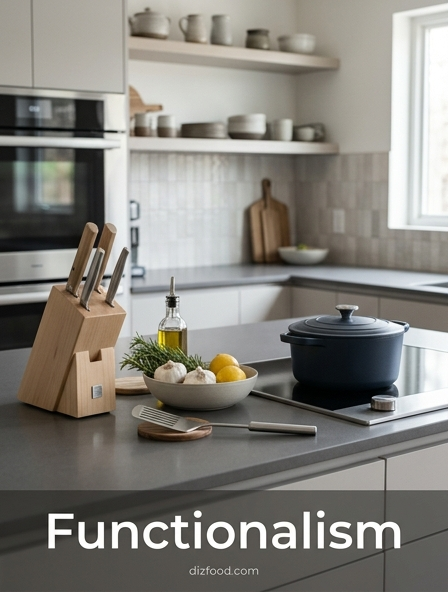
Defining the Social Core
In the philosophy of functionalism, the kitchen is no longer a hidden service room but the primary social engine of the home. This shift recognizes that the modern household revolves around food preparation as a communal activity. By defining the kitchen as a social core, designers prioritize open-concept layouts that allow the cook to remain part of the conversation. The architecture of the space must facilitate interaction without sacrificing the technical requirements of cooking.
To achieve this balance, several key elements are integrated into the social core:
- Centrally located islands that serve as both prep stations and casual dining hubs.
- Integrated seating that keeps guests close to the action but out of the direct work path.
- Sightlines that connect the kitchen to the living and dining areas for seamless engagement.
- Acoustics designed to dampen the noise of appliances while amplifying the human voice.
Ultimately, a functionalist social core ensures that every design choice supports the human connection. It is about creating a space where the act of nourishing the body coincides with the act of nourishing relationships.
Streamlined Layouts for Natural Flow
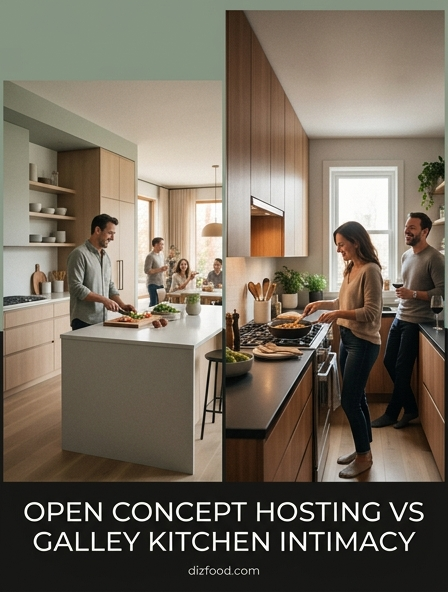
Efficiency in the kitchen is dictated by the logic of movement. A functionalist layout reduces the number of steps required to complete a task, ensuring that the transition from storage to preparation to cooking is fluid. This is often achieved through the "work triangle" concept, which optimizes the distance between the refrigerator, sink, and stove. When these elements are placed with intentionality, the kitchen feels intuitive rather than chaotic.
The following table illustrates common functional layouts and their specific advantages for different household needs:
| Layout Type | Primary Benefit | Best For |
|---|---|---|
| Galley | Maximum efficiency in small footprints | Professional single-cook environments |
| L-Shape | Openness and flexibility | Connecting to adjacent dining rooms |
| U-Shape | Ample counter space and storage | Busy families with multiple cooks |
By streamlining these paths, the kitchen becomes a stress-free environment. Natural flow prevents bottlenecks, allowing multiple people to navigate the space simultaneously without interference, which is essential for both daily routines and hosting events.
Furniture Built for Real Life
Functionalist furniture in the kitchen must endure the rigors of high-traffic use while providing maximum comfort. The focus is on the marriage of durability and utility. Chairs, stools, and tables are selected not for their ornamental value, but for their ability to withstand spills, heat, and constant movement. In a functionalist kitchen, every piece of furniture must justify its footprint by offering a tangible benefit to the user.
When selecting furniture for a high-use kitchen environment, several criteria are prioritized:
- Material resilience: Using hardwoods, metals, or high-grade polymers that are easy to sanitize.
- Weight and mobility: Stools that can be easily tucked under a counter or moved to accommodate more guests.
- Versatility: Tables that can transition from a breakfast nook to a homework station or a secondary prep surface.
- Stability: Weighted bases for stools to prevent tipping in active households.
This approach ensures that the furniture does not just sit in the space but actively participates in the household's daily rhythm. When furniture is built for real life, it fades into the background of utility, allowing the focus to remain on the people using it.
The Impact of Intentional Lighting
Lighting in a functionalist kitchen is never an afterthought; it is a critical tool for safety and atmosphere. A well-lit kitchen utilizes a layered approach to ensure that every corner serves a purpose. Task lighting is the most vital layer, focusing bright, direct beams on workstations such as the stove and cutting boards to prevent accidents. Without intentional lighting, even the most expensive kitchen becomes frustrating and difficult to use after sunset.
Beyond utility, lighting defines the mood of the social space. Dimmable ambient lights allow the kitchen to transition from a bright, high-energy workspace during meal prep to a warm, inviting environment during dinner. Accent lighting can be used to highlight architectural features or provide a low-level glow for late-night navigation. By controlling the light, the user controls the energy of the room. High-quality LED fixtures with high color rendering indexes (CRI) are preferred, as they show the true colors of food, making the cooking process more accurate and the final presentation more appetizing. Intentional lighting serves both the eye and the hand.
Maximizing Utility with Minimalist Storage
The goal of functionalist storage is to house every tool in a way that is accessible yet invisible. Minimalist storage does not mean having fewer items, but rather organizing them so they do not create visual noise. The "everything in its place" mantra is executed through clever cabinetry and internal organizers. By maximizing vertical space and utilizing deep drawers instead of lower cabinets, users can access heavy pots and pans without straining.
Key features of highly functional storage include:
- Pull-out pantries that reveal all contents at a single glance.
- Integrated appliance garages to hide toasters and blenders when not in use.
- Magnetic knife strips and spice racks located within arm's reach of the prep area.
- Custom dividers for cutlery and utensils to eliminate cluttered drawers.
When storage is maximized, the kitchen appears calm and orderly. This cleanliness is not just for show; it reduces the cognitive load on the cook, allowing them to focus on the task at hand rather than searching for misplaced tools. Storage becomes a silent partner in the culinary process.
Zoning for Quiet and Active Use
A functional kitchen must accommodate different levels of activity simultaneously. Zoning is the practice of dividing the kitchen into specific areas based on the intensity of the tasks performed there. An "active zone" includes the sink, dishwasher, and range, where heat, water, and movement are constant. Conversely, a "quiet zone" might consist of a coffee station, a seating ledge, or a pantry area where someone can enjoy a drink or read without being in the way of the cook.
Effective zoning prevents the friction that occurs when social life and domestic labor collide. For example, placing the refrigerator on the outer edge of the kitchen allows family members to grab a snack or a drink without crossing the path of someone holding a hot pan. Similarly, a dedicated "cleanup zone" away from the main prep area keeps dirty dishes from encroaching on fresh food. By respecting these boundaries, the kitchen remains a harmonious space where different rhythms of life can coexist. Zoning transforms a single room into a multi-functional suite that serves everyone's needs at once.
Durable Materials for Busy Hosts
For those who host frequently, the kitchen is a high-impact environment that requires materials capable of withstanding heavy use. Functionalism dictates that beauty should emerge from the quality and longevity of the material itself. Surfaces must be non-porous, heat-resistant, and easy to clean. Selecting the right materials reduces the long-term maintenance burden, allowing the host to spend more time with guests and less time scrubbing or worrying about stains.
| Surface Material | Functional Property | Maintenance Level |
|---|---|---|
| Quartz | Non-porous and scratch-resistant | Very Low |
| Stainless Steel | Hygienic and heat-proof | Moderate (shows prints) |
| Butcher Block | Natural antimicrobial properties | High (requires oiling) |
| Porcelain Tile | Waterproof and heavy-duty | Low |
Choosing durable materials is an investment in the kitchen's future. When surfaces can handle the spill of a red wine glass or the heat of a pan straight from the oven, the space becomes truly functional for real-world scenarios. Durability is the ultimate form of luxury in a busy household.
Reducing Clutter to Enhance Connection
Visual clutter is a distraction that can stifle conversation and create unnecessary stress. In a functionalist kitchen, the reduction of clutter is a deliberate design choice intended to foster a sense of peace. When countertops are clear, the kitchen feels larger and more inviting. This minimalist approach forces a focus on the essentials, highlighting the beauty of the architecture and the people within it. Reducing clutter is about more than just cleaning; it is about creating a "blank canvas" for social interaction.
To maintain a clutter-free environment, consider these strategies:
- Adopt a "one-in, one-out" rule for small appliances and gadgets.
- Utilize under-sink organizers to keep cleaning supplies out of sight.
- Select "handle-less" cabinetry for a smooth, uninterrupted visual plane.
- Designate a "junk drawer" or a specific cabinet for mail and keys to keep them off the island.
By removing the physical barriers of mess, the kitchen becomes a more effective space for connection. People feel more comfortable lingering in an environment that is tidy and organized, leading to deeper conversations and a more relaxed atmosphere.
Ergonomic Comfort for Long Conversations
A kitchen that is functional must also be comfortable for the human body. Ergonomics in the kitchen involves adjusting the heights and depths of surfaces to match the physical needs of the users. If a breakfast bar is too high or a chair lacks proper lumbar support, guests will not stay long. Functionalism seeks to eliminate physical strain, ensuring that the kitchen is a place where people want to spend time, whether they are chopping vegetables or sitting for an hour-long chat.
Proper ergonomics includes the consideration of toe-kicks at the base of cabinets, allowing people to stand closer to the counter without leaning forward. It also involves the placement of ovens at eye level to prevent constant bending. For social areas, the depth of the overhang on a kitchen island is crucial; there must be enough room for knees to fit comfortably. When the physical environment supports the body's natural posture, the kitchen transcends its utilitarian roots and becomes a sanctuary of comfort. This attention to detail ensures that the space is as pleasant to inhabit as it is to look at.
Balancing Aesthetics with Daily Purpose
The final pillar of kitchen functionalism is the realization that aesthetics and purpose are not at odds. Instead, the beauty of the kitchen should be a direct result of its utility. This is the "form follows function" principle in its purest state. A well-designed kitchen does not need excessive ornamentation because the quality of the materials, the precision of the layout, and the logic of the storage create their own visual appeal. Every design choice is weighed against its practical impact on daily life.
Achieving this balance requires a focus on several key areas:
- Using a cohesive color palette that reflects light and makes the space feel airy.
- Choosing hardware that is as tactile and easy to grip as it is stylish.
- Integrating appliances so they blend into the cabinetry for a unified look.
- Selecting flooring that provides grip and comfort while complementing the overall theme.
When aesthetics and purpose are perfectly balanced, the kitchen feels "right." It doesn't just look like a showroom; it feels like a lived-in, high-performance tool tailored to the specific needs of its inhabitants. It is a space designed for the reality of living, not just the fantasy of style.

Comments