
Narrative Layers in the Heart of the Home
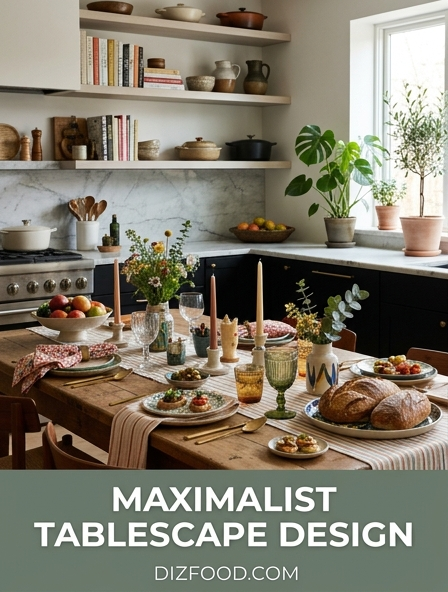
Maximalist design in the kitchen transcends simple decoration, transforming the heart of the home into a living chronicle of personal history and culinary passion. Unlike minimalist approaches that prioritize empty space, maximalism embraces the "more is more" philosophy, where every inch of a tablescape serves as a canvas for storytelling. This aesthetic layering begins with the foundational elements of the kitchen-open shelving, patterned backsplashes, and vibrant cabinetry-and extends to the intentional arrangement of the dining surface. By integrating heirloom ceramics with modern glassware, a host creates a visual dialogue between the past and the present.
The success of a maximalist narrative lies in the deliberate stacking of elements to build a cohesive yet complex atmosphere. To achieve this depth, consider the following structural layers:
- The Foundation: Using intricate textiles like embroidered runners or heavy brocade tablecloths.
- The Mid-Layer: Introducing oversized chargers and mismatched vintage plates to create physical height.
- The Accent Layer: Incorporating personal artifacts, such as antique brass candlesticks or hand-painted spice jars.
- The Natural Layer: Adding overflowing floral arrangements or bowls of seasonal fruits to ground the artificial elements.
Bold Patterns that Spark Dinner Conversation
In a maximalist kitchen, patterns are not merely accents; they are the primary protagonists of the social experience. Clashing prints-from leopard spots and vibrant ikat to classic stripes and floral toile-work together to stimulate the senses and break the ice among guests. When a tablescape features a fearless collision of motifs, it signals a creative and uninhibited environment, encouraging diners to share their own bold stories. The psychological impact of high-contrast patterns often leads to increased energy and more animated interactions during the meal.
Selecting the right pattern combination requires a balance of scale and color saturation. A large-scale geometric print on the tablecloth can be harmonized with smaller, detailed patterns on the napkins or dessert plates. The table below illustrates how different pattern families influence the communal atmosphere:
| Pattern Type | Visual Impact | Social Mood |
|---|---|---|
| Botanical/Floral | Organic and lush | Whimsical and relaxed |
| Geometric/Linear | Structured and rhythmic | Sophisticated and modern |
| Animal Prints | Eclectic and daring | Energetic and adventurous |
Sensory Textures for Immersive Social Cooking
Social cooking thrives in environments where guests feel invited to touch, hold, and interact with their surroundings. A maximalist kitchen leverages sensory textures to bridge the gap between the preparation of food and the enjoyment of the meal. Imagine the contrast of a rough-hewn stone countertop against the slick glaze of handmade pottery, or the softness of velvet chair cushions paired with a rustic wooden farm table. These tactile variations create an immersive environment that grounds guests in the present moment, making the act of dining a multi-sensory journey.
To enhance the immersive nature of a social kitchen, focus on materials that offer distinct physical feedback. Mixing diverse textures ensures that every point of contact-from the prep station to the dining chair-is engaging. Consider these essential textural elements:
- Hand-beaten copper cookware hanging within reach for a metallic, industrial touch.
- Coarsely woven linen napkins that provide a satisfying weight and grip.
- Polished marble serving boards that offer a cool, smooth surface for charcuterie.
- Intricate crystal glassware with deep-etched patterns for tactile stimulation.
Storytelling Through Curated Kitchen Accents
Every object in a maximalist kitchen serves as a potential starting point for a story. Curated accents act as the connective tissue between the host's life experiences and the guests' curiosity. A collection of mismatched salt cellars found at various flea markets across Europe, for instance, provides more than just seasoning; it offers a glimpse into the host's travels. In this design philosophy, functionality is never sacrificed for form, but rather, functional items are chosen based on their ability to represent a memory, a culture, or a specific craft. The kitchen becomes a curated gallery where the art is meant to be handled and used.
Authentic maximalism avoids the look of "clutter" by ensuring each accent has a purpose or a provenance. Whether it is a stack of vintage cookbooks with handwritten notes in the margins or a set of hand-forged iron trivets, these details invite guests to lean in and ask questions. By surrounding the dining area with these personal tokens, the host transforms a standard meal into a curated experience where the environment is as rich and flavorful as the cuisine being served.
Visual Rhythm and the Art of Hosting
Visual rhythm is the invisible force that organizes the abundance of a maximalist tablescape. Without rhythm, a kitchen can feel chaotic; with it, the space feels intentional and harmonious. This is achieved through the repetition of colors, shapes, or motifs throughout the dining area. For example, a recurring shade of emerald green found in the seat cushions, the glassware, and the pattern of the china creates a visual "beat" that guides the eye across the room. This movement prevents the guest from feeling overwhelmed and instead allows them to appreciate the complexity of the design in a structured way.
As a host, mastering visual rhythm means understanding how to direct the guest's attention through the space. You can create this flow using several specific techniques:
- Color Echoing: Repeating a secondary color in at least three different places on the table.
- Symmetry in Asymmetry: Balancing a large, eccentric centerpiece with smaller, uniform items on either side.
- Height Progression: Arranging items in varying heights to create a wave-like silhouette.
- Motif Continuity: Using a specific shape, like a scallop edge, across different materials like wood and ceramic.
Tactile Design for Enhanced Guest Experiences
The guest experience in a maximalist kitchen is deeply rooted in the physical connection to the environment. Tactile design focuses on the "hand-feel" of the objects guests interact with most frequently. In a world increasingly dominated by digital surfaces, the weight of a heavy silver spoon or the grain of a reclaimed wood table provides a comforting sense of permanence. When designing for guests, a maximalist host considers how different weights and temperatures affect the perception of the meal. A hot soup served in a thick, textured stoneware bowl feels more substantial and nurturing than the same soup in a thin, mass-produced porcelain dish.
Furthermore, the layering of textiles plays a crucial role in tactile comfort. A guest is more likely to linger over a long conversation if their physical environment is plush and inviting. Combining a silk-blend runner with heavy cotton placemats creates a sophisticated interplay of sensations. This attention to detail demonstrates a high level of care for the guest's comfort, signaling that the evening is not just about the food, but about the holistic experience of being present in a thoughtfully crafted space.
Heritage Patterns and Modern Culinary Socializing
Maximalism provides the perfect stage for the resurgence of heritage patterns, blending traditional aesthetics with contemporary social habits. Classic motifs like Delftware blue-and-white, Chinoiserie, and Victorian florals are being reimagined in modern kitchen settings. These patterns carry a sense of nostalgia and cultural weight, providing a solid foundation for social dining. By pairing a traditional toile de Jouy tablecloth with neon-colored glassware or avant-garde cutlery, the host creates a vibrant tension between the old world and the new. This juxtaposition is a hallmark of modern maximalist design, celebrating history without being trapped by it.
Incorporating heritage patterns allows for a unique form of "cultural socializing," where the history of the design itself becomes a topic of interest. To successfully blend these eras, consider the following combinations:
- Traditional Tartan: Pair with mid-century modern furniture for a cozy, grounded feel.
- Damask Prints: Use with industrial metal accents to temper the formality of the fabric.
- Paisley Motifs: Combine with minimalist matte black plates to highlight the pattern's intricacy.
- Jacquard Weaves: Layer with colorful, contemporary acrylic accessories for a playful twist.
Creating Depth with Layered Kitchen Aesthetics
Depth in a maximalist kitchen is achieved through the art of stacking and overlapping, creating a three-dimensional landscape that invites exploration. This starts with the vertical space-using hanging pot racks, tiered fruit stands, and tall candelabras to draw the eye upward. On the table itself, depth is created by moving away from flat settings. Instead of a single plate, a maximalist setting might feature a large charger, followed by a dinner plate, a salad plate, and a small bowl, each with a different but complementary design. This "nesting" effect adds a luxurious physical volume to the tablescape.
Beyond physical stacking, visual depth is created through the use of shadows and light. Layering different types of lighting-such as low-hanging pendants, flickering candles, and under-cabinet LEDs-accentuates the textures and colors of the kitchen. When guests see the way light hits a faceted glass or casts a shadow across a pleated runner, they perceive a space that is rich, complex, and full of hidden details. This depth ensures that the kitchen never feels "finished" at a glance; rather, it reveals itself slowly throughout the evening, keeping the guests engaged with their surroundings.
The Impact of Bold Patterns on Communal Mood
The relationship between environment and emotion is a cornerstone of maximalist hosting. Bold patterns have a documented impact on communal mood, often acting as a stimulant for social energy. High-saturation colors and intricate designs prevent the "lull" that can sometimes occur in sterile, minimalist environments. In a maximalist kitchen, the walls, floors, and tables work in concert to create a high-vibrancy atmosphere. This does not mean the mood is always frantic; rather, it is intentional. A host can manipulate the communal mood by choosing patterns that lean toward either high-energy excitement or cozy, maximalist intimacy.
By understanding the psychological cues of different designs, a host can curate the "vibe" of the dinner party before the first course is even served. The table below outlines how specific pattern choices influence the emotional landscape of a gathering:
| Design Element | Psychological Trigger | Resulting Mood |
|---|---|---|
| High-Contrast Stripes | Focus and alertness | Witty and fast-paced conversation |
| Oversized Florals | Warmth and abundance | Nurturing and celebratory |
| Abstract Splatters | Creativity and play | Unconventional and relaxed |
Multidimensional Design for Shared Dining Stories
The ultimate goal of a maximalist kitchen tablescape is to create a multidimensional space where shared dining stories can flourish. This design approach recognizes that a meal is more than the consumption of calories; it is a theatrical performance where the table is the stage. By combining narrative layers, bold patterns, and tactile textures, the host provides a rich backdrop for human connection. In this environment, the boundaries between the host, the guests, and the space begin to blur, leading to a more authentic and memorable social experience. The complexity of the design reflects the complexity of the relationships being nurtured around the table.
As the evening progresses, the multidimensional design continues to perform. The way a patterned napkin looks when draped over a chair, or the way the centerpiece evolves as guests help themselves to food, adds to the living story of the night. Maximalism embraces the beautiful mess of hosting, seeing the remnants of a successful dinner-wine stains on a linen runner, crumbs on a patterned plate-as the final layer of the design. These are the marks of a story well-told and a meal well-shared in a home that celebrates life in all its vibrant, cluttered glory.

Comments