
Choosing the perfect centerpiece for your next gathering often comes down to the energy you want to cultivate: the vibrant, theatrical flair of craft cocktail mixology or the refined, contemplative elegance of a wine decanting social. While mixology invites guests to participate in the "maker" culture-shaking up bespoke infusions and mastering complex garnishes-wine decanting leans into a slower pace, focusing on the sensory evolution of a vintage as it breathes. Whether you're looking to host a high-octane celebration full of creative experimentation or an intimate evening centered around sophisticated storytelling and nuanced flavors, understanding how these two styles impact your host-to-guest dynamic is essential for mastering modern entertaining.
| Feature | Craft Cocktail Mixology | Wine Decanting Social |
|---|---|---|
| Primary Vibe | High-energy, creative, and theatrical | Sophisticated, relaxed, and intimate |
| Host Effort | High (prep, shaking, cleaning) | Low (uncorking and monitoring) |
| Guest Interaction | Active: Hands-on drink building | Passive: Sensory tasting and talk |
| Equipment Needs | Shakers, strainers, jiggers, varied ice | Decanters, aerators, varietal glass |
| Learning Curve | Technical: Ratios, muddling, pouring | Educational: Terroir, vintages, aging |
| Ideal Group Size | Best for 4-10 (labor intensive) | Best for 2-8 (bottle-volume limited) |
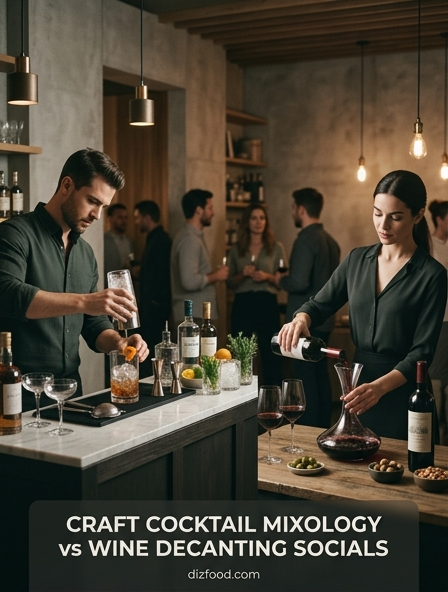
Comparing Mixology and Wine Decanting Socials
The modern kitchen often serves as a laboratory for two distinct types of beverage experiences: the high-energy artistry of craft cocktail mixology and the sophisticated, slow-burning ritual of wine decanting. While both focus on the elevation of liquids, they cater to vastly different social temperaments. Mixology is fundamentally transformative, taking raw spirits, citrus, and sweeteners to create something entirely new. It is a performance-based activity where the host acts as a chemist, engaging guests with the sounds of shaking ice and the visual flair of garnishing. In contrast, wine decanting is an act of preservation and patience, where the goal is to unlock the existing potential of a vintage through aeration. Rather than building a drink, the decanter facilitates the evolution of a single, complex ingredient.
The choice between these two socials often dictates the flow of an evening. A mixology session is typically loud, interactive, and experimental, encouraging guests to customize their flavor profiles. A wine decanting social is quieter and more contemplative, focusing on the history of the vineyard and the subtle shifts in the wine's bouquet over several hours. Choosing between them requires an understanding of the desired atmosphere: the kinetic energy of the cocktail shaker versus the steady, rhythmic pour of a crystal carafe. Both require specialized kitchenware and a keen palate, yet they represent opposite ends of the hospitality spectrum, from the frantic joy of creation to the disciplined art of appreciation.
The Creative Process of Craft Cocktails
Crafting a cocktail is a sensory journey that begins with a blueprint and ends with a masterpiece in a glass. Unlike other kitchen activities, mixology allows for immediate improvisation and bold experimentation. The process typically involves balancing four key pillars: the base spirit, the modifier, the sweetener, and the acid. A mixologist must understand how a smoky mezcal interacts with the bitterness of an amaro or how a house-made lavender syrup can soften the botanical bite of a dry gin. The kitchen becomes a workshop where syrups are simmered, herbs are muddled, and tinctures are measured with precision. Every movement, from the "dry shake" for a frothy egg white topping to the delicate expression of an orange peel's oils, is a calculated step toward flavor harmony.
- Layering: Creating visual and flavor depth by floating ingredients based on density.
- Muddling: Releasing essential oils from fresh herbs and fruits without bruising the leaves.
- Infusing: Utilizing high-proof spirits to extract flavors from spices, peppers, or botanicals over time.
- Garnishing: Adding functional aromatics that enhance the initial olfactory response to the drink.
The creativity inherent in mixology is what draws many to the craft. It allows the host to tailor drinks to individual preferences, turning the act of serving a beverage into a personalized gift. Whether it is a classic Manhattan or a contemporary foam-topped sour, the process is as much about the visual presentation as it is about the complexity of the liquid. The kitchen island transforms into a stage where textures, temperatures, and tastes collide in a single, vibrant glass.
Elegance and Patience in Wine Decanting
Wine decanting is a practice rooted in the belief that time and oxygen are the final ingredients in a vintage's lifecycle. The process begins long before the first sip is taken. For older wines, decanting serves to separate the liquid from the sediment that has settled in the bottle over decades. This requires a steady hand and a keen eye, often using a candle or a small light held under the neck of the bottle to monitor the clarity of the pour. For younger, more tannic wines, the goal is aeration. By exposing the wine to a larger surface area within a glass vessel, the harsh edges of the tannins are softened, allowing the fruit and floral notes to emerge from their tightly wound state.
The elegance of decanting lies in its simplicity and the respect it shows for the winemaker's craft. It is a slow-motion ritual that encourages guests to slow down. As the wine sits in the decanter, it undergoes a literal chemical transformation; the volatile compounds evaporate, and the oxygen interacts with the polyphenols to round out the mouthfeel. This patience is rewarded with a drink that tastes different at the thirty-minute mark than it does after two hours. In a world of instant gratification, the decanting social stands as a monument to the beauty of waiting, making the kitchen a place of quiet reflection and historical exploration through the lens of a glass.
Essential Tools for Shaking and Pouring
The success of any drink-based social depends heavily on the quality and specificity of the tools at hand. While a mixologist's kit is characterized by variety and utility, a wine enthusiast's kit is defined by precision and aesthetics. Each tool serves a functional purpose that directly impacts the final quality of the beverage. For example, a high-quality Boston shaker provides the necessary thermal mass to chill a cocktail rapidly, while a wide-bottomed decanter ensures maximum surface area for a bold Cabernet Sauvignon to breathe.
| Mixology Tools | Wine Decanting Tools |
|---|---|
| Boston Shaker or Cobbler Shaker | Wide-Base Crystal Decanter |
| Hawthorne and Fine Mesh Strainers | Aerator Attachment or Funnel |
| Japanese Style Jigger (1oz/2oz) | Sommelier's Waiter's Friend Corkscrew |
| Weighted Bar Spoon for Stirring | Microfiber Polishing Cloth |
| Citrus Zester and Channel Knife | Wine Thermometer or Chiller Sleeve |
Investing in the right equipment elevates the kitchen experience from amateur to professional. A heavy-bottomed mixing glass is essential for spirit-forward cocktails like the Negroni, preventing the drink from becoming over-diluted. Conversely, a sediment filter is a lifesaver when dealing with aged Port or unfiltered reds. Having these tools organized and ready allows the host to focus on their guests rather than fumbling for a bottle opener or a strainer, ensuring a seamless flow regardless of the beverage being served.
Social Dynamics of Mixology versus Wine
The social architecture of a mixology party is fundamentally different from that of a wine gathering. Mixology socials thrive on movement and interaction. Because cocktails are made to order, the host is often the center of attention, engaging in "bar talk" while measuring ingredients and shaking drinks. Guests frequently gather around the kitchen counter, asking questions about the ingredients or requesting custom variations. This creates a high-energy environment where the act of making the drink is just as entertaining as consuming it. It is an ideal setting for groups that enjoy learning new skills and participating in the creative process.
On the other hand, wine decanting socials foster a more egalitarian and communal atmosphere. Once the wine is poured into the decanter, the "work" is largely done, allowing the host to sit with their guests and engage in deep conversation. The focus shifts from the person making the drink to the drink itself. Guests might compare notes on the wine's evolution, discussing how the flavor profile changes over the course of the evening. This makes wine socials better suited for intimate gatherings, intellectual discussions, or occasions where the goal is relaxation rather than stimulation. While mixology is a performance, wine decanting is a shared observation, allowing the social dynamic to flow naturally without the interruptions of a loud shaker or a buzzing blender.
Sensory Profiles of Spirits and Vintages
Understanding the sensory profiles of beverages is the key to mastering both mixology and wine appreciation. Spirits offer a concentrated explosion of flavor, often characterized by high alcohol content and bold aromatics. A gin might lead with juniper and coriander, while a bourbon offers notes of vanilla, oak, and caramel. In mixology, these profiles are manipulated through the addition of acids and sugars to create a balanced "bite." The sensory experience is often sharp, cold, and refreshing, with the garnish providing an immediate olfactory hook that sets the stage for the first sip.
Wine, however, operates on a spectrum of subtlety and nuance. The sensory profile of a vintage is a combination of its terroir, grape variety, and aging process. Instead of the "constructed" flavors of a cocktail, wine offers "discovered" flavors. A Pinot Noir might reveal notes of forest floor, cherry, and spice, while a Chardonnay might lean toward buttery brioche or crisp green apple. Decanting plays a vital role here by "opening up" these scents. The following list outlines the primary sensory categories explored in these socials:
- Top Notes: Immediate aromatics like citrus peel in cocktails or floral scents in white wines.
- Body: The weight of the liquid, from the syrupy texture of a liqueur to the full-bodied tannins of a Syrah.
- Finish: The lingering taste after swallowing, which can be spicy and dry or sweet and long-lasting.
- Complexity: The presence of multiple, evolving layers of flavor that reveal themselves over time.
Hosting Interactive Cocktail versus Wine Parties
Hosting a successful beverage social in the kitchen requires careful planning of both space and supplies. For an interactive cocktail party, the kitchen island is the primary real estate. You should set up "stations" where guests can try their hand at specific tasks, such as muddling mint for Mojitos or stirring their own Old Fashioneds. This reduces the burden on the host and turns the evening into a workshop. It is essential to have an abundance of ice-far more than you think you will need-and a variety of glassware styles to match the different drinks being served. Pre-prepping syrups and garnishes is also vital to keep the "service" running smoothly without spending the entire night chopping limes.
Wine parties require a different logistical approach. The focus here is on the progression of the bottles. A common strategy is to start with a crisp sparkling wine or a light white to cleanse the palate, then move into the decanted reds as the main event. Glassware should be uniform for each guest to allow for side-by-side comparisons of different vintages. Hosting a wine party also means providing "palate cleansers" like neutral crackers or mild cheeses that won't overwhelm the wine's flavor. While the cocktail host needs a high-energy playlist and plenty of workspace, the wine host needs a stable temperature for the bottles and a comfortable seating arrangement that encourages guests to linger over their glasses as the wine breathes and evolves.
Skill Building in Mixology and Decanting
Both mixology and wine decanting are skills that improve with practice and a willingness to learn from mistakes. In mixology, the primary skill to master is balance. Beginners often struggle with drinks that are too sour or too sweet. Learning the "Golden Ratio" of 2 parts spirit, 1 part sour, and 1 part sweet is the foundation of dozens of classic recipes. Beyond ratios, technique is everything. For example, knowing when to shake (for drinks with juice or dairy) versus when to stir (for spirit-only drinks) ensures the correct texture and dilution. Mastering the "double strain" technique ensures a crystal-clear drink without ice shards or fruit pulp, elevating the home-made cocktail to professional standards.
For wine lovers, skill building involves developing a "tasting memory" and mastering the physical mechanics of the pour. Learning to identify the "legs" of a wine or the difference between French and American oak influence takes time and many bottles. The technical skill of decanting involves learning how to handle delicate, older corks that may crumble and knowing how long specific varietals need to breathe. A heavy Nebbiolo might need four hours, while a delicate Pinot Noir might only need twenty minutes before it begins to lose its brightness. These skills turn a simple hobby into a lifelong pursuit of knowledge, making every trip to the kitchen an opportunity to refine one's palate and technique.
Atmosphere and Pacing for Drink Socials
The atmosphere of a drink social is the "invisible ingredient" that ties everything together. In a mixology-focused kitchen, the atmosphere should feel like a modern speakeasy. Brighter lighting near the prep area is helpful for safety and visibility, while the background music can be upbeat to match the rhythmic sound of the shaker. The pacing of a cocktail party is usually rapid at the beginning, as guests arrive and want their first drink, followed by a steady rhythm of experimentation. Because cocktails have a higher alcohol content, it is crucial for the host to pace the serving of drinks and provide plenty of water and snacks to ensure the energy remains positive and manageable.
Wine socials thrive in a more subdued, "hygge" atmosphere. Dimmer lighting, candles, and soft jazz or acoustic music complement the slow-pouring process. The pacing is naturally slower; a single bottle might be shared among four people over forty-five minutes. This allows for the "story" of the wine to be told. The host can discuss the region, the climate of that particular harvest year, and the winemaking philosophy. This slow pace prevents over-consumption and allows the sensory experience to take center stage. While the cocktail social is a sprint of flavors and activities, the wine decanting social is a marathon of subtle transitions and deepening connections between the guests and what is in their glasses.
Deciding on the Best Social Experience
Choosing between a craft cocktail mixology session and a wine decanting social ultimately depends on the guest list and the occasion. If the goal is to celebrate a birthday or a lively promotion, the interactive nature of mixology is unbeatable. It breaks the ice, gets people on their feet, and provides a fun, educational takeaway for everyone involved. It is also the better choice for a diverse group with varied tastes, as the "menu" can be easily adapted to include non-alcoholic mocktails that use the same sophisticated syrups and garnishes, ensuring no one feels left out of the creative process.
Conversely, for an intimate dinner party or a quiet evening with fellow enthusiasts, wine decanting is the superior choice. It respects the gravity of a special vintage and allows for the type of deep, uninterrupted conversation that is often lost in more hectic environments. It requires less "work" during the actual event, allowing the host to be a full participant in the social circle. Ultimately, the best kitchen socials are those where the host is confident in their tools and techniques. Whether you are shaking a spicy Margarita or pouring a decanted Bordeaux, the objective remains the same: to create a memorable moment through the careful preparation and shared enjoyment of a well-crafted drink.

Comments