
When it comes to upgrading your sustainable kitchen, the debate between reusable silicone snack bags and beeswax wraps often boils down to one goal: maximum freshness. Silicone bags are the ultimate heavy-hitters for long-term storage, featuring an airtight, leakproof pinch-press seal that effectively halts oxidation and keeps moisture locked in-making them the clear winner for sliced produce, marinated proteins, and travel snacks. In contrast, beeswax wraps offer a semi-permeable, breathable barrier that allows ethylene gases to escape, which is actually superior for preventing mold on crusty bread and hard cheeses. While silicone bags take the trophy for sheer versatility and airtight preservation, integrating both into your routine ensures every type of food stays at its peak flavor and texture.
| Feature | Reusable Silicone Bags | Beeswax Food Wraps |
|---|---|---|
| Seal Type | Airtight & Leakproof (Pinch-lock) | Breathable & Malleable (Adhesive) |
| Best For | Liquid-rich foods, berries, & sous-vide | Cheese, bread, & covering bowls |
| Durability | High; lasts 5-10+ years | Moderate; lasts 6-12 months |
| Heat Resistance | Dishwasher, microwave, & oven safe | None (melts above room temp) |
| Cleaning | Dishwasher safe (high heat) | Hand wash only (cold water) |
| Freshness Winner | Best for preventing oxidation | Best for gas-releasing produce |
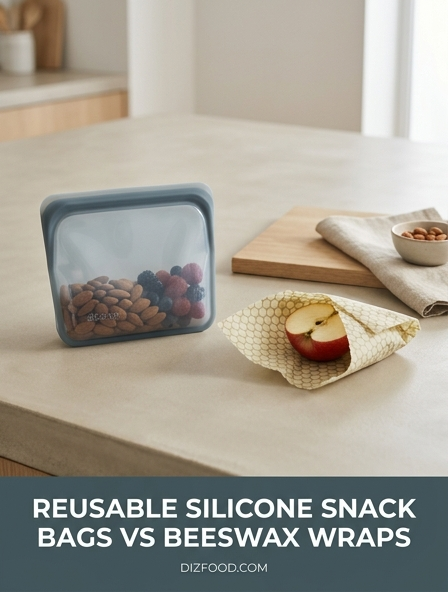
Reusable Silicone Bags vs Beeswax Wraps Key Differences
When transitioning to a plastic-free kitchen, understanding the fundamental differences between silicone snack bags and beeswax wraps is essential for effective food preservation. These two solutions represent different philosophies in sustainable storage. Silicone bags are heavy-duty, synthetic containers made from food-grade polymers, designed to behave like their single-use plastic counterparts but with a lifespan of many years. In contrast, beeswax wraps are made from organic cotton infused with beeswax, resin, and oils, relying on the warmth of your hands to create a seal around items or bowls.
- Material Composition: Silicone is an inorganic polymer, whereas beeswax wraps are 100% organic and biodegradable.
- Sealing Mechanism: Silicone bags utilize a physical "pinch-press" or sliding seal to create an airtight environment. Wraps use the tackiness of wax to mold around shapes.
- Shape and Structure: Bags are three-dimensional pouches that hold their shape; wraps are flexible sheets that adapt to the item being covered.
- Transparency: Most silicone bags are translucent, allowing you to see contents easily, while beeswax wraps are often opaque with decorative patterns.
The choice between them often comes down to the specific state of the food. If you need to contain loose components or liquids, the structural integrity of a bag is superior. However, for covering odd-shaped vegetables or sealing the tops of ceramic bowls, the adaptability of a wrap is unmatched. While both reduce waste, silicone is a "set and forget" solution, whereas beeswax wraps require a more tactile approach to achieve a proper seal.
Durability and Longevity of Silicone and Wax Food Storage
The lifespan of your eco-friendly storage depends heavily on the inherent durability of the materials used. Silicone snack bags are known for their incredible resilience. Because they are made from high-quality, non-porous material, they do not degrade easily under normal kitchen conditions. A single high-quality silicone bag can last for several thousand uses, resisting tears, stains, and odors. They are virtually indestructible in the context of daily kitchen wear and tear, making them a one-time investment for many households.
Beeswax wraps have a significantly shorter lifespan, generally lasting between six months to a year depending on the frequency of use and the care provided. Over time, the wax coating begins to crack or wear thin, and the cotton fabric may start to fray at the edges. While you can "refresh" beeswax wraps by placing them in a warm oven to redistribute the wax, they will eventually lose their adhesive properties. However, their end-of-life process is arguably more natural, as they can be composted or used as fire starters once they are no longer functional for food storage.
| Feature | Silicone Bags | Beeswax Wraps |
|---|---|---|
| Average Lifespan | 5-10 Years | 6-12 Months |
| Resistance to Tearing | High | Moderate |
| Repairability | Low | High (can be re-waxed) |
| End of Life | Recyclable (Specialized) | Compostable |
Best Uses for Silicone Snack Bags in the Kitchen
Silicone snack bags excel in environments where airtight seals and containment are non-negotiable. Their most significant advantage is their ability to hold liquids and semi-liquids without leakage. This makes them the ideal choice for marinating meats, storing leftover soups, or carrying smoothies on the go. Unlike wraps, silicone bags can be stood upright, maximizing vertical space in the refrigerator and preventing spills that often occur with less secure covers.
In addition to liquids, silicone bags are the superior choice for high-moisture snacks and freezer storage. Because they create a vacuum-like seal, they are excellent at preventing freezer burn on berries, chopped vegetables, or pre-portioned smoothie packs. They are also highly effective for "sous vide" cooking, where food is submerged in hot water. The thick walls of the bag protect the food from external contaminants while ensuring the contents remain contained during transport in lunchboxes or backpacks.
- Meal Prep: Ideal for pre-cutting onions, peppers, and garlic.
- On-the-Go: Perfectly holds grapes, crackers, or yogurt tubes for school lunches.
- Pantry Organization: Useful for storing bulk dry goods like nuts or seeds to keep them crisp.
- Frozen Assets: Storing homemade stock cubes or frozen herbs in oil.
How Beeswax Wraps Outperform Silicone for Fresh Produce
The primary reason professional chefs and home gardeners prefer beeswax wraps for produce is breathability. Silicone is entirely non-porous, which can lead to moisture buildup and "sweating" for certain vegetables, ultimately accelerating rot. Beeswax wraps, being made of infused cotton, allow for a tiny amount of airflow while still maintaining a protective barrier. This mimics the natural peel of a fruit or vegetable, keeping the item fresh for much longer than a plastic bag or silicone container would.
Furthermore, beeswax and jojoba oil-common ingredients in these wraps-possess natural antibacterial and antifungal properties. When you wrap a half-cut lemon, an avocado, or a wedge of expensive cheese, these natural elements help inhibit the growth of mold. Wraps are particularly effective for crusty bread; they keep the loaf from drying out completely while preventing the crust from becoming soggy, a common issue when bread is stored in airtight silicone or plastic.
- Leafy Greens: Wrapping kale or chard in a large beeswax sheet keeps it crisp without wilting.
- Cheese Storage: Allows hard cheeses to breathe, preventing the "slimy" texture caused by trapped moisture.
- Cut Vegetables: Perfectly molds to the uneven surface of a half-used cabbage or squash.
- Dough Rising: Use a wrap to cover a proofing bowl; it keeps the moisture in while letting the yeast "breathe."
Cleaning and Maintenance Comparison for Eco Friendly Wraps
The cleaning protocols for silicone and beeswax are diametrically opposed, and using the wrong method can easily ruin a beeswax wrap. Silicone bags are designed for modern convenience. Most are dishwasher safe, allowing you to flip them inside out and place them on the top rack for a thorough, high-temperature sanitization. They can also be hand-washed with boiling water and heavy-duty dish soap to remove grease or strong odors like curry or garlic, which silicone occasionally absorbs.
Beeswax wraps require a much gentler touch. They must never be exposed to hot water, as the wax will melt and wash away, leaving you with a plain piece of cloth. Instead, they should be washed in cool or lukewarm water with a very mild, alcohol-free soap. After washing, they cannot be wrung out; they must be hung to air dry. Because of these temperature limitations, beeswax wraps are not suitable for covering raw meat or fish, as they cannot be sanitized with the heat necessary to kill certain bacteria.
| Task | Silicone Bags | Beeswax Wraps |
|---|---|---|
| Dishwasher Safe | Yes | No |
| Water Temperature | Any (Hot preferred) | Cold/Lukewarm only |
| Drying Method | Air dry or towel dry | Air dry only |
| Sanitization | Boiling water/Steam | Mild soap only |
Temperature Resistance Silicone Bags vs Beeswax Food Wraps
Temperature resistance is perhaps the most defining functional difference between these two products. Silicone is a highly stable material that can withstand extreme temperature fluctuations. Most high-quality silicone bags are rated for temperatures ranging from -40°F (-40°C) to over 400°F (204°C). This means a single bag can go from the deep freezer directly into a microwave or a pot of boiling water. This versatility allows for unique kitchen workflows, such as freezing a meal and then reheating it in the same container, which is impossible with beeswax.
Beeswax wraps, on the other hand, are extremely sensitive to heat. The wax used in these wraps typically has a melting point around 144°F (62°C), but it begins to soften and lose its grip at much lower temperatures. You cannot use them in the microwave, near a hot stove, or to cover a dish that hasn't cooled down to room temperature. While they perform well in the refrigerator, they can become quite brittle in the freezer if left for long periods. If a beeswax wrap is used in the freezer, it should be allowed to sit at room temperature for a few minutes before unfolding to prevent the wax from cracking.
Consequently, silicone is the tool for cooking and long-term freezing, while beeswax is strictly for room temperature and refrigerated storage. Attempting to use a beeswax wrap as a lid for a hot casserole dish will result in melted wax dripping into your food, whereas a silicone bag would remain perfectly intact.
Cost Analysis of Reusable Bags versus Waxed Cotton
When evaluating the cost, one must look at the "price per use" rather than just the initial shelf price. Silicone snack bags generally have a higher upfront cost. A single high-quality bag can cost anywhere from $10 to $20. However, given their potential to last a decade, the cost over time is mere pennies per year. They represent a durable goods purchase that rarely needs replacement, making them highly cost-effective for households that use them daily for school lunches or meal prep.
Beeswax wraps are usually sold in packs of three for a similar price point ($15 to $25). While the initial cost per unit is lower, they are a semi-consumable item. Since they need to be replaced or refurbished every 6 to 12 months, the long-term investment is higher than silicone. For a household to maintain a consistent supply of wraps over five years, they would spend significantly more than they would on a set of silicone bags. However, many users find the cost justified by the specialized performance in keeping produce fresh, which can save money by reducing food waste.
- Silicone Investment: High initial cost, extremely low replacement frequency.
- Beeswax Investment: Moderate initial cost, moderate replacement frequency.
- DIY Potential: Beeswax wraps can be made at home cheaply using fabric scraps and wax pellets, lowering the cost significantly.
- Hidden Savings: Both options save money by eliminating the need to buy rolls of plastic wrap and disposable baggies.
Environmental Impact of Silicone and Biodegradable Beeswax
Both products are vastly superior to single-use plastics, but they sit at different ends of the environmental spectrum. Beeswax wraps are the gold standard for a circular economy. They are made from renewable, natural materials. At the end of their life, they are fully biodegradable and compostable, returning to the earth without leaving a trace. The production process for beeswax wraps generally involves less energy and fewer chemicals compared to synthetic manufacturing.
Silicone, while often grouped with "eco-friendly" products, is a more complex case. It is a synthetic material derived from silica (sand). While it is much more durable than plastic and does not shed microplastics into the ocean or food, it is not biodegradable. If a silicone bag ends up in a landfill, it will stay there for centuries. Furthermore, silicone cannot be recycled in standard curbside bins; it requires specialized facilities. The environmental "win" with silicone comes from its longevity; by using one bag for ten years, you prevent thousands of plastic bags from being produced and discarded.
The choice here involves a trade-off: do you prefer a product that is infinitely recyclable by nature (beeswax) or a product that prevents the most waste through sheer endurance (silicone)? For those striving for a "zero-waste" lifestyle where nothing goes to the landfill, beeswax wraps are often the preferred choice for their compostability.
Storing Liquids and Dry Goods with Eco Friendly Alternatives
Storing liquids is where the distinction between these two products is most stark. Silicone bags are designed to be leakproof. Their specialized seals allow them to hold water, broth, or marinated meats even when tilted or squeezed in a crowded fridge. This makes them a viable replacement for plastic Tupperware and jars. When storing liquids, silicone bags also have the advantage of being able to squeeze out excess air, which helps keep the contents fresh and prevents oxidation.
Beeswax wraps are fundamentally unsuitable for liquids. Because they rely on a folded or molded seal rather than a mechanical one, they cannot hold fluids. Trying to store soup in a beeswax wrap would result in a mess. However, for dry goods, both options perform well but in different ways. Silicone bags are great for "messy" dry goods like flour or spices because they can be washed easily. Beeswax wraps are excellent for "solid" dry goods like nuts, crackers, or sandwiches because they provide a lightweight, breathable cover that doesn't add bulk to a bag.
- Liquids: Use silicone bags for marinades, soups, and dressings.
- Small Dry Goods: Use silicone bags for seeds, powders, or loose tea.
- Bulky Dry Goods: Use beeswax wraps for sandwiches, whole fruits, or blocks of cheese.
- Pantry Staples: Silicone bags are better for keeping cereal or chips crispy due to the airtight seal.
Which Reusable Food Storage Solution is Right for You
Deciding between silicone snack bags and beeswax wraps depends largely on your cooking habits and lifestyle. If you are a parent packing school lunches, a "meal prepper" who uses the freezer extensively, or someone who frequently cooks sous vide, silicone bags are the clear winner. Their durability, ease of cleaning in the dishwasher, and ability to handle high heat make them a workhorse in a busy, modern kitchen. They are the "utility player" that handles everything from frozen peas to leftover spaghetti.
On the other hand, if you prioritize natural materials, shop frequently at farmers' markets for fresh produce, and enjoy the tactile nature of your kitchen tools, beeswax wraps will likely be your favorite. They are unsurpassed for keeping greens crisp and artisan bread fresh. They also appeal to the aesthetic sensibility, often coming in beautiful prints that make a refrigerator look organized and intentional. Many eco-conscious kitchens eventually find that a combination of both is the most effective strategy.
Ultimately, you should choose silicone for its versatility and longevity, and beeswax for its breathability and compostability. By replacing even half of your disposable plastic usage with these alternatives, you are making a significant positive impact on the environment. Consider starting with a small set of each to see which fits more naturally into your daily routine, as most households find that they serve very different, yet equally important, roles in the kitchen.



Comments