
If you have ever wrestled with a slippery pit or ended up with more green mash on your hands than on your toast, you know that achieving the perfect avocado slice is an art form. While a traditional kitchen knife offers professional-grade versatility for seasoned chefs, a dedicated 3-in-1 avocado slicer tool is a game-changer for those seeking safety and consistency. Choosing the best method comes down to a trade-off between the multi-purpose utility of a blade and the streamlined, mess-free efficiency of a tool designed to split, pit, and slice with surgical precision. Whether you are prepping a quick healthy snack or a gourmet platter, understanding the ergonomics and safety profiles of these two methods ensures you get beautiful results without the dreaded "avocado hand" injury.
| Feature | 3-in-1 Avocado Slicer | Standard Kitchen Knife |
|---|---|---|
| Safety Level | High; plastic blades & guarded pitter. | Low; high risk of slips during pitting. |
| Pit Removal | Stainless steel center pops pit out instantly. | Requires "whack and twist" blade technique. |
| Slice Uniformity | Perfect, even wedges via fixed wires. | Varies by hand stability and skill level. |
| Mess Factor | Minimal; scoops and slices in one motion. | Moderate; requires separate spoon/surface. |
| Prep Speed | Under 30 seconds (split, pit, slice). | 45-60 seconds (requires extra care). |
| Versatility | Single-purpose (Avocados/Kiwi). | Universal; used for all kitchen tasks. |
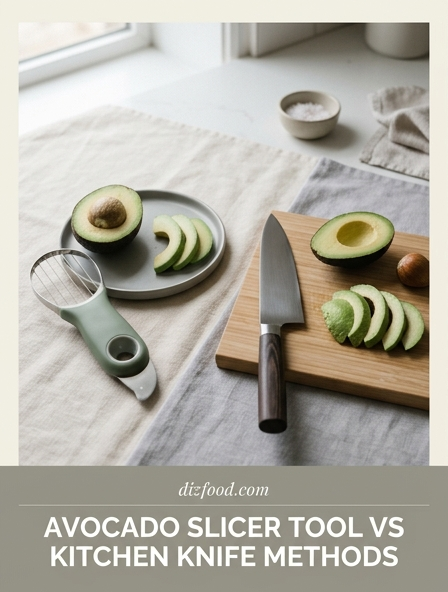
Avocado Slicer vs Kitchen Knife Safety Comparison
The debate between using a specialized avocado slicer and a traditional kitchen knife centers primarily on the risk of injury. In professional kitchens and home environments alike, "avocado hand" has become a recognized medical term referring to the lacerations sustained when a knife slips through the soft fruit or off the pit. A traditional chef's knife or paring knife requires significant control, especially when the avocado is underripe or excessively soft. The sharp edge of a knife can easily penetrate the thin skin of the fruit and continue into the palm of the hand holding it.
In contrast, most dedicated avocado slicers are designed with safety as a priority. These tools often feature plastic blades or serrated edges that are sharp enough to cut through the skin of an avocado but blunt enough to minimize the risk of skin puncture for the user. By replacing a lethal steel blade with a nylon or plastic alternative, the likelihood of a trip to the emergency room is drastically reduced. Furthermore, the specialized tool typically integrates a pitter that avoids the need for the dangerous "knife-thwack" method to remove the stone.
- Knives require high dexterity and focus to avoid slipping on the oily skin.
- Specialized tools provide a physical barrier between the hand and the cutting edge.
- Slicers often use rounded edges that do not easily catch on human skin.
- The risk of injury is highest during the pitting stage when using a standard blade.
Efficiency and Speed in Preparing Avocados
When it comes to the sheer speed of preparation, the choice between a knife and a specialized tool depends largely on the user's skill level and the volume of fruit being processed. A professional chef might find a knife faster because it eliminates the need to reach for a secondary tool. However, for the average home cook, a 3-in-1 avocado tool streamlines the workflow by combining cutting, pitting, and scooping into one fluid motion. This reduces the time spent switching between various utensils or cleaning up multiple items like spoons and knives.
Efficiency is also measured by the yield of the fruit. A knife often leaves behind significant amounts of green flesh attached to the skin, or requires a secondary step with a spoon to scoop it out. The avocado slicer is engineered to hug the curve of the skin, extracting the maximum amount of fruit in a single pass. This minimizes waste and ensures that the process is completed in seconds rather than minutes.
| Task | Kitchen Knife Method | 3-in-1 Slicer Method |
|---|---|---|
| Splitting | Requires careful circular cut. | Fast, safe plastic blade cut. |
| Pitting | High-risk knife strike. | Simple twist with metal prongs. |
| Slicing/Scooping | Requires a spoon then a knife. | One-step fan blade extraction. |
Achieving Consistent Slices for Better Presentation
Presentation is a critical component of culinary success, particularly for dishes like avocado toast, salads, or sushi. Achieving uniform thickness with a kitchen knife requires a steady hand and a keen eye. Even then, the slices can vary in width, and the soft texture of the fruit often causes it to stick to the blade, leading to ragged edges or mashed portions. This is especially true when the avocado is perfectly ripe and highly delicate.
Specialized avocado slicers solve this problem by utilizing a fan-style blade assembly. These blades are spaced at equal intervals, allowing the user to push the tool through the flesh to create identical slices every time. This consistency ensures that every plate looks professional and that the avocado is distributed evenly across the dish. The mechanical nature of the tool removes the human error associated with freehand slicing, making it an essential gadget for those who prioritize the visual appeal of their meals. For home entertainers, the ability to produce restaurant-quality fans of avocado in seconds is a significant advantage over the tedious process of manual slicing.
- Align the tool with the top of the halved avocado.
- Apply even pressure while pulling the tool toward the base.
- Lift the tool to reveal perfectly uniform, pre-separated slices.
- Transfer the slices directly to the plate to maintain their shape.
The Hidden Dangers of Traditional Knife Methods
While a knife is a versatile tool, its application on an avocado presents unique hazards that are often overlooked until an accident occurs. The avocado's skin is naturally waxy and can become extremely slippery when handled with oily or wet hands. When a sharp knife is applied to this surface, it can easily deflect. Most injuries occur during the "halving" stage or the "pitting" stage. During halving, the knife is rotated around the fruit while being held in the palm, placing the blade in close proximity to the user's fingers throughout the entire rotation.
The most dangerous moment, however, is the removal of the pit. The common technique involves striking the pit with the heel of a chef's knife to lodge the blade into the wood-like seed. If the user misses the center or if the pit is particularly hard or small, the blade can glance off the pit and strike the hand holding the fruit. Furthermore, removing the pit from the knife blade after extraction requires pushing the seed off the sharp edge, which is another frequent point of failure and injury. These hidden dangers make the traditional method a high-risk activity in a fast-paced or distracted kitchen environment.
Multi Functional Knife vs Single Purpose Slicer
The debate between multi-functional tools and single-purpose gadgets is a classic "unitasker" dilemma. A high-quality kitchen knife is the ultimate multi-functional tool; it can slice bread, mince garlic, and carve a turkey. For many minimalists, adding a specialized avocado slicer is seen as unnecessary clutter. They argue that a chef who masters their knife skills does not need a plastic gadget taking up space in the drawer. The knife offers flexibility in how the avocado is prepared, allowing for dicing, mashing, or ultra-thin shaving that a fixed-blade slicer cannot replicate.
On the other hand, the avocado slicer is a "specialist" that does one thing exceptionally well. While it lacks the versatility of a knife, it provides a level of convenience and safety that a knife cannot match for that specific task. For families who consume avocados daily, the "unitasker" status of the slicer is justified by the frequency of use. It becomes a dedicated station for a specific job, much like a cherry pitter or an apple corer. The choice often comes down to the size of your kitchen and your personal philosophy on kitchen organization. If you value speed and safety for a recurring task, the specialized tool wins. If you value drawer space and versatility, the knife remains the superior option.
Mastering the Pitting Process Without Injuries
Pitting is arguably the most difficult part of avocado preparation. When using a knife, the "strike and twist" method is standard but dangerous. To perform this safely, one must ensure the avocado is placed on a cutting board rather than held in the hand, yet many people ignore this safety rule. Even on a board, the pit can be slippery, and the force required to embed the knife can cause the fruit to slide. If the knife is not sharp enough, it may bounce off the pit, leading to an uncontrolled movement of the blade.
Avocado slicer tools typically feature a central pitting mechanism consisting of three or four small metal prongs inside a circular housing. Instead of a forceful strike, the user simply presses the tool into the pit and twists. The prongs grab the pit securely, allowing it to be lifted out without ever requiring the user to touch a sharp edge or apply excessive force. This method is not only safer but also more effective for stubborn pits that might be tightly lodged in the flesh. By mechanicalizing the grip on the pit, the tool removes the volatility of the process, making it accessible even for children or those with limited hand strength who might find a heavy chef's knife intimidating.
Clean Up and Dishwasher Safety Differences
After the avocado has been enjoyed, the cleanup process begins, and here the two methods diverge significantly. A kitchen knife is relatively simple to clean; it has a flat, smooth surface that can be wiped down with a soapy sponge in seconds. Most high-end knives, however, are not dishwasher safe, as the high heat and harsh detergents can damage the steel's temper or the handle material. This means the knife must be hand-washed and dried immediately to prevent rust and maintain its edge, which adds a small but consistent labor requirement to every meal.
Avocado slicers, being largely made of plastic and stainless steel, are almost universally dishwasher safe. This allows the user to simply toss the tool into the top rack and forget about it. However, the design of the slicer can make manual cleaning more difficult than a knife. The narrow gaps between the slicing blades often trap avocado pulp, which can become stubborn if allowed to dry. Users without a dishwasher may find themselves needing a small brush to thoroughly clean the crevices. Despite this, the convenience of the dishwasher often makes the slicer the preferred choice for busy households that want to minimize manual cleanup after cooking.
- Knives: Easy manual wipe, but usually require hand-washing to preserve quality.
- Slicers: Dishwasher safe, but manual cleaning can be tedious due to pulp buildup.
- Drying: Knives must be dried instantly; slicers can air dry without risk of corrosion.
Ergonomics and Comfort for Frequent Use
Ergonomics play a vital role in the kitchen, especially for individuals who prepare food frequently or those who suffer from conditions like arthritis or carpal tunnel syndrome. A chef's knife requires a specific "pinch grip" and significant wrist stability to maneuver around the curves of an avocado. The repetitive motion of scooping with a spoon and slicing with a blade can be taxing on the small muscles of the hand over time. If the knife is heavy or poorly balanced, this fatigue is amplified.
Avocado slicers are generally designed with large, non-slip handles that are easy to grip. The motion required to use a slicer is a pulling action involving the larger muscles of the arm rather than the intricate movements of the fingers. This makes the tool much more comfortable for extended use. The soft-touch grips often found on these gadgets provide cushioning that a hard wooden or plastic knife handle lacks. For a person preparing a large batch of guacamole for a party, the ergonomic advantage of a dedicated tool becomes very apparent. It reduces the physical strain of the task and allows for a more relaxed grip, which in turn increases the control the user has over the tool, further enhancing the safety profile of the device.
Cost Analysis of Specialized Kitchen Gadgets
When analyzing the cost of an avocado slicer versus a kitchen knife, it is important to consider both the initial investment and the long-term value. A high-quality chef's knife is a significant investment, often costing between $50 and $200. However, this cost is amortized over thousands of different tasks across many years. Since most households already own a knife, the "cost" of using it for an avocado is effectively zero. The knife is a sunk cost that provides utility in almost every culinary scenario.
An avocado slicer, meanwhile, usually retails for between $10 and $20. While this is a small absolute amount, it is a dedicated expense for a tool that can only be used for one type of fruit. For someone who eats one avocado a year, this is a poor investment. For someone who eats them daily, the cost is easily justified by the time saved and the reduced risk of medical bills from a knife injury. There is also the "hidden cost" of wasted fruit to consider. If a slicer extracts just 5% more flesh than a knife and spoon method, it could eventually pay for itself in saved produce costs over several years of frequent use.
Final Verdict for Your Kitchen Workflow
The choice between an avocado slicer and a kitchen knife ultimately depends on your personal priorities: safety, speed, or minimalism. If your kitchen philosophy is built around high-quality, versatile tools and you have the knife skills to match, the traditional method is perfectly adequate. It keeps your drawers uncluttered and allows for creative control over the size and shape of your avocado cuts. For the experienced cook, the knife is an extension of the hand that requires no replacement.
However, for the majority of home cooks, the specialized avocado slicer is the clear winner. The primary driver for this is safety. The frequency of "avocado hand" injuries suggests that the risks of the traditional method are often underestimated. When you add the benefits of perfectly uniform slices for presentation and the ease of dishwasher-safe cleanup, the $15 investment becomes highly logical. If you have children who help in the kitchen, or if you simply want to make your morning breakfast routine as frictionless and safe as possible, the 3-in-1 tool is an essential addition to your culinary arsenal. It transforms a potentially hazardous chore into a quick, clean, and satisfying step in your food preparation workflow.



Comments