
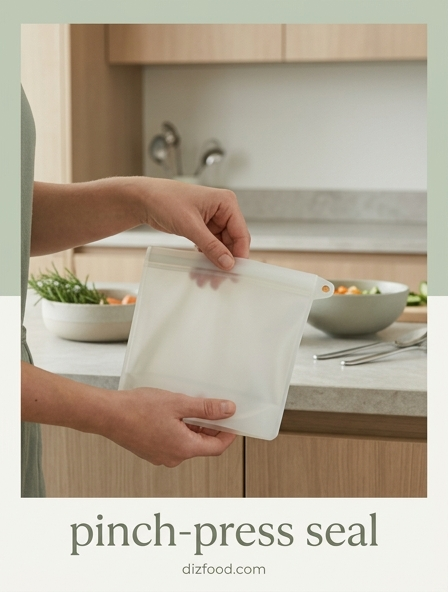
Molecular Mechanics of Pinch Press Seals
The efficacy of a pinch-press seal relies on the polymer science of thermoplastic elastomers, typically polyethylene or polypropylene. At a microscopic level, these seals function through a mechanical interlocking mechanism consisting of male and female tracks. When external pressure is applied, the ribs of the male track undergo elastic deformation to fit within the recesses of the female track. This creates a high-friction interface that resists longitudinal separation. The molecular chains within the plastic must exhibit enough flexibility to permit repeated deformation without succumbing to material fatigue or stress cracking.
The seal's integrity is further enhanced by the intermolecular forces between the contact surfaces. Van der Waals forces provide a secondary level of adhesion, ensuring that the two sides of the closure remain in intimate contact. This contact is essential for preventing the passage of air molecules. Over time, repeated use can lead to polymer degradation, where the tracks lose their structural memory, resulting in a diminished ability to maintain a hermetic environment. Understanding these mechanics is vital for designing closures that balance ease of use with robust physical performance.
Inhibiting Oxidation in Packaged Snacks
Oxidation is the primary chemical pathway leading to the degradation of snack foods, particularly those containing high levels of unsaturated fats. When oxygen molecules penetrate a package, they initiate a free radical chain reaction known as autoxidation. This process breaks down lipid molecules into volatile compounds like aldehydes and ketones, which are responsible for off-flavors and rancid odors. A pinch-press seal acts as a physical barrier that restricts the influx of atmospheric oxygen, effectively slowing the rate of these oxidative reactions.
- Reduces the concentration of available oxygen within the headspace.
- Interrupts the initiation phase of lipid radical formation.
- Protects sensitive vitamins and antioxidants from aerobic degradation.
- Extends the induction period before significant rancidity occurs.
By maintaining a low-oxygen environment through manual resealing, consumers can significantly prolong the sensory quality of the food. The seal must be pressed firmly along its entire length to ensure no micro-gaps remain, as even a small opening allows enough oxygen to catalyze the oxidation of the entire contents. This simple mechanical action is a critical tool in household food preservation.
Oxygen Barrier Technology for Food Freshness
The performance of a pinch-press closure is intrinsically linked to the Oxygen Transmission Rate (OTR) of the packaging material. While the seal provides the mechanical closure, the multi-layered film of the bag provides the surface barrier. Manufacturers often utilize co-extruded films that combine structural integrity with gas-blocking properties. These layers often include materials such as Ethylene Vinyl Alcohol (EVOH) or Polyamide, which have high crystalline structures that inhibit gas diffusion.
| Material Type | Oxygen Barrier Level | Common Application |
|---|---|---|
| Low-Density Polyethylene | Low | Short-term storage bags |
| Biaxially Oriented PP | Medium | General snack packaging |
| EVOH Co-polymers | High | Long-life shelf products |
| Metallized Polyester | Very High | Premium coffee/nuts |
When a pinch-press seal is integrated into these high-barrier films, it completes a comprehensive protection system. The synergy between the material's OTR and the seal's mechanical tightness determines the total shelf life. If the seal is compromised, the high-tech barrier properties of the surrounding film become redundant, highlighting the importance of the closure's structural design.
Preserving Volatile Flavor Compounds
The flavor profile of many kitchen staples, such as spices, coffee, and seasoned snacks, is defined by volatile organic compounds (VOCs). These molecules have high vapor pressures and easily escape into the surrounding atmosphere if the packaging is not properly secured. The loss of VOCs results in a "flat" taste profile, even if the food remains safe to eat. A pinch-press seal functions by creating a localized high-pressure zone that keeps these aromatic esters and aldehydes trapped within the container.
Furthermore, the seal prevents the absorption of exogenous odors from the kitchen environment. Because the closure creates a tight physical boundary, it inhibits cross-contamination of flavors between different stored items. This is particularly important in refrigerators or pantries where strong-smelling items like onions or spices are stored near sensitive products like butter or flour. Maintaining the aromatic integrity of food is not just about keeping air out, but about keeping the essential essence of the ingredients in.
The Physics of Airtight Closures
Airtightness in a pinch-press seal is achieved through the application of localized compressive force. From a physics perspective, the seal must withstand the pressure differential between the inside and outside of the bag. As air is squeezed out of a bag before sealing, a slight partial vacuum can be created. The seal must be strong enough to resist the atmospheric pressure attempting to push air back into the lower-pressure interior. The interlocking geometry of the tracks is designed to increase the "tortuous path" that any invading gas molecule must travel.
- Mechanical Interlock: The physical fit of the ribs.
- Surface Friction: Resists opening due to internal pressure.
- Compression Set: The ability of the plastic to maintain its shape.
- Path Length: The distance air must travel through the interface.
The effectiveness of this system is often measured by its "leak rate." A high-quality pinch-press seal minimizes the microscopic channels that exist between the male and female components. By ensuring a continuous line of contact, the user utilizes basic principles of fluid dynamics to prevent the flow of air into the package.
Maintaining Crispness through Moisture Control
Crispness is a textural attribute that depends on low water activity within the food matrix. Snacks like potato chips and crackers are hygroscopic, meaning they readily absorb moisture from the air. When water molecules enter the snack, they plasticize the starch and gluten structures, turning a brittle, crunchy texture into a soft, leathery one. The pinch-press seal serves as a primary defense against Water Vapor Transmission (WVT).
By creating a moisture-tight barrier, the seal maintains the equilibrium relative humidity inside the package. If the seal is left even partially open, the humidity inside the bag will quickly equalize with the ambient kitchen air, which is often high due to cooking vapors. Moisture control is a constant battle against the second law of thermodynamics, as water molecules naturally move from areas of high concentration (the air) to low concentration (the snack). A properly executed pinch-press closure effectively halts this migration, preserving the structural crunch that defines fresh snack foods for several days or weeks beyond the initial opening.
Reducing Lipid Peroxidation in Oils
Lipid peroxidation is a complex biochemical process where free radicals "steal" electrons from the lipids in cell membranes or food oils, leading to cell damage and rancidity. In the kitchen, oils used in snacks are highly susceptible to this degradation when exposed to light and air. The pinch-press seal is a crucial manual intervention that limits the oxygen exposure necessary for the propagation phase of peroxidation. Without a constant supply of fresh oxygen, the chemical chain reaction eventually terminates, or at least slows significantly.
This protection is essential for maintaining the nutritional value of the food, as peroxidation destroys essential fatty acids and can produce toxic compounds. The seal acts as a gatekeeper; once it is engaged, the limited amount of oxygen trapped inside is quickly consumed, and the reaction stabilizes. Consistent use of the seal ensures that the peroxide value of the oils remains within acceptable limits for human consumption. This demonstrates how a simple mechanical device provides a sophisticated chemical defense for processed foods containing various vegetable and seed oils.
Gas Permeability and Seal Integrity
Gas permeability refers to the ease with which gases like nitrogen, carbon dioxide, and oxygen pass through a barrier. In the context of kitchen storage, the pinch-press seal is the most vulnerable point of any packaging system. Seal integrity is defined by the absence of leaks and the uniformity of the closure along its entire length. If the track is contaminated with crumbs, powders, or liquids, the integrity is compromised, creating a "bridge" for gas exchange. This phenomenon is known as capillary leakage.
Maintaining seal integrity requires the user to ensure the tracks are clear of debris before pressing them together. The physics of the seal rely on smooth, clean surfaces to achieve a true airtight fit. Even a single grain of salt trapped in the track can create a gap large enough for thousands of oxygen molecules to enter per second. Therefore, the effectiveness of the gas barrier is not just a result of the manufacturer's design, but also the consumer's attention to detail during the manual closing process. Regular inspection of the seal for kinks or tears is recommended for long-term storage.
The Chemistry of Stale Snack Prevention
Staling is often misunderstood as merely drying out, but it involves complex chemical changes, including the recrystallization of starch. In products like pretzels or tortillas, starch molecules undergo retrogradation, where they rearrange into a more ordered, crystalline structure that feels hard and unpalatable. While temperature plays a role, the presence of air and fluctuating moisture levels significantly accelerates this chemical transition. A pinch-press seal mitigates this by stabilizing the internal micro-climate of the packaging.
When the seal is engaged, it prevents the rapid evaporation of the "bound water" that keeps starches in their amorphous, soft state. It also prevents the influx of external moisture that can lead to a different type of staleness characterized by sogginess. By controlling the gas and moisture exchange, the seal keeps the starch molecules in a state of chemical stasis. This preservation of the molecular arrangement is what allows a snack to retain its original mouthfeel and flavor profile long after the protective factory atmosphere has been breached.
Optimizing Shelf Life with Manual Resealing
The transition from a factory-sealed environment to a home-storage environment represents a significant drop in food protection. Manual resealing via pinch-press technology is the consumer's primary method of restoring that protection. Optimizing shelf life requires more than just closing the bag; it requires the expulsion of excess air before the final "pinch." This reduces the volume of reactive gases left inside the package, effectively minimizing the potential for oxidation and moisture absorption.
- Expel air by flattening the bag from the bottom up.
- Align the seal tracks carefully to avoid cross-threading.
- Apply firm pressure across the entire width of the bag.
- Listen for the "click" or feel the tactile snap of the tracks.
Studies show that food stored with a functional pinch-press seal can last up to five times longer than food stored in an open or loosely folded bag. This extension of shelf life reduces food waste and maintains nutritional density. The manual seal is a bridge between industrial food science and everyday kitchen management, providing a reliable, repeatable solution for food preservation.



Comments