
When choosing between freeze-dried berries and sun-dried raisins, you are essentially deciding between a modern flavor explosion and a classic, chewy sweetness. Freeze-dried berries are the champions of intensity, utilizing a sublimation process that removes moisture while locking in the fruit's original cellular structure, resulting in a lightweight, crispy snack that delivers a sharp, tart zing. In contrast, sun-dried raisins undergo a slow dehydration process that concentrates natural sugars into a dense, syrupy morsel with deep caramelized undertones. While raisins offer a nostalgic, energy-dense chew, freeze-dried berries provide a sophisticated, melt-in-your-mouth experience that preserves up to 90% of the fresh fruit's antioxidants and vibrant color, making them the superior choice for those seeking a bold, nutrient-packed punch in every bite.
| Feature | Freeze-Dried Berries | Sun-Dried Raisins |
|---|---|---|
| Texture | Light, airy, and ultra-crispy | Dense, chewy, and sticky |
| Flavor Profile | Sharp, tart, and highly concentrated | Deep, mellow, and sugary-sweet |
| Nutrient Density | High; retains heat-sensitive vitamins | Moderate; loses some Vitamin C/A |
| Sugar Content | Lower sugar by volume; no additives | Very high natural sugar concentration |
| Moisture Content | ~1% to 2% (maximum crunch) | ~15% to 20% (plump/soft) |
| Best For | Gourmet toppings and healthy snacking | Baking, trail mixes, and quick energy |
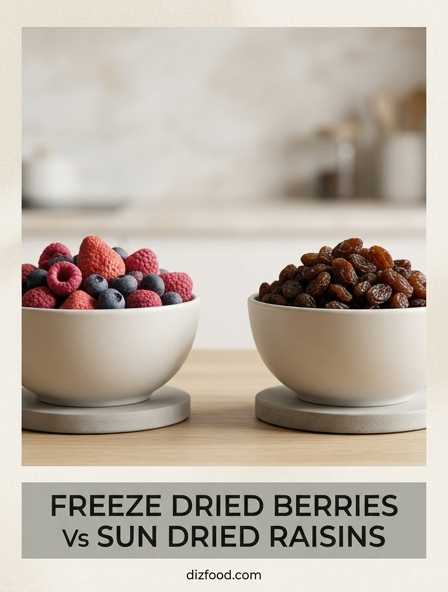
Nutritional Differences Between Freeze Dried Berries and Raisins
When evaluating the nutritional profiles of freeze dried berries and sun dried raisins, the most striking difference lies in their concentration of micronutrients relative to their weight. Freeze dried berries, such as strawberries, raspberries, and blueberries, undergo a process of sublimation that removes nearly all moisture while leaving the cellular structure intact. This results in a snack that is exceptionally high in fiber and Vitamin C, but very low in weight. Because the water is removed without significant heat, the integrity of the fruit's original nutrients remains largely uncompromised, offering a dense source of flavonoids and manganese.
In contrast, sun dried raisins are produced by dehydrating grapes under the sun or in large-scale driers. This process concentrates the minerals naturally found in grapes, such as potassium, iron, and copper. Raisins are particularly noted for their high boron content, which supports bone health, and their significant levels of tartaric acid, which aids in digestive health. However, the heat and oxidation involved in sun drying can lead to a reduction in certain heat-sensitive vitamins compared to the freeze-drying method.
- Freeze Dried Berries: Higher in Vitamin C, fiber per gram, and anthocyanins.
- Sun Dried Raisins: Higher in potassium, iron, and specific organic acids.
- Fiber Content: Both are excellent sources, but berries often provide more soluble fiber.
- Mineral Density: Raisins typically lead in magnesium and copper concentrations.
Ultimately, while both options provide a concentrated form of fruit nutrition, berries lean toward antioxidant and immune support, whereas raisins offer a robust profile of essential minerals and quick-burning energy for physical activity.
The Impact of Processing Methods on Fruit Antioxidants
The method used to preserve fruit significantly alters its antioxidant capacity. Freeze drying is often considered the gold standard for preserving delicate phytonutrients. By freezing the berries and then lowering the pressure to allow the ice to escape as vapor, the process avoids the thermal degradation that typically destroys heat-labile antioxidants. Anthocyanins, the pigments responsible for the deep reds and purples in berries, are particularly sensitive to heat. Freeze drying ensures these compounds remain bioactive, providing the consumer with the same anti-inflammatory benefits as fresh fruit.
Sun drying, while traditional and cost-effective, subjects the grapes to prolonged exposure to heat and oxygen. This exposure can trigger the oxidation of phenolic compounds. While raisins still retain a significant amount of antioxidants, specifically catechins and quercetin, some of the more volatile compounds are lost during the slow drying period. Interestingly, the browning reaction (Maillard reaction) that occurs during sun drying can create new flavor compounds, but it generally does not increase the total antioxidant potency compared to the fresh state.
The contrast is clear when looking at the ORAC (Oxygen Radical Absorbance Capacity) values. Freeze dried berries usually maintain a higher ORAC value per serving than sun dried raisins. This makes freeze dried berries a superior choice for those specifically looking to combat oxidative stress and support cardiovascular health through their diet. However, raisins remain a valuable source of polyphenols that contribute to long-term cellular protection.
Caloric Density and Weight Comparison in Dried Snacks
One of the most confusing aspects for home cooks and dieters alike is the massive disparity in caloric density between these two snacks. Freeze dried berries are incredibly light; a large bowl of freeze dried strawberries might weigh only 30 grams but occupy a significant volume. Conversely, raisins are dense and heavy, meaning a small handful can pack a surprising number of calories. This weight difference is due to the residual moisture content and the natural structural density of the fruit skins and sugars.
| Fruit Type | Average Weight (Per Cup) | Approximate Calories | Volume Impression |
|---|---|---|---|
| Freeze Dried Strawberries | 20g - 25g | 70 - 90 kcal | High Volume |
| Sun Dried Raisins | 145g - 160g | 430 - 480 kcal | Low Volume |
| Freeze Dried Raspberries | 15g - 20g | 60 - 80 kcal | Very High Volume |
| Sun Dried Sultanas | 150g | 450 kcal | Moderate Volume |
Because freeze dried fruit is so light, it is very easy to eat a "large" portion without consuming excessive calories, making it an ideal choice for volume eaters. Raisins, being much more compact, are better suited for athletes or hikers who need to carry high-energy fuel in a small space. When substituting one for the other in recipes, it is crucial to measure by weight rather than volume to avoid significant caloric discrepancies. A cup of raisins is nearly five times as calorically dense as a cup of freeze dried berries, a fact that can quickly derail a calorie-controlled diet if not carefully monitored.
Natural Sugar Levels in Sun Dried vs Freeze Dried Fruit
Sugar concentration is a primary concern for those monitoring their glycemic load or sugar intake. Both freeze dried berries and sun dried raisins contain no added sugars, but their natural sugar concentrations vary wildly due to the original fruit's composition. Grapes are naturally one of the highest-sugar fruits, consisting primarily of glucose and fructose. When dried into raisins, these sugars become highly concentrated. A standard serving of raisins can contain up to 25-30 grams of sugar, which is nearly equivalent to some candy bars.
Berries are naturally lower on the glycemic scale and contain less sugar per unit of volume compared to grapes. When berries are freeze dried, the sugar is concentrated because the water is removed, but the starting point is much lower. For instance, a serving of freeze dried raspberries contains significantly less sugar than an equivalent serving of raisins. This makes berries a more favorable option for individuals with diabetes or those following a low-sugar lifestyle.
Furthermore, the type of sugar matters. Raisins have a high ratio of fructose, which is processed by the liver. While natural, the sheer density of sugar in raisins means they should be consumed in moderation. Freeze dried berries provide a "slow-release" sensation because the high fiber content helps mitigate the impact of the natural sugars present. If you are looking for a sweet fix that won't cause a massive spike in blood glucose, the freeze dried berry category is almost always the safer bet.
Texture Profiles Crunchy Berries versus Chewy Raisins
The sensory experience of eating dried fruit is often the deciding factor for many consumers. Freeze dried berries offer a unique, airy crunch that is often described as "honeycomb-like" or "stystyrofoam-adjacent" in a positive, crisp way. Upon contact with moisture or the tongue, they quickly dissolve or rehydrate, releasing a burst of tartness. This "crunch factor" makes them an excellent substitute for croutons in salads or a crispy topping for yogurt and cereal. Their lack of moisture prevents them from being gummy, but it also makes them fragile; they can easily turn into powder if crushed.
Sun dried raisins provide the classic "chewy" texture that defines traditional dried fruits. Because they retain about 15% to 20% moisture, they are pliable, gummy, and substantial. This texture is highly desirable in baked goods like cookies and bread, where the fruit needs to hold its shape and provide a moist contrast to the surrounding dough. Raisins are also much more durable than freeze dried fruits; they can be tossed in a backpack or a lunchbox without the risk of being pulverized into dust.
The choice between the two often comes down to the desired mouthfeel. If a snack requires a satisfying snap and a light feel, freeze dried berries are the superior choice. If the goal is a dense, lingering chew that provides a sense of satiety through mastication, raisins are the traditional favorite. In the kitchen, these textures behave differently when exposed to heat: raisins stay chewy, while freeze dried berries can soften or bleed color more rapidly into the batter.
Shelf Life and Storage Requirements for Dried Fruit Varieties
Storage is where the two types of fruit diverge most significantly. Freeze dried berries are extremely hygroscopic, meaning they greedily absorb moisture from the air. If left in an open bowl for even an hour in a humid kitchen, they will lose their signature crunch and become soft, rubbery, and unappealing. To maintain their quality, they must be stored in airtight containers, preferably with a desiccant packet. When stored correctly in a cool, dark place, freeze dried fruit can last for years, which is why it is a staple in emergency food supplies and space travel.
Sun dried raisins are more resilient to ambient humidity but are susceptible to other forms of degradation. Over time, the sugars in raisins can crystallize, leading to a gritty texture on the surface. While they have a long shelf life-typically six to twelve months in a pantry-they eventually become hard and lose their flavor. Unlike freeze dried fruit, raisins can also attract pests like pantry moths if not sealed properly, and their residual moisture means that in very poor conditions, they could theoretically develop mold, though this is rare due to their high sugar concentration.
- Freeze Dried: Requires hermetic sealing; highly sensitive to humidity; very long-term shelf life.
- Sun Dried: More tolerant of air exposure; prone to sugar crystallization; best used within a year.
- Temperature: Both prefer cool, dark environments to prevent nutrient loss and color fading.
In a kitchen setting, always ensure that freeze dried berries are the last ingredient added to a wet dish to preserve their texture, whereas raisins can be integrated early or even soaked to plump them up before use.
Vitamin Retention in Freeze Drying and Sun Drying
The nutritional superiority of freeze dried berries is most evident when examining vitamin retention. Vitamin C and the various B vitamins are notoriously unstable when exposed to heat and air. The sun drying process, which can take several days of exposure to direct sunlight and fluctuating temperatures, results in a significant loss of these vital nutrients. While raisins are not devoid of vitamins, they are much lower in Vitamin C than the original grapes from which they were made.
Freeze drying occurs at extremely low temperatures, often reaching -50 degrees Celsius or lower, before the vacuum process begins. This "cold" processing protects the molecular structure of vitamins. Research has consistently shown that freeze dried fruits retain upwards of 90% of their original vitamin content. For berries, which are primary sources of Vitamin C and folate, this preservation is crucial for consumers relying on fruit for their daily nutritional requirements.
In addition to vitamins, freeze drying preserves the volatile oils and aromatic compounds that give berries their distinct flavor. Sun drying tends to "cook" the fruit slightly, altering the flavor profile toward a deeper, more caramelized taste but sacrificing the bright, acidic notes associated with fresh vitamins. If your goal is to supplement your diet with a product that mimics the nutritional value of fresh produce as closely as possible, freeze dried options are scientifically proven to be more effective than sun dried alternatives.
Culinary Applications for Baking and Healthy Snacking
In the kitchen, these two dried fruits serve very different roles. Sun dried raisins are the workhorses of the baking world. Their ability to hold moisture and withstand high oven temperatures makes them perfect for cinnamon rolls, oatmeal cookies, and savory Moroccan tagines. When baked, raisins become tender and sweet, integrating into the crumb of the bread. They can also be macerated in liquid-such as rum, juice, or hot water-to plump them up before they are added to a recipe, ensuring they don't pull moisture away from the dough.
Freeze dried berries are often used as a finishing touch or a "secret ingredient." Because they can be easily crushed into a fine powder, they are frequently used as natural food coloring or flavor intensifiers in frostings, meringues, and whipped creams. Unlike fresh berries, the freeze dried powder adds intense flavor and color without adding unwanted liquid, which can ruin the consistency of delicate confections. In their whole form, they are best used as a topping for oatmeal or yogurt right before serving to maintain their crunch.
- Baking: Use raisins for internal moisture; use freeze dried berries for toppings or powdered flavor.
- Salads: Raisins pair well with grains like quinoa; freeze dried berries pair well with leafy greens and nuts.
- Smoothies: Freeze dried berries provide an intense flavor boost without the ice crystals of frozen fruit.
- Trail Mix: Raisins provide energy and chew; freeze dried berries provide a tart, crispy contrast.
Glycemic Index and Blood Sugar Impacts of Dried Fruits
The glycemic index (GI) measures how quickly a food causes blood sugar levels to rise. This is a critical metric for long-term metabolic health. Sun dried raisins have a moderate to high GI, typically ranging between 55 and 65. Because raisins are small and easy to overconsume, they can lead to a rapid spike in blood glucose and a subsequent insulin response. This makes them an excellent "quick fuel" for athletes during a long run, but perhaps less ideal for someone sitting at a desk looking for a steady energy flow.
Freeze dried berries generally have a lower glycemic impact. The base fruits-strawberries, raspberries, and blackberries-are inherently low-GI. The freeze-drying process does not change this significantly, and the high fiber-to-sugar ratio helps slow down the absorption of glucose into the bloodstream. Furthermore, because freeze dried berries are so light, a standard "serving" usually contains much less total carbohydrate than a serving of raisins, leading to a much lower glycemic load (GL).
For those concerned with blood sugar management, the "crunch" of freeze dried berries also provides more sensory satisfaction, which can lead to better portion control. Eating a handful of raisins happens in seconds, whereas eating the equivalent volume of freeze dried berries takes longer and provides more fiber. This fiber is essential for gut health and plays a major role in flattening the glucose curve, making berries the preferred snack for metabolic stability.
Choosing the Healthiest Option for Your Dietary Needs
The "healthiest" choice between freeze dried berries and sun dried raisins depends entirely on your personal health goals and lifestyle. If you are focused on weight loss or calorie restriction, freeze dried berries are the clear winner. Their high volume and low caloric density allow you to enjoy a substantial-looking snack for under 100 calories, all while providing a massive boost of antioxidants and Vitamin C. They are also the superior choice for those on low-carb or ketogenic diets who still want to incorporate fruit into their regimen.
However, sun dried raisins have their own merits, especially for those with high energy requirements. For growing children, athletes, or individuals struggling to maintain weight, raisins provide a compact, nutrient-dense source of calories and essential minerals like iron and potassium. They are also much more budget-friendly than freeze dried berries, which require expensive machinery and high energy costs to produce. In the kitchen, the durability of raisins makes them a more practical "pantry staple" for everyday cooking and baking.
Ultimately, a diverse diet includes both. You might use raisins for their iron content and chewy texture in a morning bowl of oatmeal, while relying on freeze dried raspberries for a mid-afternoon antioxidant boost or to flavor a healthy dessert. By understanding the differences in sugar concentration, vitamin retention, and caloric density, you can make an informed decision that supports your specific nutritional requirements while enjoying the unique culinary benefits each fruit offers.



Comments