
Deciding between the nostalgic crunch of a stovetop popcorn kettle and the modern efficiency of a hot air popper can elevate your movie night from average to cinematic. Stovetop kettles are the gold standard for flavor, utilizing oil and agitation to produce that authentic, theater-style richness we all crave, while hot air poppers offer a guilt-free, high-speed alternative that relies on rapid convection to puff kernels without added fats. Whether you prioritize the artisanal process of seasoning on the fly or the convenience of a "set it and forget it" healthy snack, understanding how these two methods compare in speed, texture, and cleanup is essential for finding your perfect snacking companion.
| Feature | Stovetop Popcorn Kettle | Hot Air Popper |
|---|---|---|
| Cooking Method | Conduction (Oil + Direct Heat) | Convection (Rapid Hot Air) |
| Flavor Profile | Rich, savory, theater-style | Clean, light, neutral |
| Health Impact | Higher (requires 1-3 tbsp oil) | Low (zero fat required) |
| Prep Time | 3-5 minutes (manual stirring) | 2-3 minutes (automated) |
| Cleanup Effort | Moderate (hand wash oil residue) | Minimal (wipe down dust) |
| Best For | Gourmet taste & textures | Health-conscious & quick snacks |
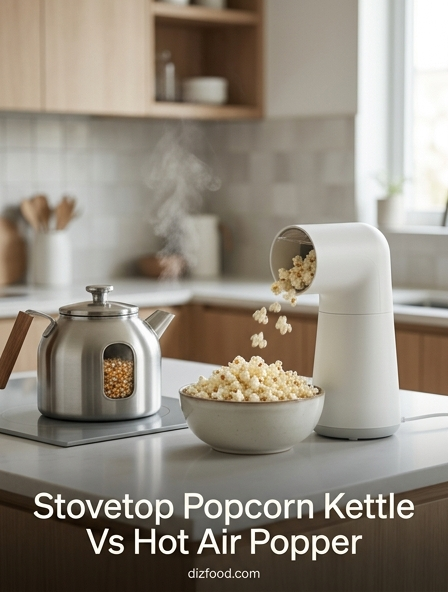
Stovetop Popcorn Kettle vs Hot Air Popper Comparison
The debate between using a stovetop popcorn kettle and a hot air popper often comes down to the user's preference for traditional methods versus modern convenience. A stovetop kettle, such as a Whirley-Pop, utilizes conduction to heat kernels in a reservoir of oil. This method involves a manual or semi-automatic hand-crank mechanism that keeps the kernels moving to prevent burning. It is a tactile process that requires the user to stand over the stove, monitoring the heat and listening for the frequency of the pops to change.
In contrast, the hot air popper is a standalone electrical appliance that uses convection. It blows high-velocity hot air through a chamber containing the kernels, causing them to dance and eventually pop once they reach the internal pressure threshold. This method requires no oil and very little supervision beyond turning the machine on and off. While the stovetop kettle is a favorite for those who enjoy the ritual of cooking, the air popper appeals to those seeking a quick, clean, and automated snacking experience.
- Stovetop kettles require a burner (gas, electric, or induction).
- Air poppers require a standard electrical outlet and counter space.
- Kettles allow for the addition of sugar or salt during the popping process.
- Air poppers are strictly for dry kernels to avoid damaging the heating element.
Comparing Taste and Texture Profiles
Texture and taste are where these two methods diverge most significantly. Popcorn made in a stovetop kettle tends to have a crunchier, more robust exterior. Because the kernels are cooked in oil, the heat is transferred more efficiently to the hull, resulting in a deeper, toasted flavor profile. The oil acts as a flavor enhancer, giving the popcorn a rich mouthfeel that many find superior to dry-cooked alternatives. If used with coconut or peanut oil, the stovetop method imparts a distinct nutty sweetness that mimics the best artisanal batches.
Hot air poppers produce a kernel that is exceptionally light and fluffy. However, because there is no fat used during the popping process, the resulting texture can sometimes be described as "styrofoam-like" or slightly dry if eaten plain. The absence of oil means the natural flavor of the corn is front and center, which may taste bland to those accustomed to seasoned varieties. To achieve a satisfying texture with an air popper, many users find they must add melted butter immediately after popping to restore the moisture and richness that the hot air removes during the high-heat convection cycle.
The difference in moisture retention is also notable. Stovetop kettles often have vented lids that allow steam to escape while retaining enough heat to keep the popcorn crisp. Air poppers, by design, exhaust a high volume of dry air, which can sometimes result in a tougher "chew" if the kernels are not perfectly fresh or if the machine runs too long.
Health Benefits of Air Popped Popcorn
For individuals focused on caloric intake and heart health, the hot air popper is the undisputed champion. By eliminating the need for cooking oils-which can add 100 to 150 calories per tablespoon-the air popper produces a snack that is essentially pure fiber and whole grain. A standard three-cup serving of air-popped popcorn contains approximately 90 calories and less than one gram of fat. This makes it an ideal high-volume, low-calorie snack for weight management and blood sugar regulation.
Beyond the lack of oil, air popping avoids the potential health risks associated with certain chemicals found in microwave popcorn bags, such as PFOAs or diacetyl. It provides a "blank canvas" where the consumer has total control over the additives. When eaten without butter, it remains a gluten-free, vegan, and low-glycemic treat. Furthermore, the high fiber content in air-popped corn aids in digestion and provides a lasting sense of fullness that is often undermined when the corn is saturated in heavy oils or artificial fats.
- Zero grams of saturated fat when popped without oil.
- Retains 100% of the natural antioxidants found in the hull.
- Allows for the use of healthy alternatives like nutritional yeast or olive oil sprays.
- Reduces the risk of consuming scorched oil residues.
The Authentic Movie Theater Experience
Recreating the sensory experience of a cinema lobby at home is almost exclusively the domain of the stovetop kettle. The distinctive aroma that fills a movie theater is the result of kernels being heated in oil-specifically coconut oil with Flavacol seasoning. A stovetop kettle allows the user to melt these specific fats and salts together with the kernels, ensuring that every piece is infused with flavor from the moment it bursts. The sound of the hand-crank and the rhythmic "clink" of the metal lid as the pot fills creates an atmosphere of anticipation that a motorized air popper cannot replicate.
The visual appeal also plays a role in the theater experience. Popcorn from a kettle has a slight yellow tint and a glistening sheen from the oil, making it look much more appetizing under living room lights. Air-popped corn, being stark white and matte, lacks this visual richness. For those who host movie nights and want to impress guests, the stovetop method provides a "performance" element and a finished product that tastes like it came straight from a professional concessions stand, rather than a health-conscious kitchen appliance.
Additionally, the heat retention of a metal kettle ensures the popcorn stays warm longer. Cinema popcorn is kept under heat lamps; at home, the thick walls of a stainless steel or aluminum kettle provide a similar thermal mass that keeps the snack at the perfect temperature throughout the opening trailers of a film.
Speed and Efficiency of Each Method
Efficiency can be measured by how quickly the kernels pop and how many unpopped "old maids" remain at the bottom of the vessel. In terms of sheer speed, the hot air popper usually wins. Most units require only about two to three minutes of preheating followed by a sixty-second popping cycle. There is no need to wait for a heavy pot to reach temperature, and the constant flow of air ensures that popped kernels are immediately ejected from the heat source, preventing them from burning while the remaining kernels finish.
Stovetop kettles require a bit more patience and preparation. You must measure the oil, wait for it to shimmer, add a few test kernels, and then add the rest of the batch. The manual labor of cranking the handle also adds to the perceived time. However, stovetop kettles are often much more efficient at popping a high percentage of the kernels. The direct contact with the hot, oiled surface ensures that even stubborn kernels receive enough energy to explode. In many air poppers, lighter kernels can sometimes be blown out of the chute before they have a chance to pop, leading to more waste.
| Feature | Hot Air Popper | Stovetop Kettle |
|---|---|---|
| Prep Time | Minimal (30 seconds) | Moderate (2 minutes) |
| Popping Time | 2-3 minutes | 3-5 minutes |
| Cleanliness | High (Dry) | Moderate (Oily) |
| Waste Ratio | Moderate (Blow-outs) | Low (Full Heat) |
Ease of Cleaning and Maintenance
Maintenance is a significant factor in how often a popcorn maker is used. The hot air popper is the clear winner for those who despise dishwashing. Since no oil or butter enters the machine, the interior remains dry. Cleaning typically involves simply shaking out any stray husks and wiping the plastic chute with a damp cloth. There is no grease buildup to contend with, and the machine can be tucked back into a cabinet almost immediately after use. This makes it a favorite for families with children who want a quick snack without a major cleanup project.
Stovetop kettles, conversely, require diligent cleaning to maintain hygiene and performance. Because oil is used, a film of grease coats the interior, the lid, and the stirring mechanism. If left unwashed, this oil can turn rancid, ruining the flavor of future batches. Most stovetop poppers are not dishwasher safe because of their wooden handles or aluminum construction, meaning they must be hand-washed with warm, soapy water. Over time, the exterior may also develop carbon buildup if used on a gas range, requiring occasional deep scrubbing. While a well-seasoned kettle can be wiped down quickly, it will never be as maintenance-free as an electric air unit.
Seasoning and Flavor Adhesion Differences
The physics of seasoning adhesion is often overlooked but critical to the final taste. In a stovetop kettle, the oil acts as a bonding agent. When you add salt or fine seasonings to the pot, they dissolve slightly in the fat and coat the kernel as it pops and expands. This results in a perfectly even distribution of flavor. Fine-grain salt, like popcorn salt, sticks effortlessly to the oily surface of the corn, ensuring that the flavor stays on the snack rather than falling to the bottom of the bowl.
Air-popped popcorn presents a significant challenge for seasoning. Because the surface of the kernel is bone-dry, salt and powder-based flavorings have nothing to cling to. If you sprinkle salt over a bowl of air-popped corn, the vast majority of it will simply sift through to the bottom. To get flavor to stick, users must apply a secondary liquid, such as melted butter, an oil spray, or even a light mist of water or vinegar. This extra step can sometimes make the popcorn soggy if not done with precision. For those who prefer complex dry rubs-such as ranch powder, cinnamon sugar, or chili-lime seasoning-the stovetop method is vastly superior for achieving a consistent and satisfying flavor coating.
Equipment Durability and Initial Cost
When considering the long-term investment, the two devices offer different value propositions. Hot air poppers are generally inexpensive, often priced between twenty and forty dollars. However, they are made primarily of plastic and contain small electric motors and heating elements. These components are prone to failure over time, especially with frequent use. If the motor burns out or the plastic chute cracks, the entire unit usually needs to be replaced, as these appliances are rarely designed to be repaired.
Stovetop kettles represent a more "heirloom" style of kitchen tool. High-quality models are constructed from stainless steel or heavy-duty aluminum with mechanical gears. While they may cost fifty to eighty dollars initially, they can last for decades. There are no electrical parts to fail, and the simple mechanical nature of the crank means there is very little that can go wrong. If a gear slips, it can often be adjusted or tightened. For a serious popcorn enthusiast, the higher initial cost of a stovetop kettle is offset by its longevity and the lack of electronic waste. Furthermore, a stovetop kettle can be used during a power outage on a gas stove or camping grill, whereas the air popper is tethered to the electrical grid.
The Pros and Cons of Oil Popping
Popping with oil is a culinary choice that brings both advantages and drawbacks. The primary benefit is the superior heat transfer; oil conducts heat much better than air, leading to more explosive popping and a distinctively crisp texture. Additionally, different oils allow for flavor experimentation. Using coconut oil provides a classic theater taste, while avocado oil offers a high smoke point and healthy fats. Ghee or clarified butter can also be used in a kettle for an intensely rich flavor that is impossible to achieve with dry air.
The downsides are largely related to health and kitchen environment. Using oil increases the calorie count of the snack and can produce a small amount of "kitchen smog" or lingering food odors if the oil is heated past its smoke point. There is also the risk of the oil catching fire if left unattended on a high burner, a safety concern that is non-existent with air poppers. For those who prioritize flavor and "crunch factor" above all else, the pros of oil popping far outweigh the cons, but for the health-conscious or safety-minded, the drawbacks are significant.
- Pro: Higher crunch factor and better flavor absorption.
- Pro: Ability to use various flavored oils.
- Con: Significant increase in caloric density.
- Con: Potential for smoke and grease splatter in the kitchen.
Choosing the Best Popcorn Maker for Your Kitchen
The final decision depends on your lifestyle and how you intend to consume your snacks. If you are someone who eats popcorn daily as part of a fitness or weight-loss regimen, the hot air popper is the logical choice. Its speed, lack of fat, and easy cleanup make it a practical tool for a busy, health-oriented routine. It is also a safer option for older children who want to make their own snacks after school without using the stove.
However, if popcorn is a "special event" food for you-reserved for movie nights, parties, or weekend treats-the stovetop kettle is the superior investment. The quality of the popcorn is objectively closer to professional standards, and the process itself adds a level of charm to the experience. While it requires more effort to clean and operate, the results in terms of taste, texture, and seasoning adhesion are significantly better than what an air popper can provide. Consider your counter space, your willingness to hand-wash dishes, and your flavor priorities before making your purchase. Both tools have their place in the modern kitchen, but they serve very different masters of the snacking world.

Comments