
When you're looking for a portable, healthy snack, the showdown between homemade dehydrated fruit leather and store-bought fruit rolls reveals a world of difference in both quality and vitality. While commercial snacks offer convenience, they are often laden with high-fructose corn syrup, artificial dyes, and wax-like fillers that mask the fruit's natural zest. By dehydrating your own fruit at home, you take full control of the process, ensuring every bite is packed with pure vitamins, dietary fiber, and concentrated natural sugars without the hidden additives. Transitioning to DIY fruit leather doesn't just elevate the nutritional profile of your pantry; it unlocks a richer, more authentic taste experience that mass-produced, ultra-processed rolls simply cannot replicate.
| Feature | Homemade Fruit Leather | Store-Bought Fruit Rolls |
|---|---|---|
| Ingredients | 100% whole fruit, optional lemon/honey. | Fruit puree blend, corn syrup, palm oil. |
| Sugar Content | Natural fructose only; no refined sugars. | Added sugars (up to 10g+ per serving). |
| Nutrient Density | High fiber; retains vitamins A, C, and K. | Low fiber; vitamins lost in high-heat processing. |
| Additives | Zero preservatives, dyes, or stabilizers. | Red 40, Yellow 5, and artificial flavors. |
| Flavor Profile | Intense, tart, and authentically fruity. | Artificial, overly sweet, and candy-like. |
| Cost Efficiency | Low (uses bulk or overripe seasonal fruit). | High (markup for packaging and branding). |
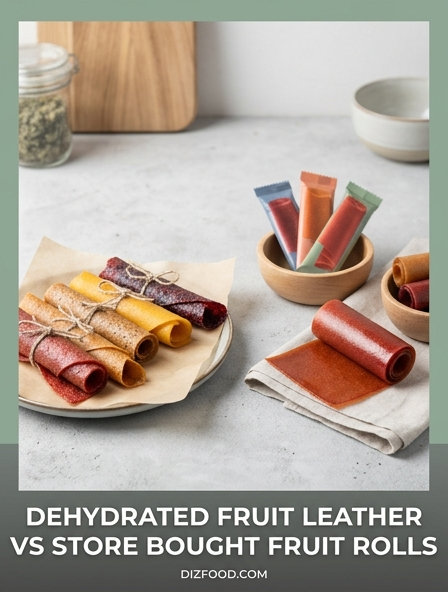
Nutritional Comparison of Homemade Leather and Commercial Rolls
The nutritional profile of fruit snacks varies significantly between homemade versions and those found on supermarket shelves. Homemade fruit leather is typically composed of pureed whole fruit, which preserves the dietary fiber often removed during the ultra-processing of commercial snacks. Because the fruit is simply dehydrated at a low temperature, the density of vitamins and minerals remains high relative to the calorie count. In contrast, store-bought rolls frequently rely on fruit juice concentrates and added sugars to achieve their sweetness, which results in a higher glycemic load and fewer micronutrients.
When comparing the two, the primary differentiator is the source of the carbohydrates. Commercial rolls often list corn syrup or maltodextrin as primary ingredients, whereas homemade leather relies on natural fructose bundled with fiber. This fiber is crucial as it slows the absorption of sugar into the bloodstream, preventing the rapid insulin spikes common after consuming processed snacks. The following table highlights the general nutritional variances found in a standard serving size of approximately 30 grams.
| Nutrient | Homemade Fruit Leather | Commercial Fruit Rolls |
|---|---|---|
| Primary Ingredient | Whole Fruit Puree | Corn Syrup / Juice Concentrate | Dietary Fiber | 2g - 4g | 0g - 1g |
| Added Sugars | 0g | 10g - 15g |
| Vitamin C | High (Retained from fruit) | Low (Unless fortified) |
Furthermore, commercial snacks often undergo high-heat extrusion processes that can degrade the natural antioxidant profile of the fruit. By making leather in a kitchen dehydrator or a low-heat oven, the cook maintains control over the temperature, ensuring that the final product is a concentrated version of the original whole food rather than a candy-like substitute.
The Hidden Additives in Store Bought Fruit Snacks
To maintain a consistent color, texture, and shelf life across millions of units, commercial manufacturers utilize a suite of chemical additives that are absent from homemade fruit leather. These ingredients are often listed under names that may be unfamiliar to the average consumer but serve specific industrial purposes. For instance, artificial dyes like Red 40 or Yellow 5 are frequently used to mimic the vibrant hues of fresh berries or citrus, even when the actual fruit content is minimal. These synthetic colorants have been the subject of ongoing debate regarding their impact on childhood behavior and sensitivities.
Beyond colorants, store-bought snacks often contain texturizers and preservatives to ensure the product remains pliable for months on a warehouse shelf. Emulsifiers like acetylated monoglycerides or carrageenan are used to prevent the ingredients from separating, while hydrogenated oils may be added to create a smoother mouthfeel and prevent the snack from sticking to its plastic wrapper. The following list identifies common additives found in processed fruit rolls:
- Modified Corn Starch: Used as a thickening agent to provide bulk without using expensive fruit solids.
- Sodium Citrate: Acts as an acidity regulator and preservative to maintain tartness.
- Malic Acid: A synthetic version of the acid found in apples, used to enhance flavor profiles.
- Carnauba Wax: Often applied as a glazing agent to give the snack a shiny, non-stick exterior.
- Artificial Flavors: Lab-created compounds designed to replicate the taste of fruit that has been lost during high-heat processing.
By producing fruit leather at home, these chemicals are entirely bypassed. The only "preservative" in homemade leather is the removal of moisture, which naturally inhibits the growth of bacteria and mold. This results in a cleaner label and a snack that aligns more closely with a whole-food diet.
Cost Efficiency of DIY Dehydrated Fruit Leather
The perceived convenience of store-bought fruit snacks often masks a significant price markup. When analyzed by weight, commercial fruit rolls are among the most expensive ways to consume fruit, often costing double or triple the price of fresh produce per ounce. This is due to the costs associated with industrial processing, multi-layer plastic packaging, marketing, and distribution. In contrast, DIY dehydrated fruit leather allows a household to leverage bulk buying and seasonal surpluses to create snacks for a fraction of the retail price.
One of the greatest economic advantages of making fruit leather at home is the ability to use "seconds" or overripe fruit. Grocery stores and farmers' markets often sell bruised or highly ripe fruit at a steep discount. These fruits are actually ideal for leather because their sugar content is at its peak and they puree easily. Additionally, for those with fruit trees or access to wild foraging, the cost of the raw material can drop to near zero. While there is an initial investment in a dehydrator and a small recurring cost for electricity, the long-term savings are substantial.
Energy consumption for a standard dehydrator is relatively low, typically ranging between 300 and 600 watts. When a dehydrator is filled to capacity with multiple trays of fruit puree, the cost per strip of leather becomes negligible. Compared to the individual packaging and branding fees built into the price of a box of fruit rolls, the home-dried alternative provides far better value for families who consume these snacks regularly. Over the course of a year, transitioning from commercial snacks to homemade leather can save a family hundreds of dollars while simultaneously providing a superior product.
Texture Differences Between Real Fruit and Processed Rolls
The tactile experience of eating fruit leather differs vastly from that of a commercial fruit roll. Commercial snacks are engineered to have a uniform, plastic-like consistency that is highly elastic and smooth. This is achieved through the use of refined sugars, starches, and fats which create a gummy-candy texture. These snacks are designed to pull apart easily and melt quickly on the tongue, a sensation that is often more characteristic of a confection than a piece of fruit. The addition of waxes and oils ensures that the roll does not stick to itself, allowing for the classic "unrolling" action.
Homemade fruit leather, however, possesses a more complex and varying texture that reflects the specific fruit used. Because it contains the actual pulp and fiber of the fruit, it has a "toothy" quality. Depending on the drying time, it can range from soft and pliable to tough and "leathery"-hence the name. For example, strawberry leather may contain tiny seeds that provide a slight crunch, while apple leather tends to be denser and more fibrous. This variation is a hallmark of a natural product and provides a more satiating eating experience than the uniform softness of a processed roll.
Moisture content also plays a role in these textural differences. Commercial rolls are chemically treated to remain "moist" feeling even if they are technically dry, whereas homemade leather relies on precise dehydration. If dried too long, homemade leather can become brittle like a chip, and if under-dried, it remains tacky. Achieving the perfect "leather" feel-flexible enough to fold but dry enough not to stick to fingers-is an artisanal skill that rewards the home cook with a snack that feels substantial and real, rather than manufactured and synthetic.
Benefits of Sugar Free Dehydrated Fruit Snacks
One of the most compelling reasons to choose homemade fruit leather is the ability to eliminate added sugars entirely. Commercial fruit rolls are notorious for their high sugar content, often containing three or four different types of sweeteners, including corn syrup, sugar, and juice concentrates. These additives are used not only for flavor but also as cheap fillers and preservatives. For individuals managing diabetes, parents looking to limit their children's sugar intake, or those following a ketogenic or paleo diet, these hidden sugars make store-bought options unsuitable.
Homemade fruit leather relies on the natural sweetness of the fruit, which becomes concentrated as the water evaporates. This concentration provides an intense flavor profile that satisfies sweet cravings without the need for sucrose or high-fructose corn syrup. Furthermore, because the fiber is retained in the puree, the natural sugars are metabolized more slowly. This results in a more stable release of energy rather than the "sugar crash" often associated with processed snacks. The benefits of sugar-free leather extend to dental health as well, as natural fruit sugars are less likely to contribute to tooth decay compared to the sticky, refined syrups used in commercial brands.
By removing added sugar, the true flavor of the fruit is allowed to shine. Many people find that after switching to sugar-free homemade leather, commercial snacks taste cloyingly sweet and artificial. The absence of sugar also allows for more creative flavor pairings that aren't masked by sweetness, such as the inclusion of tart lemons, spicy ginger, or earthy kale blended into fruit bases. Ultimately, sugar-free leather represents a shift toward honoring the natural integrity of the ingredient rather than treating fruit as a mere delivery system for sweeteners.
Flavor Customization in Homemade vs Store Bought Options
Commercial fruit snacks are limited to a narrow range of flavors that appeal to the widest possible demographic, such as "strawberry," "grape," or "tropical punch." These flavors are often achieved through synthetic flavoring agents that provide a one-dimensional taste experience. When making fruit leather at home, the flavor possibilities are limited only by the ingredients available in the kitchen. This allows for the creation of sophisticated, gourmet combinations that are impossible to find in a grocery store aisle.
Customization also allows for the adjustment of tartness and spice. A home cook can add a squeeze of lime to brighten a dull pear puree or a pinch of cinnamon to enhance an autumn apple blend. This level of control ensures that the snack meets the specific palate of the household. Some popular ways to customize homemade fruit leather include:
- Herb Infusions: Adding finely minced mint to watermelon leather or basil to strawberry puree for a refreshing, adult-friendly snack.
- Spice Blends: Incorporating ginger, cardamom, or even a dash of chili powder for a sweet and spicy kick.
- Textural Mix-ins: Sprinkling chia seeds, hemp hearts, or finely chopped nuts over the puree before drying for added protein and crunch.
- Vegetable Blends: Sneaking in spinach, roasted beets, or carrots to boost the nutritional profile without compromising the sweet fruit flavor.
- Creamy Variations: Mixing in a small amount of coconut milk or Greek yogurt to create a "creamsicle" style leather with a softer texture.
This versatility makes homemade leather a superior choice for adventurous eaters. While store-bought rolls offer a predictable and repetitive taste, DIY leather provides an opportunity for culinary experimentation. It allows the kitchen to become a laboratory where seasonal produce is transformed into unique, artisanal treats that cannot be replicated by a factory machine.
Impact of Processing on Fruit Snack Vitamin Content
The methods used to create fruit snacks have a profound impact on their final vitamin and antioxidant content. Industrial manufacturing of fruit rolls often involves "flash pasteurization" or high-heat extrusion. These processes are designed for speed and safety but are detrimental to heat-sensitive nutrients. Vitamin C, in particular, is highly susceptible to degradation when exposed to high temperatures and oxygen. Consequently, many commercial brands must "fortify" their products with synthetic vitamins after processing to claim any significant nutritional value on their labels.
In contrast, home dehydration is a slow, low-temperature process. Most food dehydrators operate between 115°F and 135°F (46°C to 57°C). At these temperatures, the cellular structure of the fruit is preserved more effectively than in high-heat industrial ovens. This gentle removal of water leaves behind a concentrated source of the fruit's original vitamins, minerals, and phytonutrients. Anthocyanins in berries, carotenes in apricots, and polyphenols in apples remain largely intact, providing the body with the complex bioavailable compounds found in fresh fruit.
Furthermore, because homemade leather is typically made and consumed within a few months, it does not suffer from the nutrient loss that occurs during the long-term storage and light exposure of clear-wrapped commercial snacks. The longer a product sits on a shelf, the more its nutritional potency diminishes. By controlling the heat and the timeline from "tree to tray," the home cook ensures that the final snack is not just a source of calories, but a genuine source of nourishment that retains the health-promoting properties of the original harvest.
Storage and Shelf Life of Dehydrated Fruit Leather
Proper storage is essential to maintaining the quality and safety of homemade fruit leather. While commercial fruit rolls use chemical preservatives and air-tight plastic films to achieve a shelf life of a year or more, homemade leather relies on low moisture content and proper environmental controls. When stored correctly, homemade leather can remain fresh and delicious for several months at room temperature, and even longer when refrigerated or frozen. The key is to prevent the fruit from re-absorbing moisture from the air, which can lead to stickiness or mold growth.
To maximize the shelf life of your kitchen-made snacks, follow these steps for optimal storage:
- Cooling: Allow the leather to cool completely at room temperature before packaging. Rolling it up while warm can trap steam, creating moisture pockets.
- Separation: Wrap individual strips or rolls in parchment paper or wax paper to prevent them from sticking together over time.
- Airtight Containers: Place the wrapped leather in glass jars or vacuum-sealed bags. Glass is preferred over plastic as it provides a better vapor barrier.
- Environment: Store the containers in a cool, dark, and dry location. Light and heat can degrade the color and flavor of the fruit.
- Conditioning: For the first few days, check the container for any signs of condensation. If moisture appears, the fruit needs further drying time.
While store-bought rolls are designed to survive in a backpack for weeks, homemade leather is a "living" product that benefits from a more controlled environment. If you have produced a large batch, freezing is an excellent option; fruit leather can be kept in the freezer for up to a year without losing its flavor or texture, making it a perfect way to preserve a summer harvest for the winter months.
Why Homemade Fruit Leather is Better for Healthy Diets
For those committed to clean eating or specific therapeutic diets, homemade fruit leather is the only logical choice. Many modern dietary frameworks, such as the Whole30, Paleo, or Specific Carbohydrate Diet (SCD), emphasize the consumption of whole foods and the elimination of processed additives. Commercial fruit rolls are almost universally disqualified from these programs due to their inclusion of refined sugars, soy lecithin, and various starch-based thickeners. Homemade leather, being composed solely of fruit, fits perfectly into a diet centered on ancestral or unprocessed foods.
Beyond ingredient purity, homemade leather supports healthy diets through portion control and satiety. The high fiber content of real fruit leather makes it much more filling than the airy, sugar-heavy commercial alternatives. When you eat a strip of homemade apple-strawberry leather, you are essentially consuming a concentrated serving of those fruits, complete with the bulk that signals to your brain that you are full. In contrast, the rapid digestion of a commercial fruit roll often leaves the consumer hungry shortly after, potentially leading to overeating and calorie surplus.
Additionally, making your own snacks allows for the management of food sensitivities and allergies. Commercial facilities often process fruit snacks on equipment shared with gluten, dairy, or nuts. For individuals with severe allergies or Celiac disease, the "clean" environment of a home kitchen provides peace of mind. By controlling every variable-from the ripeness of the fruit to the absence of cross-contaminants-you create a snack that is not only "not bad" for you but is actively health-promoting, contributing to your daily fruit intake goals in a convenient, portable format.
Environmental Benefits of Making Your Own Fruit Snacks
The environmental impact of the snack food industry is staggering, particularly regarding single-use plastics and food waste. Commercial fruit rolls are a primary offender; each individual strip is typically wrapped in a plastic-backed cellophane, and those strips are then placed in a cardboard box which is often wrapped in more plastic film. This creates a significant amount of non-recyclable waste for a very small amount of food. By making fruit leather at home and storing it in reusable glass jars or silicone bags, a household can eliminate this stream of packaging waste entirely.
Furthermore, DIY fruit leather is a powerful tool in the fight against domestic food waste. Globally, a significant portion of fruit is discarded because it is too ripe, bruised, or "ugly" for fresh consumption. Instead of letting these fruits end up in a landfill where they produce methane gas, they can be blended into a puree and dehydrated. Dehydration is one of the oldest and most eco-friendly methods of food preservation, requiring far less energy than canning or long-term freezing. It allows you to "rescue" produce that might otherwise be thrown away, extending its life by months.
Finally, making your own snacks encourages the use of local and seasonal produce. Buying a flat of strawberries from a local farmer in June to make a year's supply of leather reduces the "food miles" associated with trucking processed snacks across the country. It supports the local agricultural economy and reduces the carbon footprint associated with industrial food distribution. In this way, the act of making fruit leather in your own kitchen is not just a health choice, but a small, meaningful contribution to a more sustainable and circular food system.




Comments