
When you're hosting a gathering, the foundation of your spread is just as important as the artisanal cheeses you select. Choosing between a bamboo cheese board and a slate charcuterie platter isn't just a matter of style; it's about balancing practical performance with the specific "vibe" of your event. While bamboo offers a warm, organic aesthetic and a knife-friendly surface that's incredibly easy to transport, slate provides a sleek, modern backdrop that naturally keeps cured meats cool and invites creativity with chalk labeling. Whether you prefer the sustainable, lightweight resilience of bamboo or the sophisticated, chilled elegance of natural stone, understanding the unique strengths of each material will truly elevate your entertaining game from a simple snack to a professional-grade culinary display.
| Feature | Bamboo Cheese Board | Slate Charcuterie Platter |
|---|---|---|
| Aesthetic | Warm, rustic, and organic wood grain. | Modern, sleek, and sophisticated dark stone. |
| Knife Safety | High; soft fibers prevent blade dulling. | Low; hard surface can dull or chip knives. |
| Temp. Control | Neutral; does not retain cold or heat. | Excellent; retains chill for meats and cheeses. |
| Maintenance | Hand wash only; requires occasional oiling. | Wipe clean; often dishwasher safe (check feet). |
| Sustainability | Eco-friendly; rapidly renewable grass. | Natural; durable but non-renewable stone. |
| Bonus Feature | Often includes hidden tool drawers. | Surface is writable with soapstone chalk. |
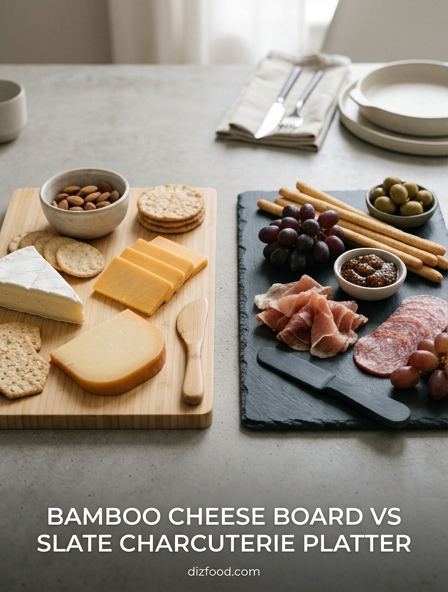
Bamboo Cheese Board vs Slate Charcuterie Platter Aesthetics
When selecting a serving foundation for your kitchen, the visual impact of the material sets the tone for the entire dining experience. Bamboo cheese boards offer a warm, organic aesthetic that complements traditional, rustic, or farmhouse-style kitchens. The natural grain patterns and light golden hues of bamboo create an inviting and cozy atmosphere, making the food look wholesome and accessible. Because bamboo is a grass, its fibrous texture provides a subtle visual depth that pairs exceptionally well with colorful fruits, nuts, and artisanal breads.
In contrast, slate charcuterie platters deliver a modern, sophisticated, and dramatic presentation. The dark, charcoal-gray to black tones of the stone provide a high-contrast backdrop that makes the vibrant colors of cured meats, white cheeses, and bright berries pop with intensity. Slate is often favored for formal gatherings or contemporary settings where a sleek, minimalist look is desired. One of the most distinctive aesthetic features of slate is the ability to write directly on the surface using soapstone chalk, allowing hosts to label varieties of cheese or charcuterie with elegant calligraphy.
- Bamboo: Warm tones, visible grain, rustic appeal, soft edges.
- Slate: Cool tones, textured matte finish, modern elegance, sharp or natural cleft edges.
Ultimately, the choice between the two depends on the desired mood. Bamboo feels like a casual afternoon gathering, while slate suggests a refined evening of wine tasting and professional hospitality.
Durability and Longevity of Natural Serving Surfaces
The structural integrity of your serving board determines how well it will withstand years of slicing, washing, and hosting. Bamboo is renowned for its incredible strength-to-weight ratio; it is harder than many hardwoods yet remains flexible enough to resist shattering. It is highly resistant to warping and cracking when properly seasoned, making it a reliable workhorse in a busy kitchen. However, because it is a porous organic material, it can suffer from deep knife grooves over time if used aggressively for heavy chopping.
Slate, while a dense and hard stone, is physically brittle. It excels at resisting scratches from metal cutlery, but it is susceptible to chipping or "flaking" along its natural layers if bumped against hard surfaces. If dropped, a slate platter is likely to shatter, whereas a bamboo board would likely bounce or suffer a minor dent. Slate is also completely non-porous, meaning it will never absorb moisture or odors, which contributes to its longevity as a hygienic serving surface, provided it is handled with care.
| Feature | Bamboo Board | Slate Platter |
|---|---|---|
| Impact Resistance | High (Bounce) | Low (Shatter) |
| Scratch Resistance | Moderate | High |
| Porosity | Low (if oiled) | Non-porous |
| Average Lifespan | 5-10 years | Indefinite (with care) |
Temperature Control Differences Between Bamboo and Slate
Temperature management is a critical but often overlooked aspect of food presentation. Different materials interact with heat and cold in ways that can significantly alter the texture and safety of your appetizers. Slate is a natural stone with high thermal mass, meaning it retains temperature remarkably well. By placing a slate platter in the refrigerator for thirty minutes before service, it becomes a chilled stage that keeps soft cheeses, pâtés, and delicate charcuterie firm and fresh for hours. This is particularly beneficial during outdoor summer parties or in warm, crowded indoor environments.
Bamboo, on the other hand, acts as a natural insulator. It does not conduct heat or cold efficiently, which means it remains at room temperature regardless of its environment. While you cannot "pre-chill" a bamboo board, it is excellent for serving items that you want to keep from cooling down too quickly, such as warm brie wrapped in pastry or freshly toasted crostini. The insulating properties of bamboo prevent the coldness of a granite countertop from sapping the warmth out of your food. For a varied spread, many hosts use slate for the meats and soft cheeses while utilizing bamboo for the crackers and room-temperature accompaniments.
Maintenance and Cleaning Requirements for Each Material
Keeping your serving surfaces sanitary requires different approaches based on the material's properties. Bamboo is a grass that requires regular "seasoning" with food-grade mineral oil to maintain its water resistance and prevent the fibers from becoming brittle. Without this maintenance, bamboo can develop small cracks where bacteria may hide. It should never be soaked in water or placed in a dishwasher, as the high heat and moisture will cause the adhesive holding the bamboo strips together to fail, leading to splitting.
Slate maintenance is relatively straightforward but requires attention to the edges. While slate is generally dishwasher safe (if the manufacturer specifies), the harsh detergents and clanking against other dishes can cause the edges to chip. Most experts recommend hand washing slate with mild soap and warm water. Unlike bamboo, slate does not require oiling for structural health, though some users apply a thin coat of mineral oil to give the stone a darker, "wet" look and to help hide minor scratches. Because slate is non-porous, it is much easier to sanitize after serving raw or oily items.
- Hand wash with warm, soapy water immediately after use.
- Dry thoroughly with a soft cloth to prevent water spots.
- For bamboo: Apply mineral oil once a month or when the surface looks dry.
- For slate: Check for loose flakes or chips before each use to ensure food safety.
Eco Friendly Benefits of Choosing Bamboo Boards
For the environmentally conscious consumer, bamboo is frequently cited as the gold standard for sustainable kitchenware. Technically a fast-growing grass rather than a tree, some species of bamboo can grow up to three feet in a single day. This rapid regeneration allows for frequent harvesting without causing deforestation or destroying the surrounding ecosystem. Furthermore, bamboo does not require pesticides or fertilizers to thrive, and its extensive root system helps prevent soil erosion. When a bamboo board eventually reaches the end of its life, it is biodegradable and compostable, returning to the earth without leaving a permanent footprint.
Slate is a natural stone that must be quarried from the earth. While it is a natural material and does not involve the synthetic chemicals found in plastic boards, the extraction process is more energy-intensive and non-renewable. Once a slate deposit is mined, it does not grow back. However, slate is incredibly long-lasting, potentially serving a household for decades, which reduces waste through longevity. When comparing the two, bamboo wins on renewability and carbon sequestration, while slate wins on sheer permanence. For those looking to reduce their immediate environmental impact, bamboo remains the superior ecological choice due to its status as a highly renewable resource.
The Professional Appeal of Slate Charcuterie Platters
There is a reason why high-end bistros and professional caterers frequently reach for slate when plating appetizers. The material offers a level of "drama" that wood cannot replicate. The dark, matte surface acts as a canvas, allowing the chef to treat the food like art. The rough, natural edges of the stone provide a tactile contrast to the smooth textures of cheese and meat. Furthermore, the ability to use soapstone chalk directly on the board is a functional benefit that professionals love. It eliminates the need for messy paper labels or toothpicks, keeping the presentation clean and informative for guests with dietary restrictions.
- Visual Contrast: Highlights the bright reds of salami and the creamy whites of goat cheese.
- Labeling: Direct chalk writing identifies food items clearly and elegantly.
- Professionalism: Mimics the plating styles found in Michelin-starred establishments.
- Sanitation: The non-porous surface is preferred in professional environments for its resistance to bacteria.
Beyond the look, the weight and "heft" of a slate platter convey a sense of luxury and permanence. When a guest sees a heavy slate board being brought to the table, there is an immediate perception of quality and thoughtfulness in the food preparation.
Knife Safety and Surface Hardness Comparison
The relationship between your serving board and your expensive cheese knives is a vital consideration for any kitchen enthusiast. Bamboo is a "forgiving" surface. Its fibers are oriented in a way that allows a knife blade to slide between them rather than cutting directly against a solid, unyielding mass. This means that bamboo helps maintain the sharpness of your blades for a longer period. It is soft enough to absorb the impact of the edge but hard enough to provide a stable cutting surface.
Slate is significantly harder than bamboo on the Mohs scale of mineral hardness. Cutting directly on slate is essentially the same as cutting on a rock. Metal knife blades will dull very quickly when they strike the surface of a slate platter. For this reason, many aficionados prefer to pre-cut their cheeses and meats in the kitchen on a traditional wooden cutting board before arranging them on the slate platter for service. If you do use knives on slate, it is best to use inexpensive spreaders or cheese planes rather than high-carbon steel chef's knives.
| Material | Effect on Knife Edge | Recommended Tool |
|---|---|---|
| Bamboo | Gentle / Minimal dulling | Sharp cheese knives, slicers |
| Slate | Harsh / Rapid dulling | Spreaders, pre-sliced food |
Portability and Weight Factors for Social Hosting
Hosting often involves moving food from the kitchen to the dining room, or even outdoors to a patio or balcony. In these scenarios, the weight of the serving vessel becomes a practical concern. Bamboo is exceptionally lightweight. Even a large, thick bamboo board can be easily carried with one hand, making it the ideal choice for "buffet-style" service where the board might be passed around or moved frequently. Many bamboo boards also feature integrated handles or thumb holes specifically designed to aid in portability.
Slate is substantially heavier. A medium-sized slate platter can weigh several pounds even before it is loaded with heavy cheeses and fruits. This makes it a "static" serving piece; once it is placed on the table, it usually stays there for the duration of the event. Additionally, the bottom of slate platters can be abrasive and may scratch delicate glass or polished wood tables if moved without felt or foam feet. While the weight adds to the premium feel, it can be a drawback for those who prefer effortless transport. For social hosts who enjoy "roaming" appetizers or have a long walk to the serving area, the light profile of bamboo is a significant advantage.
Best Uses for Bamboo and Slate in Food Presentation
While both materials are versatile, they each have "sweet spots" where they truly shine in a culinary context. Bamboo is the perfect choice for high-volume, casual spreads. Because it is often sold in sets or with built-in drawers for cutlery, it is the ultimate "party in a box" solution. It is best used for dry or semi-dry foods like hard cheeses (cheddar, manchego), nuts, crackers, breads, and firm fruits like apples and grapes. The warm wood tones enhance the "comfort food" vibe of these items.
Slate is the superior choice for "messy" or temperature-sensitive items. Its non-porous surface means you can place oily olives, honey-drenched figs, or soft, weeping cheeses like camembert directly on the stone without worrying about staining or odors soaking into the material. The dark surface also makes it an excellent choice for desserts; imagine vibrant macarons, chocolates, or powdered-sugar-dusted pastries set against the black stone.
- Best for Bamboo: Artisanal breads, crackers, hard cheeses, casual family gatherings.
- Best for Slate: Soft cheeses, charcuterie meats, oily appetizers, chilled desserts, formal wine tastings.
By matching the material to the food group, you ensure both the best possible presentation and the easiest cleanup after the guests have departed.
Final Verdict on Selecting Your Ideal Serving Board
Choosing between a bamboo cheese board and a slate charcuterie platter ultimately comes down to your personal hosting style and the specific needs of your kitchen. If you value sustainability, portability, and a warm, rustic aesthetic, bamboo is the clear winner. It is a resilient, eco-friendly option that is kind to your knives and easy to carry around a crowded room. It is the "everyday" board that works just as well for a Tuesday night snack as it does for a large holiday party.
However, if your goal is to create a stunning, professional-grade visual experience and you don't mind a bit of extra weight, slate is the better investment. Its ability to be chilled, its non-porous nature, and the creative potential of chalk labeling make it a favorite for those who view hosting as an art form. It brings a modern edge to the table that bamboo simply cannot replicate. Many enthusiasts find that the best solution is not an "either/or" choice, but rather owning both. Using a bamboo board for breads and hard snacks while utilizing a slate platter for meats and soft cheeses creates a balanced, multi-textured landscape that will impress any guest. Consider your most frequent type of gathering and choose the material that best supports your culinary vision.

Comments