
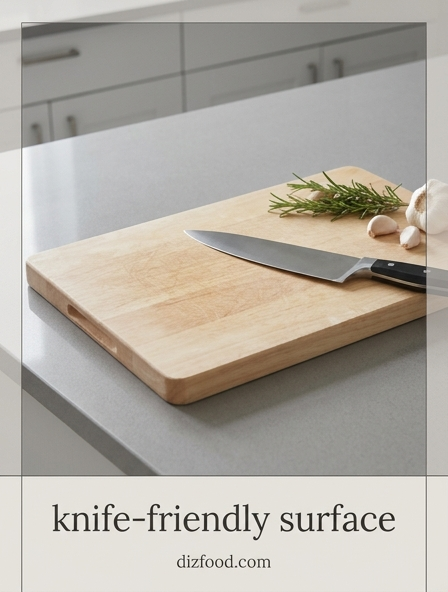
The Science of Surface Hardness and Blade Longevity
The relationship between a kitchen knife and its cutting surface is defined by the physics of hardness and material resistance. When a blade strikes a surface, the kinetic energy must be absorbed or reflected. On a molecular level, a surface that is harder than the steel of the knife will cause the fine apex of the edge to roll or collapse. This phenomenon is often measured using the Mohs scale or the Janka hardness test for woods. A surface that lacks "give" forces the microscopic teeth of the blade to flatten against an unyielding plane, leading to immediate dulling.
- Material Density: High-density surfaces like granite offer zero compression, reflecting all force back to the blade.
- Surface Friction: Smooth, hard surfaces increase the likelihood of the blade sliding, which causes lateral stress.
- Molecular Alignment: Fibrous materials allow the blade to penetrate slightly, distributing the load across a larger surface area.
Selecting a surface with a lower hardness rating than the knife's Rockwell C (HRC) scale is essential. For most high-quality kitchen knives, this means seeking materials that allow for microscopic indentation during the chop, effectively "cradling" the edge rather than resisting it.
Preserving Edge Retention with End Grain Wood
End grain wood cutting boards are widely considered the gold standard for maintaining a sharp edge over long periods. Unlike edge grain boards, where the wood fibers run horizontally, end grain boards are constructed so the wood fibers stand vertically, similar to the bristles of a brush. When a knife descends onto an end grain surface, the tip of the blade slides between the fibers rather than cutting across them. This unique orientation preserves the structural integrity of both the board and the knife edge.
- The blade enters the vertical grain, causing the fibers to part naturally.
- Upon lifting the knife, the resilient nature of the wood allows the fibers to close back up.
- The lack of cross-grain resistance prevents the microscopic apex of the knife from folding.
This "self-healing" property not only keeps the board looking new but significantly extends the time between professional sharpening sessions. For chefs using expensive Japanese or German cutlery, the investment in end grain maple or walnut is a practical strategy for protecting their most vital tools from premature wear and tear.
How Soft Materials Prevent Premature Dulling
Beyond traditional wood, modern synthetic materials such as high-performance rubbers and thermoplastics provide exceptional protection for precision edges. These materials are engineered with a specific level of "yield" that mimics the benefits of soft wood while offering enhanced sanitation. Soft rubber boards, frequently found in high-end sushi kitchens, are designed to absorb the impact of a sharp blade, ensuring that the razor-thin edge is never subjected to harsh vibrations or abrasive contact.
- Synthetic Rubber: Offers a "grippy" texture that prevents food and blades from slipping.
- Thermoplastic Polyurethane (TPU): A flexible material that resists deep scarring while remaining gentle on steel.
- High-Density Polyethylene (HDPE): A common commercial choice that balances durability with a knife-friendly surface.
The primary advantage of these soft materials is their ability to decelerate the knife stroke. By absorbing the downward force, the material prevents the metal from reaching a point of plastic deformation. This preservation of the edge geometry is critical for tasks requiring extreme precision, such as julienning vegetables or slicing raw proteins where a clean, effortless cut is required.
Avoiding Micro Chipping on Inflexible Prep Surfaces
Micro chipping occurs when the extremely thin edge of a high-performance knife encounters a surface that does not yield. This is particularly problematic for knives with a high Rockwell hardness, as the steel becomes increasingly brittle as it gets harder. When used on inflexible surfaces like ceramic, glass, or certain hard plastics, the edge cannot penetrate the material. Instead, the force of the impact causes tiny segments of the steel to snap off, creating a jagged, serrated edge where a smooth one should be.
These chips are often invisible to the naked eye but can be felt as the knife "snags" on food. Over time, these micro-fractures propagate deeper into the blade, requiring significant metal removal during the sharpening process to repair. Avoiding contact with rigid surfaces is the first line of defense in maintaining a pristine edge. By utilizing surfaces with a lower modulus of elasticity, the user ensures that the energy of the stroke is dissipated safely, keeping the delicate crystalline structure of the knife steel intact and preventing costly damage to artisanal tools.
Protecting High Carbon Steel Artisanal Blades
High carbon steel blades are prized for their ability to take an incredibly sharp edge, but they are also more susceptible to damage and corrosion than stainless steel counterparts. The surface they interact with must be chosen with care to avoid both physical chipping and chemical reactions. For these artisanal tools, the surface must be non-reactive and sufficiently soft to accommodate the high carbon steel's inherent brittleness. A proper pairing ensures that the refined geometry of the blade remains functional for years.
| Surface Type | Compatibility | Impact on Carbon Steel |
|---|---|---|
| Larch/Maple | Excellent | Minimal friction; preserves thin edge. |
| Bamboo | Poor | High silica content causes rapid dulling. |
| Soft Rubber | Very Good | Shock absorbent; non-reactive surface. |
Because high carbon steel can be reactive, it is also important that the prep surface is well-maintained and free of trapped moisture or acidic residues. Using a dedicated wood board that has been properly seasoned with food-grade mineral oil creates a hydrophobic barrier that further protects the blade during use.
The Impact of Shock Absorption on Precision Edges
The physics of a knife strike involve a rapid transfer of energy from the hand through the blade into the prep surface. Shock absorption is the capacity of a material to dissipate this energy without reflecting it back into the tool. When a surface lacks shock-absorbing qualities, the vibration caused by the impact can travel up the blade, potentially causing fatigue in the steel and discomfort for the user. A precision edge, which may only be a few microns thick at the apex, is highly sensitive to these shocks.
- Vibration Dampening: Soft woods and rubbers dampen the "clack" of the knife, indicating energy absorption.
- Edge Stability: Reduced shock leads to less lateral movement of the blade apex during the cut.
- User Ergonomics: Improved shock absorption reduces joint fatigue for the chef during repetitive tasks.
A surface that absorbs shock effectively ensures that the knife remains in contact with the food rather than bouncing or skipping. This stability is essential for high-speed chopping and intricate decorative work, where a single misaligned strike on a hard surface could ruin both the ingredient and the knife's edge.
Why Glass and Stone Damage Premium Tools
Glass and stone surfaces are popular in modern kitchens for their aesthetic appeal and heat resistance, but they are the primary enemies of premium cutlery. These materials are essentially abrasive aggregates. Glass, for instance, is harder than most steels used in knifemaking. When a blade meets glass, it is essentially being rubbed against a whetstone of an inappropriate grit and density. This contact results in immediate "rolling" of the edge, where the sharp point is flattened into a blunt, rounded surface.
- Glass acts as a hard abrasive that grinds down the steel apex instantly.
- Marble and granite surfaces are porous but unyielding, creating high-pressure points on the blade.
- The lack of surface friction on stone can cause the knife to slip, leading to accidents.
Using a knife on these surfaces can ruin a professional edge in just a few strokes. While these materials are excellent for rolling dough or serving cheese, they should never be used as a primary cutting surface. The damage caused is not merely superficial; it often requires a full regrind of the blade to restore its original cutting performance, which shortens the overall lifespan of the tool.
Optimal Cutting Boards for Gourmet Snacking Prep
Gourmet snacking prep often involves frequent, light cuts on a variety of textures, from hard cured meats to soft cheeses and crusty breads. For these tasks, a versatile and knife-friendly surface is essential to maintain the enjoyment of the process. Small, manageable boards made from high-quality hardwoods or specialized composites are ideal for these scenarios. They allow for precision while being easy to clean and store, making them perfect for quick culinary tasks that don't require a full-sized butcher block.
- Hinoki Cypress: A soft Japanese wood that is naturally antibacterial and very gentle on blades.
- Richlite: A durable paper-composite that is heat resistant and kind to knife edges.
- Acacia: A sustainable hardwood that provides a balance between beauty and resilience.
When preparing gourmet snacks, the aesthetic presentation is often as important as the preparation itself. Choosing a board that can transition from a prep surface to a serving platter without dulling your knives ensures that you can slice thin, perfect portions of prosciutto or hard cheeses without struggling. Investing in a dedicated "snack board" prevents the cross-contamination of flavors and keeps your sharpest paring knives in peak condition.
Maintenance Benefits of Resilient Prep Surfaces
The choice of a resilient prep surface directly correlates to the amount of maintenance required for your cutlery. A knife-friendly board acts as an extension of your knife maintenance routine. By minimizing the damage caused during every meal prep, you reduce the frequency of honing and sharpening. This not only saves time but also preserves the steel of the knife, as every sharpening session removes a small amount of material from the blade. Resilient surfaces effectively "lowers the cost per cut" over the life of the knife.
| Surface Material | Sharpening Frequency | Knife Lifespan |
|---|---|---|
| End Grain Wood | Low | Maximum |
| Plastic (Poly) | Medium | Average |
| Glass/Ceramic | Very High | Shortened |
Furthermore, surfaces that are easy on the blade are often easier to maintain themselves. While a glass board might be dishwasher safe, it destroys the knife. Conversely, a quality wood board requires occasional oiling but provides a superior environment for your tools. This holistic approach to kitchen maintenance ensures that both the surface and the cutlery remain in optimal condition for decades of use.
Maximizing the Lifecycle of Custom Cutlery
Custom cutlery represents a significant investment in both craftsmanship and utility. To maximize the lifecycle of these bespoke tools, the environment in which they operate must be strictly controlled. This begins with the cutting surface. A custom knife is often ground to a specific edge geometry intended for high performance; using such a tool on an inappropriate surface is akin to driving a high-performance sports car on a rocky off-road trail. The surface must be soft enough to allow the edge to perform as designed.
- Always pair custom steel with end grain wood or high-quality rubber.
- Avoid "scraping" the edge across the board to move food; use the spine instead.
- Clean the surface regularly to prevent the buildup of abrasive particles.
By respecting the limits of the steel and providing a compatible interface, you ensure that the knife retains its value and functionality. The lifecycle of a well-cared-for custom knife can span generations, but this is only possible if the edge is protected from the mechanical stress of hard, unresponsive cutting surfaces. Proper surface selection is the most critical factor in preserving the thin, high-performance grinds that define custom cutlery.

Comments