
When elevating a dish with high-end ingredients, the choice between a dedicated truffle shaver and a classic Microplane often determines the final sensory experience of your meal. While both tools are staples in a gourmet kitchen, they offer vastly different structural results: the truffle shaver is engineered to produce those signature, paper-thin translucent ribbons that showcase the intricate marbling of a fresh tuber, whereas the Microplane creates a delicate, snowy zest that melts instantly into hot pasta or risotto. Choosing the right instrument is about more than just prep work; it is about controlling the surface area to maximize aroma and ensure the texture of your garnishes-whether it's earthy truffles, aged Parmigiano-Reggiano, or artisanal chocolate-complements the architecture of your plate perfectly.
| Feature | Truffle Shaver | Microplane (Fine Grater) |
|---|---|---|
| Cut Result | Uniform, wide, paper-thin slices | Fine, fluffy, aerated granules |
| Adjustability | Precision screw for variable thickness | Fixed blade depth (non-adjustable) |
| Aroma Release | Gradual release as slice hits palate | Immediate, intense aromatic burst |
| Visual Impact | Elegant, high-end "petal" aesthetic | Subtle "snowy" dusting effect |
| Best Used For | Fresh truffles, garlic, hard radishes | Citrus zest, hard spices, aged cheese |
| Maintenance | Sharpenable flat blade; hand wash | Etched teeth; dishwasher safe (usually) |
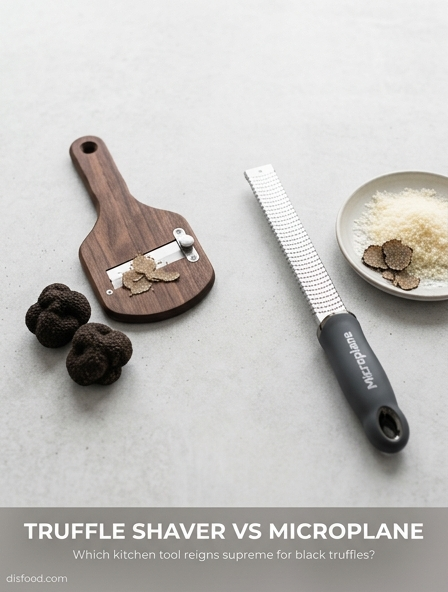
Truffle Shaver vs Microplane Key Differences
The primary distinction between a truffle shaver and a Microplane lies in their mechanical approach to processing the ingredient. A truffle shaver, also known as a mandoline for fungi, utilizes a flat, razor-sharp blade to produce thin, translucent slices. Its design is rooted in tradition, often featuring a wooden or stainless steel base with a central blade that allows the user to maintain the integrity of the truffle's internal marbling. In contrast, a Microplane uses a photo-etched grating surface consisting of hundreds of tiny, sharp teeth. This tool is designed to shred the ingredient into fine, wispy curls or a powder-like consistency, fundamentally changing the physical form of the truffle.
- Mechanical Action: The shaver cuts across the grain of the fungus, while the Microplane tears through it.
- Material Construction: Shavers often feature adjustable screws and ergonomic handles, whereas Microplanes are usually long, slender, and fixed-depth.
- Output Volume: A shaver yields individual pieces; a Microplane yields a collective pile of shavings.
- Waste Potential: Microplanes can sometimes trap small bits of truffle in the teeth, whereas shavers leave a clean, flat surface on the remaining knob.
When choosing between the two, a chef must consider whether the goal is to highlight the truffle as a distinct visual and textural component or to integrate its flavor seamlessly into a sauce or dough. The shaver is built for ceremony and visual elegance, whereas the Microplane is a tool of efficiency and intense flavor dispersion.
Texture Comparison Slicing vs Grating Results
The mouthfeel of a truffle varies significantly depending on whether it has been sliced or grated. When using a truffle shaver, the result is a distinct "coin" or petal that provides a subtle, earthy crunch. These slices sit atop a dish, offering a momentary burst of flavor that fades as the slice is consumed. The thickness of these slices can be manipulated to change the bite, ranging from paper-thin veils that melt on the tongue to thicker chips that provide a more substantial resistance. This textural presence is essential for dishes where the truffle is the star, such as a simple butter pasta or a classic carpaccio.
| Feature | Slicing (Shaver) | Grating (Microplane) |
|---|---|---|
| Consistency | Uniform, flat petals | Light, fluffy shreds |
| Mouthfeel | Slightly firm or crisp | Instantaneous melt |
| Integration | Layered on top | Stirred or folded in |
| Structural Integrity | Maintains marbling | Breaks down structure |
Conversely, grating with a Microplane produces a soft, almost snowy texture. Because the truffle is broken down into much smaller particles, it loses its individual structural identity and instead becomes a textural enhancer for the base dish. Grated truffle incorporates more easily into creamy textures, such as risottos or mashed potatoes, where a solid slice might feel like an intrusion. The decision often comes down to whether the diner should feel the truffle or simply experience its presence through the overall silkiness of the meal.
Aroma Release and Surface Area Impact
Truffles are valued primarily for their volatile aromatic compounds, which are released most effectively when the fungus is disturbed. The choice of tool significantly impacts how these aromas are perceived by the diner. A Microplane creates a massive amount of surface area by shredding the truffle into hundreds of tiny pieces. This increased surface area allows for a rapid release of dimethyl sulfide and other aromatic gasses, creating an immediate and pungent olfactory experience. This makes the Microplane an excellent choice for infusing hot dishes where the steam can carry the newly released scents directly to the nose.
The truffle shaver, however, offers a more controlled and sustained release of aroma. Because the slices are larger and have less total surface area compared to the same weight of grated truffle, the scent is released more gradually. As the diner cuts into a slice or moves it around the plate, new aromas are liberated. This creates a lingering experience rather than an immediate "aromatic bomb." Furthermore, the shaver preserves the moisture within the slice, preventing the truffle from drying out as quickly as it might when grated. For high-quality, fresh truffles, the shaver is often preferred because it respects the delicate balance of the fungus's natural oils and prevents them from oxidizing too rapidly upon contact with the air.
The Benefits of Adjustable Slicing Blades
One of the most significant advantages of a dedicated truffle shaver is the ability to adjust the blade height. Most professional-grade shavers feature a thumb screw that allows the cook to calibrate the thickness of each slice with extreme precision. This level of control is impossible with a Microplane, which has a fixed cutting depth. The adjustable blade serves both an aesthetic and an economic purpose. By setting the blade to its thinnest possible setting, a chef can make a small, expensive truffle appear much more abundant, covering a larger portion of the dish with translucent, delicate shavings.
Beyond economics, the adjustable blade allows for customization based on the specific type of truffle being used. For instance:
- Black Winter Truffles: These are often sliced slightly thicker to emphasize their robust, earthy texture and rich internal color.
- White Alba Truffles: These are typically sliced as thin as possible to maximize their intense aroma and delicate, brittle nature.
- Summer Truffles: Because they are milder, a thicker slice can help provide a more noticeable flavor profile.
This versatility ensures that the tool can adapt to the varying densities and moisture levels found in different harvests. The ability to switch from a "dusting" of thin petals to a substantial "shaving" provides the chef with a range of culinary expressions that a grating tool simply cannot replicate. It transforms the act of garnishing into a precise technical process.
Why Microplane Grating Enhances Distribution
While the truffle shaver is unmatched for elegance, the Microplane is the champion of flavor distribution. In many culinary applications, the goal is to ensure that every single bite of a dish contains the essence of the truffle. When a truffle is sliced, the flavor is localized to the specific areas where the slices land. If a diner takes a forkful of pasta without a slice, they may miss the full experience. A Microplane solves this by breaking the truffle down into a fine "dust" or "snow" that can be tossed through the dish, ensuring an even coating on every strand of pasta or grain of rice.
This method is particularly effective for sauces, compound butters, and infused oils. The tiny particles created by the Microplane have a high affinity for fats, which are the primary carriers of truffle flavor. By grating the truffle directly into a warm fat source, the flavor molecules are captured and distributed throughout the entire volume of the liquid. Additionally, for home cooks working with smaller or less aesthetically perfect truffles, the Microplane is a forgiving tool. It can utilize every odd-shaped nub and corner of the fungus, which might be difficult or dangerous to hold against a flat shaver blade. This maximizes the yield and ensures that not a single gram of the expensive ingredient is wasted during the preparation process.
Choosing the Best Tool for Visual Presentation
Visual presentation is a cornerstone of the fine dining experience, and the truffle shaver is the undisputed king in this category. The iconic image of thin, marbled truffle slices cascading onto a plate of pasta is a symbol of luxury. These slices act as a visual garnish that communicates the value and quality of the ingredients to the diner. The intricate patterns of the gleba-the internal fruiting body of the truffle-are only visible when sliced. A Microplane, by contrast, destroys these beautiful patterns, leaving behind a pile of nondescript shreds that can sometimes look messy or unrefined if not handled carefully.
However, the Microplane does offer a specific visual style often referred to as "truffle snow." When a high-quality truffle is grated over a dish at the last second, it creates a light, airy mound that can look quite modern and sophisticated. This is particularly effective on minimalist dishes where a high-contrast "pop" is desired. Ultimately, the choice depends on the desired plate aesthetic:
- Classic/Traditional: Use a shaver to showcase the natural beauty and marbling of the fungus.
- Modern/Avant-Garde: Use a Microplane to create a delicate, uniform layer of flavor that covers the dish like fallen snow.
Most high-end restaurants opt for the shaver for tableside service because the physical motion of the slicing and the sight of the petals falling is part of the theatrical appeal that justifies the high price point of truffle supplements.
Durability and Maintenance of Truffle Tools
Maintaining truffle tools is essential for ensuring they perform effectively over many years. Truffle shavers are generally constructed from stainless steel or a combination of wood and steel. The blades on high-quality shavers are often made of hardened carbon steel or high-grade stainless, and many models allow the blade to be removed for sharpening or replacement. Because a shaver has a single, straight edge, it is relatively easy to hone using a small whetstone. The wooden versions require additional care, such as occasional oiling with food-grade mineral oil, to prevent the handle from cracking or warping due to moisture exposure.
Microplanes, on the other hand, are highly durable but have a finite lifespan. The photo-etched teeth are incredibly sharp but cannot be effectively sharpened once they become dull. Because there are hundreds of small cutting surfaces, the tool will eventually need to be replaced after heavy use. Cleaning a Microplane also requires more attention; truffle particles can easily become lodged in the tiny crevices between the teeth. It is best cleaned with a stiff-bristled brush under running water immediately after use to prevent the pungent oils from drying and becoming difficult to remove. While most Microplanes are dishwasher safe, hand-washing is recommended to preserve the sharpness of the teeth. In contrast, a stainless steel shaver is virtually indestructible if kept dry and sharp, making it a better long-term investment for the serious culinary enthusiast.
Versatility for Other Gourmet Ingredients
While both tools are marketed for truffles, their utility in the kitchen extends to a wide variety of other high-end ingredients. The truffle shaver is essentially a precision mandoline, making it ideal for creating paper-thin slices of other firm items. It is frequently used for garlic cloves, yielding slices so thin they practically dissolve in olive oil, a technique popularized in classic Italian-American cooking. It is also excellent for shaving hard cheeses like Parmigiano-Reggiano into elegant shards, or for creating thin curls of chocolate to garnish desserts. Radishes, chestnuts, and even small mushrooms can be processed beautifully with a shaver.
The Microplane is perhaps even more versatile, as it is a staple for zest and hard spices. In addition to truffles, it is the gold standard for:
- Citrus Zest: Removing the flavorful pith-free skin of lemons, limes, and oranges.
- Hard Spices: Grating whole nutmeg, cinnamon sticks, or dried ginger into a fine powder.
- Hard Cheeses: Creating a cloud-like pile of cheese that melts instantly on hot pasta.
- Aromatics: Turning garlic and ginger into a fine paste for marinades and dressings.
Because the Microplane is useful for daily tasks like zesting an orange, it often sees more frequent use in a standard kitchen. However, for a gourmet who frequently works with delicate fungi or wants to achieve a specific "shaved" look for carpaccio or salads, the dedicated shaver remains an essential specialized tool.
Professional Chef Preferences for Truffle Prep
In the professional kitchen, the choice between a shaver and a Microplane often depends on the specific station and the speed of service. For tableside service in the front of the house, chefs almost exclusively provide servers with truffle shavers. The act of shaving a truffle over a customer's plate is a classic piece of "restaurant theater" that enhances the perceived value of the meal. The sound of the shaver and the sight of the thin slices falling onto the food provide a sensory experience that a Microplane cannot match. Professionals prefer shavers with a comfortable grip and a locking screw that won't slip during a busy dinner service.
In the prep kitchen, however, the Microplane is often the preferred tool for "building" flavor. When a chef is making a truffle-infused foam, a base for a sauce, or a truffle-infused salt, the Microplane is the faster and more efficient option. It allows the chef to quickly integrate the truffle into a larger batch of food. Many professional chefs actually use both tools in tandem: they might use a Microplane to infuse the base of a risotto with truffle flavor during the cooking process, and then use a shaver to finish the dish with fresh petals just before it leaves the pass. This two-pronged approach ensures that the dish is both deep in flavor and visually stunning, catering to both the palate and the eye of the diner.
Final Verdict for Your Home Kitchen
Deciding which tool to purchase for a home kitchen depends on your cooking style and how often you intend to use fresh truffles. If you are a purist who buys high-quality fresh white or black truffles and wants to experience them in the most traditional way, the truffle shaver is the superior choice. It respects the ingredient's anatomy and provides a visual elegance that is central to the "truffle experience." A stainless steel adjustable shaver is a one-time purchase that will last a lifetime and can also serve as a precision slicer for garlic and radishes.
However, for the average home cook who may only occasionally use truffles or who uses them primarily to enhance the flavor of home-cooked meals like mac and cheese or risotto, the Microplane is the more practical investment. It is a multi-purpose tool that you will use daily for citrus, cheese, and spices, and it performs exceptionally well at distributing truffle flavor throughout a dish. If you already own a fine-tooth Microplane, you may not strictly need a truffle shaver unless you specifically desire the aesthetic of sliced petals. For those who want the best of both worlds, owning both is ideal: the Microplane for the "workhorse" tasks of flavor infusion and the shaver for the final, celebratory touch of a gourmet meal. Ultimately, the shaver is about the "show," while the Microplane is about the "soul" of the truffle's flavor.

Comments