
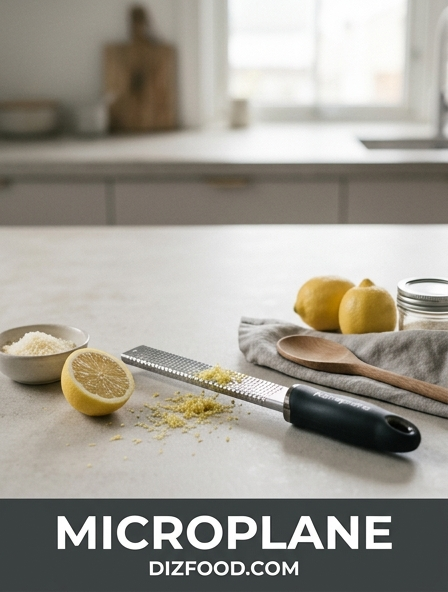
Mastering the Ultra Fine Grating Technique
To achieve the pinnacle of culinary texture with a Microplane, one must master the physical mechanics of the ultra-fine grating technique. Unlike traditional box graters that rely on sheer force to tear food apart, the Microplane utilizes hundreds of tiny, chemically etched teeth that act like individual razors. To master this, you should hold the tool at a 45-degree angle relative to the cutting board, or alternatively, hold the tool face-up and draw the ingredient across the blades for better visual control. The pressure applied should be minimal; let the sharpness of the stainless steel do the work to prevent bruising the delicate cells of the ingredient.
- Maintain a consistent, rhythmic stroke to ensure uniform particle size.
- Rotate the ingredient frequently to avoid over-grating one specific area.
- Use a "light touch" philosophy to keep the results airy and prevent clumping.
By refining these movements, you transform dense ingredients into ethereal garnishes. Whether you are working with hard aged cheeses or fibrous ginger, the goal is to create a product that melts instantly upon contact with the palate, releasing flavor without adding unwanted bulk or fibrous grit to the final dish.
Essential Tools for Fluffy Citrus Clouds
The architecture of a Microplane tool determines the final structural integrity of your zest. For those seeking the "fluffy cloud" effect, the choice of blade style is paramount. The classic grater/zester is characterized by its narrow, long frame, which allows for long strokes that produce curly, light strands. These tools are engineered using photo-etching technology, which creates edges that are significantly sharper than stamped metal. This sharpness is what allows the tool to slice through the zest without crushing it, preserving the air pockets that create a voluminous appearance.
| Tool Type | Primary Benefit | Ideal Ingredient |
|---|---|---|
| Classic Zester | Maximum Aeration | Lemons and Limes |
| Fine Grater | Dense Powder | Cinnamon and Nutmeg |
| Ribbon Grater | Textural Curls | Chocolate and Coconut |
Choosing the correct tool ensures that the zest remains dry and distinct rather than becoming a damp paste. The handle ergonomics also play a role, as a secure grip allows for the steady, rapid movements required to build up a pile of fluffy citrus snow without excessive manual fatigue.
Maximizing Essential Oil Release for Aroma
The primary value of zesting lies in the volatile essential oils trapped within the flavedo, the colored outer layer of citrus fruit. To maximize the release of these aromatic compounds, the grating process must be timed and executed with precision. When the Microplane's teeth pierce the oil sacs, the aroma is most potent within the first few seconds. To harness this effectively, consider the following steps:
- Zest directly over the bowl or pan where the ingredient will be used to catch the mist of oils.
- Work quickly to minimize the oxidation of the oils once they are exposed to the air.
- Rub the freshly grated zest into granulated sugar or salt to "trap" the oils for longer shelf life in recipes.
If you zest onto a flat surface and then move the product, you lose a significant percentage of the aromatic impact to the cutting board. The scent of a dish is often just as important as its taste, and by focusing on the preservation of these oils, you elevate a simple recipe into a multisensory experience. The microscopic precision of the Microplane ensures that these oils are released cleanly rather than being absorbed into the fruit's pulp.
Precision Slicing for Perfect Snowy Texture
Achieving a "snowy" texture with hard ingredients like Parmesan-Reggiano or Pecorino Romano requires a specific approach to precision slicing. The Microplane functions as a series of miniature planes, shaving off translucent layers of the ingredient. For the best results, the ingredient should be moved across the blade with a rapid, short motion. This prevents the shavings from becoming too long and heavy, allowing them to remain light and "dry."
When working with spices like nutmeg or star anise, the goal is to produce a dust-like consistency. Because these items are small, the precision of the Microplane is essential for safety and efficiency. The resulting "snow" has a much higher surface-area-to-volume ratio than traditionally grated cheese, which means it melts faster in sauces and provides a more immediate flavor punch on the tongue. This technique is particularly useful for finishing pasta dishes, where a heavy blanket of cheese might overwhelm the delicate balance of the sauce. By creating a snowy texture, you provide the richness of the cheese while maintaining an elegant, light presentation that enhances the overall aesthetic of the gourmet plate.
The Secret to Avoiding Bitter Pith
The greatest challenge in citrus zesting is avoiding the pith-the white, spongy layer between the skin and the fruit. This part of the citrus contains bitter alkaloids that can ruin the balance of a delicate dessert or sauce. The secret to avoiding this lies in the visual feedback loop while using your Microplane. You should only ever pass the fruit over the blades once in any given spot. As soon as the vibrant color of the skin disappears to reveal the white underneath, you must rotate the fruit.
- Use a "one-swipe" rule for every section of the fruit surface.
- Keep the fruit moving constantly in your hand like a rotating globe.
- Check the underside of the Microplane frequently to ensure no white fibers are being pulled through.
Because Microplane teeth are so sharp, they can easily dig too deep if the user applies downward pressure. By skimming the surface lightly, you ensure that only the oil-rich flavedo is harvested. This meticulous approach guarantees a pure, sweet, and tangy citrus flavor that lacks any trace of the harsh bitterness associated with the underlying pith, preserving the integrity of your culinary creations.
Temperature Control for Superior Zesting Results
Temperature plays a surprisingly critical role in the efficiency of a Microplane. For soft or semi-hard ingredients, such as ginger, garlic, or even certain cheeses, the temperature of the item can determine whether it grates cleanly or turns into a mushy mess. Cold temperatures increase the structural rigidity of the food, allowing the blades to slice through the fibers more cleanly. Many professional chefs prefer to keep their citrus in the refrigerator until the very moment of zesting to ensure the skin is firm and the oil sacs are turgid.
In the case of ginger, freezing the root before using a Microplane is a transformative technique. The frozen fibers become brittle, allowing the tool to create a fine paste without the stringy remnants typically associated with fresh ginger. Similarly, if you are grating chocolate for a garnish, chilling both the chocolate and the Microplane itself prevents the heat from your hands or the friction of the blades from melting the delicate shavings. Maintaining a controlled, cool environment ensures that every pass over the tool results in distinct, high-definition particles that look as good as they taste, avoiding the clumping that occurs when fats or sugars begin to soften.
Instant Infusion Strategies for Gourmet Dishes
Microplaned ingredients are uniquely suited for instant infusion due to their incredibly small size. Because the surface area is so vast compared to the mass, the flavor transfer occurs almost instantaneously when introduced to a liquid or fat. To leverage this in gourmet cooking, you should integrate the grated components at strategic moments during the preparation process.
- Whisk fresh zest into cold cream or oil and let it sit for five minutes before using it as a base.
- Fold finely grated aromatics into warm butter just as it begins to foam to create an instant "beurre noisette" infusion.
- Add micro-shavings of aromatics to vinaigrettes to emulsify flavor without the need for high-heat extraction.
This strategy is particularly effective for delicate herbs and spices that might lose their nuance if subjected to prolonged boiling. By using a Microplane, you bypass the traditional steeping times required for larger chunks of ingredients. This allows for "last-minute" adjustments to a dish's flavor profile, ensuring that the notes remain bright, fresh, and distinct rather than becoming muted or muddy through the cooking process.
Maintaining Sharpness in Microplane Blades
A Microplane is a precision instrument, and its performance is entirely dependent on the sharpness of its etched teeth. Unlike a knife, a Microplane cannot be easily honed or sharpened at home, making maintenance and protection essential for longevity. The primary enemy of these fine blades is improper cleaning and storage. Traditional sponges can be shredded by the teeth, and food particles left to dry can become difficult to remove without damaging the edges.
- Always rinse the tool under high-pressure warm water immediately after use.
- Brush in the opposite direction of the blades using a stiff nylon kitchen brush.
- Store the tool in its protective plastic sleeve to prevent the teeth from dulling against other metal utensils.
Avoid placing the Microplane in the dishwasher if possible; while many are labeled as dishwasher safe, the harsh detergents and the heat cycle can eventually degrade the steel's temper and the plastic handle's bond. By hand-washing and air-drying your tool, you ensure that the microscopic edges remain razor-sharp for years, allowing for effortless grating and consistent results in every culinary application.
Strategic Layering of Fragrant Zest
The timing of when you add Microplaned zest to a dish can radically change the final flavor profile. Chefs often use a "layering" strategy to build complexity. This involves adding ingredients at different stages of the cooking process to capture both the deep, cooked-in flavors and the bright, volatile top notes. When zest is cooked, its sugars caramelize and its oils mellow, providing a foundational citrus backbone. When added at the end, it provides a sharp, acidic punch that cuts through rich fats.
| Addition Stage | Flavor Outcome | Example Use Case |
|---|---|---|
| Early (Sautéing) | Deep, integrated sweetness | Risotto bases or stews |
| Middle (Simmering) | Balanced, aromatic body | Braising liquids or sauces |
| Finish (Garnishing) | Bright, zesty highlight | Grilled fish or plated pasta |
By utilizing the Microplane for both stages, you ensure consistency in texture across the dish. The fine particles disappear into the body of the sauce during the early stages, while the fresh garnish on top provides a visual and aromatic signal to the diner of the flavors contained within.
Selecting Premium Produce for High Impact Zest
The quality of your Microplaned output is fundamentally limited by the quality of the produce you select. Since the tool is specifically designed to harvest the outermost layer of the fruit, the condition of the skin is the most important factor. When shopping for citrus, look for fruits that feel heavy for their size, indicating high moisture content, but prioritize those with firm, vibrant, and unblemished skins. A shriveled or soft skin will not grate cleanly; instead, it will snag and tear, leading to a loss of essential oils.
Organic produce is highly recommended when zesting, as conventional citrus is often treated with wax or pesticides that reside primarily in the flavedo. If organic options are unavailable, scrubbing the fruit with a vegetable brush under warm water can remove some of the wax coating, which otherwise might clog the fine teeth of your Microplane. Furthermore, the thickness of the skin matters-lemons with a pebbly, thick texture often yield more zest than those with very thin, smooth skins. By starting with premium, fresh ingredients, you ensure that every stroke of the Microplane releases the maximum amount of flavor and fragrance, making your efforts in the kitchen truly high-impact.

Comments