
Navigating the world of kitchen cutlery often boils down to a fundamental choice between the rhythmic sawing of a serrated blade and the surgical precision of a straight edge. While a serrated bread knife is the undisputed champion for conquering crusty sourdough or delicate brioche without crushing the airy interior, a classic straight edge knife excels at clean, uniform slices of dense loaves and multipurpose culinary tasks. Choosing the perfect blade for every slice isn't just about the bread; it's about understanding how tooth-like scalloped edges grip slippery surfaces versus how a smooth, razor-sharp bevel glides through fibers. Whether you're a home baker or a professional chef, mastering this distinction ensures that every sandwich, baguette, or roast is handled with the optimal tool for a flawless presentation and effortless prep.
| Feature | Serrated Bread Knife | Straight Edge Knife |
|---|---|---|
| Cutting Motion | Horizontal sawing; requires minimal downward pressure. | Vertical push or pull cut; requires a sharp, steady stroke. |
| Best For | Hard crusts, soft interiors, tomatoes, and citrus. | Firm/dense bread, meats, vegetables, and fine dicing. |
| Edge Profile | Scalloped teeth concentrate force on small points. | Continuous, smooth bevel for uniform surface contact. |
| Maintenance | Stays sharp longer; requires specialized sharpening tools. | Requires frequent honing; easily sharpened with a whetstone. |
| Structural Integrity | Prevents compression; ideal for airy or delicate crumbs. | Can crush soft bread if the blade is even slightly dull. |
| Slice Texture | Textured/rougher finish due to the "tooth" marks. | Satin-smooth, clean finish for professional presentation. |
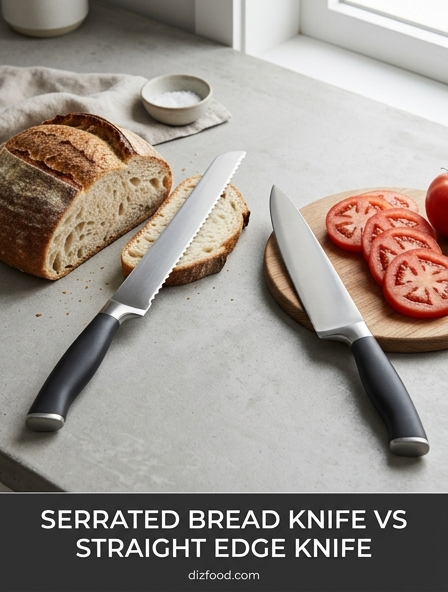
Serrated vs Straight Edge Knife Key Differences Explained
The fundamental distinction between a serrated knife and a straight edge blade lies in the geometry of the cutting edge and how it interacts with the surface of the food. A serrated knife features a scalloped or saw-toothed edge, designed to grip slippery or hard surfaces. This design allows the blade to apply high pressure to small points-the tips of the teeth-making it easier to puncture tough skins or crusts without crushing the delicate interior. In contrast, a straight edge knife, often referred to as a plain edge, has a continuous, smooth surface that tapers to a sharp point. This profile is optimized for clean, precise cuts and relies on a pushing or pulling motion to shear through fibers.
| Feature | Serrated Knife | Straight Edge Knife |
|---|---|---|
| Cutting Action | Sawing motion | Push or slice motion |
| Edge Shape | Scalloped teeth | Continuous smooth line |
| Surface Contact | Point-based pressure | Even distribution of force |
| Maintenance | Requires specialized rods | Easily honed with steel/stones |
Because the serrated edge acts like a saw, it excels when the user needs to penetrate a material that would otherwise cause a smooth blade to slide or deflect. However, this comes at the cost of a rougher cut surface. The straight edge provides the ultimate control for thin slicing and dicing, making it the preferred choice for tasks where presentation and structural integrity of the ingredient are paramount. Understanding these physical differences is the first step in mastering efficient prep work in a culinary environment.
Top Kitchen Uses for a Serrated Bread Knife
While the name suggests a singular purpose, the serrated bread knife is one of the most versatile tools in a chef's kit, particularly when dealing with ingredients that have contrasting textures. Its primary function is to navigate the challenging landscape of a sourdough boule or a baguette, where a hard, caramelized crust protects a soft, airy crumb. Beyond the bakery, however, the serrated blade is the "secret weapon" for handling various delicate fruits and vegetables. Its teeth can bite into the waxy, slippery skin of a tomato or a bell pepper without requiring the downward force that would otherwise bruise the flesh.
- Slicing Citrus: Perfect for thin rounds of lemons, limes, and oranges without losing juice.
- Trimming Cakes: The sawing motion cleanly levels sponge cakes or slices through layered tortes.
- Chocolate Preparation: Ideal for breaking down large blocks of chocolate into manageable shards.
- Sandwich Construction: Effortlessly cuts through multiple layers of meat, cheese, and crunchy vegetables.
- Pineapple and Melon: The aggressive teeth easily navigate thick, fibrous rinds.
The length of a standard bread knife, usually between 8 and 10 inches, also allows for long, steady strokes. This is particularly useful when cutting large loaves or delicate pastries like croissants, where a short blade would require too many jagged movements. By letting the teeth do the work, the user avoids compressing the food, ensuring that the final product maintains its intended volume and texture. It is the go-to tool whenever an ingredient presents a "hard-to-soft" transition that a straight edge might struggle to initiate.
Why Precision Slicing Requires a Straight Edge Blade
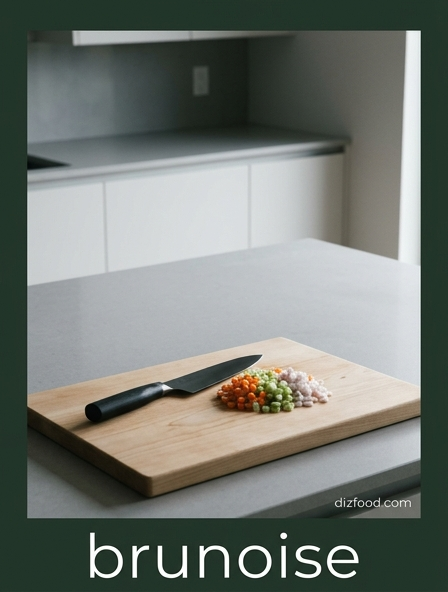
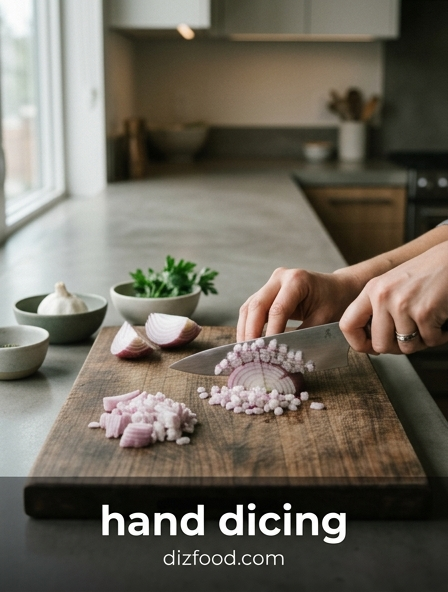
Precision in the kitchen is often defined by the ability to create uniform pieces that cook at the same rate and look aesthetically pleasing on the plate. This level of control is almost exclusively the domain of the straight edge blade. Because a smooth edge makes continuous contact with the food, it allows the cook to guide the knife with micro-adjustments. Whether performing a julienne, chiffonade, or a brunoise, the straight edge provides a level of "feel" that a serrated blade lacks. The absence of teeth means there is no "tearing" of the cellular structure, which results in a cleaner cut that preserves the juices and freshness of the ingredient.
- Uniformity: The flat profile allows for consistent thickness across every slice of a potato or onion.
- Structural Integrity: Smooth blades do not drag through the food, preventing herbs from bruising or darkening.
- Speed: A sharp straight edge can utilize a "rocking" motion, which is significantly faster for mincing garlic or shallots.
- Versatility: It can be used for both delicate fish (sashimi) and dense root vegetables like carrots.
Furthermore, the straight edge is essential for tasks requiring a "push-cut" or a "draw-cut." For instance, when slicing a raw steak or a fillet of salmon, a smooth blade glides through the protein fibers without leaving jagged marks. This is not just about looks; a cleaner cut seals the surface more effectively during searing, keeping the moisture inside. For any task where the goal is a perfectly flat, translucent slice, the straight edge is the only appropriate choice. It demands more frequent maintenance to keep it sharp, but the reward is total mastery over the ingredient's final shape and texture.
Slicing Soft Bread vs Hard Crust Performance Comparison
The debate between serrated and straight edges is most visible when confronting the diverse world of bread. Breads range from the cloud-like softness of a brioche to the tooth-shattering exterior of a wood-fired sourdough. Using the wrong knife for these tasks can lead to frustrating results, such as squashed loaves or dangerous slips. A serrated knife is the undisputed king of the hard crust. The teeth act as anchors, digging into the hardened starches and sawing through them. This prevents the knife from sliding off the rounded top of the loaf, which is a common cause of kitchen injuries when using a dull straight edge.
When dealing with soft, enriched breads like sandwich loaves or milk bread, the mechanics change. A very sharp straight edge can technically slice through soft bread, but it often requires a level of sharpness that most home cooks do not maintain. If the blade is even slightly dull, it will compress the delicate gluten structure before it begins to cut, resulting in a flattened slice. The serrated knife, however, uses its teeth to "nibble" through the soft fibers without needing downward pressure. The comparison is even more stark when the bread is warm; the steam-softened interior is incredibly vulnerable to pressure, making the sawing motion of a serrated blade essential for maintaining the bread's shape.
In a professional setting, a straight edge might be used for ultra-thin decorative slices of dense, crustless rye, but for 99% of bread-related tasks, the serrated edge wins. It manages the transition from the resistant exterior to the fragile interior with a mechanical efficiency that a smooth blade simply cannot replicate. For the home cook, having a dedicated serrated bread knife ensures that every loaf-regardless of its "crust-to-crumb" ratio-is handled with the respect its texture deserves.
The Mechanics of Serrated Teeth vs Smooth Blade Edges
The physics of cutting involves the application of force over a specific area. A smooth, straight edge distributes the force of your hand along the entire length of the blade that is in contact with the food. This is ideal for shearing, where the goal is to split the material evenly. However, if the material is tough or slippery, the force might not be concentrated enough to break the surface tension. This is why a straight edge requires significant sharpness to be effective; the narrower the edge, the higher the pressure at the point of contact, even with minimal force.
Serrated blades operate on a completely different mechanical principle. The "teeth" or scallops concentrate all the downward force onto the very tips of the serrations. This creates immense localized pressure, allowing the knife to puncture hard surfaces easily. Once the tips have pierced the exterior, the recessed curves of the scallops follow through, acting as miniature blades that slice at an angle. This "slicing at an angle" happens even if you are moving the knife straight down, which is why serrated knives feel "sharper" for longer periods. The points of the teeth take most of the wear, while the inner curves remain protected from contact with the cutting board.
This mechanical advantage is why serrated knives are often described as "forgiving." Even a relatively dull serrated knife can still "saw" its way through a tough baguette, whereas a dull straight edge would simply slide off. However, this same mechanism is what makes serrated knives unsuitable for tasks like mincing. The teeth catch on the cutting board and create a jagged, uneven surface on the food. Understanding these mechanics helps a cook choose the right tool: use the straight edge for shearing through uniform materials and the serrated edge for breaching resistant barriers.
Choosing the Right Knife for Meat Vegetables and Bread
Efficiency in food preparation depends on matching the blade's edge to the density and surface tension of the ingredient. While some knives are marketed as "all-purpose," a discerning cook knows that meat, vegetables, and bread each interact with steel differently. For raw meats and poultry, a straight edge is almost always superior. It allows for clean separation of muscles and fats without tearing the protein, which is vital for both cooking consistency and presentation. When it comes to cooked meats, such as a roast or a steak, a straight edge ensures the juices stay within the fibers rather than being squeezed out by a sawing motion.
| Category | Recommended Knife | Reasoning |
|---|---|---|
| Root Vegetables | Straight Edge | Consistent dicing and peeling. |
| Waxy Skins (Tomato) | Serrated | Bypasses slippery skin easily. |
| Boneless Meat | Straight Edge | Clean, fiber-respecting cuts. |
| Crusty Loaves | Serrated | Saws through hard exteriors. |
| Leafy Herbs | Straight Edge | Prevents bruising and oxidation. |
Vegetables present a mixed bag. For dense items like carrots, potatoes, or onions, a straight edge (like a Chef's knife or Santoku) is essential for safety and precision. Using a serrated knife on a hard carrot can be dangerous, as the teeth may catch and cause the vegetable to roll. However, for "soft-skin" vegetables like tomatoes or eggplants, a small serrated utility knife can be more efficient than a dull chef's knife. Bread is the simplest category: unless it is a very soft, crustless loaf, the serrated knife is the only tool that will provide a clean, un-squashed slice every time.
How to Sharpen Serrated Knives vs Straight Edge Blades
Maintenance is the area where these two knife types diverge most significantly. A straight edge knife is relatively simple to maintain using a sharpening stone (whetstone) or a honing steel. The process involves grinding the metal at a consistent angle on both sides to create a "V" shape. Because the edge is continuous, the user can glide the entire length of the blade across the stone in a few strokes. Regular honing-realigning the microscopic "teeth" of a smooth edge-takes only seconds and keeps the knife performing at its peak between sharpening sessions.
Serrated knives, conversely, require a much more meticulous approach. You cannot use a flat whetstone on a serrated blade because the stone would only touch the tips of the teeth, leaving the inner scallops dull. Instead, you must use a specialized tool called a sharpening rod, which is a thin, tapered ceramic or diamond-coated stick. The process is as follows:
- Identify the "beveled" side of the knife (most serrated knives are sharpened on only one side).
- Place the sharpening rod in each individual scallop or "gullet."
- Move the rod back and forth, matching the diameter of the rod to the width of the scallop.
- Repeat this for every single serration along the length of the blade.
- Flip the knife and lightly run the flat side over a stone to remove any burrs.
Because of this labor-intensive process, many home cooks neglect their serrated knives. The good news is that serrated edges stay functional much longer than straight edges because the cutting parts (the scallops) rarely touch the cutting board. However, when they eventually do go dull, the sharpening process requires patience and the correct tools to restore that "like-new" bite.
Pros and Cons of Each Blade Type for Home Cooks
Every tool in the kitchen involves a trade-off between ease of use, versatility, and maintenance. For the average home cook, the straight edge knife is the primary workhorse. Its main "pro" is its extreme versatility; a single 8-inch Chef's knife can handle roughly 90% of all kitchen tasks. It is also very easy to keep sharp with minimal equipment. The "con" is that it requires a baseline level of technique; a dull straight edge is not only frustrating but also dangerous, as it requires more force and is prone to slipping off smooth surfaces like onion skins or meat fat.
The serrated knife offers the benefit of consistency. Its greatest "pro" is its ability to cut through difficult textures with almost no effort, regardless of how much pressure you apply. It is the safest choice for slippery fruits and hard breads. Additionally, it stays "sharp enough" for years without professional maintenance. However, the "cons" are significant: it produces a ragged cut that is unsuitable for fine dicing or delicate presentation, and it is notoriously difficult to sharpen at home. It also creates a lot of crumbs when used on bread, which can be messy.
Ultimately, the choice isn't about which is better, but which is right for the specific ingredient. A kitchen without a sharp straight edge is inefficient for vegetable prep, while a kitchen without a serrated blade will struggle with basic tasks like slicing a baguette or a ripe tomato. Most experts recommend a "trio" of knives: a large Chef's knife (straight), a serrated bread knife, and a small paring knife (usually straight), to cover all possible culinary scenarios encountered in home cooking.
Food Texture Guide Matching the Knife to the Ingredient
To choose the right knife, you must first analyze the texture of the food. Culinary ingredients generally fall into four textural categories: hard-exterior/soft-interior, uniform-dense, fibrous, and delicate-soft. Matching the blade to these textures ensures safety and the best possible food quality. The "sawing" action of a serrated blade is a mechanical solution to high-surface-tension items, while the "slicing" action of a straight edge is a precision solution for uniform materials.
- Hard-Exterior/Soft-Interior: Use a Serrated Knife. Examples include crusty bread, pineapples, and tomatoes. The teeth break the barrier without crushing the center.
- Uniform-Dense: Use a Straight Edge. Examples include potatoes, carrots, beets, and hard cheeses. A smooth blade moves through these with less friction and more control.
- Fibrous: Use a Straight Edge (very sharp). Examples include raw meats, celery, and ginger. A clean cut severs fibers without pulling or tearing them.
- Delicate-Soft: Use a Serrated Knife (for large items like cake) or a Razor-Sharp Straight Edge (for small items like berries). If the knife is not extremely sharp, use the serrated one to avoid squashing.
Texture also dictates the motion of the cut. If you find yourself needing to "saw" a carrot, your straight edge is too dull, but switching to a serrated knife is a mistake-it may catch and slip. Conversely, if you are pushing down hard on a tomato and it isn't yielding, switch to the serrated blade immediately. Recognizing the resistance of the food allows you to switch tools before an accident happens or before the ingredient is ruined. This textural awareness is what separates an amateur from an experienced cook.
Final Verdict Which Knife is Best for Your Kitchen Tasks
In the "Serrated vs. Straight Edge" debate, the final verdict is that both are essential, but they serve entirely different masters. If you could only own one knife, a high-quality straight edge Chef's knife is the winner due to its sheer range of applications. It can mince, dice, slice, and chop almost anything in the pantry. However, it is an "active" tool that requires the user to maintain its edge and master its movement. It is the precision instrument of the kitchen, designed for those who value the art of the cut and the consistency of the results.
On the other hand, the serrated knife is the "specialist" that handles the tasks the Chef's knife finds annoying or impossible. It is the only tool for a crusty loaf of bread and the most reliable option for the common tomato. For home cooks who do not want to sharpen their knives every month, the serrated blade is a faithful companion that provides a "bite" long after a straight edge would have become dull. It offers a level of mechanical assistance that makes difficult textures easy to manage.
The best approach for a well-functioning kitchen is a balanced kit. Use a straight edge for 90% of your vegetables, all your meats, and any task requiring a fine, clean finish. Reserve your serrated knife for breads, waxy-skinned fruits, and delicate pastries. By understanding the mechanics, maintenance requirements, and best use cases for both, you ensure that you are never fighting against your ingredients, but rather working in harmony with them to produce perfectly prepared meals.

Comments