
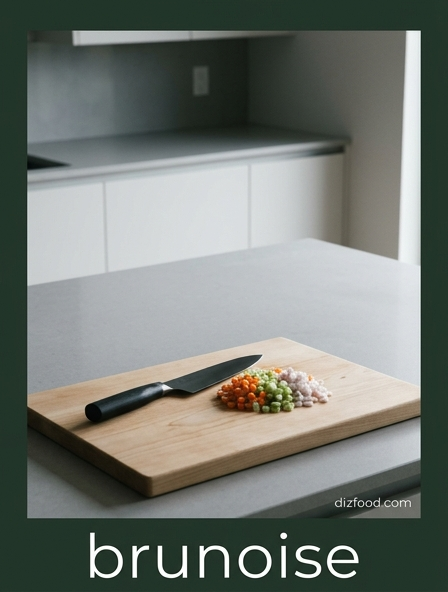
Defining the Small Dice Cut
The small dice cut is a fundamental pillar of classical French knife skills, serving as a versatile middle ground between the delicate brunoise and the larger medium dice. In professional culinary school curricula, this technique is frequently referred to as the Macédoine. Achieving this cut requires a high level of control and spatial awareness, as the goal is to produce perfectly cubic pieces of food. Unlike rough chopping, which focuses on speed and approximate sizing, the small dice is used when the visual presentation of a dish is as important as its flavor profile. It provides a neat, organized appearance that signals a chef's discipline and attention to detail.
Beyond aesthetics, the small dice is essential for managing the texture of a dish. Because each cube is small, it offers a pleasant mouthfeel that is neither too chunky nor too fine to be noticed. It is the preferred choice for hearty vegetable soups, certain types of salads, and sautéed side dishes where the ingredients need to retain their individual identity while still melding into a cohesive bite. Mastering this cut is a rite of passage for any aspiring cook, as it builds the foundational muscle memory needed for more advanced precision slicing and cubing techniques in a commercial kitchen environment.
Standard Dimensions for Small Dice
In the world of professional gastronomy, measurements are not suggestions but strict requirements that ensure consistency across a kitchen brigade. The standard dimension for a small dice is exactly 1/4 inch by 1/4 inch by 1/4 inch, which translates to roughly 6 millimeters on all sides. This size is specifically chosen because it allows for rapid, even cooking while maintaining enough surface area to provide a distinct structural presence within a recipe. To achieve these dimensions consistently, chefs often use a ruler or a specialized cutting mat during their early training to calibrate their eyes and hands.
When compared to other classic French cuts, the small dice occupies a specific niche in the hierarchy of sizing. Understanding how it relates to other cubic cuts is vital for following complex recipes accurately. The following table outlines the standard dimensions for the primary cubic knife cuts used in professional kitchens:
| Cut Name | Imperial Dimensions | Metric Dimensions |
|---|---|---|
| Fine Brunoise | 1/16" x 1/16" x 1/16" | 1.5mm x 1.5mm x 1.5mm |
| Brunoise | 1/8" x 1/8" x 1/8" | 3mm x 3mm x 3mm |
| Small Dice | 1/4" x 1/4" x 1/4" | 6mm x 6mm x 6mm |
| Medium Dice | 1/2" x 1/2" x 1/2" | 12mm x 12mm x 12mm |
Essential Knives for Precision Dicing
To produce a clean, crisp small dice without crushing the cellular structure of the vegetable, the choice of cutlery is paramount. A dull blade will slip off the skins of vegetables or tear through the flesh, resulting in uneven cubes and lost juices. For most dicing tasks, a high-quality 8-inch chef's knife is the industry standard. The length of the blade provides the necessary leverage to cut through firm root vegetables, while the slight curve of the edge allows for a smooth rocking motion. However, many precision-focused chefs prefer a Santoku or a Nakiri for dicing, as the flatter edges of these Japanese-style blades are specifically designed for clean, vertical contact with the cutting board.
Regardless of the specific knife style, several characteristics are non-negotiable for precision work:
- Razor Sharpness: The blade must be sharp enough to slice through a tomato skin with zero downward pressure.
- Balance: A well-balanced knife reduces hand fatigue during repetitive dicing tasks.
- Thin Spine: A thinner blade creates less resistance when moving through dense vegetables like potatoes or carrots.
- Comfortable Bolster: This allows for a proper pinch grip, which is essential for guiding the knife with accuracy.
Mastering the Square Off Technique
The secret to achieving perfect cubes lies not in the final dicing motion, but in the preparation of the vegetable. This process is known as "squaring off" or creating a "plinth." Because most vegetables are naturally round or tapered, they cannot be sliced into uniform cubes immediately. To begin, the chef must trim the ends of the vegetable and then slice off the rounded sides to create a rectangular block. While this may seem wasteful to a home cook, in a professional setting, these trimmings are rarely discarded; instead, they are reserved for stocks, purees, or sauces where shape does not matter. Squaring off provides a stable base, preventing the vegetable from rolling on the board.
Once the vegetable has been transformed into a rectangular prism, the chef can proceed with confidence, knowing that every subsequent slice will result in a uniform shape. This technique is particularly important for vegetables like carrots or parsnips, which have a significant taper. By creating a uniform block first, you ensure that the dice from the top of the vegetable matches the dice from the bottom. This foundational step is what separates a professional small dice from a rustic home-style chop, ensuring that the final dish has the geometric precision expected in fine dining establishments.
Step by Step Small Dice Instructions
Performing a small dice is a rhythmic process that involves three distinct stages of reduction. Each step must be executed with precision to ensure the final cubes meet the 1/4-inch requirement. Consistency at the beginning of the process is the only way to ensure consistency at the end. Follow these steps to achieve a perfect small dice:
- Stabilize and Square: Cut off the top and bottom of the vegetable and slice off the four rounded sides to create a flat-sided rectangular block.
- Slice into Planks: Cut the block lengthwise into flat slices, each exactly 1/4 inch thick. Ensure the knife remains perfectly vertical to prevent slanted edges.
- Create Batonnets: Stack two or three planks on top of each other and slice them lengthwise again into 1/4 inch strips. These long, square-sided sticks are called batonnets.
- The Final Dice: Turn the batonnets 90 degrees and cut crosswise at 1/4 inch intervals. Maintain a consistent pace to produce uniform cubes.
Throughout the process, use your non-cutting hand in a "claw grip" to guide the blade and protect your fingertips. Keep the tip of the knife in contact with the board if using a rocking motion, or use a clean "push-cut" if using a Japanese-style blade to ensure the corners of the cubes remain sharp and defined.
Small Dice vs Brunoise Comparisons
In the hierarchy of French knife cuts, the small dice and the brunoise are often confused due to their similar cubic shapes. However, the primary difference lies in their scale and their intended use within a dish. A brunoise is significantly smaller, measuring 1/8 inch on all sides, whereas a small dice is double that size at 1/4 inch. This difference in volume is more substantial than it sounds; a single small dice cube actually contains the same volume as eight brunoise cubes. Because of this size disparity, the two cuts behave very differently when exposed to heat and offer different sensory experiences when eaten.
The choice between these two cuts is usually dictated by the cooking time of the recipe. A brunoise will dissolve or overcook if simmered in a soup for an hour, while a small dice will hold its shape perfectly. Conversely, a small dice might be too chunky for a delicate consommé or a refined garnish where a brunoise would provide a more elegant finish. The following table highlights the key distinctions between the two techniques:
| Feature | Brunoise | Small Dice (Macédoine) |
|---|---|---|
| Size | 1/8" x 1/8" x 1/8" | 1/4" x 1/4" x 1/4" |
| Primary Use | Garnish, sauces, stuffings | Soups, salads, sautéed sides |
| Cook Time | Extremely fast (seconds) | Fast to moderate (minutes) |
| Visual Impact | Fine, confetti-like | Structured, geometric |
Uniformity in Culinary Slicing
Uniformity is the hallmark of a professional chef, and the small dice is one of the best ways to demonstrate this skill. There are two primary reasons why precision is vital: even cooking and professional presentation. When ingredients are cut to the exact same size, they finish cooking at the exact same moment. In a soup containing small-diced potatoes and carrots, if some pieces are 1/4 inch and others are 1/2 inch, the smaller pieces will turn to mush while the larger pieces remain crunchy. This inconsistency ruins the texture of the dish and can lead to customer dissatisfaction. Uniformity ensures that every spoonful of food provides a consistent experience.
From a visual perspective, uniformity creates a sense of order and luxury. In high-end culinary environments, the eye "eats" first. A plate featuring perfectly identical cubes of colorful vegetables looks intentional and highly crafted. It suggests that the kitchen is disciplined and that every element of the meal has been handled with care. Achieving this level of perfection requires patience and a refusal to settle for "good enough." It is this dedication to uniformity that separates a home-cooked meal from a professional gastronomic experience, making it a critical skill for any serious cook to develop.
Best Vegetables for Small Dicing
While almost any firm ingredient can be diced, certain vegetables are particularly well-suited for the small dice technique. Root vegetables are the gold standard for this cut because their dense, rigid structure allows them to hold sharp corners and maintain their shape during the cooking process. Vegetables with high water content or soft interiors, like tomatoes, are much more difficult to dice into perfect 1/4-inch cubes and often require removing the seeds and pulp first (a process called concassé) to achieve a workable surface. For beginners, the potato is the ideal vegetable to practice on, as it is inexpensive and provides a firm, opaque body that makes it easy to see where cuts are made.
Common vegetables that are traditionally prepared using a small dice include:
- Carrots and Parsnips: Excellent for aromatics and soups.
- Potatoes (All varieties): The most common candidate for the Macédoine cut.
- Onions: Though they have natural layers, they are often small-diced for mirepoix.
- Zucchini and Squash: The firm outer flesh is perfect for colorful, sautéed dices.
- Celery: A staple in the classic trinity of dicing for stocks and sauces.
- Turnips and Beets: Dense root vegetables that hold a geometric shape very well.
Small Dice Applications in Recipes
The small dice is a workhorse in the kitchen, appearing in a vast array of recipes across different cuisines. One of its most famous applications is in a classic French mirepoix-a mixture of onions, carrots, and celery that serves as the flavor base for countless stews and braises. Because the small dice offers a balance between surface area and bulk, it allows these aromatics to release their flavors into the fat without disintegrating before the main protein is finished cooking. It is also the standard cut for a traditional potato salad, where the cubes need to be large enough to provide a bite but small enough to be thoroughly coated in dressing.
In addition to foundational bases, the small dice is frequently used in contemporary appetizers and side dishes. For example, a vegetable succotash or a corn and pepper relish relies on the small dice to create a vibrant, multi-colored mosaic on the plate. It is also the ideal size for ingredients in a hearty minestrone soup or a rustic chowder. When making a fruit salad, a small dice of apples, pears, or melons can elevate the dish from a simple bowl of fruit to a sophisticated dessert. The versatility of the 1/4-inch cube makes it an essential tool for any chef looking to balance flavor, texture, and visual appeal.
Safety Tips for Fine Knife Work
Engaging in high-precision knife work like small dicing requires focus and proper form to prevent injury. The most important safety rule is the "claw grip." By curling the fingertips of the guiding hand inward and using the knuckles to guide the flat of the blade, you keep your fingers well away from the sharp edge. This technique not only prevents cuts but also provides better control over the width of the slices, as you can incrementally move your knuckles back for each subsequent cut. Additionally, always ensure your cutting board is stable; if it slides, place a damp paper towel or a silicone mat underneath it to keep it firmly in place.
A common misconception is that a dull knife is safer because it is less sharp. In reality, a dull knife is far more dangerous because it requires more force to use and is more likely to slip off the vegetable. Keep your knives honed and sharpened regularly. Finally, maintain a clean and organized workspace (mise en place). Clear away your trimmings and your finished dice frequently so that your board remains uncluttered. A crowded board leads to awkward angles and compromised grip, which are the leading causes of knife accidents in the kitchen. By following these safety protocols, you can master the small dice with confidence and speed.


Comments