
Elevating your culinary skills from home cooking to professional-grade artistry starts with mastering the art of the cut. Achieving surgical precision and uniform slices isn't just about aesthetics; it ensures even cooking and enhances the overall texture of every dish. Whether you are julienning crisp vegetables or carving a delicate roast, using the right technique and high-quality tools is essential for that flawless finish. Consistency is the secret ingredient that transforms a simple meal into a gourmet experience, making every plate look as good as it tastes. To master these techniques, you must first understand the functional differences between a Serrated Bread Knife Vs Straight Edge Knife.
The Foundation of Razor Sharp Blades
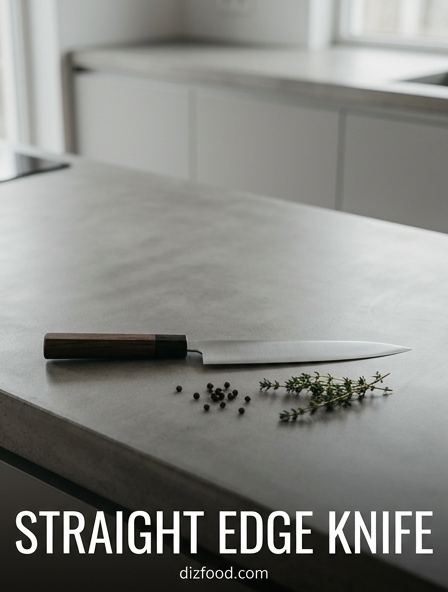
The straight edge knife serves as the primary instrument for precision in the modern kitchen. Unlike its serrated counterparts, which use a sawing motion, the straight edge relies on a clean, downward pressure combined with a slight horizontal draw. This design allows for a microscopic level of contact with the ingredient, ensuring that cellular structures are sliced rather than crushed. Achieving this level of sharpness requires an understanding of blade metallurgy, typically involving high-carbon stainless steel that balances hardness with ease of maintenance.
- High-Carbon Steel: Retains a sharp edge for extended periods but requires meticulous drying to prevent oxidation.
- Stainless Steel: Offers high resistance to corrosion and staining, making it ideal for high-acid environments.
- Ceramic Blades: Provide extreme hardness and edge retention but are susceptible to chipping if dropped.
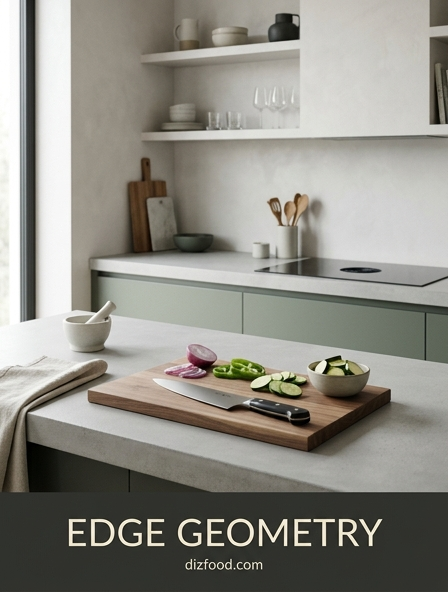
To maximize the utility of a straight edge, the blade must be ground to a specific angle, usually between 15 and 20 degrees. This geometry ensures that the knife can glide through dense root vegetables and delicate proteins with minimal resistance, forming the essential baseline for all professional culinary preparation.
Mastering the Professional Pinch Grip
Control over a straight edge knife begins with the grip, specifically the professional "pinch grip." This technique involves placing the thumb and the side of the index finger directly on the blade's bolster or the base of the spine, rather than wrapping all fingers around the handle. By choking up on the knife, the chef shifts the center of gravity forward, effectively making the blade an extension of the hand. This provides superior lateral stability and prevents the blade from rolling or twisting during heavy-duty tasks.
The remaining three fingers wrap around the handle to provide support, while the "guiding hand" assumes the claw position to protect fingertips. This synergy between the pinch grip and the claw allows for rapid, rhythmic slicing without sacrificing safety. Practicing this grip minimizes wrist fatigue and maximizes the mechanical advantage of the straight edge. Over time, this method becomes subconscious, allowing the chef to focus entirely on the thickness and uniformity of the product being processed, which is critical for consistent results in a high-pressure environment.
Essential Anatomy of Uniform Knife Cuts
Uniformity in knife cuts is not merely an aesthetic choice; it is a fundamental requirement for culinary success. A straight edge knife is the only tool capable of producing the flat, even surfaces necessary for standardized dimensions. These dimensions are classified by specific names and measurements that dictate the final texture and appearance of the dish. When ingredients are cut to the same size, they offer a predictable surface-to-volume ratio, which is the key to mastering heat transfer.
| Cut Name | Dimensions (Inches) | Primary Use |
|---|---|---|
| Fine Brunoise | 1/16 x 1/16 x 1/16 | Garnishes, Consommé |
| Small Dice | 1/4 x 1/4 x 1/4 | Sautés, Mirepoix |
| Medium Dice | 1/2 x 1/2 x 1/2 | Stews, Roasts |
| Batonnet | 1/4 x 1/4 x 2.5 | French Fries, Side Dishes |
Mastering these specific dimensions allows a chef to execute complex recipes with mathematical precision, ensuring that every bite contains a balanced proportion of ingredients and flavor.
The Role of Surface Stability
A straight edge knife is only as effective as the surface it meets. Stability is the silent partner in precision cutting; if the cutting board shifts even a fraction of a millimeter during a stroke, the accuracy of the cut is compromised. Professional environments prioritize heavy, thick cutting boards made of wood or high-density polyethylene. Wood, particularly end-grain maple or walnut, is preferred for its "self-healing" properties and its kindness to the knife's edge, preventing premature dulling compared to harder surfaces like glass or marble.
To ensure absolute stability, chefs often place a damp paper towel or a specialized silicone mat beneath the cutting board. This eliminates any "skating" across the stainless steel prep table. Furthermore, the board must be kept clear of debris; a cluttered workspace leads to uneven cuts and potential slips. By maintaining a clean, anchored surface, the user can apply the consistent downward and forward pressure required to utilize the full length of the straight edge, resulting in cleaner separations and a safer working environment for the duration of the prep shift.
Technical Accuracy in Mandoline Slicing
While the chef's knife is the primary tool, the mandoline represents the pinnacle of mechanized straight-edge precision. It utilizes a fixed, razor-sharp straight blade or V-shaped blade set into a flat platform. The technical advantage of a mandoline lies in its ability to produce slices of identical thickness that would be nearly impossible to replicate by hand at high speeds. This is essential for dishes like potato gratin or carpaccio, where transparency and uniformity are the defining characteristics of the plate.
- Adjust the thickness gauge to the desired specification, ensuring the locking mechanism is tight.
- Use a safety guard or cut-resistant glove to protect the palm and fingers from the exposed blade.
- Apply firm, even pressure to the ingredient as it slides across the platform.
- Maintain a consistent pace to ensure the blade shears through the fiber without tearing.
The mandoline's straight edge must be kept exceptionally sharp; a dull blade will cause the vegetable to snag, creating uneven ridges and increasing the risk of injury. When maintained properly, it is the ultimate tool for high-volume precision.
Advanced Geometry for Visual Plating
Advanced plating relies on the manipulation of shapes to create visual interest and movement on the plate. The straight edge knife is the architect's tool in this process, allowing for the creation of sharp angles and clean facets. One common technique is the oblique or roll cut, frequently used for long, cylindrical vegetables like carrots or parsnips. By rotating the vegetable 90 degrees after each diagonal cut, the chef creates pieces with multiple flat surfaces, which catch the light and hold sauces more effectively than standard rounds.
Another high-level technique is the tourne cut, which transforms a vegetable into a seven-sided football shape. This requires a specific curved straight-edge knife known as a bird's beak paring knife. The geometry of these cuts ensures that the vegetable sits elegantly on the plate, providing a sense of intentionality and professional craftsmanship. By mastering the geometric potential of the straight edge, a cook transitions from simple food preparation to culinary artistry, using the physical properties of the ingredients to enhance the overall dining experience through visual symmetry.
Standardizing Dimensions for Even Cooking
The primary scientific reason for using a straight edge knife to standardize dimensions is the predictability of heat conduction. Heat travels from the exterior of an ingredient to its center at a rate determined by its thickness and density. If a pan contains a mixture of large and small vegetable pieces, the smaller ones will soften or burn before the larger ones have finished cooking. This leads to a dish with inconsistent textures and compromised flavors. By utilizing a straight edge to produce uniform cubes or slices, every piece reaches the ideal internal temperature at the same moment.
This standardization is particularly vital in high-heat applications like searing or stir-frying, where the window for perfect doneness is extremely narrow. In professional kitchens, this process is known as "mise en place," and it ensures that the cooking process is streamlined and repeatable. When a chef can trust that every onion dice will translucent simultaneously, they can focus on more complex tasks like sauce emulsification or protein timing, resulting in a cohesive and professionally executed meal.
Precision Tools for Delicate Garnishes
Delicate garnishes require a specialized application of the straight edge, often involving smaller blades like paring or utility knives. These tools allow for intricate work that larger chef's knives cannot accommodate. For instance, creating a chiffonade of basil requires a sharp straight edge to slice through stacked leaves without bruising the delicate cell walls, which would cause the herb to turn black. The precision of the blade ensures that the aromatic oils remain within the ribbons until they reach the diner's palate.
Similarly, creating radish fans or scallion curls depends on the knife's ability to make micro-incisions that respond to ice water baths. A dull or serrated edge would tear these fibers, resulting in a ragged appearance. The straight edge also excels in "sculpting" tasks, such as removing the pith from citrus supremes or de-seeding chili peppers with surgical accuracy. In the realm of fine dining, these small details differentiate a standard dish from an exceptional one, proving that the straight edge is essential for both the broad strokes and the fine finishing touches.
The Art of the Consistent Julienne
The julienne is perhaps the most iconic precision cut associated with the straight edge knife. Often referred to as "matchsticks," a standard julienne measures approximately 1/8 inch by 1/8 inch by 2 inches. Achieving this consistency requires a methodical two-step process: first, squaring off the ingredient to create a "plank," and second, slicing those planks into thin strips. The flat edge of the knife is crucial here, as any curvature in the blade would make it difficult to maintain the exact 1/8-inch thickness along the entire length of the cut.
This cut is prized in salads, slaws, and as a base for sautéed dishes because it provides a delicate crunch and a high surface area for seasoning. For even more refined applications, the "fine julienne" or "allumette" reduces the dimensions even further to 1/16 inch. To maintain this level of accuracy, the chef must use a rocking motion or a push-cut, keeping the blade's edge in constant contact with the knuckles of the guiding hand. This rhythmic precision ensures that every strip is a perfect mirror of the last.
Maintaining Edge Integrity for Performance
The performance of a straight edge knife is entirely dependent on the integrity of its bevel. Over time, the microscopic teeth of the blade's edge become misaligned or rounded through contact with cutting boards and food fibers. Maintenance is divided into two categories: honing and sharpening. Honing is performed frequently using a ceramic or steel rod; it does not remove metal but rather realigns the existing edge to keep it centered. Sharpening, however, involves the use of whetstones to grind away a small amount of steel, creating a fresh, sharp apex.
- Honing: Should be done before every use to maintain the "bite" of the blade.
- Whetstones: Use varying grits (1000 for sharpening, 6000 for polishing) for a mirror finish.
- Storage: Always use magnetic strips or blade guards to prevent the edge from hitting other metal.
- Cleaning: Hand-wash only; dishwashers use abrasive detergents and high heat that ruin the temper.
By following these maintenance protocols, a chef ensures that the straight edge remains a reliable tool, capable of delivering the surgical precision required for professional-grade culinary preparation.

Comments