
Achieving restaurant-quality results in your home kitchen often boils down to a single factor: the consistency of your cuts. When weighing the benefits of a mandoline slicer versus a traditional chef knife, you are essentially choosing between specialized mechanical precision and multi-purpose manual control. While a high-quality chef knife is the backbone of culinary prep, offering the versatility to mince, dice, and carve, the mandoline slicer excels at producing paper-thin, uniform slices at a speed that manual chopping simply cannot match. Whether you are prepping a delicate cucumber salad or a hearty potato gratin, understanding the specific strengths of these tools-ranging from the knife's tactile feedback to the mandoline's rapid-fire efficiency-is key to elevating your kitchen workflow and ensuring your dishes cook evenly and look professional.
| Feature | Mandoline Slicer | Chef Knife |
|---|---|---|
| Slice Uniformity | Calibrated thickness; identical results every time. | Variable; depends entirely on user technique and focus. |
| Prep Speed | Ultra-fast for bulk slicing and julienning. | Slower; requires individual attention for every cut. |
| Versatility | Limited to slicing, crinkle cuts, and julienne. | High; can chop, mince, disjoint, and peel. |
| Safety Profile | High risk of deep nicks; requires a hand guard. | Lower risk with proper "claw" grip technique. |
| Learning Curve | Minimal; mechanical setup handles the precision. | High; requires years to master consistent knife skills. |
| Maintenance | Harder to clean; many parts and sharp crevices. | Easy to clean; requires regular honing and sharpening. |
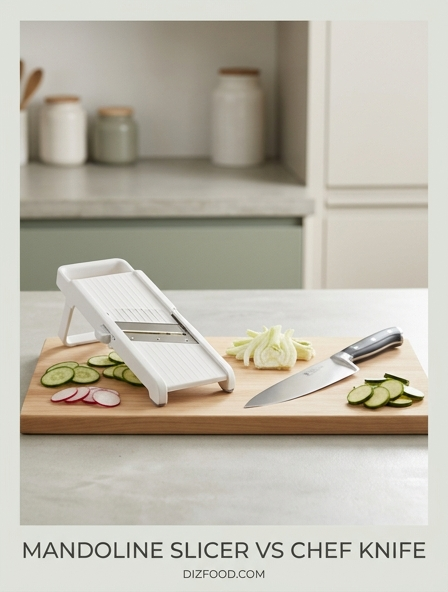
Mandoline Slicer vs Chef Knife for Precision Cutting
Precision cutting is the hallmark of professional-grade culinary preparation, yet the mandoline slicer and the chef knife achieve this through vastly different mechanical principles. The mandoline slicer relies on a fixed-blade system where the user moves the food across a sharp, stationary edge. This design allows for microscopic adjustments, often measured in millimeters, enabling the production of paper-thin translucent slices that are nearly impossible to replicate by hand. For ingredients like radishes for a garnish or potatoes for a carpaccio, the mandoline offers a level of calibrated thinness that remains absolute throughout the entire batch. The blade is locked into a platform, removing the human error associated with hand-eye coordination and blade-angle deviation.
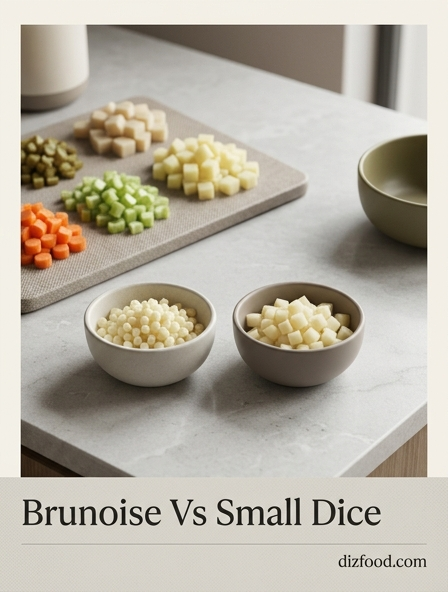
In contrast, the chef knife provides a more organic form of precision. It is the tool of the artisan, where the thickness of each cut is determined by the chef's muscle memory and tactile feedback. While a master chef can achieve remarkable thinness, the knife excels in complex precision tasks that the mandoline cannot handle, such as brunoise dicing or curved garnishes. The chef knife allows for "on-the-fly" adjustments, shifting from a heavy chop to a delicate sliver in a single motion. However, maintaining that level of precision over a large volume of produce is physically demanding. While the mandoline offers mechanical accuracy through its rigid architecture, the chef knife offers versatile precision that is limited only by the user's skill level and steady hand.
Consistency and Uniformity in Vegetable Slices
When it comes to high-volume consistency, the mandoline slicer is the undisputed champion of the kitchen. Uniformity is not merely an aesthetic choice; it is a functional requirement for even cooking. When every slice of a potato or zucchini is exactly 3mm thick, they will all reach the desired texture at the same moment in the oven or deep fryer. The mandoline removes the variability that naturally occurs with manual slicing, ensuring that the first slice is an exact clone of the hundredth slice. This makes it the primary tool for dishes like potato gratin, vegetable chips, or layered tarts where geometric perfection is paramount to the dish's success.
| Feature | Mandoline Slicer | Chef Knife |
|---|---|---|
| Thickness Accuracy | Mechanical/Fixed | Manual/Estimated |
| Visual Uniformity | Extremely High | High (Skill Dependent) |
| Batch Continuity | Identical results | Variable results |
The chef knife, while capable of producing uniform results, is subject to the fatigue and distraction of the cook. Over a long period of slicing, the angle of the knife may drift, or the spacing of the cuts may widen. This inconsistency can lead to "hot spots" in cooking, where thinner pieces burn while thicker ones remain undercooked. For home cooks and professionals alike, the mandoline serves as a shortcut to achieving a high-end, polished look that usually requires years of knife-handling practice. While the knife is more than adequate for a single salad, the mandoline ensures that large-scale catering or meal prep remains visually and texturally harmonious.
Speed and Efficiency Comparison in Food Prep
The efficiency of a kitchen tool is often measured by the ratio of setup time to actual processing speed. The mandoline slicer is built for speed in high-volume scenarios. Once the blade height is set and the safety guard is in place, a user can process a whole bag of cucumbers or onions in a fraction of the time it would take with a knife. The repetitive sliding motion is incredibly fast because it eliminates the need to reset the blade for every individual cut. For tasks like shredding cabbage for coleslaw or julienning carrots for a stir-fry, the mandoline can reduce prep time from twenty minutes down to five, making it a favorite for those processing large quantities of produce.
However, the chef knife often wins on efficiency for smaller, everyday tasks. If you only need to slice half an onion and one clove of garlic, the time spent retrieving, assembling, and eventually cleaning a mandoline far outweighs the few seconds saved during the cutting process. A chef knife is always "ready"; it requires no assembly and is significantly faster to clean and store. Furthermore, a knife can transition between different types of cuts-such as moving from slicing to dicing-without needing to change blades or adjust dials. In a fast-paced environment where a cook must switch between different ingredients rapidly, the versatility and low-maintenance nature of the chef knife often make it the more efficient choice for day-to-day meal preparation.
Safety Risks and Protection Measures for Both Tools
Both tools carry significant risks, but the nature of the danger differs between them. The mandoline slicer is often cited as one of the most dangerous tools in the kitchen due to the speed of its use and the proximity of fingers to the blade. Because the motion is repetitive and fast, it is easy to lose track of where the vegetable ends and the fingertips begin. The chef knife, while also capable of causing deep lacerations, is generally used with a "claw" grip that keeps the knuckles as a guide and the fingertips tucked away. To mitigate the risks associated with these tools, users should adhere to the following safety protocols:
- Mandoline: Always use the provided hand guard or "pusher" to keep skin away from the blade.
- Mandoline: Consider wearing a cut-resistant Kevlar glove for an extra layer of protection.
- Chef Knife: Keep the blade sharp; a dull knife requires more force and is more likely to slip.
- Chef Knife: Maintain a stable cutting board by placing a damp paper towel underneath it.
- General: Never leave either tool submerged in soapy dishwater where they cannot be seen.
The psychological approach to safety also varies. Users tend to be more cautious with a chef knife because the blade is exposed and obvious. With a mandoline, the blade is often partially hidden within the frame, which can lead to a false sense of security. Most mandoline injuries occur when the user decides the hand guard is "too clunky" and tries to finish the last nub of a vegetable by hand. In both cases, focus and respect for the edge are the most important safety measures one can employ.
Versatility and Range of Kitchen Tasks
The chef knife is the undisputed "Swiss Army Knife" of the culinary world. Its versatility is unparalleled, as it can handle almost any ingredient in the kitchen. From breaking down a whole chicken and deboning fish to dicing tough root vegetables and mincing delicate herbs, the chef knife is a multi-purpose workhorse. It can crush garlic with its flat side, scrape seeds out of a pepper with its tip, and handle heavy-duty tasks like splitting a butternut squash. There is almost no food item that a chef knife cannot process in some capacity, making it the foundational tool upon which all other kitchen skills are built.
The mandoline slicer, by contrast, is a highly specialized tool with a narrow range of functions. It is designed almost exclusively for firm fruits and vegetables. You cannot use a mandoline to carve a roast, chop parsley, or dice a steak. While some high-end models come with interchangeable blades for julienne, crinkle cuts, or waffle cuts, the tool remains limited to "pass-through" slicing. It struggles with soft or overripe produce, such as soft tomatoes or stone fruits, which tend to tear rather than slice. While it performs its specific job better than any other tool, the mandoline is an accessory to the kitchen, whereas the chef knife is the core. For a minimalist kitchen, the knife can do everything the mandoline does, albeit slower, but the mandoline cannot reciprocate that versatility.
The Learning Curve for Mastery and Control
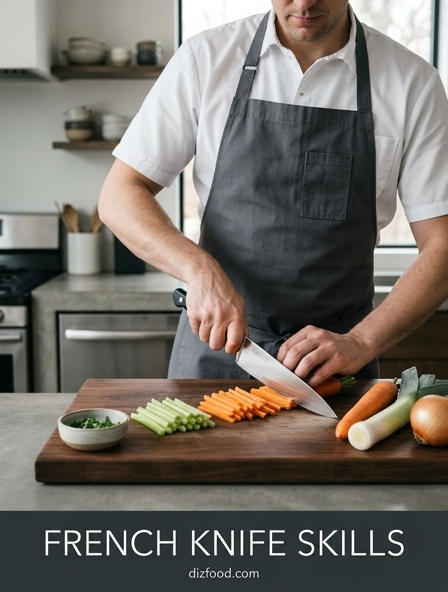
Mastering the chef knife is a journey that can take years of consistent practice. It involves learning proper grip, various cutting motions (the rock chop, the push cut, the draw cut), and the anatomy of different ingredients. A beginner must develop muscle memory to maintain a consistent angle and speed without risking injury. This learning curve is steep, but the reward is a level of control that allows the cook to manipulate food with extreme nuance. Once mastered, the knife becomes an extension of the hand, providing feedback on the ripeness and texture of the food as the blade passes through it.
The mandoline has a much shallower learning curve in terms of technique but a higher requirement for situational awareness. Most users can produce perfect slices within seconds of picking up the tool. The "skill" involved with a mandoline isn't about the cut itself-which is handled by the machine-but rather about the setup and the safety management. Learning how to adjust the thickness dials and swap blades without touching the edges is the primary hurdle. However, the lack of tactile feedback can be a disadvantage; you don't "feel" the cut in the same way you do with a knife. While the mandoline offers instant gratification and "pro-level" results for beginners, the chef knife offers a lifetime of skill progression and a deeper connection to the cooking process.
Cleaning and Maintenance Requirements for Longevity
The longevity of any cutting tool depends heavily on how it is treated after the prep work is finished. A high-quality chef knife requires regular maintenance, including honing with a steel rod to keep the edge centered and periodic sharpening with a whetstone. It must be hand-washed and dried immediately to prevent corrosion and protect the handle material. Because it is a single piece of steel (or a simple tang-and-handle construction), there are no hidden crevices where food particles can hide. Maintenance is straightforward but requires a disciplined routine to ensure the blade remains a precision instrument for decades.
Mandoline slicers are more complex to clean and maintain. They often consist of several moving parts, including dials, spring-loaded platforms, and interchangeable blade inserts. These components create nooks and crannies where vegetable juices and small fibers can become trapped, potentially leading to bacterial growth if not scrubbed thoroughly. While many modern mandolines claim to be dishwasher safe, the high heat and harsh detergents can dull the specialized blades and warp plastic frames. Furthermore, sharpening a mandoline blade is significantly more difficult than sharpening a knife; many models use proprietary blades that are meant to be replaced rather than sharpened. This makes the chef knife the more sustainable long-term investment, while the mandoline is often viewed as a semi-disposable or part-replaceable appliance.
Storage and Portability for Modern Kitchens
In modern kitchens where drawer and counter space are at a premium, the physical footprint of a tool matters. A chef knife is incredibly compact. It can be stored on a magnetic strip, in a slim knife block, or in a protective sheath inside a drawer. It is also the ultimate portable tool; a chef's "knife roll" is the standard way for professionals to transport their essential gear. The knife's slim profile and lack of extra accessories make it easy to integrate into any kitchen layout, regardless of size. It is a single, self-contained unit that performs a thousand tasks.
The mandoline slicer is often more cumbersome to store. Even "folding" models take up considerable space because of their wide base and the various attachments that accompany them. A full mandoline kit might include several different blades (slicing, julienne, grating), a hand guard, and sometimes a dedicated storage container to keep the sharp parts organized. For those with small apartment kitchens, finding a home for a mandoline can be a challenge. Additionally, because it is made of multiple parts, it is less portable; bringing a mandoline to a friend's house for a dinner party involves packing a box of components rather than just sliding a single blade into a sheath. While the mandoline is an invaluable secondary tool, its bulkiness can be a deterrent for those who prefer an uncluttered kitchen environment.
Best Use Cases for Each Cutting Tool
Determining whether to reach for a mandoline or a chef knife depends entirely on the specific dish being prepared. The mandoline is the superior choice for recipes that require repetitive, uniform, and thin cuts. It is the only tool that should be used for making homemade potato chips, where the thickness must be paper-thin and perfectly consistent to achieve the right crunch. It is also ideal for making a classic "Slaw" or a Fennel Salad, where the texture of the vegetables is improved by being shaved into fine ribbons. If you are preparing a large-scale Ratatouille or a Scalloped Potato dish, the mandoline will save you significant time and ensure the final presentation is stunning.
The chef knife should be the tool of choice for almost everything else. If the task involves dicing an onion, mincing garlic, cubing meat, or chopping herbs, the knife is faster and safer. It is also better for "heavy" vegetables like large pumpkins or sweet potatoes, which can be difficult to push through a mandoline blade. Furthermore, the knife is necessary for any task that requires "cleaning" food, such as trimming fat from a steak or removing the skin from a fillet of fish. For the vast majority of daily cooking-making a quick stir-fry, a soup, or a basic salad-the chef knife remains the most practical and efficient choice. The mandoline should be viewed as a "specialist" called in for specific, high-precision assignments.
Final Verdict on the Ultimate Kitchen Essential
If a cook were forced to choose only one tool to survive in a kitchen, the chef knife would be the clear winner every time. It is the foundational pillar of culinary arts, offering a level of versatility that no other tool can match. From the simplest home meal to the most complex Michelin-star dish, the chef knife is involved in nearly every step of the process. It is a lifetime tool that grows with the user's skill level, providing a sense of control and connection to the ingredients that a mechanical slicer simply cannot replicate. Its ease of maintenance and compact nature make it the ultimate essential.
However, the mandoline slicer is far from obsolete. It is the ultimate "luxury" tool for those who value efficiency and visual perfection. While it cannot replace the knife, it complements it by handling the tasks that the knife finds tedious or difficult. For the serious home cook or the professional chef, the two tools should exist in a partnership. Use the chef knife for 90% of your labor, but keep the mandoline in the cupboard for those moments when you need to transform a humble potato into a work of art. The final verdict is that the chef knife is the essential "need," while the mandoline slicer is the highly recommended "want" for anyone looking to elevate their culinary output to the next level of precision and speed.

Comments