
When it comes to extending the life of your groceries and reducing household food waste, the debate between vacuum sealing and standard Ziploc bagging often boils down to your specific storage goals. While Ziploc bags offer unbeatable convenience and low upfront costs for short-term leftovers or daily snacks, vacuum sealing is the undisputed heavyweight for long-term preservation. By removing nearly all oxygen, vacuum sealers effectively halt the oxidation process and virtually eliminate the risk of freezer burn, keeping your proteins and produce fresh for up to five times longer than traditional methods. Whether you are a meal prepper looking for efficiency or a bulk-buyer aiming to protect your culinary investment, understanding how air exposure impacts flavor and texture is key to choosing the right method for your kitchen.
| Feature | Vacuum Sealing | Ziploc Bagging |
|---|---|---|
| Freezer Shelf Life | 1-3+ Years | 3-6 Months |
| Oxygen Removal | ~99% (Hermetic Seal) | Minimal (Manual displacement) |
| Freezer Burn Risk | Near Zero | High (due to air pockets) |
| Upfront Cost | High ($50-$200 for machine) | Very Low (Pennies per bag) |
| Preparation Speed | Slower (Machine cycle required) | Instant (Manual zip) |
| Ideal Use Case | Bulk meat & long-term storage | Daily snacks & short-term leftovers |
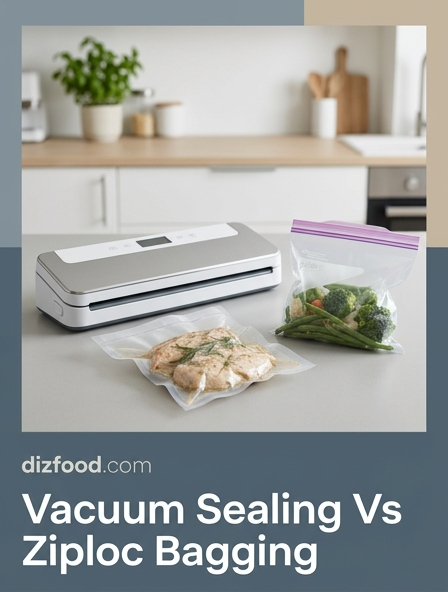
The Science of Food Preservation Vacuum Sealing vs Ziploc Bags
The fundamental principle of food preservation lies in the management of environmental factors that contribute to spoilage, primarily oxygen, moisture, and microbial activity. Vacuum sealing and Ziploc bagging represent two distinct philosophies in this scientific endeavor. Vacuum sealing operates on the principle of atmospheric pressure reduction. By removing nearly all air from a specialized plastic barrier, the process significantly slows down the oxidation of lipids and pigments, which are responsible for rancidity and discoloration in meats and produce. Furthermore, most spoilage-causing bacteria and fungi are aerobic, meaning they require oxygen to survive; a vacuum-sealed environment effectively puts these biological processes into a state of stasis.
In contrast, standard resealable bags, commonly known as Ziploc bags, function as a physical barrier rather than an atmospheric control system. While they effectively prevent external contaminants like dust or insects from reaching the food, they trap a significant volume of ambient air inside the pouch. Even when a user manually presses air out, microscopic pockets of oxygen remain in direct contact with the food surface. This facilitates a slower but inevitable degradation process. The science favors vacuum sealing for chemical stability, as the hermetic seal prevents the exchange of gases and moisture vapor between the internal and external environments.
- Oxidation: Vacuum sealing reduces oxygen levels to below 1%, whereas Ziploc bags maintain ambient oxygen levels.
- Microbial Growth: Absence of air inhibits aerobic pathogens.
- Enzymatic Activity: Reduced oxygen slows down the natural ripening and eventual decay of plant tissues.
Comparing Shelf Life and Freshness for Long Term Storage
When evaluating the longevity of food items, the difference between vacuum sealing and standard bagging is substantial. Vacuum sealing is designed for the "long haul," extending the usable life of frozen and refrigerated goods by three to five times compared to traditional methods. For instance, meat kept in a Ziploc bag in the freezer may begin to show signs of degradation within six months, whereas vacuum-sealed meat can remain pristine for up to three years. This is largely due to the thickness of the specialized bags and the total exclusion of air, which maintains the cellular integrity of the food.
The following table illustrates the typical shelf-life expectations for various food categories under different storage conditions:
| Food Item | Ziploc Bag (Freezer) | Vacuum Sealed (Freezer) |
|---|---|---|
| Beef & Poultry | 6 Months | 2-3 Years |
| Fish | 3-6 Months | 2 Years |
| Vegetables | 8 Months | 2-3 Years |
| Berries/Fruits | 6 Months | 2 Years |
In the pantry, dry goods like coffee beans, nuts, and grains also benefit from vacuum technology. Oxygen is the enemy of freshness for oils found in nuts; by removing it, the user prevents the "stale" taste that often develops in opened Ziploc bags after just a few weeks. For long-term emergency prep or bulk seasonal buying, the vacuum sealer is the undisputed leader in maintaining nutrient density and flavor profile over extended periods.
How Vacuum Sealing Prevents Freezer Burn Effectively
Freezer burn is a phenomenon caused by sublimation-the process where ice crystals turn directly into water vapor, leaving the food dehydrated and tough. This occurs when air reaches the surface of the food. Ziploc bags, even those labeled as "freezer grade," are often made of polyethylene, which is slightly porous at a molecular level. Over time, air enters and moisture escapes, leading to those telltale white, leathery patches on your frozen steaks or chicken breasts.
- Total Surface Contact: The vacuum process pulls the plastic flush against every contour of the food, leaving no room for moisture to migrate and turn into ice crystals.
- Barrier Thickness: Vacuum bags are typically 3 to 4 mils thick and feature multi-layer construction (usually a mix of polyethylene and nylon) to block vapor transmission.
- Hermetic Heat Seal: Unlike a plastic zipper that can fail or leak under pressure, a heat-welded seal is permanent and airtight.
By eliminating the air-to-food interface, vacuum sealing keeps the moisture inside the muscle fibers of meat. When thawed, the food retains its original texture and juiciness. Ziploc bags are prone to "frosting" inside the bag; this frost is actually the moisture being pulled out of your dinner. Consequently, if your goal is to preserve the quality of expensive cuts of meat or seasonal harvests for more than a month, avoiding the air-gap inherent in Ziploc bags is essential for culinary success.
Cost Benefit Analysis of Vacuum Sealers vs Resealable Bags
Determining the best storage method requires a balance between initial investment and long-term savings. Vacuum sealers require an upfront cost for the machine, ranging from $50 to $300, and the bags themselves are generally more expensive per unit than Ziploc bags. However, the primary financial benefit of vacuum sealing is found in the drastic reduction of food waste. Most households throw away significant portions of their grocery budget due to spoilage or freezer burn. By extending the life of food, the machine often pays for itself within the first year of frequent use.
- Initial Cost: Ziploc bags are inexpensive and require no hardware. Vacuum sealers are a capital investment.
- Consumables: Generic vacuum rolls can lower costs, but brand-name bags remain pricier than bulk-buy Ziplocs.
- Waste Reduction: Ability to buy "family packs" or bulk meats at lower prices per pound without fear of spoilage.
- Energy Efficiency: A well-organized, vacuum-packed freezer has less air to cool and operates more efficiently.
For a household that rarely stores leftovers and buys food daily, Ziploc bags are more cost-effective. However, for those who participate in bulk buying at warehouse clubs or gardeners who preserve their own produce, the vacuum sealer is a strategic financial tool. The "cost of convenience" for Ziplocs is low, but the "cost of failure" (throwing away a $20 steak) is high. Properly calculating your return on investment involves looking at your monthly trash bin and identifying how much food could have been saved with better atmospheric control.
Best Methods for Bulk Food Storage and Meal Prep
Bulk food storage and meal prepping are foundational strategies for modern kitchen efficiency. Vacuum sealing excels here by allowing for "portion control" and "marination acceleration." When you buy five pounds of ground beef, Ziploc bags are convenient for quick division, but vacuum bags allow you to flatten the meat into thin "bricks" that freeze and thaw rapidly. Furthermore, the vacuum process opens the pores of protein, allowing marinades to penetrate deeper and faster than traditional soaking in a Ziploc bag.
Effective meal prep often involves cooking in large batches. Here is a recommended workflow for utilizing both methods:
- Vacuum Sealing: Use for raw proteins, hard cheeses, blanched vegetables, and liquid-heavy meals like stews (after pre-freezing).
- Ziploc Bagging: Use for daily snacks, pre-cut dry vegetables for tonight's stir-fry, and temporary storage of bread.
- Labeling: Both methods require rigorous labeling, but vacuum bags provide a flatter surface for indelible markers to remain legible.
For meal preppers who cook once a week for the following seven days, Ziploc bags are often sufficient. However, if the goal is "Once a Month Cooking," vacuum sealing becomes mandatory. It ensures that the meal eaten on day 30 tastes as fresh as the one eaten on day one. Additionally, vacuum-sealed bags can be dropped directly into boiling water or a microwave for reheating, which is often safer and more effective than using thin-walled Ziploc bags that may melt or leak at high temperatures.
Sous Vide Performance Vacuum Sealers vs Ziploc Water Displacement
Sous vide cooking requires food to be submerged in a temperature-controlled water bath. The goal is to have no air in the bag so that the water's heat is transferred directly to the food. There are two primary schools of thought: the vacuum sealer and the "water displacement method" using Ziploc bags. While both can work, the vacuum sealer is the gold standard for sous vide due to the security of the seal and the total removal of air, which prevents the bag from floating.
- Water Displacement Method: You place food in a Ziploc, slowly lower it into water to push air out, and zip it closed. This is cheap but prone to human error and seal failure at high temperatures.
- Vacuum Sealing: This creates a heavy-duty, reinforced seal that can withstand long cook times (up to 72 hours) without the risk of the bag opening and ruining the food.
- Buoyancy: Even a tiny amount of trapped air in a Ziploc bag can cause it to float, leading to uneven cooking and potential safety issues.
Furthermore, many Ziploc bags are not rated for high-temperature cooking and may contain BPA or other chemicals that can leach when heated. Dedicated vacuum bags are almost always BPA-free and designed specifically for the heat of sous vide. If you are serious about precision cooking, the vacuum sealer provides the peace of mind that your bag won't leak or float, ensuring perfectly edge-to-edge cooked proteins every time.
Space Saving Benefits of Removing Air for Kitchen Organization
Kitchen real estate, especially in the freezer and pantry, is often limited. Standard Ziploc bags, even when "deflated" by hand, tend to be bulky and irregular in shape. Vacuum sealing transforms the way food occupies space. By removing all air, the volume of a package is reduced to the absolute minimum size of the food itself. This allows for "filing" food like books on a shelf rather than stacking it in a jumbled pile.
- Compression: Items like hops, coffee, or shredded cheese can be compressed into a fraction of their original size.
- Uniformity: Vacuum sealed bags can be frozen flat. Once frozen, these "planks" of food can be stood upright in bins, maximizing vertical space.
- Visibility: Because the plastic is pulled tight, you can clearly see the contents without the distortion of frost or air pockets.
In the pantry, vacuum sealing can be used with canisters or specialized bags to keep dry goods organized. It prevents the "half-empty bag" syndrome where a large Ziploc bag takes up a whole shelf despite containing only a handful of crackers. For those with small apartment kitchens or limited chest freezer space, the ability to fit 30% to 50% more food in the same footprint is a significant advantage. This organized approach also makes inventory management easier, as you can see exactly what you have at a glance, preventing over-buying and further clutter.
When to Choose Ziploc Bags for Short Term Refrigeration
Despite the technical superiority of vacuum sealing for long-term needs, Ziploc bags remain a staple for a reason: speed and accessibility. Not every kitchen task requires a hermetic seal. For items that will be consumed within 24 to 48 hours, the time and material cost of using a vacuum sealer are often unjustifiable. Ziploc bags are designed for high-frequency interaction, allowing the user to open, grab a portion, and reclose the bag in seconds.
- Daily Lunch Prep: Sandwiches and sliced fruit for school lunches are best suited for resealable bags.
- Leftovers: If you plan on eating last night's pizza for lunch today, a Ziploc bag is the most efficient choice.
- Produce Breathability: Some fresh vegetables, like mushrooms or certain leafy greens, actually prefer a bit of airflow or a looser environment rather than a tight vacuum, which can cause them to become slimy.
The "easy-open" nature of Ziploc bags makes them superior for snacks like pretzels or grapes that family members might graze on throughout the day. Vacuum sealing these would be counterproductive, as the bag would have to be cut open and a new one used every time someone wanted a snack. Therefore, the Ziploc bag is the king of the "active" kitchen, where food is in constant motion, while the vacuum sealer is the king of the "storage" kitchen, where food is being preserved for the future.
Durability and Material Strength for Heavy Duty Food Protection
Not all plastic bags are created equal. The physical durability of a storage medium is critical when dealing with sharp edges, like bone-in ribs, or during the rigors of a crowded freezer where bags are frequently shifted. Vacuum sealer bags are engineered for toughness, usually featuring a multi-layered construction that includes a textured side to facilitate air removal and a smooth side for clarity. This makes them significantly more resistant to punctures and "pinholing" than standard Ziploc bags.
| Feature | Ziploc (Standard) | Vacuum Sealer Bag |
|---|---|---|
| Material Type | Low-Density Polyethylene | PE/Nylon Composite |
| Puncture Resistance | Low | High |
| Seal Integrity | Mechanical (Zipper) | Thermal (Welded) |
| BPA Free | Usually | Standard |
Ziploc bags are prone to "zipper failure," where the plastic track pulls away from the bag or the slider comes off. In a freezer environment, the plastic of a standard bag can become brittle and crack if bumped. Vacuum bags remain more pliable at low temperatures due to the nylon content in the film. For heavy-duty protection-such as sous vide cooking, long-term freezing, or even non-food uses like protecting emergency kits from water-the material strength of vacuum bags is vastly superior to the thin film used in consumer-grade resealable bags.
The Final Verdict on the Best Food Storage Investment
Choosing between vacuum sealing and Ziploc bagging is not necessarily an "either-or" proposition, but rather a matter of choosing the right tool for the specific task. For the modern home cook, a hybrid approach is most effective. The vacuum sealer represents an investment in quality, flavor preservation, and waste reduction. It is the superior choice for anyone who hunts, gardens, shops at warehouse clubs, or enjoys the precision of sous vide cooking. The ability to keep food fresh for years instead of months provides both security and culinary excellence.
- Use Vacuum Sealing for: Bulk meats, long-term freezing, sous vide, and seasonal produce.
- Use Ziploc Bags for: Short-term leftovers, daily snacks, and items requiring frequent access.
- The Bottom Line: The vacuum sealer pays for itself by preventing the disposal of expensive, freezer-burned food.
Ultimately, the "best" investment depends on your lifestyle. If your freezer is a graveyard of unidentified frosty packages, a vacuum sealer will transform your kitchen economics. If you primarily eat fresh food and rarely have leftovers for more than a day, Ziploc bags are a sufficient and convenient utility. However, for those looking to elevate their food prep and maximize their grocery budget, the vacuum sealer is a transformative piece of technology that offers a level of protection that no manual bagging method can replicate.


Comments