
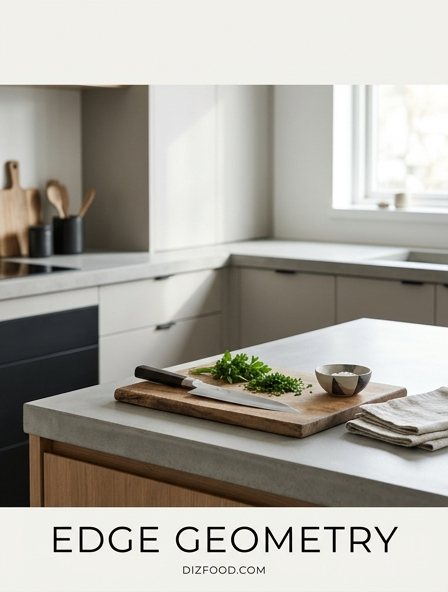
The Mechanics of Blade Edge Geometry
The mechanics of blade edge geometry involve the intricate relationship between the knife's thickness, its grind, and the final apex angle. At its core, a knife functions as a portable wedge designed to separate fibers. The geometry is defined by the primary bevel, which is the main slope of the blade, and the secondary bevel, which forms the actual cutting edge. A thinner geometry allows the blade to move through dense materials with minimal resistance, as there is less metal to displace the food being cut. Conversely, a thicker geometry provides the necessary structural support for the edge, preventing it from buckling or chipping under heavy pressure.
Understanding these mechanics requires looking at the "behind the edge" thickness. A blade can be sharpened to a razor-like apex, but if the steel immediately behind that apex is too thick, the knife will wedge and tear rather than slice. The cross-sectional shape-whether it is flat, convex, or concave-dictates how the force of the user's stroke is distributed throughout the cut, ultimately determining the efficiency of the tool in a professional or home kitchen environment.
Precision Cutting and Texture Control
Edge geometry is the primary determinant of precision in the kitchen. When a blade possesses a refined, acute angle, it can perform intricate tasks such as julienning herbs or Creating translucent slices of sashimi. This precision is not merely aesthetic; it directly influences the mouthfeel and texture of the finished dish. A clean cut shears through cell walls without crushing them, which is essential for maintaining the crispness of vegetables and the delicate fibers of proteins. If the geometry is too obtuse, the blade creates a ragged surface area, which can lead to uneven cooking and a muddying of distinct flavors.
- Sashimi: Requires a single-bevel geometry for mirror-smooth surfaces.
- Chiffonade: Benefits from a thin, distal taper to ensure delicate leafy greens do not bruise.
- Carpaccio: Needs a highly acute secondary bevel to achieve uniform, paper-thin slices.
By controlling the geometry, a chef controls the physical interaction between the ingredient and the palate. The smoother the cut surface, the more light reflects off the food, enhancing visual appeal alongside the textural refinement provided by the precise edge.
Effortless Prep and Reduced Fatigue
Proper edge geometry significantly reduces the amount of physical force required to complete repetitive cutting tasks. In high-volume culinary environments, the cumulative strain on the wrist, forearm, and shoulder can lead to chronic fatigue or repetitive strain injuries. A knife with a distal taper-thinning from the bolster to the tip-and a thin edge profile allows the blade to "fall" through ingredients. This mechanical advantage means the user does not have to lean into the knife to force it through dense items like butternut squash or root vegetables.
When the geometry is optimized for the task, the knife does the majority of the work. For example, a convex grind can help the blade transition through a cut by reducing the surface friction against the food. This lack of resistance translates to a smoother workflow. Professional prep cooks often prioritize blades with specific geometries that balance weight and thinness, ensuring that they can maintain high speed and accuracy over an eight-hour shift without experiencing the diminishing returns of muscular exhaustion or joint pain caused by forcing a dull or poorly ground tool.
Maintaining Ingredient Structural Integrity
The structural integrity of ingredients is often compromised by poor blade geometry. When a thick or blunt edge is forced through a vegetable, it causes "cell rupture." This physical trauma releases enzymes and fluids that would otherwise remain inside the plant's cells. For example, when cutting onions, a clean slice with a thin-edged knife minimizes the release of syn-propanethial-S-oxide, the gas responsible for causing tears. A duller, thicker edge crushes the cells, releasing more gas and causing the onion to degrade faster.
| Ingredient | Effect of Poor Geometry | Benefit of Fine Geometry |
|---|---|---|
| Herbs | Bruising and rapid oxidation (browning) | Bright green color and retained oils |
| Citrus | Loss of juice on the cutting board | Juice remains within the fruit segments |
| Red Meat | Tearing of fibers and loss of myoglobin | Retained moisture and clean sear |
By utilizing a knife with an appropriate edge, the chef preserves the internal moisture and chemical balance of the food, leading to better flavor retention and a longer shelf life for prepped components.
Japanese Versus Western Edge Profiles
The distinction between Japanese and Western edge profiles is rooted in both tradition and metallurgy. Western knives, typically made from softer steels, feature a symmetrical double-bevel profile, usually ground to an angle of 20 to 22 degrees per side. This geometry is designed for durability and "rocking" cuts, making it ideal for heavy-duty tasks like disjointing poultry or chopping through fibrous vegetables. The robust edge can withstand the impact of a cutting board without frequent chipping, though it requires more frequent honing to realign the soft steel.
In contrast, Japanese knives often utilize much harder steel, allowing for a far more acute angle, typically between 10 and 15 degrees. Many traditional Japanese blades feature a single-bevel (kataba) geometry, where one side is flat or slightly concave and the other is ground to an edge. This creates an incredibly sharp, wedge-like effect that excels at precision and clean separation. While these edges are more brittle and prone to damage if used improperly, they offer a level of sharpness and "bite" that Western profiles cannot match, catering to specialized techniques in fish and vegetable preparation.
The Impact of Bevel Angles
The bevel angle of a kitchen knife is the specific degree at which the edge is ground relative to the center of the blade. This angle is the primary trade-off between absolute sharpness and edge longevity. A lower bevel angle, such as 15 degrees, creates a narrower apex. This reduces the surface area of the edge, allowing it to penetrate food with minimal effort. However, this narrowness also means there is less steel supporting the tip, making the knife susceptible to rolling or micro-chipping when it encounters hard objects like bones or frozen foods.
Higher bevel angles, such as 25 degrees, provide a broader, more stable edge. These are commonly found on cleavers and utility knives intended for rougher work. While they require more force to push through an ingredient, they can endure significant stress without deformation. Choosing the correct angle involves analyzing the steel's Rockwell hardness; harder steels can support lower angles without the edge collapsing, whereas softer steels require a wider angle to maintain their integrity during standard kitchen use. The geometry of the bevel must therefore be matched to the metallurgical properties of the knife.
Optimizing Food Release and Suction
One of the most frustrating aspects of food preparation is "stiction," where sliced ingredients stick to the side of the blade. This is largely a result of the blade's surface geometry. A perfectly flat-ground blade creates a vacuum seal with moist vegetables like potatoes or cucumbers, causing them to ride up the knife and slow down the user. To combat this, various geometric features are engineered into the blade face to promote food release. These include hollow-ground "kullenschliff" (Granton) edges, which create small air pockets to break the suction.
Another highly effective geometric solution is the convex grind, often called a Hamaguri-ba edge in Japanese knifemaking. This subtle outward curve acts as a shoulder that pushes the slice away from the blade as it moves upward. By increasing the angle of the blade face slightly above the edge, the geometry ensures that the contact time between the food and the steel is minimized. This optimization is crucial for maintaining a fast, rhythmic pace during prep, as it eliminates the need for the cook to manually clear the blade after every few strokes, thereby increasing overall efficiency.
Blade Durability and Edge Retention
Edge retention refers to a blade's ability to remain sharp over time, and it is inextricably linked to edge geometry. A common misconception is that sharpness is the only factor in performance; however, a knife that cannot hold its geometry is of little use in a professional kitchen. The "stability" of the edge is determined by the volume of steel behind the apex. If a blade is ground too thin (a "laser" geometry), the edge may be incredibly sharp initially but will dull rapidly as the thin steel undergoes plastic deformation or abrasive wear against the cutting board.
To optimize durability, many manufacturers employ a compound bevel. This involves a very thin primary grind for cutting performance, topped with a slightly more obtuse micro-bevel at the very tip. This micro-geometry reinforces the apex, providing a buffer against the rigors of contact with hard surfaces. The relationship can be summarized as follows:
- Acute Angles: High performance, lower durability, requires frequent maintenance.
- Obtuse Angles: Lower performance, high durability, resists chipping and rolling.
- Hardness Factor: High HRC steel allows for thinner geometry with acceptable retention.
Safety Through Predictable Knife Paths
Safety in the kitchen is often a matter of predictability, and blade geometry plays a vital role in how a knife tracks through a cut. A knife with poor geometry-such as an uneven bevel or a warped blade-will "steer" or "drift" to one side. This unpredictable movement is a major cause of accidents, as the knife may slip off the intended path and toward the user's fingers. A properly ground, symmetrical edge ensures that the force applied is directed straight down, allowing for precise control and a predictable exit from the ingredient.
Furthermore, the geometry of the tip and the heel influences how the knife interacts with the cutting board. A blade with a slight "belly" or curve allows for a smooth rocking motion, keeping the tip in contact with the board and reducing the risk of the knife skipping. Conversely, a flat geometry requires a push-cut or draw-cut technique. If a user attempts to rock a knife with a flat geometry, the heel may dig in or the tip may lift dangerously high. Matching the cutting technique to the specific geometry of the tool is a fundamental safety practice that prevents slips and uncontrolled shears.
Matching Geometry to Kitchen Tasks
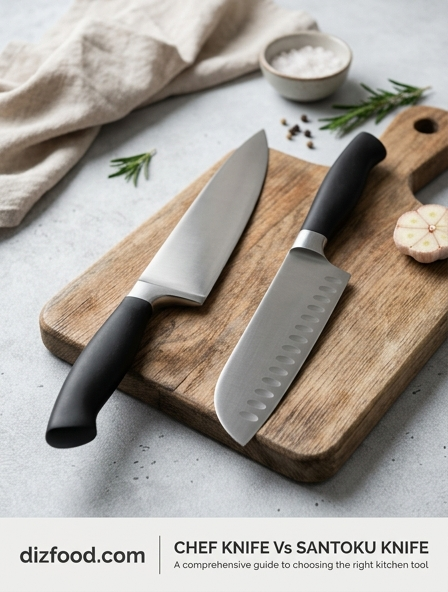
The diversity of kitchen tasks necessitates a variety of edge geometries, as no single blade can excel at everything. A heavy meat cleaver requires a thick, obtuse geometry to withstand the impact of bone, whereas a paring knife needs a slim, nimble profile for peeling and coring. Selecting the right tool involves identifying the density of the ingredient and the desired finished shape. Using a thin Japanese gyuto for splitting a frozen squash can result in a ruined edge, while using a thick Western chef's knife for fine herb work can result in bruised, unappealing garnishes.
- Boning Knives: Feature a stiff, narrow geometry to navigate around joints and connective tissue.
- Bread Knives: Utilize serrated geometry to saw through hard crusts without crushing the soft interior.
- Nakiri Knives: Use a flat, thin geometry optimized for vertical vegetable chopping.
- Sujihiki/Slicers: Long, thin blades designed for long drawing cuts through roasted meats.
By understanding the intended application of each geometric profile, a cook can select the tool that provides the best balance of efficiency, safety, and result, ensuring the longevity of their cutlery collection.



Comments