
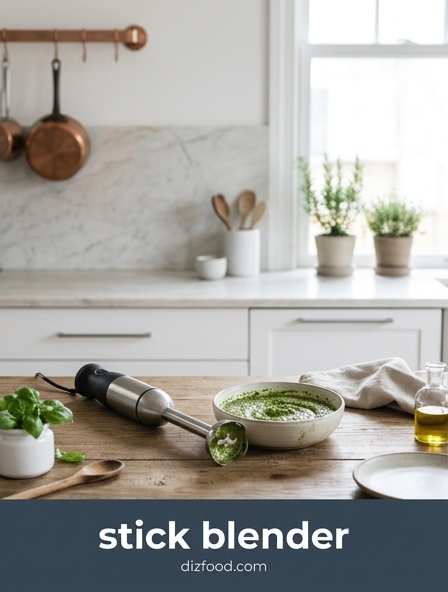
Maximizing Small Kitchen Counter Space
In a compact kitchen, every square inch of counter real estate is a precious commodity. Traditional countertop blenders, while powerful, often occupy a permanent and bulky footprint that limits your workspace for chopping and assembly. The stick blender, or immersion blender, offers a sophisticated solution to this spatial dilemma. Its sleek, vertical design allows it to be stored easily in a standard cutlery drawer or hung on a wall rack, keeping your surfaces clear for other culinary activities.
- Eliminates the need for a dedicated blending station.
- Reduces visual clutter in open-concept kitchen designs.
- Fits into narrow cabinets where upright appliances cannot.
- Lightweight enough to be moved frequently without physical strain.
By opting for a stick blender, you essentially replace the need for several larger appliances. Modern iterations come with high-torque motors that rival mid-range stand blenders, ensuring that you do not sacrifice performance for the sake of organization. This makes the tool an essential asset for urban apartment dwellers and minimalist cooks who prioritize a clean, functional environment over a collection of heavy machinery.
Effortless One Pot Soup Blending
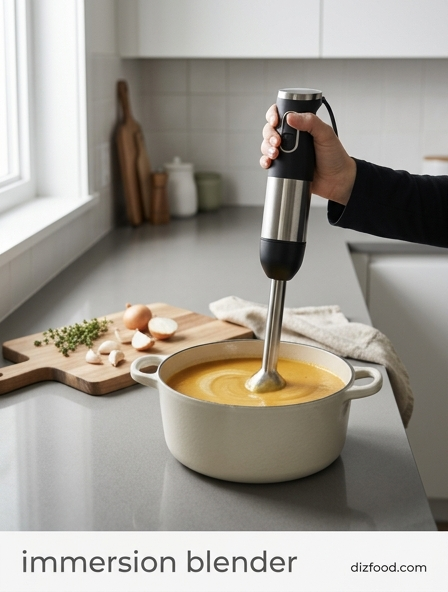
The traditional method of making pureed soup involves the hazardous task of transferring steaming hot liquids from a stockpot into a blender jar in multiple batches. This process is not only time-consuming but also poses a significant risk of steam burns and messy spills. A stick blender revolutionizes this workflow by allowing you to blend the ingredients directly within the cooking vessel. Whether you are working with a shallow sauté pan or a deep Dutch oven, the immersion wand reaches the bottom to create a uniform consistency.
Control is a major advantage during one-pot blending. You can easily toggle between a chunky texture and a silky-smooth bisque by adjusting the duration and angle of the blades. Most high-quality stick blenders feature non-scratch guards to protect the seasoned surface of your expensive cookware. This direct approach preserves the heat of the soup, ensuring it is ready to serve immediately after blending without requiring a reheat cycle, which can often alter the delicate flavor profile of fresh vegetables and herbs.
Speed Up Your Daily Meal Prep
Efficiency in the kitchen is often measured by how quickly one can move from raw ingredients to a finished plate. The stick blender is a primary driver of speed, particularly during the labor-intensive preparation phase. Its rapid assembly-usually a simple click-to-lock mechanism-means you can start processing food in seconds rather than minutes. For daily tasks like whipping eggs for an omelet or creating a quick vinaigrette, the setup time is virtually non-existent compared to larger food processors.
- Attach the blending wand to the motor body.
- Submerge the blades into your prep container.
- Pulse for 15 to 30 seconds to achieve the desired texture.
- Detach and rinse the shaft under warm water.
Because these devices are designed for rapid use, they encourage home cooks to make more elements from scratch. Instead of settling for store-bought dressings or pre-chopped ingredients, you can utilize the high-speed blade to liquefy aromatics or emulsify fats instantly. This speed does not come at the cost of quality; the localized power of the blade ensures thorough processing of even fibrous greens and tough nuts.
The Ultimate Tool for Emulsifying Sauces
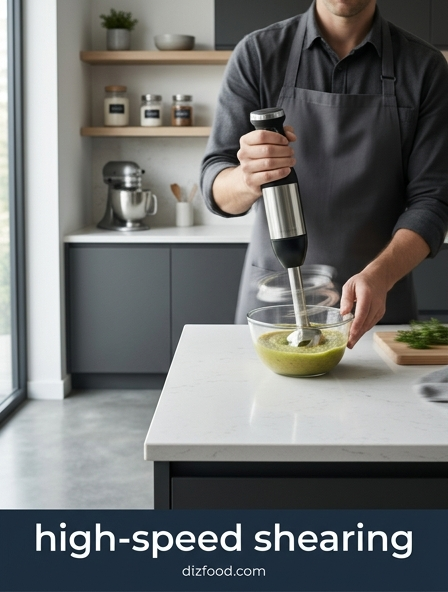
Achieving a stable emulsion is one of the most challenging techniques for a home cook. Traditional whisking requires immense physical effort and precise timing, yet the risk of the sauce breaking remains high. The stick blender excels in this area because its blades rotate at thousands of revolutions per minute, creating a powerful vortex that shears fat molecules into microscopic droplets. This is particularly effective for thick, creamy sauces like mayonnaise or hollandaise.
| Sauce Type | Standard Method | Stick Blender Method |
|---|---|---|
| Mayonnaise | 5-8 Minutes Whisking | 30 Seconds Pulsing |
| Hollandaise | Double Boiler/Constant Stir | Direct Heat/Rapid Blend |
| Vinaigrette | Shaking/Separates fast | High Shear/Stays stable |
By using a tall, narrow beaker, you ensure the blades stay in constant contact with the oil and base liquid. This concentrated energy forces the ingredients to bond quickly and permanently. The result is a sauce with a professional-grade mouthfeel that stays emulsified even after hours of sitting at room temperature, a feat rarely achieved through manual whisking or wide-jar blending.
Comparing Stick Blenders to Traditional Models
When choosing between a stick blender and a traditional countertop model, the decision often hinges on volume and intended use. While countertop blenders are the kings of ice-crushing and large-scale frozen smoothies, they fall short in terms of convenience for small, everyday tasks. Stick blenders offer a level of maneuverability and "tactile feedback" that a closed-jar system simply cannot provide. You can feel the resistance of the food, allowing for precise adjustments to the texture in real-time.
| Feature | Stick Blender | Traditional Blender |
|---|---|---|
| Portability | High (Handheld) | Low (Stationary) |
| Cleanup | Under 1 minute | 3-5 minutes |
| Batch Size | Single to Medium | Large / Family Size |
| Storage | Drawer / Hook | Counter / Cabinet |
Furthermore, traditional blenders require a minimum liquid threshold to function properly, which often leads to food waste when making small portions. Stick blenders can operate in as little as half a cup of liquid, making them far more efficient for single-serving recipes or finishing a sauce directly in a small saucepan.
Quick Cleanup for Busy Home Cooks
The most significant deterrent to using kitchen gadgets is often the dreaded cleanup process. Many high-end blenders involve multiple gaskets, locking rings, and heavy glass jars that are cumbersome to wash and dry. Stick blenders circumvent this issue with a streamlined design that prioritizes hygiene and ease of maintenance. Most models feature a detachable blending shaft that can be separated from the motorized handle with the press of a button.
- Dishwasher-safe stainless steel components.
- Self-cleaning capability by blending soapy water in a glass.
- No hidden crevices for food particles to get trapped.
- Small parts that dry quickly on a standard rack.
For the busy cook, this means the tool can be cleaned and put away before the meal is even served. A quick rinse under a hot tap immediately after use is usually sufficient to remove most residues. This "zero-friction" cleanup encourages more frequent use, as the cook knows they won't be left with a sink full of complicated parts at the end of the night. This efficiency is vital for maintaining a clean kitchen environment during multi-stage cooking projects.
Perfecting Textures in Small Batches
Precision is the hallmark of a great chef, and nowhere is this more evident than in the creation of small-batch purees, coulis, or baby food. Large blenders often struggle with small quantities because the ingredients get thrown against the walls of the jar, out of reach of the blades. The stick blender solves this by allowing the user to bring the blades to the food. By using a narrow vessel, you create a concentrated zone of agitation that ensures every morsel is processed uniformly.
This localized control is perfect for achieving specific textures. If you are making a rustic tapenade, a few short pulses will give you a coarse, flavorful spread. If you are preparing a silky fruit coulis for a dessert, a sustained high-speed blend will yield a professional finish. For parents, the ability to turn a small portion of the family dinner into a perfectly smooth puree for an infant is an invaluable time-saver. The stick blender provides the delicacy required for these tasks, ensuring that the integrity of the ingredients is maintained without over-processing them into a tasteless paste.
Versatile Attachments for Every Task
Modern stick blender kits have evolved far beyond the simple rotating blade. They are now considered "multi-tools" of the kitchen, often arriving with a suite of attachments that can replace several standalone devices. These interchangeable heads allow the user to pivot from blending to whisking to chopping in a matter of seconds. This versatility makes the stick blender a comprehensive food preparation system that can handle almost any recipe requirement.
- Balloon Whisk: Perfect for whipping cream, egg whites, or light batters.
- Mini Chopper: A closed container for dicing onions, nuts, or hard cheeses.
- Potato Masher: A specialized head for creating fluffy, non-gummy mashed potatoes.
- Milk Frother: A high-speed attachment for café-style beverages at home.
By utilizing these attachments, you reduce the need to invest in a separate hand mixer or a dedicated food processor. This not only saves money but also ensures that your kitchen remains organized. Each attachment is usually designed to be compact and easy to store, further enhancing the stick blender's reputation as the ultimate space-saving kitchen companion.
Seamless Transition from Prep to Cook
One of the underrated benefits of a stick blender is how it facilitates a smooth culinary workflow. In many recipes, blending is not the final step but an intermediate one. For example, when making a curry base, you might need to blend sautéed onions and spices before adding the protein. A stick blender allows you to do this without ever taking the pan off the heat. You can simply submerge the blender, pulse until smooth, and immediately move on to the next cooking step.
This seamless transition prevents the "stop-and-start" nature of traditional cooking where you have to pause to move ingredients between the stove and a stationary blender. It keeps the momentum of the cooking process high and maintains consistent temperatures within the pan. This is especially useful for thickening sauces through starch release or incorporating fats into a simmering liquid. By keeping everything in one vessel, you minimize the "dead time" in your workflow, allowing for a more intuitive and enjoyable cooking experience that feels less like a series of chores and more like a creative process.
Why Portability Matters for Kitchen Efficiency
The portability of a stick blender-especially cordless models-adds a layer of freedom to the kitchen that stationary appliances cannot match. In a busy kitchen, you may be managing several pots on the stove while also prepping on an island or a separate counter. The ability to bring the tool to the food, rather than the food to the tool, significantly optimizes your movement and reduces the risk of accidents during transport. You can move from the sink to the stove to the dining table with ease.
Ergonomics also play a vital role in efficiency. Stick blenders are designed to be operated with one hand, leaving your other hand free to steady a pot or add ingredients while you blend. This multitasking capability is a hallmark of efficient cooking. Furthermore, the lightweight nature of the device means that even during longer blending tasks, such as creating a large batch of tomato sauce, the physical strain is minimal. Portability is not just about moving the device; it is about the flexibility to adapt to the dynamic and often chaotic environment of a working kitchen.

Comments