
If you're looking to elevate your home cooking, choosing between a manual garlic press and a Microplane zester can drastically change your dish's final flavor profile. While a heavy-duty garlic press offers unparalleled speed by crushing cloves into juicy bits that retain a bit of texture, the Microplane transforms garlic into a fine, aromatic paste that melts instantly into sauces and dressings. Understanding the mechanics of each tool is the ultimate way to get the most flavor from your garlic, whether you prefer the pungent kick of a grated paste or the consistent, mild pieces produced by a quality press. This guide compares their efficiency and culinary impact to help you decide which gadget deserves the prime spot in your kitchen drawer.
| Feature | Manual Garlic Press | Microplane Zester |
|---|---|---|
| Consistency | Uniform small bits/cubes | Fine, moist puree/paste |
| Flavor Profile | Bold and textured | Intense and highly pungent |
| Prep Speed | High (can often press unpeeled) | Slower (requires peeling first) |
| Cleanup | Moderate (skin buildup in basket) | Quick (rinse or dishwasher safe) |
| Ingredient Waste | Medium (residue left in chamber) | Minimal (fully grates the clove) |
| Versatility | Limited to garlic and ginger | High (citrus, cheese, spices) |
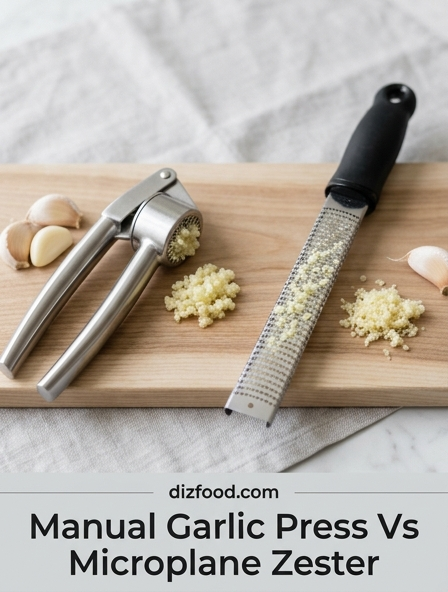
Garlic Press vs Microplane Zester Key Differences
The primary distinction between a manual garlic press and a Microplane zester lies in the mechanical method used to breakdown the garlic clove. A garlic press utilizes leverage and brute force to push a clove through a grid of small holes, effectively crushing the structure. In contrast, a Microplane zester uses rows of razor-sharp, etched stainless steel teeth to shave away thin layers of the garlic, creating a fine, moist paste. These two approaches result in different culinary outcomes and user experiences.
| Feature | Manual Garlic Press | Microplane Zester |
|---|---|---|
| Mechanism | Compression/Crushing | Shearing/Slicing | Resulting Texture | Chunky Pulp | Fine Paste |
| Contact with Metal | High Surface Area | Precision Cutting |
| Required Effort | Squeeze Strength | Repetitive Motion |
While both tools aim to process garlic quickly, the garlic press is often seen as a specialized "uni-tasker," designed specifically for bulbs and occasionally ginger. The Microplane is a versatile rasp originally derived from woodworking tools, designed to handle a variety of hard and soft foods. Choosing between them often depends on whether a cook prefers the intensity of crushed garlic or the delicacy of grated garlic.
Mincing vs Grating Texture and Flavor Impact
The texture of processed garlic directly dictates how the flavor disperses within a dish. When using a manual garlic press, the clove is pulverized, which breaks a significant number of cell walls simultaneously. This rapid cellular destruction releases a high concentration of allicin, the compound responsible for the pungent, "hot" garlic bite. The resulting texture is a mix of juice and fibrous bits that stand out in sauces and stir-fries.
A Microplane zester creates a much more uniform, almost liquid-like paste. Because the blades are incredibly sharp, they slice through the garlic rather than smashing it. This produces a refined texture that melts into emulsions, dressings, and marinades without leaving behind noticeable chunks. The flavor profile tends to be more aromatic and integrated rather than sharp and aggressive.
- Crushed (Press): Best for bold sautés, hearty stews, and rustic meat rubs where texture is desired.
- Grated (Microplane): Ideal for Caesar dressings, garlic butter, and raw applications where a smooth consistency is paramount.
- Aromatic Release: Grating allows for a more controlled release of sulfurous compounds compared to the sudden explosion of oils from a press.
Ultimately, the choice of tool can change the personality of a recipe. If you want the garlic to be the star with a sharp kick, the press is superior. For subtle layering of flavor, the Microplane is the professional choice.
Speed and Prep Efficiency for Daily Cooking
Efficiency in the kitchen is often measured by the time elapsed from the cutting board to the pan. The manual garlic press is widely considered the speed champion for high-volume prep. Because most modern presses can accommodate multiple small cloves or one giant clove at once, you can process several cloves in a matter of seconds. The physical action of squeezing is instantaneous, making it the go-to for busy weeknight meals where time is of the essence.
The Microplane zester requires a bit more finesse and time per clove. Each clove must be held individually-often posing a risk to the fingertips as the clove gets smaller-and moved back and forth across the grating surface. While the results are superior in terms of consistency, the "strokes-per-clove" count is significantly higher than the "one-squeeze" method of the press.
- Loading: The press is faster to load, especially models that don't require peeling.
- Processing: The press takes roughly 2 seconds per squeeze; the Microplane takes 10-15 seconds per clove.
- Batching: For recipes requiring a whole head of garlic, the press saves minutes of manual labor.
However, many chefs argue that the Microplane saves time elsewhere because it integrates into liquids faster, reducing the need for extensive whisking or blending. For the average home cook, the press remains the faster option for raw throughput.
Cleaning Comparison and Maintenance Requirements
The biggest deterrent to using a garlic press has historically been the cleaning process. Garlic residue is sticky and fibrous; once it dries inside the tiny holes of a press, it becomes incredibly difficult to remove. Many presses come with a specialized "cleaning tool" or plastic poke-board to push out the remains, but if misplaced, the user is left picking at holes with a toothpick. Even dishwasher-safe models can trap particles in the hinge or the grid.
In contrast, the Microplane zester is relatively straightforward to clean, provided it is rinsed immediately after use. Because it is a single flat or curved piece of etched metal, there are no hidden hinges or deep chambers for garlic to hide in. Running a sponge in the direction of the blades (not against them) or using a kitchen brush removes most residue in seconds.
Maintenance considerations include:
- Press: Requires checking the hinge pin for loosening and ensuring the plunger aligns perfectly with the basket.
- Microplane: Requires protection of the blades; they can dull if tossed carelessly into a utensil drawer without a protective cover.
- Drying: Presses often hold water in the joints, necessitating thorough towel drying to prevent mineral buildup or corrosion.
While the Microplane is sharper and requires more care for the fingers during washing, its lack of complex parts makes it the more hygienic and lower-maintenance tool over time.
Peeling Requirements for Each Tool
One of the most significant advantages of a high-quality manual garlic press is its ability to process unpeeled cloves. Many heavy-duty models are designed to crush the garlic through the grid while retaining the papery skin inside the chamber. This eliminates the tedious task of peeling, which is often the most disliked part of garlic preparation. Once the garlic is pressed, you simply flip open the basket and flick out the flattened skin.
The Microplane zester absolutely requires the garlic to be fully peeled before use. Attempting to grate an unpeeled clove will result in papery bits of skin being shredded into your food, which ruins the texture of the dish. This adds an extra step to the preparation process, requiring the cook to either smash the clove with a knife, use a silicone peeling tube, or peel by hand before they can even begin grating.
Consider the following workflow differences:
- Press Workflow: Separate clove from bulb -> Place in press -> Squeeze -> Discard skin.
- Microplane Workflow: Separate clove -> Remove skin (smash/peel) -> Grate clove -> Tap tool to release paste.
For cooks who value a "no-touch" approach to garlic to keep their hands from smelling, the press is the clear winner. The Microplane requires significant contact with the peeled clove, ensuring your fingers will carry the scent of garlic for the rest of the day.
Versatility and Multi Functional Kitchen Uses
When evaluating kitchen tools, versatility is often the deciding factor for those with limited drawer space. The manual garlic press is largely a "uni-tasker." While some models can be used to crush ginger or perhaps a single peppercorn, their design is highly specific to the size and density of a garlic clove. This makes the press a dedicated tool that serves one purpose very well but sits idle for most other culinary tasks.
The Microplane zester is one of the most versatile tools in a modern kitchen. It was not designed specifically for garlic, which means its utility extends to dozens of other ingredients. Its ability to create fine shavings makes it indispensable for tasks that a garlic press simply cannot perform. This multi-functional nature often justifies its place in the kitchen over a dedicated press.
Common uses for a Microplane include:
- Zesting citrus fruits (lemons, limes, oranges) without hitting the bitter pith.
- Grating hard cheeses like Parmesan or Pecorino into light, fluffy clouds.
- Shaving whole nutmeg, cinnamon sticks, or chocolate for garnishes.
- Creating a fine paste from fresh ginger or horseradish.
If you prefer a minimalist kitchen, the Microplane is the superior investment. It replaces the need for a dedicated garlic tool while providing essential functionality for baking and garnishing that a press cannot offer.
Controlling Garlic Bitterness and Oil Release
The science of garlic flavor is rooted in the enzymatic reaction that occurs when the plant's cells are ruptured. When you use a garlic press, the high-pressure crushing action causes a massive, immediate release of enzymes and oils. If the garlic is then added to a hot pan, these oils can quickly scorch, leading to a bitter, acrid taste. Furthermore, the "juice" produced by a press oxidizes rapidly, which can develop "off" flavors if not used immediately.
The Microplane zester offers more control over this chemical process. By shaving the garlic into thin ribbons, the tool breaks many cells, but it does so with less "bruising" than a press. The resulting paste is moist but doesn't usually result in the same pool of oxidized juice. This allows the garlic to mellow more gracefully when cooked, providing a sweet, nutty undertone rather than a sharp, aggressive bite.
Factors affecting bitterness include:
- Heat Sensitivity: Pressed garlic has more surface area and oil, making it burn faster in olive oil.
- Oxidation: The "crush" method accelerates enzymatic browning and flavor degradation.
- Uniformity: Microplaned garlic is so fine it dissolves, preventing the bitter "hot spots" found when biting into a larger pressed chunk.
For delicate sauces or light sautéing, the Microplane provides a sophisticated flavor profile. The press is better suited for heavy, spiced dishes where the garlic needs to compete with other strong flavors like chili or cumin.
Ergonomics and Hand Strength Comparison
The physical act of using these tools requires different types of strength and dexterity. A manual garlic press relies on grip strength and leverage. For individuals with arthritis, carpal tunnel, or smaller hands, squeezing a metal press can be difficult or even painful. While "easy-squeeze" ergonomic models exist, the fundamental requirement is still a strong, single-handed or two-handed compression force.
The Microplane zester requires repetitive motion and fine motor control. Instead of a single burst of power, the user must hold the handle in one hand and the garlic clove in the other, moving them across each other. This is generally easier on the joints of the hand but requires more coordination. There is also the safety aspect: as the clove nears the end, the user's fingertips come dangerously close to the sharp teeth of the rasp.
| Aspect | Garlic Press | Microplane Zester |
|---|---|---|
| Strength Type | Grip / Crushing | Motion / Stroke |
| Joint Strain | High (Fingers/Palm) | Low (Wrist/Elbow) |
| Safety Risk | Pinching skin in hinge | Scraping fingertips on blades |
For those who struggle with hand strength, a well-designed Microplane used against a cutting board for stability may be more comfortable. However, for those who want to avoid the risk of "grating" their knuckles, the enclosed nature of the press is much safer.
Long Term Durability and Tool Value
In terms of longevity, the two tools face very different failure points. A high-quality stainless steel garlic press is nearly indestructible in its main body, but the moving parts are its Achilles' heel. The hinge pin can wear down over years of use, or the plunger may become misaligned, causing the metal to grind against the basket. Cheap aluminum presses are prone to snapping at the handle or losing their coating, which can flake into food.
The Microplane zester is a static tool with no moving parts, which inherently makes it more durable in terms of structure. However, it is a consumable tool in the long run. The etched teeth, while incredibly sharp at the start, will eventually dull after years of contact with hard cheeses and tough garlic skins. Unlike a knife, a Microplane cannot be easily sharpened at home. Once it loses its edge, it begins to "tear" the food rather than slice it, necessitating a replacement.
- Materials: Stainless steel is the gold standard for both to prevent rust.
- Construction: A solid-cast press lasts longer than a riveted one.
- Blade Life: A Microplane typically lasts 3 to 5 years with regular use before dulling.
When considering value, the Microplane often wins because its price point (usually $15-$25) covers a dozen different kitchen tasks. A garlic press of similar quality costs the same but only performs one task. However, a premium garlic press may be a "buy it for life" item, whereas the Microplane will eventually need to be retired.
Final Verdict Choosing the Best Garlic Tool
The decision between a manual garlic press and a Microplane zester ultimately depends on your cooking style and how much you value efficiency over culinary precision. Neither tool is objectively "better," but they serve different masters. The garlic press is the tool of the pragmatist-the cook who wants the job done quickly, wants to avoid peeling, and isn't afraid of a bold, pungent garlic flavor. It is the workhorse of the busy home kitchen.
The Microplane zester is the tool of the enthusiast or professional. It rewards the cook with a superior texture and a more nuanced flavor profile. It demands more time and careful cleaning, but it pays dividends in its versatility across other ingredients like citrus and hard cheese. If you have limited space and want one tool that does everything, the Microplane is the clear winner.
Choose the Garlic Press if:
- You cook with large quantities of garlic daily.
- You hate peeling garlic by hand.
- You prefer a strong, sharp garlic presence in your meals.
Choose the Microplane Zester if:
- You want a tool that can also zest lemons and grate ginger.
- You prefer a smooth garlic paste that melts into sauces.
- You prioritize easy cleaning and storage over prep speed.
For many, the ideal solution is to own both: the press for the Tuesday night pasta, and the Microplane for the Saturday night gourmet dinner.

Comments