
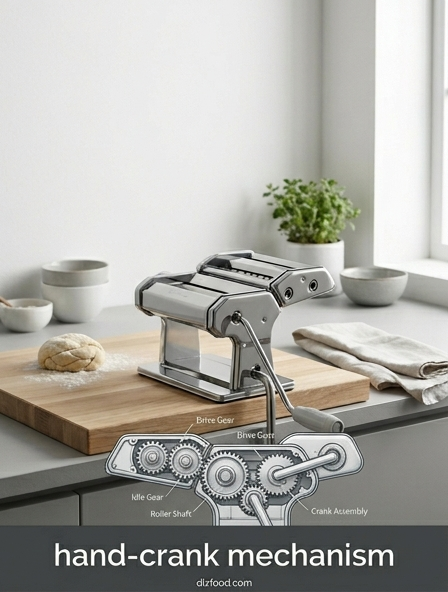
Benefits of Manual Crank Mechanisms
In a world increasingly dominated by digital appliances, manual crank mechanisms offer a reliable and tactile alternative for the modern kitchen. One of the primary advantages of these tools is their independence from electrical outlets, allowing for a more flexible kitchen layout and the ability to cook during power outages or while camping. Because they rely on simple mechanical principles rather than complex circuit boards or motors, they are incredibly durable and often outlast their electric counterparts by decades.
- Minimal maintenance requirements with no electronic parts to fail.
- Superior control over processing speeds for delicate ingredients.
- Quiet operation that does not disrupt the household environment.
- Compact designs that are easy to store in standard cabinetry.
Furthermore, the sensory feedback provided by a hand-cranked tool is unmatched. As the user turns the handle, they can feel the resistance of the food, allowing for instantaneous adjustments in speed or pressure. This physical connection to the food preparation process ensures that the cook remains in total command, preventing the over-processing that often occurs with high-speed electric blenders or food processors.
Streamlining Prep with Rotary Slicers
Rotary slicers equipped with hand-crank mechanisms have revolutionized the way home cooks approach vegetable preparation. By converting a simple circular motion into a high-speed slicing or grating action, these tools allow for the processing of large quantities of produce in a fraction of the time required for traditional knife work. The enclosed drum design also provides a significant safety advantage, as the user's fingers never come into direct contact with the blades during operation.
These devices are particularly effective for creating uniform shapes, which is essential for even cooking and professional presentation. Whether you are preparing a potato gratin or a large batch of coleslaw, the rotary motion ensures that every slice is consistent. The efficiency gained through these tools makes it much easier to incorporate fresh vegetables into daily meals without the daunting prospect of extensive chopping. Many models come with interchangeable drums to provide various textures, such as fine grating, coarse shredding, or thin slicing, making them a centerpiece of efficient kitchen workflow.
Enhancing Kitchen Speed Without Electricity
The assumption that electric tools are always faster is a common misconception in kitchen management. Hand-cranked tools often enhance overall speed by eliminating the "setup and breakdown" time associated with motorized appliances. There are no heavy bases to haul out of deep cupboards, no cords to untangle, and no complex safety interlocks to engage before the machine will start. A manual crank tool is typically ready to use the moment it is placed on the counter.
- Immediate deployment for small to medium tasks.
- Rapid cleanup due to fewer detachable electronic components.
- Zero lag time between switching from one ingredient to the next.
When factoring in the time spent cleaning a large electric food processor-washing the heavy bowl, the lid, the pusher, and the drive shaft-a manual rotary tool often wins the race for efficiency. The simplicity of the crank mechanism allows for quick rinsing under the tap. For the busy home cook, the ability to grab a tool, process an onion in ten seconds, and rinse it clean in another five is the ultimate definition of kitchen speed.
Precision Cutting Through Hand Power
Precision in the kitchen is often a matter of micro-adjustments that electric motors simply cannot replicate. Hand-cranked mechanisms provide the user with the ability to stop on a dime, which is vital when working with expensive or highly sensitive ingredients. For example, when using a manual nut grinder or a crank-operated spice mill, the user can observe the texture in real-time and stop exactly when the desired coarseness is achieved. This level of granular control prevents the unintentional "turning to dust" that often happens in high-RPM electric grinders.
The gear ratios in high-quality manual tools are designed to maximize torque while maintaining steady movement. This allows for a smooth, continuous cut through even the toughest root vegetables or hard cheeses. By controlling the input speed, the cook ensures that the blade geometry interacts perfectly with the food's fibers, resulting in cleaner edges and better preservation of the ingredient's natural juices and structural integrity. This mechanical precision transforms food preparation from a chore into an artisanal process.
Ergonomic Advantages of Crank Tools
Ergonomics play a critical role in long-term kitchen safety and comfort. Repetitive chopping motions with a chef's knife can put significant strain on the wrist and elbow joints, potentially leading to fatigue or even chronic injury. In contrast, the rotary motion used in hand-cranked tools utilizes the larger muscle groups of the arm and shoulder. This circular movement is more natural for the human body and distributes the physical load more evenly across the upper kinetic chain.
Most modern crank-operated tools feature ergonomically designed handles with soft-grip coatings and contoured shapes to fit the palm comfortably. The leverage provided by the crank arm reduces the amount of downward force the user must apply. This is particularly beneficial for individuals with arthritis or limited grip strength. By moving the point of effort from the fingers to a rotating handle, these tools make heavy-duty tasks like grinding meat or milling flour accessible to everyone, ensuring that physical limitations do not hinder the joy of creating homemade meals from scratch.
Optimizing Workflow with Manual Grinders
Manual grinders are essential for optimizing the workflow of a kitchen that prioritizes freshness and flavor. Whether processing coffee beans, peppercorns, or cuts of beef, the hand-crank allows for a customized output that fits the specific needs of a recipe. The slower rotation of a manual grinder generates less heat than an electric motor, which is crucial for preserving the delicate oils and volatile aromatics in spices and coffee. This thermal management ensures the highest possible quality of the finished product.
| Ingredient | Crank Speed | Resulting Texture |
|---|---|---|
| Coffee Beans | Moderate | Uniform Grounds |
| Hard Cheese | Fast | Light Flakes |
| Cooked Meat | Slow | Fine Mince |
| Whole Spices | Controlled | Aromatic Powder |
Integrating these tools into a professional or home workflow allows for "just-in-time" processing. Instead of using pre-ground ingredients that have lost their potency, a cook can grind exactly what is needed for a single dish. This reduces waste and ensures that every plate served features the peak flavor profile of the components.
Consistent Results with Rotary Motion
The mathematical certainty of a circle contributes to the remarkable consistency of hand-cranked kitchen tools. When you turn a handle, the internal blades or gears move through a fixed path every single time. This geometric regularity is what allows a rotary apple peeler to remove a single, unbroken strand of skin or a pasta machine to roll out dough to a perfectly uniform thickness. Unlike hand-chopping, where human error can lead to varied sizes, the mechanical constraints of a crank system enforce uniformity.
Consistency is not just about aesthetics; it is the foundation of predictable cooking. If every slice of potato in a pan is exactly three millimeters thick, they will all reach the perfect level of doneness at the same moment. A hand-cranked mandoline or slicer removes the guesswork from the equation. Users can develop a rhythm with the handle that matches the resistance of the food, creating a steady output that rivals the precision of industrial food manufacturing equipment while maintaining the heart of a home-cooked meal.
Reducing Food Prep Effort Daily
Daily meal preparation can often feel like an endurance test, especially when dealing with high-volume tasks. Hand-cranked tools are engineered to reduce the physical exertion required for these chores. By leveraging the principles of physics-specifically the mechanical advantage of the lever-these devices multiply the force applied by the user. This means that tasks like churning butter, spinning salad greens dry, or pureeing tomatoes for sauce require significantly less energy than traditional manual methods.
- Large handles provide better leverage for tough ingredients.
- Suction-cup bases stabilize the unit, reducing the need for bracing.
- Smooth gear synchronization prevents jarring stops and starts.
By lowering the "barrier to entry" for complex tasks, these tools encourage cooks to experiment more often. When the effort to grate a block of parmesan or slice five pounds of onions is minimized, recipes that once seemed too labor-intensive become manageable options for a weeknight dinner. This reduction in daily effort translates to a more sustainable and enjoyable relationship with cooking, preventing "kitchen burnout" and promoting healthier eating habits through fresh preparation.
Sustainability in Modern Kitchen Prepping
In an era where environmental impact is a primary concern for many consumers, the hand-cranked mechanism stands as a beacon of sustainable design. These tools require zero electricity, meaning their carbon footprint during use is non-existent. Furthermore, the manufacturing of manual tools often avoids the use of rare earth minerals and plastics required for electric motors and batteries. Constructed primarily from stainless steel, cast iron, or heavy-duty glass, these items are often "heirloom quality," designed to be passed down through generations rather than ending up in a landfill after three years.
Choosing manual tools also promotes a zero-waste lifestyle. Since they do not rely on power, they are perfectly suited for off-grid living, composting-focused households, or anyone looking to reduce their reliance on the grid. The durability of these mechanisms means fewer replacements are needed over a lifetime, reducing the demand for manufacturing and shipping. By investing in high-quality hand-power, the modern cook makes a statement that efficiency does not have to come at the expense of the planet's health.
Versatile Applications for Hand-Crank Tools
The versatility of hand-crank mechanisms across different kitchen tasks is truly impressive. These tools are not limited to a single function; rather, the rotary principle is applied to a vast array of culinary needs. From the delicate aeration of a hand-cranked egg beater to the heavy-duty extrusion of a manual pasta maker, the application of rotational force is a universal solution for food processing. This versatility allows a cook to build a comprehensive toolkit that is both space-efficient and multi-functional.
- Pasta Machines: Rolling and cutting dough into various shapes.
- Flour Mills: Grinding whole grains into fresh, nutritious flour.
- Apple Peelers: Coring, peeling, and slicing in one fluid motion.
- Nut Grinders: Processing walnuts or almonds for baking.
- Food Mills: Pureeing cooked fruits and vegetables while removing skins.
This wide range of applications ensures that no matter the cuisine or the complexity of the dish, there is likely a manual crank tool that can assist. The adaptability of these tools makes them invaluable assets for everything from preserving summer harvests to preparing intricate holiday pastries. Their multi-purpose nature ensures they remain relevant in the kitchen, providing consistent value across countless recipes and cooking styles.



Comments