
Mastering Your Dough: Bench Scraper vs. Pastry Scraper
Whether you're a weekend bread enthusiast or a dedicated pastry pro, understanding the nuance between a bench scraper and a pastry scraper is the secret to a cleaner workspace and superior dough management. While they might look like simple rectangles of metal or plastic, these tools serve distinct roles in the baking process; the sturdy, straight-edged bench scraper acts as your heavy-duty multitasker for precision portioning and clearing floury debris from flat surfaces, whereas the flexible pastry scraper (often called a bowl scraper) is designed to contour to curves, ensuring every last bit of batter or dough is salvaged from your mixing bowl. Investing in both doesn't just make baking more efficient-it elevates your precision, making cleanup effortless and your dough handling significantly more professional.
| Feature | Bench Scraper | Pastry Scraper (Bowl Scraper) |
|---|---|---|
| Primary Material | Rigid Stainless Steel | Flexible Plastic or Silicone |
| Edge Design | Straight, sharp, and flat | Curved or "D-shaped" |
| Core Function | Cutting, portioning, and lifting dough | Gathering dough and emptying bowls |
| Flexibility | Zero flex (sturdy for heavy dough) | High flex (conforms to bowl shapes) |
| Cleanup Utility | Scraping dried flour/dough off counters | Removing sticky residue from curved surfaces |
| Added Features | Often includes etched ruler measurements | Tapered edges for fine scraping |
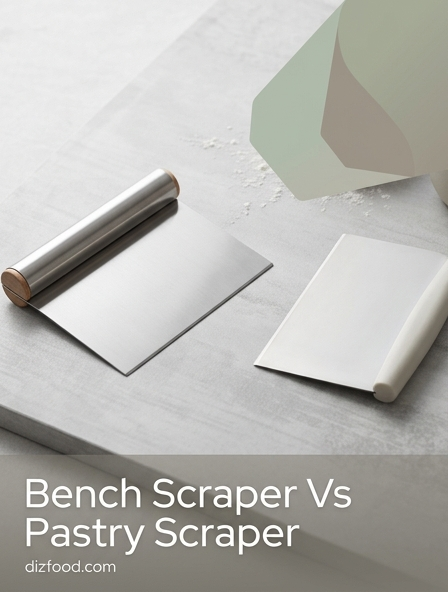
Bench Scraper vs Pastry Scraper Key Differences
In the culinary world, particularly within the realms of baking and pastry arts, the distinction between a bench scraper and a pastry scraper is fundamental to efficiency and technique. While they share a common goal of moving and shaping ingredients, their physical properties and intended applications differ significantly. The bench scraper, often referred to as a dough cutter or bench knife, is characterized by its rigid, rectangular metal blade and a sturdy handle. It is designed for heavy-duty tasks on flat surfaces, such as a wooden butcher block or a stainless steel countertop. Its primary function is to provide leverage and a sharp edge for cutting through dense doughs or clearing debris from the workspace.
In contrast, the pastry scraper-sometimes called a bowl scraper-is defined by its flexibility. Usually made of plastic, silicone, or thin, pliable metal, this tool often features at least one curved edge. This curvature is specifically engineered to contour to the rounded interior of mixing bowls, ensuring that every bit of batter or dough is salvaged. While the bench scraper excels at precision on flat planes, the pastry scraper is the master of curves and delicate handling. Understanding these differences is the first step toward mastering bread making, cake decorating, and general kitchen organization, as using the wrong tool can lead to scratched surfaces or wasted ingredients.
- Rigidity: Bench scrapers are stiff and unyielding, while pastry scrapers are flexible.
- Shape: Bench scrapers are rectangular; pastry scrapers are often "D-shaped" or oblong.
- Material: Metal is standard for bench scrapers, whereas plastic or silicone is common for pastry scrapers.
- Surface Focus: Bench scrapers are for flat counters; pastry scrapers are for curved bowls.
Anatomy of a Metal Bench Scraper
The anatomy of a metal bench scraper is a study in functional minimalism. At its core is the blade, typically constructed from high-carbon stainless steel. This material is chosen for its resistance to rust and its ability to maintain a straight, sharp edge over years of use. The blade usually measures approximately six inches in length and three to four inches in height, providing a large surface area for scooping up piles of minced garlic or chopped nuts. A unique feature found on many professional bench scrapers is the etched measurement markings along the bottom edge. These rulers, usually in inches or centimeters, allow bakers to precisely measure the length of a baguette or the width of a cinnamon roll slice without reaching for a separate measuring tape.
The handle is the second critical component, designed for ergonomics and safety. Handles are generally made from wood, heavy-duty plastic, or rolled steel. A high-quality handle should provide a non-slip grip, even when the cook's hands are covered in flour or butter. Some modern designs feature "offset" handles that keep the knuckles away from the work surface, reducing fatigue during long sessions of dough preparation. The connection between the blade and the handle is a frequent point of failure in cheap models; therefore, professional versions often feature a full-tang construction or a seamless molded design to prevent the buildup of bacteria in hidden crevices.
| Component | Typical Material | Primary Function |
|---|---|---|
| Blade | Stainless Steel | Cutting dough and scraping flat surfaces clean. |
| Edge | Beveled Metal | Providing a clean shear through gluten structures. |
| Handle | Wood or Composite | Ergonomic grip and leverage for heavy lifting. |
| Scale | Etched Markings | Quick measurements for uniform portioning. |
Defining the Flexible Pastry Scraper
The flexible pastry scraper is a tool defined by its adaptability. Unlike its rigid metal counterpart, the pastry scraper is designed to yield under pressure, allowing it to sweep across the uneven surfaces of a bowl. Most pastry scrapers are manufactured from food-grade polyethylene or silicone. These materials are chosen because they are non-reactive and possess the perfect balance of stiffness and "give." A pastry scraper typically lacks a traditional protruding handle; instead, the user grips the body of the tool itself, which often features a thickened edge on one side to provide a comfortable handhold. This design allows for a direct tactile connection with the ingredients being moved.
The most common shape for this tool is the "D-shape," which features one flat side and one wide, sweeping curve. This geometry is essential for the baker who needs to evacuate thick sourdough starters or sticky cake batters from a deep bowl. Because the tool is often made of a single piece of molded plastic, there are no seams where food particles can become trapped, making it an exceptionally hygienic choice for high-volume environments. Some variations include "comb" edges used in cake decorating to create textured patterns in buttercream, demonstrating that the pastry scraper's utility extends far beyond just moving dough. It is a quiet, essential workhorse that protects the integrity of expensive glass or ceramic mixing bowls from the scratches a metal tool might cause.
- Bowl Clearance: Designed to scrape every ounce of batter from curved vessels.
- Gentle Touch: The soft material prevents damage to delicate surfaces and containers.
- Hand-Centric Design: Controlled directly by the palm and fingers for maximum feedback.
- Compact Storage: Slim profile allows it to fit easily into utensil drawers or pockets.
Blade Sharpness and Material Comparisons
When comparing the blade sharpness and material composition of these two tools, the differences become even more pronounced. The bench scraper features a metal edge that, while not knife-sharp, is ground to a fine bevel. This allows it to act as a guillotine for dough, cleanly severing gluten strands without tearing the delicate structure of the bread. The steel is hard enough to scrape dried-on bits of flour and water-often called "bench flour"-off a wooden surface without dulling. This hardness is the bench scraper's greatest strength, allowing it to double as a spatula for moving heavy items like a frosted cake or a large quantity of diced vegetables from the cutting board to the pan.
On the other hand, the pastry scraper relies on its material softness and edge thinness rather than raw hardness. A plastic or silicone scraper has a tapered edge that creates a seal against the side of a bowl, acting much like a squeegee. While it cannot "cut" through dough in the same way a metal blade can, it is far superior for folding delicate mixtures, such as egg whites into a soufflé base, where a sharp metal edge might deflate the air bubbles. In terms of durability, metal scrapers are prone to rusting if not dried properly, whereas plastic scrapers can eventually warp or develop nicks in the edge over time. The choice between them often comes down to the specific texture of the material you are working with: metal for solids and dense pastes, plastic for liquids and aerated batters.
| Feature | Bench Scraper (Metal) | Pastry Scraper (Plastic) |
|---|---|---|
| Edge Type | Beveled / Rigid | Tapered / Flexible |
| Cutting Ability | High (Excellent for dough) | Low (Primarily for scraping) |
| Surface Safety | May scratch soft metals/bowls | Safe for all surfaces |
| Heat Resistance | High (Can use on griddles) | Low to Moderate |
Primary Uses for the Bench Scraper
The bench scraper is one of the most versatile tools in a chef's kit, extending its utility far beyond basic baking. Its most frequent use is portioning dough. Whether you are making rolls, bagels, or pizza, the bench scraper allows you to chop large masses of dough into equal pieces with a single downward motion. Because of its wide surface area, it is also the ideal tool for lifting fragile items. For example, when transferring a rolled-out pie crust from the counter to the pie tin, the bench scraper can be used to gently loosen the edges and support the weight of the pastry, preventing it from stretching or breaking.
In the savory kitchen, the bench scraper acts as a "mise en place" assistant. After chopping a large pile of onions, carrots, or herbs, using the flat blade to scoop up the ingredients and transport them to a pot is significantly faster and safer than using the edge of a chef's knife, which can be dulled by the board or risk cutting the user. Finally, it is an unbeatable cleaning tool. At the end of a baking session, the counter is often covered in a layer of "dough skin" and flour. A few quick passes with the metal blade can scrape the surface clean in seconds, reducing the amount of scrubbing required during the final cleanup. This makes it an essential tool for maintaining a professional-grade workspace.
- Portioning Dough: Cleanly dividing bulk dough into individual loaves or rolls.
- Lifting and Transferring: Moving delicate pastries or large quantities of chopped food.
- Bench Cleaning: Removing stuck-on debris from work surfaces without chemicals.
- Smoothing Frosting: Using the long straight edge to create flat sides on layered cakes.
When to Use a Pastry Scraper
A pastry scraper should be your primary choice whenever you are dealing with wet, sticky, or delicate mixtures that reside within a container. Its flexibility is its primary asset; it can reach into the "corners" of a bowl where a rigid spatula or spoon might miss pockets of unmixed flour. For home bakers, it is the best tool for emptying a bowl of muffin batter into a tin, ensuring that you don't leave behind two or three cupcakes worth of material. This not only prevents waste but also makes the subsequent washing of the bowl much easier, as there is less residue to contend with.
Beyond simple scraping, the pastry scraper is an excellent tool for "folding" ingredients. When incorporating whipped cream into a chocolate mousse or folding flour into a sponge cake batter, the wide, flat surface of the scraper allows you to lift and turn the mixture gently, preserving the aeration that provides the final product its lift. It is also highly effective for "tucking" dough. During the bulk fermentation of bread dough, a plastic scraper can be used to reach under the dough and pull it over itself, a technique known as a "stretch and fold." Because the plastic is less likely to stick to the wet dough than a metal blade, it allows for cleaner handling of high-hydration recipes like focaccia or ciabatta.
- Bowl Emptying: Salvaging every drop of batter or sauce.
- Delicate Folding: Incorporating air-sensitive ingredients without deflation.
- Dough Manipulation: Handling high-hydration, sticky doughs with minimal mess.
- Texture Application: Creating decorative swirls or patterns in soft icing.
Dough Handling and Cutting Performance
The performance of a scraper during dough handling is largely determined by its interaction with gluten. When working with a high-gluten bread dough, the bench scraper's metal edge is superior because it can resist the "snap-back" of the elastic fibers. When you press down, the metal shears through the dough. If you were to use a plastic scraper for the same task, the dough might simply compress or tear, leading to a jagged edge that can affect the final rise and appearance of the bread. For professionals, the "feel" of the metal against the wooden bench provides feedback on the dough's hydration and development, helping the baker decide if more flour is needed.
However, the pastry scraper shines during the early stages of dough development. When ingredients are first being incorporated, the dough is often a shaggy, sticky mess. A metal scraper can be cumbersome in a bowl, but the plastic scraper can easily consolidate the mass. In the cutting of delicate pastries, like puff pastry or croissant dough, the choice is more nuanced. A very cold, butter-rich dough requires the sharp, cold metal of a bench scraper to ensure the layers of butter are not smashed together. If the layers are smashed by a blunt plastic edge, the pastry will fail to "puff" in the oven. Therefore, the cutting performance is not just about the tool's sharpness, but how its material properties affect the temperature and physical structure of the fat and gluten in the recipe.
Versatility and Tool Interchangeability
While the bench scraper and pastry scraper have distinct roles, there is a degree of overlap that allows them to be used interchangeably in certain scenarios. If you only own a metal bench scraper, you can use it to scrape out a bowl, though you will find it frustrating as the straight edge cannot match the bowl's curve, and you risk scratching the surface. Conversely, a stiff plastic pastry scraper can be used to divide dough on a counter, but it will require more pressure and may not produce the same clean cut as metal. In a pinch, either tool can be used to smooth the sides of a cake, though the metal scraper's weight usually provides a steadier hand for a professional finish.
The versatility of these tools also extends to non-baking tasks. Both can serve as excellent makeshift spatulas for cleaning out jars or spreading sauces. In the world of chocolate work, both are used for tempering, though the metal bench scraper is preferred for its ability to quickly move and cool the chocolate on a marble slab. The key to interchangeability is understanding the limitations of the material. You should never use a metal scraper on a non-stick pan, as it will ruin the coating instantly; in this case, the plastic pastry scraper is the only safe choice. Similarly, if you are working with hot ingredients on a stovetop or griddle, the metal scraper is the only option, as most plastic scrapers will melt upon contact with high heat.
Cleaning and Maintaining Your Scrapers
Proper maintenance of your scrapers ensures they remain hygienic and effective for years. Metal bench scrapers require more attention because they are susceptible to oxidation. Even if labeled "stainless," prolonged exposure to acidic ingredients or being left wet in a sink can lead to pitting or rust spots. It is best to hand wash metal scrapers with warm, soapy water and dry them immediately with a clean towel. If the wooden handle begins to feel dry or rough, applying a small amount of food-grade mineral oil will prevent cracking and keep the wood water-resistant. If the metal edge develops small nicks from hitting a hard surface, it can often be smoothed out with a fine-grit whetstone.
Plastic and silicone pastry scrapers are generally much easier to maintain, as they are typically dishwasher safe. The high heat of a dishwasher helps to sanitize the tool, which is particularly important if it has been used with raw eggs or dairy. However, users should be careful not to place plastic scrapers near the heating element, as they can warp. Over time, plastic scrapers can absorb odors or stains from strong ingredients like turmeric or tomato sauce. A paste of baking soda and water can often remove these stains. Always inspect the edges of plastic scrapers for fraying or peeling; once the edge is no longer smooth, it should be replaced to prevent small plastic fragments from entering your food.
- Hand Drying: Essential for metal scrapers to prevent rust and corrosion.
- Mineral Oil: Used on wooden handles to preserve the integrity of the grip.
- Sanitization: High-heat washing for plastic scrapers to eliminate bacteria.
- Edge Inspection: Regularly checking for nicks or warping to ensure performance.
Choosing the Best Tool for Your Baking Needs
Choosing between a bench scraper and a pastry scraper-or deciding to purchase both-depends largely on your specific baking habits. if you are an avid bread baker who frequently works with sourdough, yeast rolls, or pizza dough, the metal bench scraper is an absolute necessity. Its ability to clean the "bench," measure portions, and cut through gluten-heavy dough makes it a transformative tool for the home kitchen. It provides a level of control and cleanliness that is impossible to achieve with just your hands or a knife. For those who focus on savory cooking, the bench scraper's ability to act as a giant spatula for chopped vegetables makes it equally valuable.
On the other hand, if your kitchen activities lean more toward cakes, cookies, and batters, the flexible pastry scraper should be your first acquisition. Its efficiency in bowl-clearing alone makes it worth the very small investment. Most professional pastry chefs consider both tools to be "essential," often keeping a metal scraper for the counter and a plastic one in their pocket for the bowl. If you are just starting out and can only choose one, consider your primary workspace. If you work mostly in bowls, go with the flexible scraper. If you spend your time kneading and shaping on a counter, the bench scraper is the superior choice. Ultimately, having both in your drawer ensures that you are prepared for every texture and task the kitchen can throw at you.


Comments