
Choosing between a food processor and an immersion blender often feels like a culinary crossroads, as both tools excel at simplifying meal prep in distinct ways. If you frequently tackle heavy-duty tasks like kneading dough, slicing bulk vegetables, or grating cheese for a crowd, the powerhouse capacity and interchangeable blades of a food processor are unmatched for precision. However, for those who value speed and minimal cleanup, an immersion blender-or "stick blender"-is the ultimate shortcut for emulsifying silky dressings and pureeing hot soups directly in the pot. Ultimately, while the food processor acts as a multi-functional workstation for dry and textured ingredients, the immersion blender offers unparalleled agility for liquid-based recipes, making your choice a matter of whether you prioritize high-volume processing or streamlined, pot-to-table efficiency.
| Feature | Food Processor | Immersion Blender |
|---|---|---|
| Primary Strength | Labor-intensive prep (slicing, shredding, kneading) | Liquid emulsification (pureeing, frothing) |
| Best Use Case | Pie crusts, salsa, nut butters, coleslaw | Creamy soups, mayo, smoothies, sauces |
| Capacity | Limited by bowl size (usually 7-14 cups) | Unlimited; works directly in pots/bowls |
| Texture Control | High; produces uniform chunks or fine grinds | Moderate; focuses on smooth, liquid results |
| Storage & Size | Bulky; requires dedicated counter/shelf space | Compact; fits easily into a kitchen drawer |
| Cleanup | Multiple parts; usually dishwasher-safe | Minimal; detachable wand rinses in seconds |
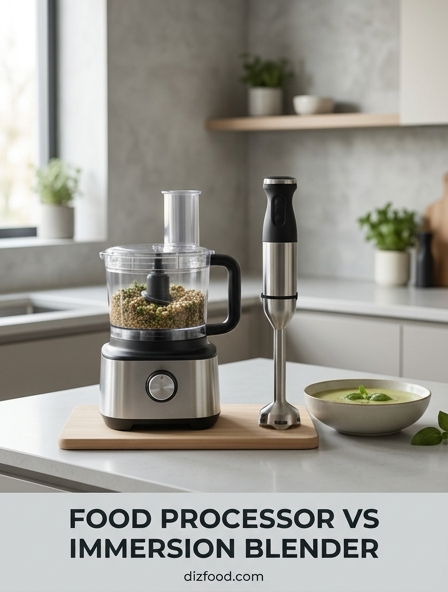
Food Processor vs Immersion Blender Comparison
In the modern kitchen, efficiency is often dictated by having the right tool for the specific mechanical task at hand. The food processor and the immersion blender represent two different philosophies of food preparation. A food processor is a stationary, heavy-duty appliance designed to handle solid foods and perform complex labor-intensive tasks like slicing, grating, and dough kneading. It relies on a high-torque motor and a wide variety of interchangeable blades to transform ingredients within a self-contained work bowl.
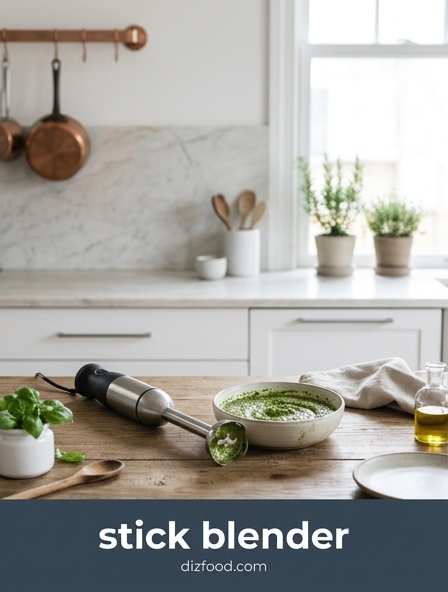
Conversely, the immersion blender, often referred to as a stick blender, is a handheld device designed for mobility and convenience. It allows the cook to bring the blade to the food rather than the food to the machine. Its primary strength lies in pureeing liquids and emulsifying sauces directly in the cooking vessel, such as a pot or a beaker. While both tools can technically overlap in functions like making pesto or hummus, their physical builds and operational mechanics set them apart in terms of speed, texture, and volume handling.
| Feature | Food Processor | Immersion Blender |
|---|---|---|
| Primary Texture | Chopped, sliced, or shredded | Liquid, smooth, or pureed |
| Container | Fixed work bowl | Any pot, jar, or bowl |
| Portability | Stationary countertop unit | Handheld and mobile |
| Best for Solids | Excellent | Poor |
Key Differences and Core Functions
The mechanical core of a food processor is its ability to handle dry and solid ingredients without the mandatory addition of liquid. The motor is housed in a heavy base, driving a central shaft that spins various attachments. This design allows for "pulsing," which provides the user with precise control over the size of the food particles. You can stop at a coarse chop or continue until you reach a fine meal. The inclusion of specialized discs also allows for uniform slicing of vegetables and shredding of hard cheeses, tasks that a blender simply cannot replicate.
Immersion blenders operate on a high-speed, low-torque principle that creates a vortex. The small blades are shielded by a guard to prevent them from hitting the bottom of your cookware. This vortex draws ingredients into the blades, making it the superior tool for creating perfectly smooth textures in liquids. Unlike the food processor, the immersion blender excels when there is a high ratio of liquid to solid. It is the go-to for aerating mixtures, such as creating foams or frothing milk for coffee. While it lacks the versatility of different cutting styles, its core function of high-speed blending makes it indispensable for texture refinement.
- Mechanical Action: Processors use shearing/slicing; blenders use high-speed pulverization.
- Interface: Processors use buttons/dials on a base; blenders use a hand-trigger.
- Ingredient Prep: Processors require items to be dropped in through a chute; blenders are submerged into the pot.
Best Culinary Tasks for Food Processors
The food processor is the ultimate "prep cook" of the kitchen. Its versatility is most evident when dealing with labor-intensive tasks that would take a significant amount of time with a chef's knife or a hand grater. One of its most celebrated uses is in pastry making. The cold blades can quickly cut butter into flour for pie crusts or biscuits without the heat from a cook's hands melting the fat, ensuring a flaky result every time. It is also a powerhouse for vegetable preparation, capable of slicing several pounds of potatoes for a gratin or shredding heads of cabbage for coleslaw in seconds.
Beyond prep, the food processor is essential for recipes that require a thick, paste-like consistency. It is the superior choice for making traditional nut butters, where the oils need to be released from the solids over several minutes of high-speed processing. It also handles heavy doughs, such as pizza or pasta dough, using a specialized plastic blade. For those who enjoy making their own condiments, it is perfect for chunky salsas, olive tapenades, and thick dips like hummus or baba ganoush, where maintaining some textural integrity is often desired over a perfectly smooth puree.
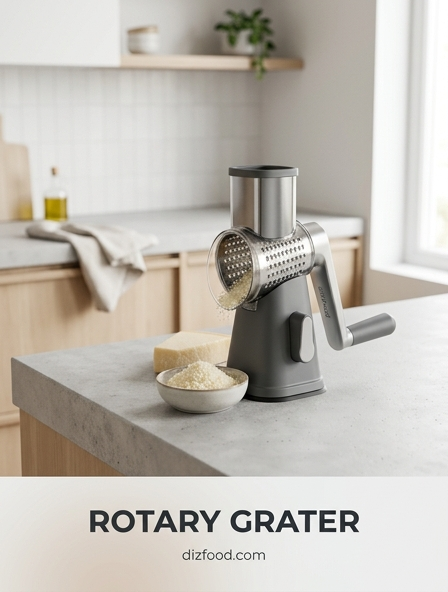
- Grating hard cheeses like Parmesan or Romano.
- Slicing thin rounds of cucumbers, radishes, or carrots.
- Making homemade breadcrumbs from toasted bread.
- Chopping nuts for baking or garnishes.
- Mixing meat for homemade sausages or meatballs.
Top Uses for Immersion Blenders
The immersion blender is the king of "one-pot" cooking. Its primary appeal is the elimination of the need to transfer hot liquids from a stove to a countertop blender, which significantly reduces the risk of burns and minimizes the number of dishes to clean. For anyone who regularly makes soups-such as butternut squash, tomato basil, or potato leek-the stick blender allows you to achieve a silky-smooth consistency directly in the stockpot. This tool provides granular control over the texture; you can blend just a portion of the soup to thicken the base while leaving some chunks of vegetables for a rustic feel.
Furthermore, the immersion blender is remarkably efficient for small-batch emulsifications. When using a standard food processor for a small amount of mayonnaise or vinaigrette, the blades often cannot reach the ingredients effectively. The narrow profile of the immersion blender head makes it perfect for fitting into a wide-mouth mason jar. This allows you to make a fresh batch of mayo or Caesar dressing in under sixty seconds. It is also an excellent tool for quick breakfast prep, such as blending protein shakes or whisking eggs for an exceptionally fluffy omelet.
- Pureeing hot soups directly in the cooking pot.
- Emulsifying mayonnaise, hollandaise, or aioli.
- Blending fruit smoothies or milkshakes in a single-serve glass.
- Whipping cream for desserts or coffee toppings.
- Removing lumps from gravies or sauces mid-simmer.
Texture and Consistency Faceoff
When it comes to the final mouthfeel of a dish, the choice between these two tools is critical. A food processor is designed to produce uniformity in size rather than total homogenization. Because the blades are large and sweep across a wide area, they are excellent at creating "crumbles" or "minces." If you are making a pesto and you want to see individual flecks of basil and pine nuts, the processor is your tool. It respects the structure of the ingredient to an extent, allowing for a multifaceted texture that provides a bit of "bite."
The immersion blender, however, is a specialist in total homogenization. Because its blades rotate at significantly higher speeds within a very small radius, it breaks down cell walls more aggressively. This results in a texture that is velvety and aerated. If your goal is a coulis or a smooth sauce where no individual particles should be detectable by the tongue, the immersion blender is the clear winner. The limitation is that it cannot "chop"; if you try to use an immersion blender on a pile of onions, you will likely end up with a watery onion puree rather than neatly diced pieces, as the high speed tends to pulverize rather than cut.
Capacity and Serving Size Differences
Capacity is perhaps the most practical dividing line between these two appliances. Food processors are rigid in their volume limits. Most home models range from 7 to 14 cups. If you try to process too little, the blades may not catch the food; if you process too much, the motor can strain or the liquid can leak through the central spindle. This makes the food processor best suited for medium to large batches of food prep where the volume is known and fixed.
The immersion blender offers virtually unlimited capacity because it is not tied to a specific container. You can use it in a small 2-cup beaker for a single serving of salad dressing, or you can submerge it into a 10-quart stockpot to blend soup for a large dinner party. This flexibility makes it a favorite for both the solo cook and the large family. However, the immersion blender does struggle with "dry" capacity. While a food processor can easily turn a bag of flour into dough, an immersion blender cannot function without enough liquid to create the vortex necessary for the ingredients to move toward the blades.
| Aspect | Food Processor | Immersion Blender |
|---|---|---|
| Minimum Volume | Approx. 1-2 cups (depending on size) | Approx. 1/4 cup |
| Maximum Volume | Limited by bowl size (up to 14 cups) | Unlimited (pot size dependent) |
| Ideal Batch Size | Family meals and bulk prep | Single servings to large pots |
Cleanup and Maintenance Comparison
The ease of cleaning is often a deciding factor for home cooks. The food processor is notoriously more difficult to clean. A standard session involves washing the heavy base (wipe down), the work bowl, the lid, the pusher, and the specific blade or disc used. Many of these parts have nooks and crannies where food can become trapped, such as the hollow center of the S-blade or the rim of the lid. While most modern parts are dishwasher safe, they take up a significant amount of real estate in the drying rack or dishwasher.
In contrast, the immersion blender is designed for rapid cleanup. Most models feature a detachable blending arm that can be popped off with the press of a button. You can often clean it simply by running it in a glass of warm, soapy water immediately after use, followed by a quick rinse. There are no bowls or lids to scrub. Because the motor unit is handheld, it rarely comes into contact with the food, requiring only an occasional wipe. For the cook who values a "clean as you go" workflow, the immersion blender is significantly less burdensome and encourages more frequent use for minor tasks.
Storage and Kitchen Space Considerations
Kitchen real estate is a premium for most people, and these two tools occupy very different footprints. A food processor is a bulky, heavy appliance that usually earns a permanent spot on the countertop or requires a dedicated deep cabinet. Because of its weight-often 15 to 20 pounds for high-end models-moving it in and out of storage can be a deterrent to using it. Additionally, you must manage the storage of the various discs, blades, and attachments, which often require a separate accessory box to keep the sharp edges safe and organized.
The immersion blender is the champion of small-space living. Its sleek, wand-like shape allows it to fit easily into a standard kitchen drawer or a narrow corner of a cabinet. Even with its attachments, such as a whisk or a small chopper bowl, it takes up a fraction of the space required by a food processor. For those living in apartments or with limited counter space, the immersion blender is often the first choice because it provides significant power without cluttering the environment. It is also light enough to be handled with one hand, making it accessible for a wide range of users.
- Processor Footprint: Large, requires 10-15 inches of counter depth.
- Blender Footprint: Minimal, roughly the size of a rolling pin.
- Portability: Processors are stationary; blenders can be moved to any outlet.
- Cord Management: Many blenders now offer cordless, rechargeable options.
Essential Features and Attachments
When shopping for these tools, the available features can greatly expand their utility. A high-quality food processor should come with a "pulse" function, which is vital for preventing over-processing. Essential attachments include the standard metal S-blade, a dough blade, and reversible discs for slicing and shredding. Some premium models also include dicing kits or adjustable slicing discs that allow you to choose the thickness of your vegetables with a simple external lever.
The immersion blender has evolved to include several versatile attachments that bridge the gap between it and a food processor. Many "all-in-one" kits include a whisk attachment for eggs and cream, and a small "chopper" bowl attachment. This chopper attachment is essentially a mini food processor that runs off the immersion blender's motor, perfect for mincing a few cloves of garlic or a handful of nuts. Variable speed control is another essential feature for the stick blender, allowing you to start slow to prevent splattering and ramp up to high speed for a perfect puree. Build quality is also important; a stainless steel blending wand is preferred over plastic as it won't stain or crack when exposed to high temperatures.
Final Verdict on Which Tool to Buy
The decision between a food processor and an immersion blender ultimately depends on your cooking style and the frequency of your prep work. If you are a baker who frequently makes pie crusts, a gardener who preserves large quantities of vegetables, or someone who cooks for a large family, the food processor is an essential investment. Its ability to slice, shred, and handle heavy solids makes it a "workhorse" that saves hours of manual labor. It is a foundational tool for the "from-scratch" kitchen where bulk ingredient processing is a regular occurrence.
However, if you are a fan of soups, sauces, and quick morning smoothies, or if you generally cook smaller meals, the immersion blender is the more practical choice. Its ease of use, rapid cleanup, and minimal storage requirements make it one of the most used tools in the modern kitchen. For many households, the ideal solution is eventually owning both; however, if you must choose just one to start, the immersion blender is often the more affordable and versatile entry point for general liquid-based tasks. Choose the tool that addresses your most frequent kitchen bottleneck, and you will find your culinary workflow much more enjoyable.

Comments