
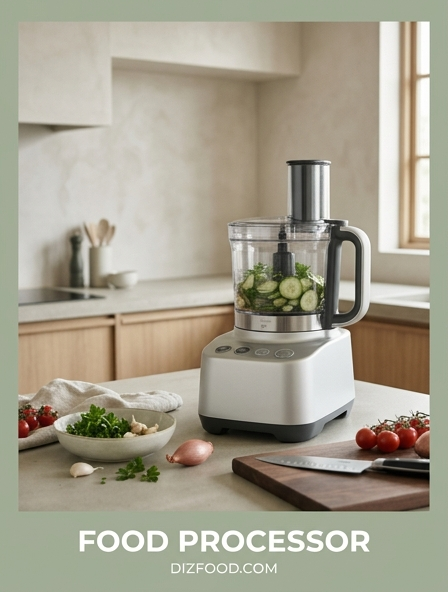
Maximizing Speed in High Volume Batch Prep
In high-capacity culinary environments, the ability to process massive quantities of ingredients in a fraction of the time is essential for operational success. Industrial-grade food processors are engineered with high-torque motors and wide-mouth feed tubes that allow chefs to process whole vegetables without the need for extensive pre-cutting. This capability significantly reduces the time spent on basic preparation, moving ingredients from their raw state to a usable form in seconds rather than minutes.
- Continuous feed attachments allow for non-stop processing into external containers.
- High-wattage motors maintain constant RPMs even when handling dense root vegetables.
- Large bowl capacities reduce the number of cycles needed for wet mixtures or doughs.
- Variable speed settings provide the precision needed to avoid over-processing delicate items.
By integrating these machines into the daily routine, kitchens can handle unexpected surges in demand without compromising the schedule of the prep team. The speed advantage is most evident during the preparation of base components like mirepoix, slaws, or large batches of hummus, where manual chopping would be prohibitively slow.
Ensuring Uniform Consistency Across Large Quantities
Achieving a standardized texture is one of the most difficult challenges when preparing food at scale. Manual knife work, while artisanal, is subject to human error and fatigue, which often leads to variations in piece size. Such inconsistencies can negatively impact cooking times and the final presentation of the dish. Food processors eliminate this variability by utilizing fixed-depth blades and precision-engineered discs that produce identical results with every rotation.
Whether the requirement is a fine brunoise, a specific millimeter slice for a gratin, or a perfectly emulsified vinaigrette, the mechanical nature of the processor ensures that the first cup of product looks exactly like the last. This level of uniformity is crucial for sous-vide cooking and deep-frying, where uneven pieces result in some items being overcooked while others remain raw. For sauces and purées, the high-speed S-blade shears fibers at a microscopic level, creating a silky mouthfeel that is difficult to achieve by hand. Maintaining this level of control across twenty or fifty gallons of product ensures that every guest receives a dish of the same high quality.
Reducing Labor Costs Through Automated Processing
Labor remains one of the highest expenses in the hospitality industry, making efficiency a primary driver of profitability. Utilizing a food processor allows a single operator to perform the work that would otherwise require three or four prep cooks. This automation does not necessarily replace staff but allows them to be redirected toward more complex, value-added tasks such as plating, flavor balancing, and creative development. The return on investment for high-end equipment is often realized within a few months through the reduction of billable hours spent on repetitive tasks.
| Task Type | Manual Time (10kg) | Processor Time (10kg) | Labor Savings |
|---|---|---|---|
| Onion Slicing | 25 Minutes | 3 Minutes | 88% |
| Cheese Grating | 40 Minutes | 5 Minutes | 87% |
| Emulsifying Mayo | 15 Minutes | 4 Minutes | 73% |
By standardizing these tasks, management can better predict labor needs and stabilize food costs. Automated processing also reduces the physical toll on staff, leading to higher retention and lower turnover costs over the long term.
Versatile Blade Attachments for Diverse Prepping Needs
The modern food processor is far more than a simple blender; it is a multi-functional system capable of replacing several standalone appliances. The versatility of a processor is defined by its array of interchangeable blades and discs, which can be swapped out in seconds to transition from one task to another. This adaptability makes it the most utilized piece of equipment in the "mise en place" phase of production.
- Serrated S-Blades: Ideal for mincing meat, chopping nuts, or making coarse salsas.
- Adjustable Slicing Discs: Range from paper-thin 1mm slices to thick 10mm cuts for stews.
- Dicing Kits: Create perfect cubes for soups and fruit salads in a single pass.
- Shredding/Grating Plates: Efficiently handle hard cheeses, carrots, and potatoes for hash browns.
- Dough Blades: Blunted edges designed to knead heavy doughs without shearing the gluten strands.
This variety allows a kitchen to maintain a smaller footprint by consolidating tools. Instead of owning separate slicers, graters, and mixers, a chef can invest in one high-quality motor base and a comprehensive set of attachments to cover all culinary bases.
Streamlining Workflow During Peak Kitchen Hours
Efficiency during peak service hours relies on the preparation completed beforehand. A food processor is the backbone of a streamlined "mise en place" workflow, ensuring that all stations are fully stocked with processed ingredients before the first order arrives. When every component is ready, the line cooks can focus on assembly and heat management rather than chopping. If a specific ingredient runs out mid-service, the processor allows for an "on-the-fly" replenishment that takes seconds, preventing the entire kitchen line from grinding to a halt.
Furthermore, the design of commercial processors often includes features that facilitate easy cleaning between tasks. Removable bowls and dishwasher-safe components mean that a cook can switch from processing onions to grating cheese with minimal downtime. This rapid turnover is essential in compact kitchens where space is at a premium and every second counts. By centralizing the bulk of the mechanical work, the kitchen remains organized, the floor remains clear of excess cutting boards, and the staff can maintain a calm, methodical pace even during the highest volume periods of the day.
Improving Safety by Minimizing Manual Knife Work
The kitchen environment is inherently hazardous, with sharp knives being a leading cause of workplace injuries. Food processors significantly mitigate this risk by enclosing the cutting action within a sealed bowl or a guarded feed chute. When staff members use a processor, their hands are kept away from the moving blades, and safety interlock systems ensure the motor will not engage unless the lid is properly secured. This shift in methodology creates a safer workspace and reduces the likelihood of accidents related to fatigue or distraction.
- Reduces repetitive strain injuries associated with long hours of manual chopping and dicing.
- Minimizes the risk of severe lacerations during the processing of slippery or hard-to-cut items.
- Utilizes pushers to guide food into the blades, ensuring fingers never enter the cutting zone.
- Features automatic braking systems that stop the blade instantly when the lid is opened.
By automating the most dangerous aspects of prep work, kitchen managers can lower insurance premiums and create a more sustainable work environment for their team. Safety-first equipment is an investment in the health and longevity of the culinary staff.
Efficient Bulk Vegetable Slicing and Dicing
For establishments that specialize in salads, stir-fries, or vegetable-heavy cuisines, the food processor is an indispensable tool for bulk production. Processing fifty pounds of potatoes for fries or a crate of cabbage for slaw is a daunting task with a chef's knife, often leading to inconsistent results as the cook grows tired. Using a continuous feed processor, these tasks are completed with industrial efficiency. The vegetables are fed through the top and immediately ejected into a large bin, allowing for a continuous stream of production that never saturates the internal bowl capacity.
This efficiency is further enhanced by specialized dicing grids. Traditionally, dicing is a two-step process requiring precise horizontal and vertical cuts. A processor with a dicing kit performs both actions simultaneously as the vegetable passes through the grid and the rotating blade. This is particularly beneficial for high-volume items like pico de gallo or vegetable soup bases. The ability to process bulk quantities in minutes ensures that ingredients are as fresh as possible, as they spend less time sitting at room temperature during the prep phase and more time under refrigeration or in the cooking vessel.
Maintaining Ingredient Quality During Rapid Processing
While speed is important, the quality of the ingredient must be preserved. High-quality food processors are designed to cut cleanly rather than crush or tear the food. Sharp, stainless steel blades ensure that the cellular structure of vegetables is maintained, which prevents excessive moisture loss and oxidizing. When a blade is dull or the motor is underpowered, ingredients can become bruised or mushy, leading to a shorter shelf life and a degraded final product. Commercial units use heavy-duty induction motors that maintain a steady speed to prevent heat transfer to the food.
- Precise cutting reduces the "weeping" of water from vegetables like cucumbers and tomatoes.
- Pulse functions prevent the over-emulsification of fats in delicate pastries or pâtés.
- Sharp blades ensure clean cuts in herbs, preventing them from turning black or bitter.
- Heavy-duty bowls resist staining and odors, ensuring flavor purity between different batches.
By controlling the temperature and the precision of the cut, the food processor helps maintain the vibrant colors, crisp textures, and natural flavors that are the hallmark of high-quality cuisine, even when working at maximum speed.
Optimizing Commercial Kitchen Throughput and Efficiency
The throughput of a kitchen-the total volume of food it can produce within a specific timeframe-is often limited by the slowest part of the production chain. Often, this bottleneck occurs during the preparation stage. By implementing high-speed food processing solutions, a kitchen can effectively "widen the pipe," allowing for a greater volume of raw materials to flow into the cooking and assembly stages. This efficiency is vital for businesses that rely on high turnover, such as catering companies, school cafeterias, or large-scale bistros.
| Operational Goal | Processor Strategy | Impact on Throughput |
|---|---|---|
| Higher Output | Continuous Feed Usage | Increases volume per hour by 400%. |
| Menu Expansion | Multi-Blade Attachments | Allows for more complex dishes without more staff. |
| Cost Control | Bulk Buying / In-house Prep | Reduces cost by avoiding pre-cut, processed goods. |
The ability to prep in-house using a processor also allows kitchens to buy whole produce rather than pre-cut vegetables, which are more expensive and lose quality faster. This shift improves the bottom line while simultaneously raising the standard of the ingredients used.
The Role of Food Processors in Consistent Recipe Scaling
Scaling a recipe from four servings to four hundred involves more than just multiplying ingredients; it requires maintaining the same ratios and textures across the entire batch. The food processor plays a vital role in this scaling process by providing a controlled environment for mixing and chopping. When recipes are standardized around machine settings-such as "process on high for 45 seconds"-the results become replicable regardless of who is operating the machine. This standardization is the foundation of successful multi-unit operations and franchises.
For items like spice rubs, pesto, or doughs, the processor ensures that every gram of the large batch is identical. This prevents "hot spots" of seasoning or pockets of unmixed flour that can occur with manual mixing. Furthermore, many modern processors feature integrated scales or timers, allowing for even tighter control over the production process. By removing the guesswork and individual technique from the mechanical preparation, chefs can ensure that the flavor profile and texture of their signature dishes remain constant, whether they are serving a small private dinner or a thousand-person gala. Consistency is the key to brand loyalty, and the food processor is a primary tool for achieving it at scale.



Comments