
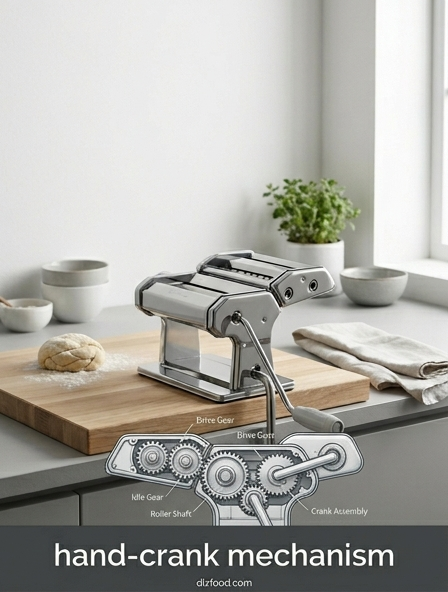
Whether you're prepping a mountain of hash browns or garnishing a pasta dish with fresh Parmesan, choosing between a box grater and a rotary grater can significantly impact your kitchen efficiency. The classic box grater is a versatile workhorse, offering multiple blade surfaces for zesting, slicing, and shredding various textures, though it requires a bit of elbow grease and careful finger placement. In contrast, the rotary grater is the specialist of the prep world, utilizing a hand-crank mechanism and enclosed drums to deliver lightning-fast results with maximum safety. Deciding on the best tool ultimately comes down to whether you prioritize the multi-functional utility of a single upright unit or the ergonomic speed and specialized precision of a crank-operated device.
| Feature | Box Grater | Rotary Grater |
|---|---|---|
| Versatility | High: 4+ blade types (zest, slice, shred) | Low/Medium: 1-3 interchangeable drums |
| Safety Profile | Higher risk; exposed blades near fingers | Very safe; blades enclosed in housing |
| Speed & Effort | Manual vertical motion; physically demanding | Mechanical crank; high-speed output |
| Ideal Ingredients | Large vegetables, soft cheeses, citrus | Hard cheeses, nuts, chocolate, carrots |
| Cleanup | Simple one-piece wash; dishwasher safe | Moderate; requires disassembly of parts |
| Storage Footprint | Bulky; takes up significant vertical space | Compact body; handle/drums may be awkward |
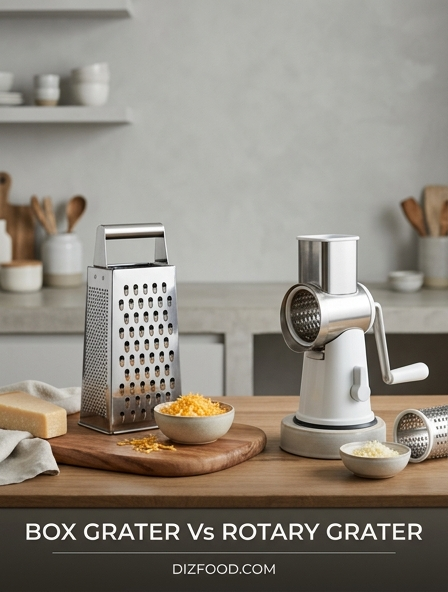
Box Grater vs Rotary Grater Performance Comparison
When evaluating the performance of a box grater against a rotary grater, the primary differentiator lies in the mechanical delivery of force and the volume of output produced per stroke. The box grater relies entirely on manual vertical or diagonal pressure, where the user moves the food item against a stationary blade. This allows for significant control over the length of the shreds, making it ideal for creating long strands of hash browns or cheddar. However, it requires more physical exertion and is often slower for processing large quantities of hard ingredients.
In contrast, a rotary grater utilizes a circular drum mechanism. By turning a handle, the user engages a continuous cutting motion that is significantly faster for hard substances like Parmesan or nuts. Because the drum rotates multiple times for every full turn of the crank, the "strokes per minute" far exceed what a human arm can achieve on a flat plane. While the rotary grater excels in speed, it often struggles with soft cheeses, which can become gummed up in the drum. The box grater maintains a performance edge in versatility, as its stable base allows for heavy-duty pressure that the smaller, often plastic-housed rotary drums cannot always withstand.
- Box Graters offer better control for long, uniform shreds.
- Rotary Graters provide superior speed for hard, aged cheeses.
- Manual pressure on a box grater allows for processing softer items.
- Mechanical advantage in rotary models reduces user fatigue during bulk prep.
Best Cheese Grater for Home Kitchen Efficiency
Efficiency in a home kitchen is measured by how quickly a task is completed relative to the effort required and the subsequent cleanup. For the average home cook, the box grater is often viewed as the most efficient "all-in-one" tool because it handles everything from citrus zesting to slicing cucumbers. It eliminates the need to switch between multiple gadgets during complex recipe preparation. If a recipe calls for both shredded carrots and sliced potatoes, the box grater manages both without any reconfiguration of parts.
However, if the task is strictly focused on a single high-volume ingredient, such as grating a pound of cheese for a family pizza night, the rotary grater is the clear winner in efficiency. The rotary design often includes a hopper and a plunger, which allows the user to process small blocks of cheese in rapid succession without stopping to reposition their grip. To compare these tools effectively, consider the following throughput metrics:
| Feature | Box Grater Efficiency | Rotary Grater Efficiency |
|---|---|---|
| Setup Time | Instant (one piece) | Moderate (assembly required) |
| Processing Speed | Moderate | High (continuous motion) |
| Versatility | High (multiple blades) | Limited (requires drum swap) |
| Bulk Grating | Tiring | Effortless |
Anatomy of a Box Grater Versatile Blade Types
The box grater is a masterclass in multi-functional design, typically featuring four distinct sides that cater to various culinary textures. The anatomy starts with the coarse shredding side, which features large, raised holes. This is the most frequently used side for semi-hard cheeses like Monterey Jack and for vegetables like zucchini or potatoes intended for frying. The large apertures allow moisture to escape, preventing the food from turning into a paste.
The second side usually houses the fine shredding blades. These smaller, sharper holes are perfect for hard cheeses, chocolate, or ginger. Because the surface area is denser, it produces a light, fluffy texture that melts almost instantly. The third side often contains a slicing blade, which functions as a basic mandoline. This is ideal for quick cucumber slices or cabbage for slaw. Finally, the fourth side typically features star-shaped punching blades. These are used for zesting citrus or creating a very fine, almost powdered texture for hard spices like nutmeg or cinnamon. This architectural variety ensures that a single tool can provide a complete range of textures for a multi-course meal, a feat that a standard rotary grater cannot match without an array of interchangeable drums.
- Coarse Side: Best for melting cheeses and sturdy vegetables.
- Fine Side: Ideal for garnishes and hard-textured ingredients.
- Slicing Side: Quick alternative to a knife for uniform rounds.
- Zesting Side: Specialized for citrus peels and hard aromatics.
Benefits of Using a Rotary Grater for Safety
Safety is perhaps the most compelling argument for choosing a rotary grater over a traditional box model. The primary danger of a box grater is the proximity of the user's fingers to the sharp, exposed blades as the food item shrinks during the grating process. Known colloquially as "knuckle busters," box graters require extreme caution when reaching the end of a block of cheese. Without a finger guard, the risk of minor cuts is high, especially when applying the heavy pressure necessary for efficient shredding.
Rotary graters solve this problem through an enclosed design. Most modern rotary models feature a hopper where the food is placed and a plastic plunger or "food pusher" that keeps the ingredient in contact with the drum. This means the user's hands never come into direct contact with the cutting surface during operation. This is particularly beneficial for children learning to cook or for individuals with reduced dexterity or hand tremors. Furthermore, many rotary graters come with a suction base that secures the device to the countertop, preventing it from slipping. By stabilizing the unit and shielding the blades, the rotary grater transforms a potentially hazardous kitchen task into a controlled, safe mechanical process. This safety-first approach reduces kitchen anxiety and minimizes the need for first-aid during busy meal preparation sessions.
Easy Cleaning Tips for Box and Rotary Graters
Cleaning a grater can be a frustrating task, as cheese residues and vegetable fibers tend to cling to the sharp edges. For a box grater, the most effective method is to rinse it under hot water immediately after use. If the residue hardens, it becomes significantly more difficult to remove. Using a stiff-bristled nylon brush is more effective than a sponge, as sponges tend to get shredded by the blades. A helpful tip is to rub the grater with a bit of lemon juice or vegetable oil before use; this creates a temporary non-stick barrier that helps the food slide off during the wash cycle.
Rotary graters require a slightly different approach because they are composed of multiple parts. To clean them thoroughly, the unit must be disassembled. Most drums are made of stainless steel and are dishwasher safe, but the plastic housing should usually be washed by hand to prevent warping from high heat. One specific challenge with rotary models is the "gunk" that can build up in the axle or the handle attachment. Using a small bottle brush can help reach these internal crevices. For both types of graters, always wash in the opposite direction of the blades to avoid damaging your cleaning tools or dulling the edges. If cheese is particularly stubborn, grating a small piece of dry bread through the device can help push out the remaining dairy bits before you start the scrubbing process.
Space Saving Design Differences Between Grater Types
Kitchen storage is often at a premium, and the choice between these two tools often comes down to footprint and stackability. The box grater is a vertical tool, usually standing about 9 to 10 inches tall. While it takes up a moderate amount of height, its hollow center is a hidden advantage for space saving. Many cooks store smaller items like zesters or small whisks inside the cavity of the box grater when it is parked in a cabinet. Its rectangular or hexagonal shape also allows it to be tucked into corners or placed alongside cookbooks on a shelf quite easily.
Rotary graters, conversely, present a more awkward storage profile. Because they often have a protruding handle and a large hopper, they do not sit flat. If the model is a handheld version, it might fit in a utensil drawer, but the drum often makes the drawer difficult to close. Tabletop rotary models with suction bases are even bulkier and often require being kept in their original box or disassembled to fit into a standard drawer. However, some modern rotary designs feature collapsible handles or nesting drums to mitigate these issues. When deciding based on space, the box grater is generally the more "cabinet-friendly" option, whereas the rotary grater is a "specialty tool" that demands a dedicated spot in a deeper drawer or pantry shelf.
Durability and Material Quality for Kitchen Graters
Durability in kitchen tools is dictated by material choice and the integrity of the joints. Box graters are traditionally constructed from a single sheet of stainless steel folded into a box shape and riveted or welded at the seams. This all-metal construction is incredibly resilient. There are no moving parts to snap, and no plastic gears to strip. A high-quality 18/10 stainless steel box grater can easily last twenty years or more, resisting rust and maintaining its edge with minimal maintenance. The only common failure point is the handle, so choosing a model with a reinforced, bolted-on handle is key for longevity.
Rotary graters, however, are often a hybrid of stainless steel drums and plastic housings. The plastic components represent a significant vulnerability. Over time, the tension required to grate hard cheeses can cause the plastic arm or the hopper to crack. Furthermore, the mechanical connection between the handle and the drum can wear down, leading to a "slipping" sensation where the handle turns but the drum does not. While there are premium all-metal rotary graters available, they are much more expensive. For the budget-conscious cook, the box grater provides far more durability for the price. When shopping, one should prioritize heavy-gauge steel and look for "seamless" designs that prevent the metal from bending under the pressure of dense vegetables or aged cheeses.
Choosing the Right Tool for Different Vegetable Textures
The texture of the ingredient determines which tool will provide the best results. Box graters are the undisputed champions for "wet" or soft vegetables. If you are making zucchini bread or carrot cake, the box grater allows you to use long, sweeping motions that produce juicy, thick shreds. The open design prevents the vegetable fibers from getting compacted, which is essential for maintaining the moisture balance in baking. It is also the preferred tool for potatoes; the stability of the box allows you to exert the force needed to grate a dense tuber without the tool wobbling.
Rotary graters are better suited for "dry" or brittle textures. They are excellent for grating nuts, hard chocolate, or even dried breadcrumbs. Because the food is contained in a small hopper, it doesn't fly all over the counter, which often happens when grating light items on a box grater. However, if you try to put a soft vegetable like a tomato or a very ripe bell pepper through a rotary grater, the result is usually a mushy pulp because the drum tends to "squeeze" the ingredient against the housing before it hits the blades. For a diverse vegetable-heavy diet, the box grater offers a broader range of successful outcomes across various densities.
- Potatoes/Zucchini: Use a Box Grater for moisture and length.
- Nuts/Hard Chocolate: Use a Rotary Grater for containment and speed.
- Hard Carrots: Both work, but Box Graters offer longer shreds.
- Onions: Box Grater (slicing side) is superior for thin rings.
Ergonomics and Ease of Use Comparison Guide
Ergonomics play a vital role in kitchen safety and comfort, particularly for those who cook frequently or in large batches. The box grater requires a downward and slightly forward pushing motion. This engages the shoulder and triceps, which can lead to fatigue if the grater is not stabilized properly. Most high-quality box graters feature a rubberized base to prevent sliding, which is crucial for ergonomic safety. However, the repetitive motion can be taxing on the wrist if the blades are dull or if the ingredient is particularly hard.
The rotary grater offers a completely different ergonomic profile. Handheld rotary models require a "squeeze and turn" motion, which can be difficult for people with arthritis as it requires constant grip strength. However, countertop rotary models-those that suction to the desk and use a crank-are the most ergonomic option available. The cranking motion is much easier on the joints than the high-impact scrubbing motion of a box grater. It allows the weight of the arm to do the work rather than the fine muscles of the hand and wrist. When choosing between the two, consider your own physical comfort: the box grater offers a familiar, athletic motion, while the countertop rotary grater provides a mechanical assist that favors those who prefer lower-impact kitchen tasks.
Final Decision Which Grater Style Fits Your Cooking Needs
Deciding between a box grater and a rotary grater depends on your specific culinary habits and the size of your household. If you are a "minimalist" cook who wants one tool that can do everything from zesting a lemon for a cocktail to shredding a mountain of potatoes for Sunday brunch, the box grater is your best investment. Its versatility, durability, and ease of storage make it the quintessential kitchen workhorse. It is a tool built for variety and longevity, capable of handling almost any ingredient you throw at it, provided you are careful with your fingers.
On the other hand, if your kitchen activities are heavily focused on pasta dishes, salads with hard cheese toppings, or baking with nuts, the rotary grater will change your life. The safety and speed it provides for these specific tasks are unmatched. It is the specialist's choice. For many modern families, the ideal setup actually involves owning both: a sturdy stainless steel box grater for general prep work and a compact rotary grater kept specifically for table-side cheese service. Ultimately, the box grater wins on versatility and value, while the rotary grater wins on safety and specialized efficiency. Assess your most frequent recipes, and let your menu guide your purchase.



Comments