
The Evolution of Manual Food Processing
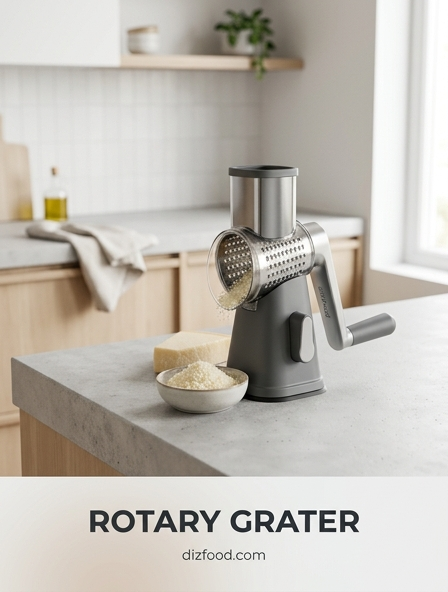
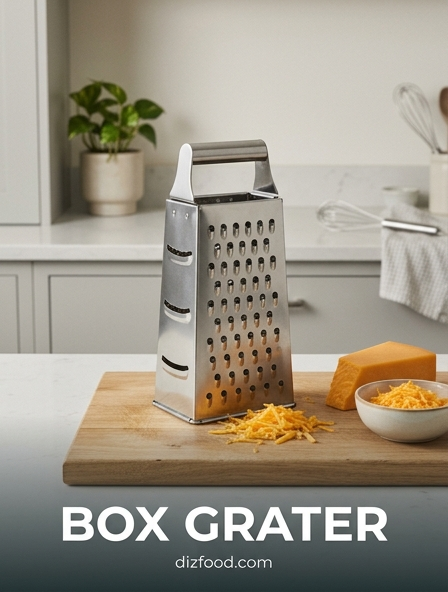
The journey of manual food processing has transitioned from rudimentary stone tools to sophisticated mechanical devices. For centuries, the humble box grater was the gold standard for shredding cheese and vegetables, yet it remained fraught with inefficiencies and physical risks. As culinary technology advanced, the need for a more ergonomic and safer alternative became apparent, leading to the development of the rotary grater. This innovation shifted the mechanical burden from the user's fingers to a controlled, enclosed drum system.
- Traditional box graters required significant downward force and exposed fingers to sharp edges.
- Early mechanical graters focused on hard cheeses like Parmesan, utilizing a simple hand-crank.
- Modern rotary iterations incorporate high-grade stainless steel and reinforced plastics for durability.
- The design evolution emphasizes the separation of the cutting surface from the user's hand.
Today, the rotary grater stands as a testament to practical engineering in the kitchen. It bridges the gap between manual labor and electric processing, providing a portable solution that does not require a power outlet. By refining the motion of grating into a circular rotation, the tool has revolutionized how home cooks approach ingredient preparation, making it more accessible and less strenuous for individuals of all skill levels.
Maximizing Speed with Mechanical Rotary Action
Speed is a critical factor in both professional and home kitchens, and the rotary grater excels by leveraging basic physics. Unlike the linear motion of a standard grater, which requires a back-and-forth movement where half the motion is non-productive, the rotary action provides continuous cutting. Every turn of the handle engages the blade with the ingredient, resulting in a significantly higher output per second. This mechanical advantage allows users to process ingredients up to three times faster than traditional methods.
- The continuous 360-degree rotation ensures the blade is always in contact with the food.
- Centrifugal force helps push shredded material out of the drum, preventing clogs.
- Gear-driven handles in premium models amplify the torque applied by the user.
- Large hopper openings allow for multiple small items, like radishes or garlic, to be processed simultaneously.
By maximizing the efficiency of every hand movement, the rotary grater minimizes the time spent on tedious prep work. This is particularly beneficial for recipes requiring large volumes of shredded ingredients, such as hash browns or carrot cakes. The mechanical consistency ensures that the speed does not come at the cost of quality, maintaining a steady flow of processed food that is ready for the pan or the plate.
Prioritizing Safety Through Blade Shielding
One of the most significant advantages of the rotary grater is its focus on user safety. In traditional grating, the proximity of the fingertips to the sharp blades is a constant source of kitchen accidents. The rotary grater solves this by housing the sharp drum within a protective casing. The user never needs to touch the blade while the tool is in operation. Instead, ingredients are placed into a hopper and pushed toward the drum using a dedicated plunger or "food pusher."
This design creates a physical barrier that makes it virtually impossible for fingers to come into contact with the cutting surface. Furthermore, the external handle ensures that the hand generating the power is located several inches away from the active drum. For families with children who are learning to cook, this tool provides a safe way for beginners to assist with food preparation without the high risk of lacerations associated with mandolines or box graters. The stability of the unit further prevents slips that often lead to injury during high-pressure cooking tasks.
Versatile Drum Attachments for Diverse Textures
The versatility of a modern rotary grater is largely defined by its interchangeable drum system. Rather than being limited to a single texture, users can swap out stainless steel cylinders to achieve specific culinary results. This modularity transforms the device from a simple cheese grater into a multi-functional food processor. Each drum is designed with specific hole patterns or blade shapes to handle different ingredient densities and desired outcomes.
| Drum Type | Primary Use | Ideal Ingredients |
|---|---|---|
| Fine Shredding | Zesting and hard cheeses | Parmesan, Chocolate, Nutmeg |
| Coarse Shredding | Main dish components | Cheddar, Zucchini, Potatoes |
| Slicing Blade | Uniform rounds | Cucumbers, Carrots, Pepperoni |
| Grinding Drum | Fine powders | Nuts, Breadcrumbs, Hard Spices |
By offering these various attachments, the rotary grater eliminates the need for multiple single-purpose tools. A high-quality set usually includes at least three drums, allowing the cook to move from slicing cucumbers for a salad to grating chocolate for a dessert in a matter of seconds. This adaptability makes it a valuable asset for kitchens with limited storage space.
Achieving Uniform Slices and Fine Shreds
Consistency is the hallmark of professional cooking, and the rotary grater provides a level of uniformity that is difficult to achieve with a knife or a box grater. Because the distance between the hopper and the drum is fixed, and the blades are precision-etched, every slice or shred comes out at the same thickness. This uniformity is not just about aesthetics; it is vital for even cooking. When potato slices or cheese shreds are identical in size, they melt or brown at the same rate, preventing some pieces from burning while others remain raw.
- Uniform thickness ensures predictable textures in baked dishes like gratins.
- Fine shreds provide a better surface area for melting, ideal for sauces and pizzas.
- Consistent slicing enhances the visual appeal of garnishes and salads.
- The controlled pressure from the food pusher prevents the smashing of soft ingredients.
Whether you are preparing a delicate slaw or topping a pasta dish with hard cheese, the precision of the rotary drum ensures a sophisticated finish. Home cooks can achieve results that mimic the output of high-end restaurant equipment, elevating the presentation of everyday meals. The ability to produce perfectly identical shreds repeatedly is one of the primary reasons chefs favor rotary mechanisms for table-side service.
Reducing Prep Time for Bulk Ingredients
When preparing meals for large groups or engaging in weekly meal prep, the volume of ingredients can be overwhelming. The rotary grater is specifically engineered to handle bulk processing with minimal fatigue. The large hopper capacity combined with the rapid-fire output of the rotating drum allows for the processing of entire blocks of cheese or several pounds of vegetables in minutes. This efficiency is particularly noticeable during holiday cooking or when preparing "taco night" spreads for a crowd.
- Load the hopper with pre-cut chunks of the ingredient.
- Apply steady pressure with the pusher while turning the handle at a constant rhythm.
- Collect the processed food in a large bowl positioned directly under the drum exit.
- Repeat the process, as the open-ended drum design prevents internal buildup.
By automating the most repetitive part of the grating process, the tool saves significant labor. It effectively bridges the gap between manual hand-grating and the use of a bulky electric food processor, which often requires more time to set up and clean than it saves during the actual prep. For the efficiency-minded cook, the rotary grater is the optimal balance of speed and simplicity.
Ergonomic Design for Reduced Wrist Strain
Traditional grating methods often involve awkward wrist angles and repetitive vertical motions that can lead to joint strain or exacerbate conditions like carpal tunnel syndrome. The rotary grater addresses these ergonomic concerns by utilizing a horizontal cranking motion. This movement is more natural for the human arm and shoulder, distributing the effort across larger muscle groups rather than concentrating it in the wrist and fingers. The handle is typically designed with a comfortable grip to further reduce pressure points.
Furthermore, many rotary graters are designed to be used while sitting or standing, allowing the user to find the most comfortable posture. The mechanical leverage provided by the crank handle means that even hard ingredients like ginger or cold butter require significantly less force to process. This makes the tool an essential kitchen aid for elderly cooks or those with limited hand strength. By prioritizing the user's physical comfort, the rotary grater ensures that food preparation remains an enjoyable activity rather than a painful chore. The lightweight nature of the device also makes it easy to maneuver and position on any countertop surface.
Securing Stability with Enhanced Suction Bases
A common frustration with many kitchen gadgets is their tendency to slide across the counter during use. To combat this, high-quality rotary graters are equipped with powerful suction bases. These bases utilize a vacuum seal mechanism, usually activated by a lever or a dial, to lock the unit firmly to any smooth, non-porous surface. This stability is crucial because it allows the user to focus entirely on the cranking and pushing motions without needing to hold the base of the machine steady.
- Clean the countertop surface to ensure it is free of crumbs or moisture.
- Place the grater on the surface and press down firmly.
- Engage the suction lock to create a vacuum seal between the rubber base and the counter.
- Test the stability before adding ingredients to the hopper.
Once locked, the grater remains stationary even under significant pressure. This not only improves the efficiency of the grating process but also adds another layer of safety, as a slipping tool can cause accidents. The enhanced stability allows for a one-handed operation of the crank in some models, making the workflow much smoother and more professional. When finished, a simple flick of the lever releases the vacuum, allowing for easy storage.
Streamlined Cleanup for Daily Kitchen Use
The utility of a kitchen tool is often judged by how difficult it is to clean. The rotary grater is designed with a "modular breakdown" philosophy, meaning it can be quickly disassembled into its component parts. Most models consist of the main housing, a handle, a food pusher, and the interchangeable drums. These parts are typically made from dishwasher-safe materials, such as BPA-free plastics and high-grade stainless steel, ensuring that the cleanup process is as fast as the food preparation itself.
Because the drums are open-ended, food particles are less likely to get trapped in hard-to-reach crevices compared to the interior of a box grater. A quick rinse under running water immediately after use is often enough to remove most residues. For stubborn foods like soft cheeses, the smooth surfaces of the drum and housing allow for easy scrubbing with a standard kitchen brush. This ease of maintenance encourages daily use, as cooks are more likely to reach for a tool that won't require a lengthy cleanup session after the meal is served. The compact nature of the disassembled parts also means they take up minimal space in the dishwasher or drying rack.
Enhancing Culinary Precision and Professional Results
The final result of using a rotary grater is a noticeable improvement in the precision and presentation of dishes. Professional chefs often use rotary tools for table-side service because they produce a light, airy texture that cannot be replicated by other means. When cheese is grated through a rotary drum, it retains more volume and creates a better mouthfeel, making it ideal for garnishing pasta, soups, and salads. This precision extends to baking, where finely grated nuts or chocolate provide a consistent flavor profile throughout the recipe.
| Culinary Application | Recommended Drum | Benefit |
|---|---|---|
| Pasta Topping | Fine Drum | Lighter texture, better melt |
| Vegetable Slaw | Slicing Drum | Uniform crunch and aesthetics |
| Taco Garnish | Coarse Drum | Classic "restaurant style" shreds |
| Dessert Topping | Fine Drum | Delicate, professional dusting |
By using a tool that prioritizes uniformity and texture, the home cook can achieve a level of culinary precision that was previously reserved for professional environments. The rotary grater is more than just a convenience; it is a specialized instrument that enhances the final quality of the food, ensuring that every dish looks as good as it tastes.

Comments