
Tired of the noisy "cabinet avalanche" every time you reach for a frying pan? Deciding between a pot lid organizer and a vertical plate rack is the key to reclaiming your kitchen's sanity and flow. While both tools aim to maximize vertical space, they serve distinct masters: pot lid organizers are engineered to secure awkward knobs and varying circumferences, whereas vertical plate racks focus on preventing chips and providing instant access to your daily dinnerware. Whether you are looking to streamline a cramped apartment gallery or protect a premium set of stoneware, understanding how these storage solutions handle weight, visibility, and accessibility will help you choose the perfect fit for your culinary workspace.
| Feature | Pot Lid Organizers | Vertical Plate Racks |
|---|---|---|
| Primary Design | Deep U-shaped or M-shaped slots to secure lid handles. | Narrow, uniform slots designed for flat profiles. |
| Adjustability | Often expandable or features moveable wire dividers. | Usually fixed width for stability and consistent spacing. |
| Space Efficiency | High; utilizes vertical height for bulky, odd shapes. | Extreme; converts horizontal stacks into thin vertical rows. |
| Safety Focus | Prevents lids from sliding or rolling out of cabinets. | Reduces friction and surface contact to prevent chipping. |
| Weight Capacity | Reinforced for heavy tempered glass and cast iron. | Optimized for lighter ceramic, porcelain, or melamine. |
| Best For | Deep drawers, lower cabinets, and heavy cookware. | Upper cabinets, drying racks, and display shelving. |
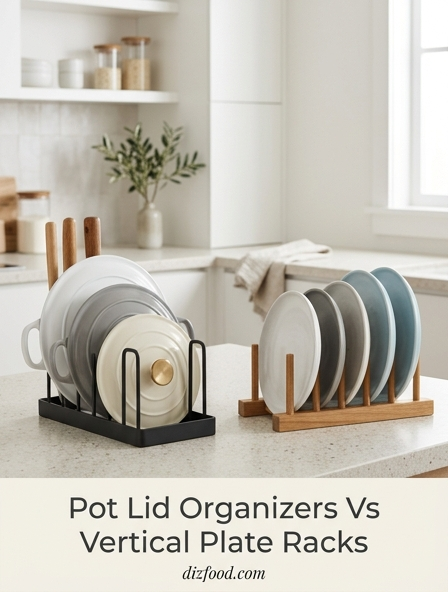
Pot Lid Organizers vs Vertical Plate Racks Comparison
Choosing between a pot lid organizer and a vertical plate rack requires an understanding of how each design handles the unique geometry of kitchenware. While both tools aim to eliminate the cluttered "avalanche" of stacked items in a cabinet, they serve distinct structural purposes. Pot lid organizers are typically engineered with wider slots and specialized indentations to accommodate the protruding handles or knobs of various lids. In contrast, vertical plate racks are designed with narrower, uniform spacing intended to hold flat surfaces securely in place.
| Feature | Pot Lid Organizer | Vertical Plate Rack |
|---|---|---|
| Slot Width | Variable and wide (2-4 inches) | Uniform and narrow (1 inch) |
| Handle Clearance | Deep U-shaped or V-shaped cutouts | Flat or low-profile support |
| Weight Capacity | High (built for heavy tempered glass) | Moderate (built for ceramic plates) |
| Best Used For | Dutch oven lids, domed glass lids | Dinnerware, salad plates, saucers |
When deciding between the two, consider the profile of your collection. If you own high-domed lids or lids with bulky heat-resistant knobs, a standard plate rack will likely prove frustrating, as the lids will lean awkwardly or fail to fit into the slots entirely. However, for thin, flat stainless steel lids, a plate rack might offer a more space-efficient footprint. The primary difference lies in the tension and support; lid organizers prioritize the stability of the lid's center of gravity, whereas plate racks focus on the alignment of the rim.
Maximizing Cabinet Space with Strategic Vertical Storage
The transition from horizontal stacking to vertical storage is perhaps the most effective way to reclaim lost real estate in a cramped kitchen. Horizontal stacking forces you to lift multiple heavy items to reach the one at the bottom, which not only wastes time but also increases the risk of scratching delicate non-stick surfaces or chipping glass. By implementing vertical storage solutions, every item becomes independently accessible, effectively turning a deep, dark cabinet into an organized library of cookware.
To maximize your cabinet's potential, consider the following strategic placement tips:
- Upper Shelf Utilization: Use vertical racks on higher shelves for lightweight lids or plates that are used less frequently, ensuring they remain visible and reachable.
- Corner Optimization: Place a lid organizer in the "dead space" of a corner cabinet to make use of awkward angles that cannot accommodate large round pots.
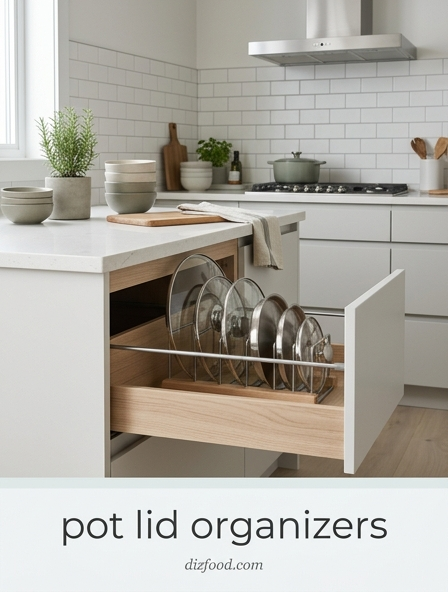
- Pull-Out Integration: Mount vertical racks onto pull-out cabinet drawers to prevent items from shifting or sliding when the drawer is opened and closed.
- Height Gradation: Arrange items from largest to smallest within the rack to maintain a clear line of sight and prevent smaller items from being buried behind larger ones.
This approach does more than just save space; it protects your investment in high-quality cookware. When lids and plates are stored vertically, they do not rub against one another, which significantly reduces wear and tear on the edges and surfaces. Furthermore, vertical storage allows for better air circulation, which is crucial for ensuring that items are completely dry before they are put away, preventing the musty odors often found in poorly ventilated, stacked cabinets.
The Structural Differences Between Lid Organizers and Plate Racks
At first glance, lid organizers and plate racks may appear interchangeable, but their structural engineering reveals specific functional intentions. The most significant difference is found in the "rungs" or dividers. A pot lid organizer often features a "cradle" design. The wires or plastic dividers are frequently curved or notched in the center. This notch serves a vital purpose: it provides a resting place for the lid's knob, allowing the lid to sit deeper in the rack and remain upright without wobbling. Without this notch, a domed lid would be pushed outward by its own handle, leading to instability.
Plate racks, on the other hand, are built with straight, parallel bars. These are designed to provide maximum contact along the flat surface of a plate. Because plates are relatively uniform in thickness, the slots are consistent. If you attempt to place a heavy glass lid in a plate rack, the lack of a handle notch means the lid will sit higher than intended, potentially hitting the top of the cabinet or sliding out of the slot. Furthermore, the gauge of the wire used in lid organizers is typically thicker to support the concentrated weight of tempered glass and cast iron, whereas plate racks may use thinner materials suitable for the distributed weight of ceramic dinnerware.
Another structural factor is the base. Lid organizers often feature a non-slip or weighted base to counteract the top-heavy nature of large lids. Plate racks usually have a wider, more stable footprint to prevent the entire unit from tipping over when one side is heavily loaded with plates while the other side is empty. Understanding these nuances helps in selecting a tool that won't fail under the weight of your specific kitchen inventory.
Pros and Cons of Using Plate Racks for Heavy Lids
In many kitchens, DIY enthusiasts often repurpose vertical plate racks to hold pot lids, especially when looking for a budget-friendly solution. While this can work for some, there are distinct advantages and disadvantages to this crossover use. Plate racks are widely available and come in various aesthetic finishes, such as bamboo or chrome, making them easy to match with kitchen decor. However, their utility is strictly limited by the physical dimensions of the lids being stored.
Pros:
- Cost-Effectiveness: Plate racks are generally less expensive and more widely available at standard retail stores.
- Compact Design: They often have a smaller footprint, which is ideal for storing very thin, flat lids like those found on professional stainless steel fry pans.
- Aesthetic Variety: Because they are meant to be seen on countertops, they often come in more decorative styles.
Cons:
- Insufficient Slot Width: Most plate racks cannot accommodate the thick rims of cast iron lids or the deep domes of Dutch oven covers.
- Stability Risks: Heavy glass lids can easily overbalance a lightweight plate rack, causing the entire unit to flip forward.
- Handle Interference: The lack of handle cutouts forces lids to sit at an angle, consuming more horizontal space than a dedicated lid organizer would.
- Durability Issues: The thin wires of a plate rack may bend or snap under the weight of heavy professional-grade cookware over time.
If you choose to use a plate rack for lids, it is best reserved for small, lightweight lids (under 8 inches) or flat silicone stretch lids. For anything substantial, the structural integrity of a dedicated lid organizer is the safer and more durable choice.
Best Storage Solutions for Narrow Kitchen Cabinets
Narrow cabinets, often found flanking an oven or a sink, present a unique organizational challenge. These spaces are frequently too slim for standard pots but are perfectly sized for vertical storage of flat items. In these instances, the choice between a lid organizer and a plate rack depends entirely on the width of the cabinet opening. For cabinets measuring 6 to 9 inches wide, a narrow-profile vertical rack can transform a "junk" cabinet into a high-efficiency storage hub.
The following options are most effective for narrow spaces:
- Expandable Racks: These allow you to customize the length of the organizer to fit the exact depth of your cabinet, ensuring no space is wasted behind the unit.
- Over-the-Door Organizers: If the cabinet interior is too narrow for a floor-standing rack, using the back of the cabinet door for a tiered lid rack can free up the entire shelf for larger items.
- Adjustable Wire Dividers: These units allow you to move the dividers to accommodate lids of varying thicknesses, which is essential when every half-inch of width matters.
- Pull-Out Slim Racks: A sliding track system installed at the base of a narrow cabinet allows you to pull the entire collection of lids or plates into the light, making selection effortless.
When working with narrow cabinets, verticality is your greatest ally. Instead of one large rack, consider stacking two shorter racks if your shelf height allows. This "double-decker" approach is particularly useful for separating small saucepot lids from larger skillet lids. By matching the scale of the organizer to the narrow constraints of the architecture, you create a streamlined system that feels custom-built for your kitchen.
Evaluating Stability and Security for Glass Pot Lids
Glass pot lids are among the most fragile items in a kitchen. They are susceptible to shattering if dropped and can easily become scratched if they rub against metal surfaces. When evaluating a storage solution for glass lids, stability is the paramount concern. A lid that rolls or tilts within its slot is a hazard. Specialized lid organizers address this by using rubberized or silicone-coated wires. This coating provides "grip," ensuring that the lid stays exactly where it is placed and preventing the metal-on-glass friction that causes micro-scratches.
Security is also influenced by the depth of the divider. In a standard plate rack, the dividers are often short, barely reaching a third of the way up a large plate. For a large 12-inch glass lid, these short dividers offer insufficient lateral support. A dedicated lid organizer typically features higher "shoulders" on its dividers, which cradle the lid and prevent it from tipping sideways. This is especially important for households with high kitchen traffic or children, where cabinets might be opened and closed with force.
To ensure maximum security for your glass lids, look for an organizer with a "U" shaped base. This design allows the rim of the lid to sit lower than the rest of the rack, creating a low center of gravity. Additionally, check that the organizer has non-slip feet on the bottom. If the rack itself slides when you reach for a lid, it can create a domino effect, potentially knocking other lids out of their slots. A secure, heavy-duty organizer is an insurance policy against the cost and mess of broken glassware.
Multi Functional Uses for Vertical Kitchen Dish Racks
While plate racks are marketed for dinnerware, their vertical design makes them surprisingly versatile for a range of kitchen and household items. The narrow, consistent spacing that makes them difficult for bulky pot lids makes them ideal for other flat, thin items that usually clutter up drawers or countertops. If you find yourself with an extra plate rack, or if you prefer the uniform look of these units, consider their utility beyond the dinner table.
The following items are perfectly suited for vertical plate rack storage:
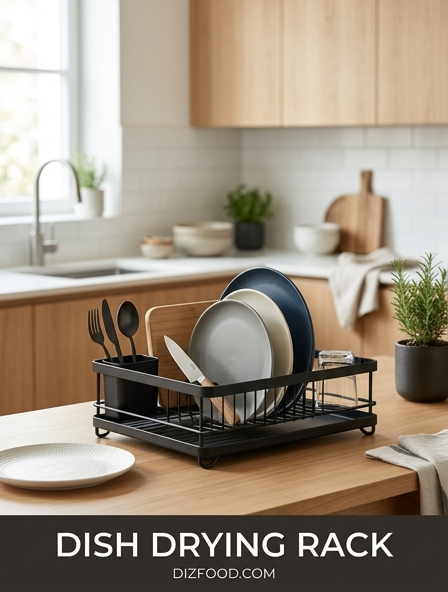
- Cutting Boards: Keeping wood or plastic cutting boards vertical allows them to air dry properly and prevents moisture from being trapped between boards.
- Baking Sheets and Cooling Racks: These flat items often get buried in the "oven drawer." A plate rack keeps them separated and prevents the non-stick coating from being scratched.
- Serving Platters: Large, heavy platters that are used only on special occasions can be stored safely at the back of a cabinet using a sturdy rack.
- Cookbook Display: On a countertop, a decorative plate rack can hold an open cookbook or a tablet at the perfect reading angle while cooking.
- Bento Box Lids and Food Containers: Smaller plate racks are excellent for organizing the various plastic lids for food storage containers.
This multi-functionality allows for a cohesive look throughout the kitchen. By using the same style of vertical rack for plates, baking sheets, and cutting boards, you create a visual rhythm that makes the space appear more organized and professionally designed. The key is to match the weight of the item to the strength of the rack; always ensure that heavy stone platters are placed in metal racks rather than light bamboo ones.
Selecting the Right Material for Your Cookware Organizer
The material of your organizer affects not only its durability but also the maintenance of your cookware. Kitchen environments are often humid and subject to temperature fluctuations, so choosing a material that can withstand these conditions is essential. The three most common materials are stainless steel, coated wire, and bamboo, each offering different benefits depending on your specific needs and aesthetic preferences.
| Material | Pros | Cons |
|---|---|---|
| Stainless Steel | Rust-resistant, heavy-duty, very durable | Can be noisy; potential to scratch glass |
| PE Coated Wire | Soft on glass, quiet, affordable | Coating can peel or stain over time |
| Bamboo/Wood | Eco-friendly, aesthetic, naturally soft | Can mold if wet; slots are usually fixed |
| Hard Plastic | Dishwasher safe, light, customizable | May crack under very heavy weight |
For pot lids, especially glass ones, coated wire is often the superior choice because the soft exterior cushions the impact when you place the lid in the rack. If you are storing heavy cast iron lids, stainless steel is the only material with the structural integrity to prevent the rungs from bowing over time. Bamboo is an excellent choice for a "dry" countertop plate rack but is less ideal inside a dark, unventilated cabinet where moisture from a recently washed lid could lead to mildew. Consider your "workflow" as well-if you tend to put things away while they are still slightly damp, prioritize rust-proof or moisture-resistant materials like stainless steel or high-grade plastic.
How Vertical Storage Improves Kitchen Workflow Efficiency
Efficiency in the kitchen is measured by the smoothness of the transition between tasks. Nothing disrupts this flow more than having to stop and search through a chaotic cabinet for a matching lid. Vertical storage directly addresses this bottleneck by providing immediate visual inventory. When you can see every lid or plate at a glance, the mental load of cooking is reduced. You no longer have to remember if the 10-inch lid is under the frying pan or the stockpot; it is simply there, in its designated slot.
The ergonomic benefits are equally significant. Reaching into a cabinet and pulling a single item out horizontally is a natural, low-strain movement. Conversely, bending over to lift a stack of three heavy pans just to get the lid at the bottom puts unnecessary strain on the wrists and back. Over time, these small efficiencies add up to a significantly more pleasant cooking experience. Furthermore, vertical storage facilitates better "mise en place" (everything in its place). During a busy cooking session, being able to one-handedly grab a lid to cover a boiling pot can prevent boil-overs and accidents.
Finally, vertical storage simplifies the "putting away" process. When every item has a specific home, unloading the dishwasher becomes a faster, more mindless task. There is no "Tetris-like" maneuvering required to make items fit. This organization encourages all members of the household to maintain the system, as the correct placement for each item is obvious. A well-organized vertical system transforms the kitchen from a place of frustration into a streamlined workshop.
Choosing the Best Organizer for Your Specific Cookware Set
The final step in optimizing your kitchen is matching the organizer to your specific cookware brand and style. Not all lids are created equal; for example, a Le Creuset cast iron lid is significantly thicker and heavier than a T-fal aluminum lid. Before purchasing an organizer, take measurements of your largest and smallest lids, noting the height of the knobs. If you have a diverse set of cookware, an adjustable organizer with movable dividers is the most versatile investment, as it can grow and change with your collection.
Consider these factors for a perfect match:
- Rim Thickness: Ensure the slots are wide enough for the thickest rims in your set, particularly if you use professional-grade or cast iron cookware.
- Knob Style: If your lids have oversized or "stay-cool" handles, look for an organizer with deep center cutouts to prevent the lids from leaning too far forward.
- Set Size: Count your most-used lids. It is better to have two small organizers that fit perfectly than one giant rack that leaves half the cabinet empty or is too cramped.
- Weight Distribution: If you have one exceptionally heavy lid, place it in the center of the rack to maintain balance, or choose a rack with a bolted-down base.
Ultimately, the goal is to create a bespoke storage solution that feels intuitive. By carefully selecting between a lid organizer and a plate rack based on the physical properties of your items, you ensure that your kitchen remains a functional, safe, and organized space. Whether you are a gourmet chef or a casual home cook, the right vertical storage tool is the foundation of a high-performance kitchen environment.

Comments