
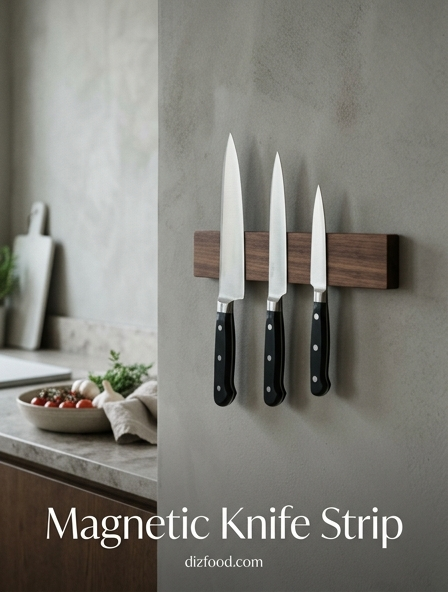
Maximized Vertical Counter Space
In the modern kitchen, counter space is often the most precious commodity. Traditional knife blocks, while functional, occupy a significant footprint on the workspace, creating "dead zones" where prep work cannot occur. By migrating cutlery to a magnetic strip, homeowners can reclaim several square inches of primary work surface. This transition is particularly beneficial for those who operate in high-traffic kitchens or professional environments where every inch of marble or granite is required for plating and preparation.
- Eliminates the bulky footprint of traditional wooden blocks.
- Moves essential tools to the unused "splash zone" of the wall.
- Creates a cleaner, more expansive visual field on the countertop.
- Allows for larger cutting boards to be used without obstruction.
The utilization of vertical space shifts the storage burden away from the horizontal plane. This architectural adjustment ensures that the area directly in front of the cook remains unobstructed, facilitating a more fluid transition between different cooking tasks. When the counter is clear, the psychological feeling of clutter is reduced, leading to a more focused and enjoyable culinary experience.
Superior Blade Maintenance and Longevity
The longevity of a high-carbon or stainless steel blade is directly influenced by how it is stored. Storing knives in a drawer often leads to "blade clashing," where edges strike one another, causing micro-chips and dullness. Similarly, wooden blocks can harbor abrasive dust or moisture within their deep slots, which can degrade the metal over time. A magnetic strip provides a touch-free storage solution where the only point of contact is the flat of the blade, effectively protecting the delicate honed edge.
When a knife is placed on a magnetic bar, the edge remains suspended in the air, preventing any friction-based wear. This method ensures that the razor-sharp geometry of the bevel is preserved between professional sharpenings. Furthermore, high-quality magnetic strips are often surfaced with wood or silicone to provide a soft landing for the metal, further reducing the risk of scratches or aesthetic damage to the finish. By investing in this storage method, enthusiasts can extend the life of their premium cutlery sets significantly, ensuring that each slice remains as effortless as the first.
Enhanced Kitchen Workflow and Accessibility
Efficiency in the kitchen is largely a matter of ergonomics and the reduction of unnecessary movement. Magnetic strips facilitate a "grab-and-go" system that eliminates the friction of searching through drawers or guessing which handle belongs to which blade in a block. By having the entire toolset visible and within arm's reach, the cook can maintain a steady rhythm during complex recipes. The accessibility provided by a wall-mounted strip allows for rapid transitions between a paring knife for delicate tasks and a chef's knife for heavy chopping.
- Identify the specific tool needed through full visual exposure.
- Reach directly to the wall without bending or opening cabinets.
- Return the tool to its designated spot with a simple magnetic snap.
- Maintain a clean workstation by keeping tools off the prep surface.
This streamlined workflow is essential during time-sensitive tasks, such as stir-frying or sautéing, where seconds matter. The magnetic strip acts as a visual inventory, ensuring that the right tool is always at the ready. This spatial arrangement mimics the professional "mise en place" philosophy, where organization is the foundation of culinary success.
The Hygienic Alternative to Knife Blocks
Sanitation is a primary concern in any food preparation area. Traditional knife blocks are notorious for being difficult to clean; the narrow, deep slots can collect moisture, food particles, and dust, creating a breeding ground for bacteria and mold. Because these slots are inaccessible to sponges or brushes, they remain a hidden hygiene risk. Magnetic strips solve this problem by offering a completely open and flat surface that can be wiped down in seconds using standard kitchen sanitizers.
| Feature | Knife Block | Magnetic Strip |
|---|---|---|
| Cleaning Ease | Difficult/Impossible | Instant Wipe-down |
| Air Circulation | Restricted/Poor | Maximum/Open |
| Moisture Retention | High Risk | Zero Retention |
The open-air design of the magnetic strip allows blades to dry completely after washing, preventing the oxidation and pitting that can occur when a damp knife is inserted into a dark wooden slot. By maintaining a visible and easy-to-clean storage area, the kitchen remains a safer environment for food processing.
Modern Aesthetics for Minimalist Design
Beyond their functional utility, magnetic knife strips serve as a powerful design element in the contemporary kitchen. They align perfectly with the minimalist aesthetic, which favors clean lines and the display of functional tools. Whether the strip is crafted from sleek stainless steel, warm walnut, or industrial-grade bamboo, it transforms a collection of knives into a visual centerpiece. This display celebrates the craftsmanship of the cutlery, turning everyday kitchen tools into a form of wall art that reflects the owner's passion for cooking.
The lack of a bulky block creates a more open and airy feel in the room, which is a hallmark of modern interior design. By exposing the blades, the strip adds a professional, "chef-inspired" look to the home. This transparency also allows the kitchen to feel less cluttered and more organized. Designers often recommend magnetic strips for those who wish to achieve a "pro-kitchen" vibe while maintaining the elegance of a residential space. The integration of metal and wood textures against a backsplash adds depth and character to the overall kitchen architecture.
Versatile Storage Beyond Kitchen Knives
While primarily designed for cutlery, the utility of a magnetic strip extends to any metallic item frequently used in the culinary process. This versatility makes it an indispensable multi-tool for kitchen organization. By expanding the use of the strip, cooks can clear even more clutter from their utility drawers, ensuring that small but essential items are never lost. The strong magnetic pull can safely hold a variety of metal objects that would otherwise take up valuable space.
- Kitchen shears and poultry snips for quick access.
- Metal measuring spoons and whisks.
- Microplanes and handheld graters.
- Metal spice tins with magnetic lids.
- Bottle openers and jar grips.
This multi-purpose nature allows the magnetic strip to act as a central hub for all metallic prep tools. Users can customize the arrangement based on their specific cooking habits, placing the most-used items in the center. This adaptability ensures that the magnetic strip remains a relevant storage solution even as the cook's tool collection evolves over time, providing a flexible framework for organization that traditional blocks simply cannot match.
Safety Benefits of Elevated Storage
Safety is a critical factor when managing sharp objects in a household. Storing knives in a drawer poses a significant risk of accidental cuts when someone reaches in to find a utensil. Furthermore, low-sitting knife blocks are often within reach of curious children or pets. By mounting a magnetic strip at a higher elevation on the wall, the blades are kept well out of the reach of toddlers while remaining easily accessible to adults. This vertical displacement creates a physical barrier that enhances the overall safety of the home environment.
Additionally, the magnetic force provides a secure grip that prevents knives from falling or shifting. When a knife is properly engaged with the strip, it stays in a fixed position until intentionally removed. The visual nature of the strip also ensures that there are no "surprises"; the sharp edge is always visible, so the user knows exactly where to grab the handle. This eliminates the "blind reach" associated with drawer storage, significantly reducing the likelihood of minor nicks or serious lacerations during the rush of meal preparation.
Installation Flexibility for Small Layouts
One of the greatest advantages of the magnetic knife strip is its ability to be installed in locations that are otherwise unusable. Unlike heavy blocks that require a flat, horizontal surface, strips can be mounted on various vertical planes. This flexibility is vital in kitchens with unusual layouts, limited backsplash area, or numerous windows. Because they come in various lengths-ranging from 10 to 24 inches-they can be fitted into tight corners or even on the side of a cabinet.
Installation is generally straightforward, requiring only basic hardware or, in some cases, high-strength adhesive for tile surfaces. This allows renters and homeowners alike to customize their storage without major renovations. The strip can be placed directly above the stove, next to the sink, or even on the inside of a pantry door. This adaptability ensures that no matter how small or awkwardly shaped a kitchen may be, there is always a way to integrate a high-capacity storage solution that improves the functionality of the space without requiring a massive footprint.
Visual Organization and Inventory Control
A magnetic strip provides an immediate visual inventory of a cook's toolset. In a traditional block, many knives look identical from the handle, leading to the "trial and error" method of finding the correct blade. With a magnetic strip, the entire silhouette of the knife is visible, allowing the user to distinguish between a serrated bread knife, a slicer, and a utility knife at a glance. This instant recognition saves time and reduces the frustration of pulling out the wrong tool repeatedly.
Furthermore, this visibility makes it easy to spot when a tool is missing or if a knife has been left elsewhere in the kitchen. It encourages a "place for everything" mentality, where each knife has its specific home on the bar. For those who take pride in their collection, the strip serves as a gallery, showcasing the variety and quality of their equipment. This level of organization is not just about aesthetics; it is about maintaining a disciplined environment where the tools of the trade are respected and accounted for at all times during the culinary process.
Transforming Tiny Kitchens with Magnetic Strips
In studio apartments, tiny homes, or recreational vehicles (RVs), traditional storage solutions often fail due to extreme space constraints. The magnetic knife strip is a transformative tool in these environments because it utilizes the "dead space" of the walls, leaving drawers free for non-metallic items like linens or plastic utensils. In a tiny kitchen, every square inch of the counter is needed for actual food prep; losing that space to a knife block can make cooking feel cramped and difficult. The strip alleviates this pressure by elevating the most important tools.
Moreover, in mobile environments like RVs or boats, the magnetic strip offers a secure way to keep knives from sliding around during movement. High-strength magnets ensure that even during travel, the cutlery remains safely pinned to the wall. This combination of space-saving utility and secure containment makes the magnetic strip the gold standard for small-scale living. By rethinking how and where tools are stored, even the smallest kitchen can be turned into a highly functional and professional-feeling workspace that belies its modest square footage.


Comments