
Choosing between a traditional dish drying rack and a microfiber drying mat is a pivotal decision for maintaining an organized, efficient kitchen. While heavy-duty dish racks excel at maximizing vertical space and providing superior airflow for bulky pots and pans, microfiber mats offer a sleek, low-profile alternative perfect for minimalist counters and delicate glassware. Whether you are tackling a family-sized load of dishes or simply need a quick-dry solution for a city apartment, understanding how these two options handle drainage, hygiene, and counter real estate will help you select the best fit for your culinary workflow.
| Feature | Dish Drying Rack | Microfiber Drying Mat |
|---|---|---|
| Drying Efficiency | High; 360° airflow prevents moisture buildup. | Moderate; flat surface limits air to dish interiors. |
| Storage Capacity | Superior; vertical tiers hold plates and heavy cookware. | Low; limited to the flat surface area of the mat. |
| Space Footprint | Permanent; occupies significant counter real estate. | Minimal; easily folded and stored in a drawer. |
| Maintenance | Requires scrubbing of drip trays and wire frames. | Convenient; most are 100% machine washable. |
| Best Use Case | Large families and heavy daily meal prep. | Small apartments, glassware, or backup drying. |
| Price Point | $20 - $70 (Quality stainless steel or bamboo). | $5 - $15 (Affordable and replaceable). |
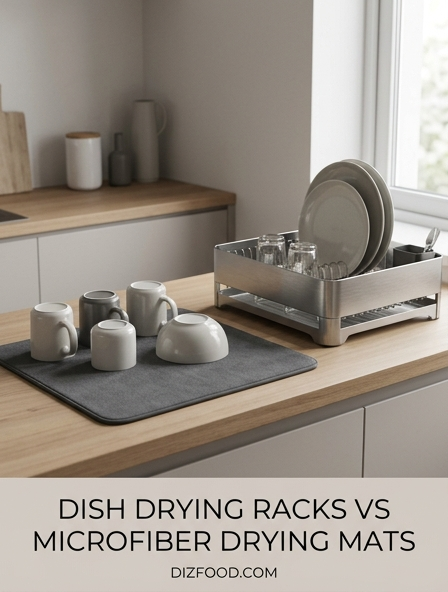
Dish Drying Racks Versus Microfiber Mats
The debate between using a traditional dish drying rack and a modern microfiber drying mat is a central consideration in kitchen organization and efficiency. For decades, the dish rack has been the standard fixture beside the sink, providing a structured environment for plates, bowls, and cutlery to air dry after washing. These units are typically designed with distinct compartments to keep items upright and separated, maximizing the use of vertical space. However, as kitchen designs have trended toward minimalism and clutter-free surfaces, the microfiber drying mat has emerged as a popular alternative. These mats are composed of highly absorbent synthetic fibers designed to pull moisture away from dishes while protecting the countertop from water damage.
Choosing between these two options involves weighing several factors, including the volume of hand-washed dishes, the available counter real estate, and personal aesthetic preferences. While a rack offers superior organization for large families or those who cook frequently, a mat provides a low-profile solution for single-person households or those with limited kitchen space. The transition from one to the other often reflects a change in lifestyle or a desire to reclaim the kitchen counter for food preparation rather than storage. Understanding the functional differences between a rigid structure and a flexible textile is essential for optimizing the workflow of your culinary space.
Pros and Cons of Dish Racks
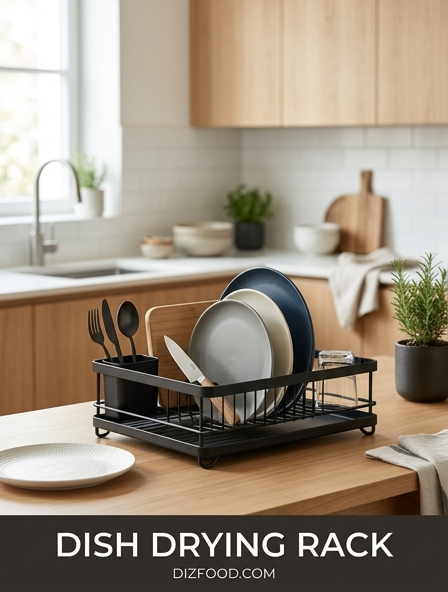
Dish racks are engineered for high-capacity drying and organizational efficiency. By utilizing vertical tiers and specialized slots, they allow users to stack a significant number of items in a relatively small footprint. This structure is particularly beneficial for heavy cookware and delicate plates that require stability to prevent chipping. However, their permanent presence on the counter can contribute to a sense of visual clutter, and they often require more intensive cleaning due to the accumulation of hard water spots and limescale on their frames and drainage trays.
| Feature | Pros | Cons |
|---|---|---|
| Capacity | Holds large loads vertically | Bulky and takes up permanent space |
| Airflow | Excellent 360-degree circulation | Water can pool in the bottom tray |
| Durability | Sturdy metal or plastic builds | Prone to rust or mineral buildup |
| Organization | Separate spots for cutlery and plates | Difficult to clean small crevices |
Ultimately, the dish rack serves as a heavy-duty workhorse. It is best suited for households that do not own a dishwasher or for those who frequently use large pots and pans that are not dishwasher-safe. While the cons include a higher price point and a more demanding footprint, the pros of stability and speed are often enough to justify the investment for many home cooks.
Benefits of Microfiber Drying Mats
Microfiber drying mats have revolutionized the way people manage wet dishes, offering a soft, ultra-absorbent surface that can be easily tucked away when not in use. These mats are constructed from millions of tiny fibers that increase the surface area available for moisture absorption, significantly outperforming traditional cotton towels. One of the primary advantages is their ability to protect delicate glassware and porcelain; the cushioned texture acts as a buffer against hard countertops, reducing the risk of breakage during the drying process.
- Portability and Storage: Mats can be folded and stored in a drawer, instantly clearing the counter for other tasks.
- High Absorbency: They can hold several times their weight in water, keeping the underlying countertop dry.
- Cost-Effectiveness: Generally much cheaper than high-quality stainless steel racks.
- Machine Washable: Maintenance is as simple as tossing the mat into the laundry with your kitchen towels.
- Versatility: Can be used as a landing pad for hot items or to catch drips under a dish rack for extra protection.
Beyond their functional utility, microfiber mats are available in a vast array of colors and patterns, allowing them to blend seamlessly with any kitchen decor. They are the ideal choice for those who value a "clean counter" policy and prefer to handle small batches of dishes throughout the day rather than letting them pile up in a rack.
Kitchen Space Management Comparison
Space management is perhaps the most critical factor when deciding between a rack and a mat. In a small apartment or a galley kitchen, every square inch of counter space is a premium commodity. A dish rack, even a compact one, occupies a fixed area that cannot be easily reclaimed without moving the entire unit. This can make meal preparation difficult, as the rack may sit right where you need to chop vegetables or roll out dough. For many, the permanent "visual weight" of a rack makes a small kitchen feel even more cramped.
In contrast, a microfiber mat offers total flexibility. It creates a temporary drying zone that exists only when needed. Once the dishes are dry and put away, the mat disappears into a cabinet, leaving the counter completely open. However, this advantage is negated if the household produces a constant stream of dirty dishes; if the mat is always on the counter because there are always wet dishes, the "temporary" benefit is lost. Furthermore, mats utilize horizontal space exclusively. While a rack can stack plates five levels high, a mat requires a larger surface area to accommodate the same number of items laid out flat. Therefore, those with limited counter width but plenty of vertical clearance may actually find a multi-tiered rack to be a more efficient use of their specific space.
Airflow and Drying Speed Performance
The speed at which dishes dry is directly related to the amount of airflow reaching the surfaces of the items. Dish racks have a significant physiological advantage in this category. Because the items are suspended and separated by wire or plastic rungs, air can circulate freely around the front, back, and sides of each plate. Bowls and glasses can be propped at angles that allow trapped air to escape and moisture to evaporate quickly. This 360-degree exposure ensures that even the insides of deep vessels dry without leaving a damp smell or water spots.
Microfiber mats, while excellent at absorbing water from the rim of a glass, create a seal between the item and the mat. When a bowl or cup is placed face-down on a mat, the air inside becomes trapped. Without circulation, the humidity remains high inside the vessel, often leading to "sweating" or condensation that lingers for hours after the outside is dry. Users of mats often find they have to prop items up against each other or flip them over manually to finish the drying process. For those who prioritize speed and want to put their dishes away as soon as possible, the rack remains the superior performer due to its superior ventilation capabilities.
Hygiene and Mold Prevention Analysis
Hygiene is a major concern for any surface that remains wet for extended periods. Dish racks often feature a drainage tray that directs water back into the sink. However, if these trays are not sloped correctly, water can pool in the corners, leading to the growth of pink slime (Serratia marcescens) or black mold. The intricate joints and wires of a rack also provide hiding spots for bacteria and mineral deposits. Owners must be diligent about scrubbing these areas frequently to ensure that the environment where "clean" dishes sit is truly sanitary.
Microfiber mats present a different set of hygienic challenges. Because they are designed to hold moisture, a damp mat left on a counter for days can become a breeding ground for mildew and odors. If the mat does not dry out completely between uses, it can develop a musty smell that transfers to the dishes. To prevent this, mats must be hung up to dry or laundered frequently. However, unlike a rack, a mat can be thoroughly sanitized in a high-heat washing machine cycle, which kills most pathogens. The key to hygiene with a mat is rotation; having two or three mats to swap out ensures that one is always clean and dry, whereas a single rack must be maintained in place.
Cleaning and Maintenance Requirements
Maintenance routines differ significantly between the two options. A dish rack requires manual labor to keep it looking its best. Over time, the constant exposure to water leads to calcium buildup and soap scum. To clean a rack effectively, one must usually follow these steps:
- Disassemble any removable parts like cutlery caddies and drain boards.
- Scrub each individual wire or rung with a brush and vinegar solution to break down minerals.
- Rinse thoroughly and hand-dry to prevent new spots from forming.
- Sanitize the base tray with a mild bleach or hydrogen peroxide solution.
Cleaning a microfiber mat is significantly less labor-intensive but requires a laundry schedule. Most manufacturers recommend machine washing on a gentle cycle with liquid detergent. It is important to avoid fabric softeners, as these can coat the fibers and reduce their absorbency. After washing, the mats can be air-dried or placed in a dryer on a low-heat setting. Because the maintenance of a mat is "passive" (handled by machines), it is often preferred by those with busy schedules. However, if you forget to do the laundry, you are left without a drying surface, whereas a rack is always available even if it needs a scrub.
Durability and Material Longevity
When considering the long-term investment, the materials of construction play a vital role. High-end dish racks are typically made from 304-grade stainless steel, which is resistant to rust and can last for a decade or more if properly cared for. Plastic models are less durable and may crack or become permanently stained over time, but they still offer several years of service. The primary "failure point" for a rack is usually the coating on the wire; if the plastic or silicone coating nicks, the metal underneath can begin to oxidize, necessitating a replacement for hygienic reasons.
Microfiber mats have a shorter lifespan compared to metal racks. The synthetic fibers eventually break down after repeated wash cycles, leading to a loss of absorbency and "loft." A well-used mat might stay effective for one to two years before it begins to look tattered or loses its ability to pull moisture away from dishes. Because they are inexpensive, replacing them isn't a major financial burden, but it does contribute more textile waste to the environment over time. For those seeking a "buy it for life" kitchen tool, a premium stainless steel rack is the clear winner in terms of longevity and material resilience.
Aesthetic Impact on Kitchen Counters
The visual impact of a kitchen is often defined by its counters. A dish rack is a statement piece, whether intentional or not. A high-design, modern rack can complement a contemporary kitchen, looking like a professional tool. However, for most, the sight of a rack filled with a chaotic assortment of drying dishes is a source of visual stress. It breaks the clean horizontal lines of the kitchen and draws the eye toward the "work" area of the sink. Even when empty, the skeleton of the rack remains a permanent part of the room's décor.
Microfiber mats are the preferred choice for the aesthetic minimalist. They are low-profile and stay flush with the counter, making them far less noticeable than a raised rack. When the mat is a color that matches the countertop, it can almost disappear. Furthermore, the ability to store the mat away means that the kitchen can return to a "showroom" state in seconds. This is particularly valuable in open-concept homes where the kitchen is visible from the living or dining room. By removing the drying apparatus entirely, the homeowner can maintain a sleek, uninterrupted aesthetic that highlights the materials of the counter and backsplash rather than the utility of the sink area.
Best Drying Solution for Your Home
Ultimately, the decision between a dish rack and a microfiber mat depends on your daily habits and the volume of dishes you process. There is no one-size-fits-all answer, as both tools serve different needs. If you find yourself washing large pots, pans, and full sets of dinnerware for a family every night, the structural integrity and superior airflow of a high-quality dish rack will save you time and frustration. The ability to stack items vertically is an unmatched efficiency gain for heavy users.
On the other hand, if you live alone, primarily use a dishwasher, or have a very small kitchen where counter space is precious, the microfiber mat is likely the better choice. It provides just enough surface area for a few coffee mugs and a breakfast plate while offering the freedom to clear the decks whenever you want. Some homeowners even find a middle ground by using a small, collapsible rack for plates and a mat for glassware, combining the benefits of both. By assessing your storage needs, your tolerance for maintenance, and your kitchen's layout, you can choose the drying solution that keeps your kitchen functional, clean, and beautiful.


Comments