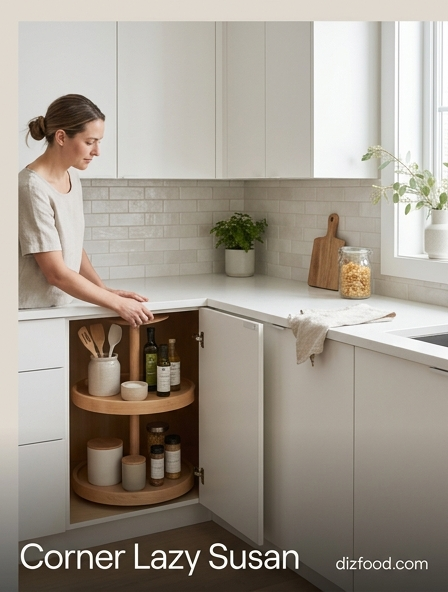
Transforming your kitchen's efficiency starts with tackling those awkward cabinet gaps where items often go to disappear. A circular corner Lazy Susan is the perfect tool to optimize storage, as its smooth rotating shelves eliminate the frustration of reaching into deep, dark corners. By providing effortless 360-degree access to spice jars, small appliances, and heavy cookware, these organizers ensure every inch of your cabinetry is utilized effectively. This simple yet functional upgrade streamlines your cooking workflow while keeping your essentials visible and organized. For a deeper look at which hardware suits your layout, compare the benefits of Corner Lazy Susans vs. Blind Corner Swing-Outs.
Understanding the Benefits of Circular Corner Lazy Susans
The primary advantage of a circular corner Lazy Susan lies in its ability to eliminate the "dead zone" typically found in deep kitchen cabinetry. By utilizing a central rotating axis, these inserts bring items from the shadowy depths of a corner unit directly to the user's fingertips. This ergonomic design significantly reduces the need for awkward reaching or kneeling, making the kitchen environment more accessible for individuals of all ages and physical abilities. Beyond accessibility, the 360-degree rotation ensures that every square inch of the shelf is utilized, preventing forgotten jars of spices or canned goods from expiring at the back of the cupboard.
Enhanced visibility of all stored inventory.
Reduction in physical strain during meal preparation.
Improved organization by preventing item stacking and burial.
Increased home resale value through optimized storage solutions.
Furthermore, these rotating systems allow for better airflow within cabinets, which can be beneficial in humid environments. The aesthetic appeal of a well-organized Lazy Susan also contributes to a sense of order and cleanliness in the heart of the home, streamlining the cooking process and reducing overall kitchen clutter.
Maximizing Blind Corner Cabinet Space Efficiency
Blind corner cabinets present a unique architectural challenge where two cabinet lines meet, leaving a large portion of the interior hidden behind a fixed panel. To maximize this efficiency, specialized Lazy Susan shapes like the "Kidney" or "Pie-Cut" are frequently employed. Unlike full circles, these shapes are engineered to clear the cabinet door frame while still providing a vast rotating surface area. By installing these units, homeowners can reclaim up to fifty percent of previously unusable space, turning a storage bottleneck into a highly productive zone.
To further enhance efficiency, users should consider the following strategies:
Install multi-tier units to double the available surface area vertically.
Utilize non-slip mats to keep items from sliding toward the center during rotation.
Place larger, infrequently used items at the base and smaller essentials on the top tier.
Ensure the rotating hardware is rated for the specific depth of the blind corner.
Effective space management in these corners allows for the storage of bulky items like mixing bowls or salad spinners that otherwise take up valuable real estate on standard shelving units.
Choosing the Right Material for Your Rotating Trays
The material of your Lazy Susan dictates its durability, weight capacity, and ease of maintenance. When selecting a tray, it is essential to match the material to the intended use and the overall aesthetic of the kitchen. While plastic is often the most cost-effective and easiest to clean, wood offers a classic, sturdy feel that complements high-end cabinetry. Metal or wire options provide a modern look and excellent ventilation for stored goods.
Material
Pros
Cons
Polymer/Plastic
Easy to clean, affordable, lightweight.
Can crack under extreme weight; may stain.
Wood (Maple/Birch)
High weight capacity, premium look.
Susceptible to moisture; more expensive.
Chrome/Wire
Excellent visibility, modern style.
Small items may fall through the gaps.
cabinet environment requires materials that resist warping. For heavy-duty storage, such as stacks of plates or canned goods, solid wood or high-impact polymer is recommended to ensure the trays do not sag over time, which could impede the rotation mechanism.
How to Measure Corner Cabinets for a Perfect Fit
Precision is vital when measuring for a corner Lazy Susan to ensure the trays rotate freely without hitting the cabinet walls or doors. Start by measuring the interior width and depth of the cabinet, taking care to account for any hinges or protrusions that might catch the tray. It is equally important to measure the door opening width, as the tray must be able to pass through the opening during the installation process. If the opening is smaller than the tray diameter, you may need a folding or multi-piece unit.
Measure the interior height from the floor of the cabinet to the ceiling.
Determine the center point of the corner to align the mounting pole.
Check for clearance from the back wall to the edge of the rotating tray.
Account for the door swing and any attached hardware.
Standard diameters typically range from 18 to 32 inches. Choosing a size that is too large will cause friction against the cabinet walls, while a size too small results in wasted space. Always leave at least one to two inches of clearance around the perimeter for smooth operation.
Categorizing Kitchen Staples for Easy Access
A Lazy Susan functions best when items are categorized logically. Grouping staples ensures that you always know exactly where to find ingredients, preventing the frantic search during a timed recipe. The most effective method is to create "zones" on the rotating trays. For example, one tier can be dedicated entirely to baking essentials like flour, sugar, and baking soda, while another tier focuses on savory items like oils, vinegars, and spices. This system turns the corner cabinet into a mini-pantry.
Baking Zone: Sprinkles, extracts, cocoa powder, and yeast.
Cooking Zone: Olive oil, balsamic vinegar, soy sauce, and salt.
Breakfast Zone: Honey, peanut butter, jams, and tea tins.
Snack Zone: Granola bars, dried fruits, and nut containers.
Using clear, square containers can help maximize the circular space more effectively than round jars. Labeling the lids of containers is particularly useful for bottom-shelf storage, allowing you to identify the contents at a glance as you rotate the unit without having to lift each individual item.
Organizing Heavy Small Appliances Effectively
Corner Lazy Susans are surprisingly robust and can serve as the perfect home for heavy small appliances that otherwise clutter the countertops. Items like blenders, food processors, slow cookers, and stand mixers fit well on the larger-diameter trays. However, organizing these heavy items requires careful consideration of weight distribution. To ensure the longevity of the rotating hardware, place the heaviest appliances closest to the center pole. This minimizes the centrifugal force and reduces the strain on the bearing system during rotation.
When organizing these items, consider the frequency of use. Keep the most-used appliance at the "front" position when the cabinet is closed. It is also helpful to wrap cords tightly and secure them with ties to prevent them from dangling over the edge of the tray, where they could get caught in the rotating mechanism or the cabinet door. By moving these bulky machines into the corner cabinet, you free up significant workspace on your counters, making the kitchen feel larger and more organized. Ensure your Lazy Susan is rated for heavy-duty loads if you plan to store multiple cast-iron pieces or large kitchen machinery.
Installation Tips for Smooth Swivel Performance
The key to a high-performing Lazy Susan is the precision of its installation. Even a slight tilt in the center pole can lead to uneven rotation or cause the trays to drift toward one side. Before mounting the hardware, use a spirit level to ensure the cabinet base is perfectly flat. If the cabinet is slanted, use shims to level the bottom mounting bracket. Once the base is secure, align the top bracket vertically using a plumb line or a long level. This ensures the central axis is perfectly perpendicular to the ground.
Lubricate the bearings with a food-safe silicone spray before final assembly.
Tighten all set screws firmly to prevent trays from sliding down the pole.
Test the rotation with a partial load to check for any rubbing sounds.
Adjust the height of the trays to allow clearance for your tallest stored items.
For pie-cut units that are attached to the cabinet doors, the alignment of the door hinges is critical. The door must be perfectly centered so that it pulls the Lazy Susan out smoothly without scraping the face frame. Regular checks of the mounting screws are recommended after the first month of use.
Maintaining and Cleaning Your Lazy Susan Inserts
A Lazy Susan can quickly accumulate crumbs, dust, and spills due to its rotating nature and deep placement. To maintain a hygienic kitchen environment, establish a seasonal cleaning routine. Most polymer and metal trays can be wiped down with a damp cloth and mild dish soap. For wooden trays, it is important to use a wood-specific cleaner and avoid saturation, which can lead to warping or cracking. If the trays are removable, taking them out of the cabinet makes it much easier to reach the floor of the cabinet where debris often falls.
Mechanical maintenance is equally important for long-term performance. Over time, the swivel bearing may collect dust or become dry, leading to a squeaking sound or jerky movement. Periodically vacuuming around the base of the pole and applying a small amount of lubricant to the ball bearings will keep the movement fluid. Check the hardware annually to ensure that the weight of the stored items hasn't caused the trays to shift. Proper maintenance not only extends the life of the insert but also ensures that your kitchen remains a quiet and efficient space for food preparation.
Innovative Ways to Use Tiers for Extra Storage
While the standard two-tier Lazy Susan is common, innovative kitchen designs often utilize three or even four tiers to maximize vertical space in tall corner cabinets. These extra layers are ideal for organizing flat or small items that don't require much height. For example, a shallow top tier can be added specifically for spice jars, lids, or small ramekins, leaving the taller bottom tiers for cereal boxes or large pots. This tiered approach allows you to customize the storage based on the specific dimensions of your kitchen inventory.
Add a "wedge" organizer to a tier to create smaller compartments for utensils.
Use a tiered "staircase" insert on one of the trays for better label visibility.
Install a magnetic strip on the center pole for small metal spice tins.
Adjust the middle tray to a higher position to accommodate tall oil bottles below.
By thinking vertically, you can effectively triple the storage capacity of a single corner. This is especially useful in smaller kitchens where every inch of cabinet space is a premium. The ability to adjust tier heights is a critical feature to look for when purchasing a new system.
Transforming Awkward Corners into Functional Hubs
The ultimate goal of installing a Corner Lazy Susan is to transform an awkward, frustrating architectural feature into a functional hub of the kitchen. A well-designed corner unit can serve as a centralized "prep station," holding everything from cutting boards to mixing bowls and small appliances. This centralization streamlines the workflow, as the cook can stay in one spot and simply rotate the tray to access different tools. It changes the psychology of the kitchen from one of frustration over lost items to one of controlled efficiency.
Modern innovations, such as soft-close mechanisms and LED interior lighting, can further enhance this hub. Motion-activated lights are particularly effective in corner units, illuminating the entire contents as soon as the door is opened. When a corner is no longer a "black hole," it encourages the use of more diverse ingredients and specialized tools that might otherwise be ignored. Investing in a high-quality rotating system is one of the most impactful upgrades a homeowner can make, significantly improving the daily utility and organization of the culinary workspace.



Comments